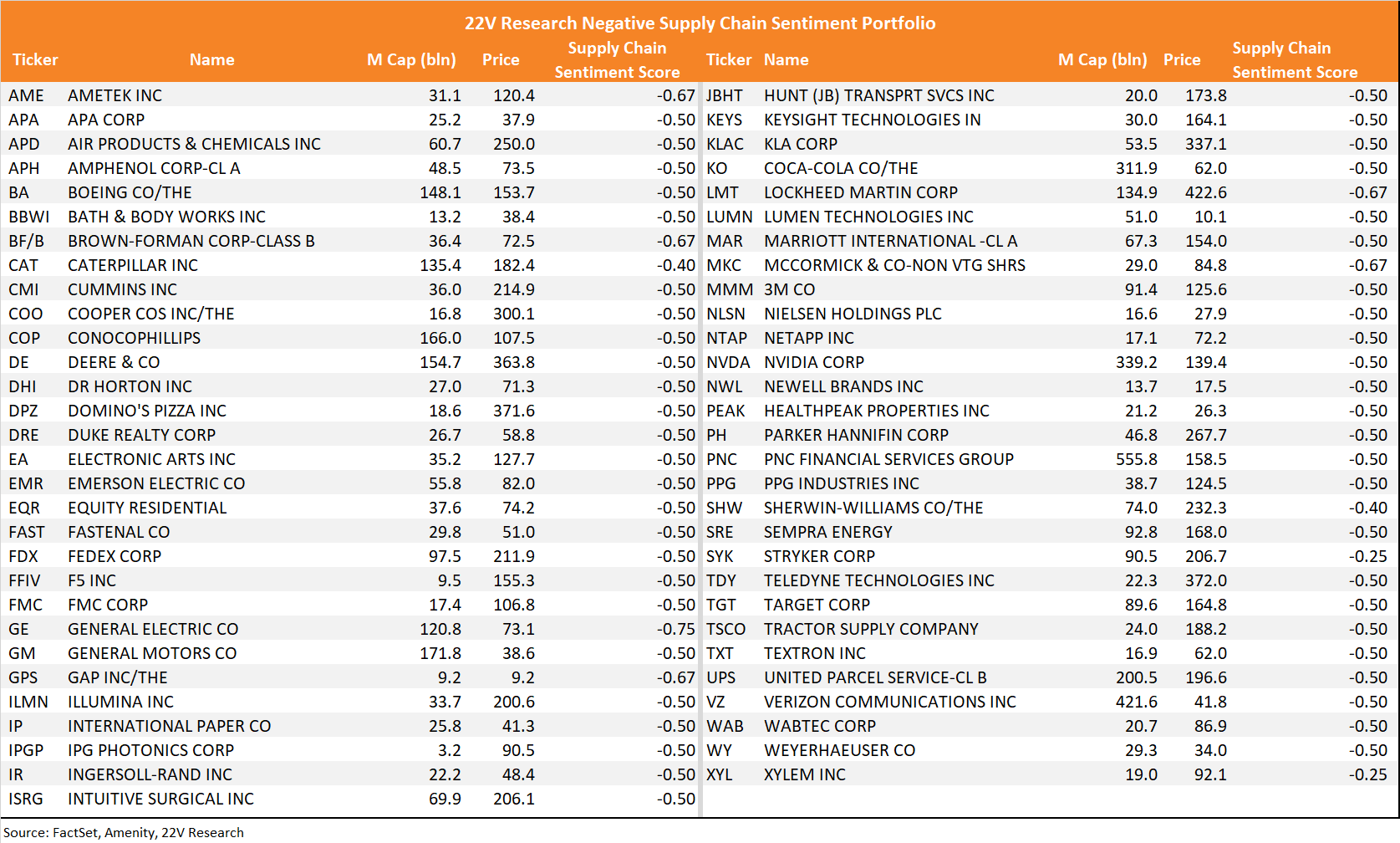
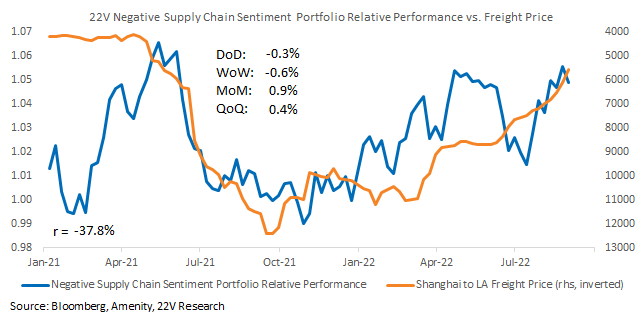
Supply chains are easing but remain tight relative to history. To profit from a further easing of bottlenecks, today we rebalance our portfolio of S&P companies with the most negative supply chain sentiment. The performance of our portfolio, which we construct using the data from the Amenity natural language processing tool, has been negatively correlated with freight prices and has outperformed the S&P by 3.5% since mid-July.
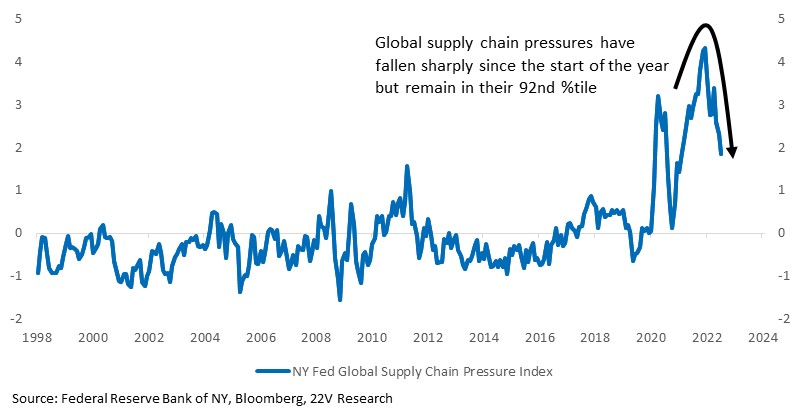
Macro influence over the S&P is high and climbing, and as the Strategy team poll from earlier this week (HERE) showed, a plurality (45%) see inflation as the most important macro factor. As a recent S.F. Fed paper (HERE) shows, supply-driven contributions to core PCE have turned negative for the first time this year. Freight prices are falling, Flexport’s Ocean Timeliness Indicator has improved significantly, and the NY Fed Global Supply Chain Pressure Index has been in a downtrend since early this year. Those trends support the continued outperformance of companies most negatively impacted by bottlenecks.

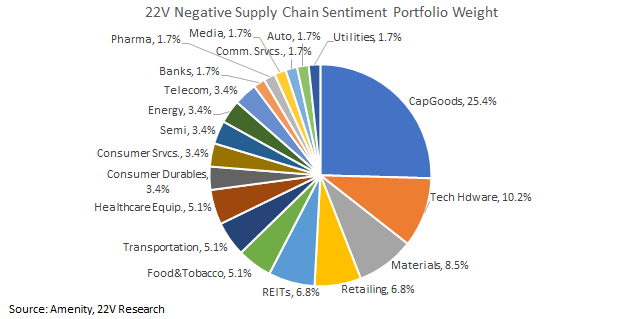
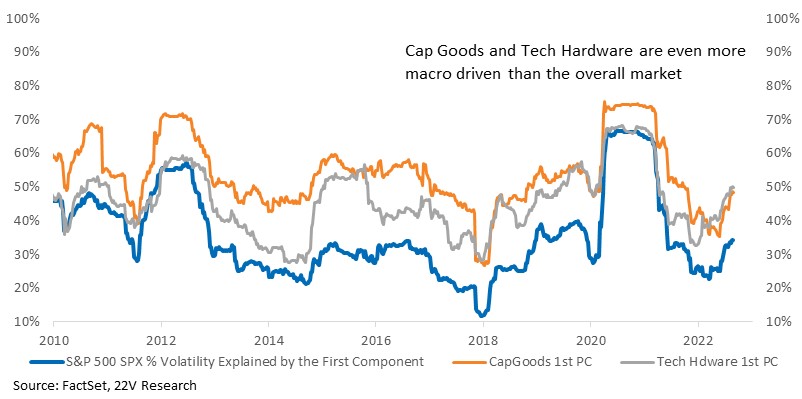
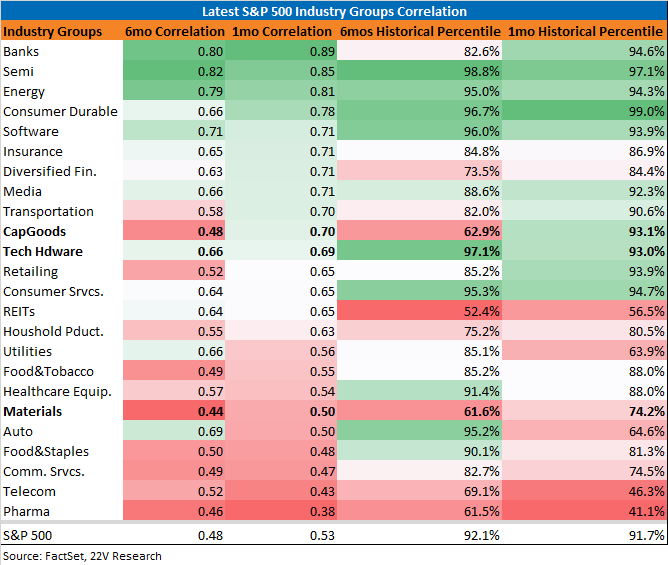
At the industry level, our portfolio is highly exposed to Capital Goods, Tech Hardware, and Materials. Near-term, tightening of financial conditions is a headwind for Cap Goods names, but Tech Hardware tends to perform well as volatility increases (HERE). Both Cap Goods and Tech Hardware have seen their macro influence spike higher over the past few months and correlations within those groups are exceptionally high (93rd %tile). Investors are treating these stocks as a basket, and those baskets are influenced by changes in the outlook for supply chains.
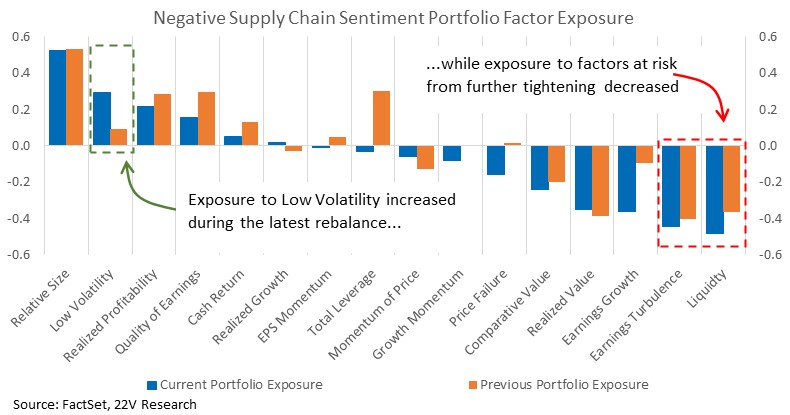
The factor exposure of the portfolio is tilted toward Low Volatility, Realized Profitability, and Quality of Earnings, all factors that benefit from tightening of financial conditions. We list the current constituents of our rebalanced portfolio at the end of this report.
Bottlenecks & Related Inflation Easing: Supply chain issues have kept inflationary pressures intense throughout the year. Labor markets remain too tight, encouraging the Fed to maintain its tightening bias, which is why we have been focused on positioning for tighter financial conditions (HERE, HERE). Goods inflation, however, has become an important disinflationary force as global supply chain pressures have eased. Freight prices are falling, Flexport’s Ocean Timeliness Indicator has improved significantly, and the NY Fed Global Supply Chain Pressure Index has been in a downtrend since early this year.
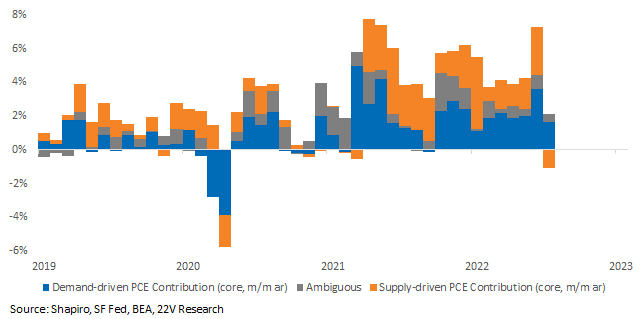
As one of the factors pushing higher inflation, easing supply chain pressure reduces supply-driven inflation. The S.F. Fed released a paper and data series separating demand from supply-driven inflation (HERE). Supply-driven contributions to core PCE has turned negative for the first time this year. The negative contribution is in line with declining supply chain pressure.
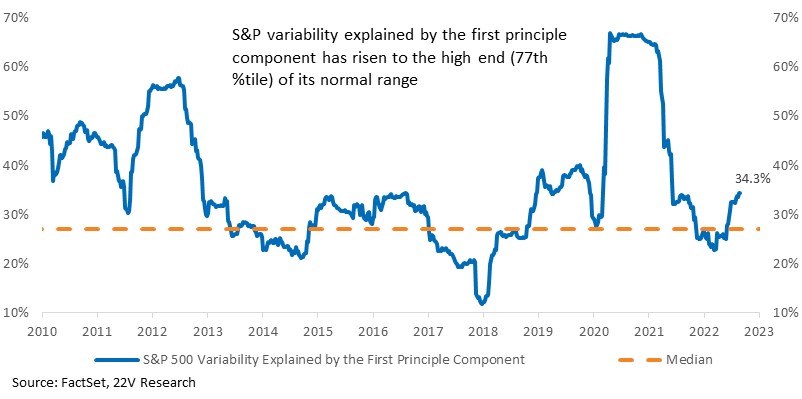
The importance of inflation trends is clear. The Strategy team poll of investors earlier this week (HERE) showed a plurality (45%) see inflation as the most important macro factor, outpacing payrolls, credit spreads, and leading indicators. Inflation becoming THE focal point for investors is consistent with the continued increase in the macro influence over S&P volatility. S&P vol explainable by the first principle component is over 34%, back to June 2021 levels.
Profiting From Easing Supply Constraints: Using the Amenity natural language processing tool, we filtered the S&P for the companies that expressed the MOST NEGATIVE supply chain sentiment during their latest earnings calls. We have been running this portfolio since 4Q21, rebalancing it quarterly. The performance of the portfolio has been negatively correlated with freight price, a high-frequency proxy for supply chain tightness, and has outperformed the S&P by 3.5% since mid-July. Supply chains are easing but remain tight relative to history. Further easing should continue to benefit our portfolio
At the industry level, our negative supply chain sentiment portfolio is most highly exposed to Capital Goods (25% of the weight), followed by Tech Hardware, and Materials. Companies selling goods are more impacted by supply chain issues than services names. Near-term, tightening of financial conditions is a headwind for Cap Goods names, but Tech Hardware tends to perform well as volatility increases (HERE).
Just as macro influence has increased for the overall market, it has also been trending higher for most S&P industry groups. Both Cap Goods and Tech Hardware have seen their macro influence spike higher over the past few months. Both groups tend to be more macro-driven than the overall market, and further easing of supply chain/inflation issues should be a tailwind.
Correlation analysis also backs up the highly macro nature of those groups today. Correlations (IPC) within Cap Good and Tech Hardware are EXTREMELY high (93rd %tile). Investors are treating these stocks as a basket, and those baskets are influenced by changes in the outlook for supply chains. Side note, the short-term correlations of a number of S&P industry groups are unusually high today. 11 of 24 industry groups have 1mo correlations in their 90th %tiles.
At the factor level, the Negative Supply Chain portfolio is tilted towards Low Volatility, Realized Profitability, and Quality of Earnings. The portfolio is less exposed to Liquidity, Earnings Turbulence, and Earnings Growth. As we discussed in our recent inflation series quant reports (Tech report here, Health Care report here, Discretionary report here, and ETF theme here), Low Volatility and Quality of Earnings names are expected to outperform at the expense of Liquidity and Earnings Turbulence in a tightening financial conditions backdrop. The latest rebalance increased the Low Vol exposure and further reduced already negative exposure to Turbulence and Liquidity. At the margin, those changes should help the outperformance of the basket.
Below, we list the constituents of the Negative Supply Chain Sentiment portfolio. These are the individual names that stand to benefit most as supply chain issues ease.