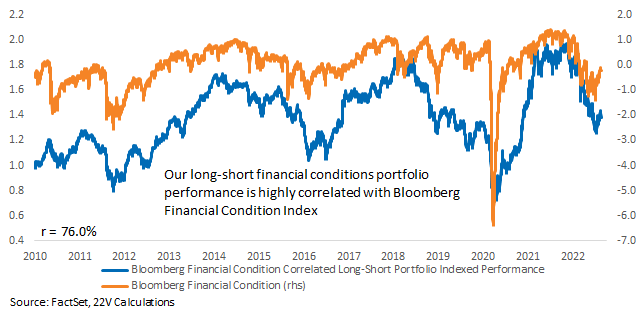
Financial conditions have been easing since June, supporting the rebound in PEs that has driven equity markets higher. Firm economic activity and inflation that remains WELL above the Fed’s target mean financial conditions are likely to tighten again. Most investors expect (HERE) Powell to try to tighten financial condition during Jackson Hole this week. That is a view we agree with and tightening conditions should favor Low Volatility names at the expense of high Earnings Turbulence (HERE).
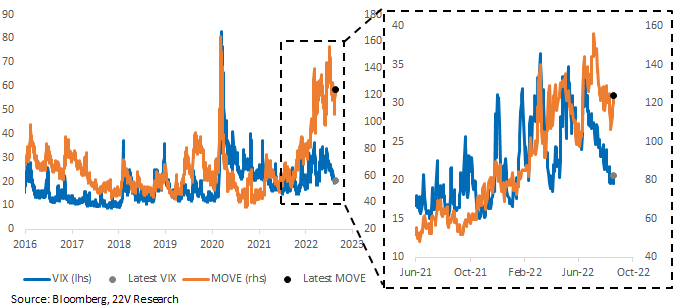
Acute phases of financial condition tightening have been driven by shifts in volatility (details HERE), including equity volatility measured by VIX and Treasury volatility measured by the MOVE Index. After a sharp decline following the FOMC meeting and weaker than expected CPI print a few weeks ago, Treasury vol rebounded last week. The spread between the VIX and MOVE index remains very high (85th %tile) and given the near-term outlook for financial conditions, that spread is likely to be resolved through higher equity volatility.
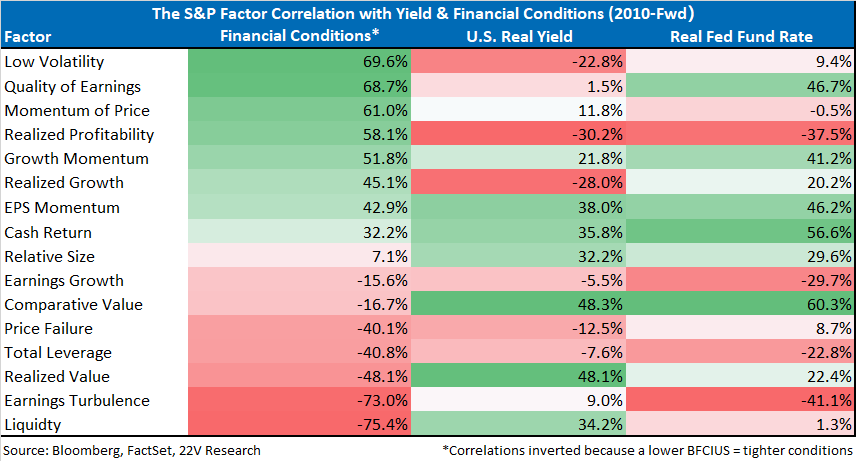
Risk factors have been the most correlated with shifts in financial conditions in the post-GFC period. Low Vol and Liquidity/Earnings Turbulence tend to see the largest reactions to shifts in financial conditions. Earnings Quality, a factor that trailed our expectations during reporting season (HERE) also stands to benefit from a retightening. The higher than normal correlation between Growth and Value names makes playing a financial conditions rotation through the style trade more difficult. Rather than focusing on Style, the Defensive/Cyclical rotation offers more opportunities.
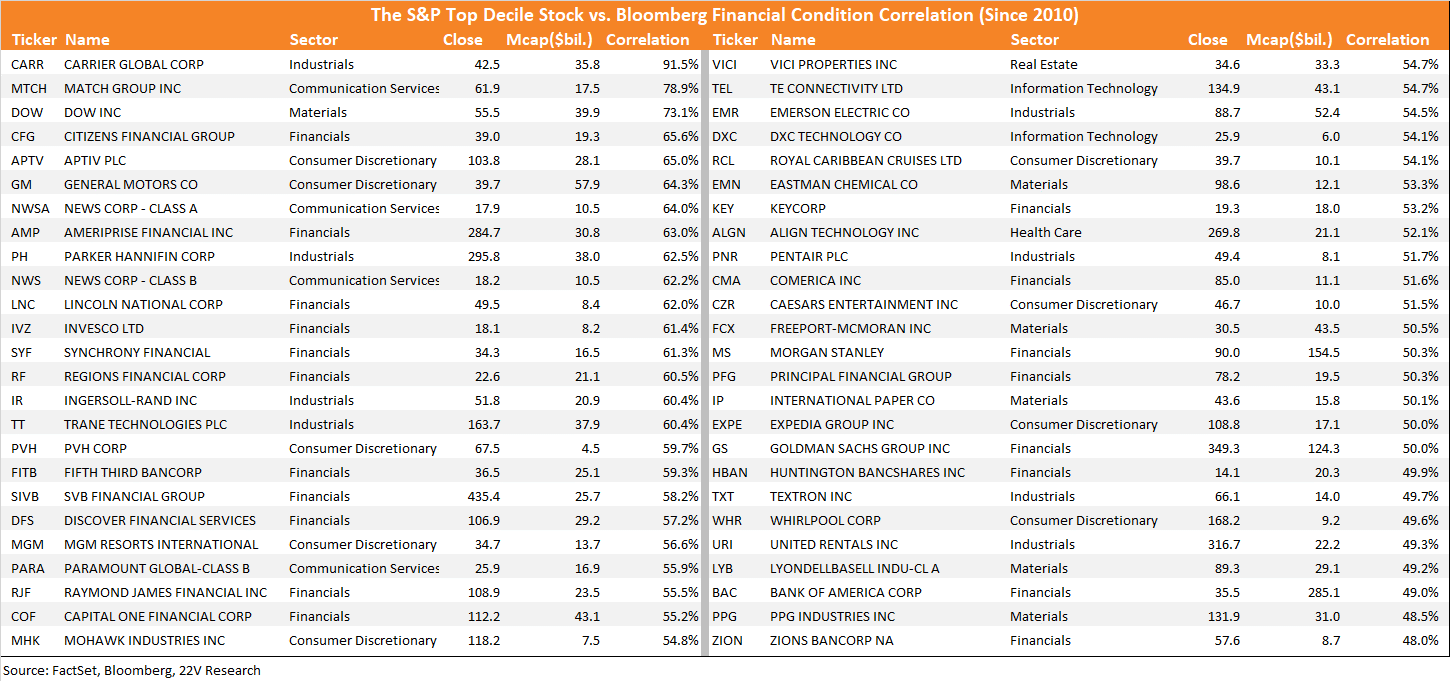
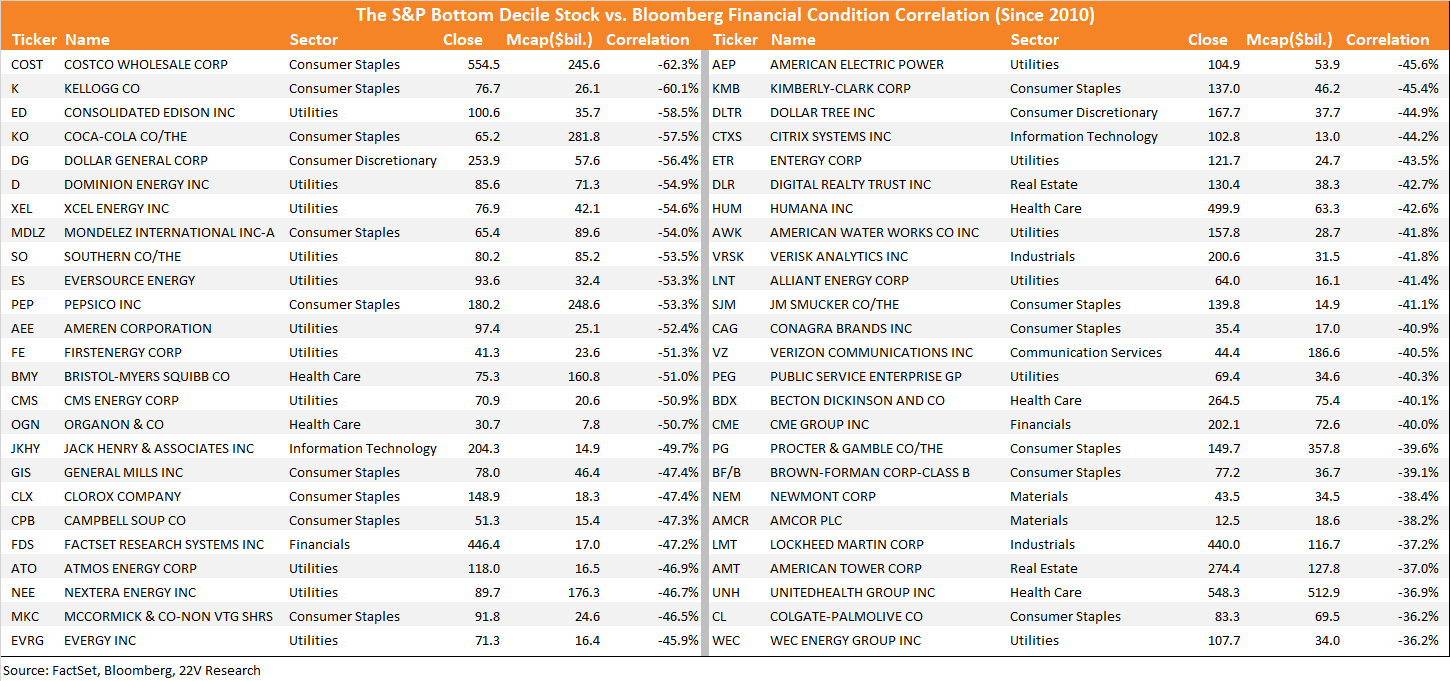
We list the long side of the portfolio which consists of the S&P names most negatively correlated with Bloomberg Financial Condition Index and should outperform in a tightening financial condition backdrop, and also the short side of the portfolio which will face more headwind. We can also run stock correlations to customized basket. Please let us know if you want us to run tightening financial condition impact on your portfolio.
Financial Conditions Long-Short Portfolio: Financial condition have been easing since June, supporting the rebound in PEs that has driven equity markets higher. Firm economic activity and inflation that remains WELL above the Fed’s target means financial conditions are likely to tighten again. Most investors expect (HERE) Powell to try to tighten financial condition during Jackson Hole this week. That is a view we agree with and tightening conditions should favor Low Volatility names at the expense of high Earnings Turbulence (HERE). We ran stock correlations with changes in the Bloomberg Financial Condition Index and constructed a long-short portfolio designed to benefit from a retightening. The constituents of the portfolio can be found at the end of this report.
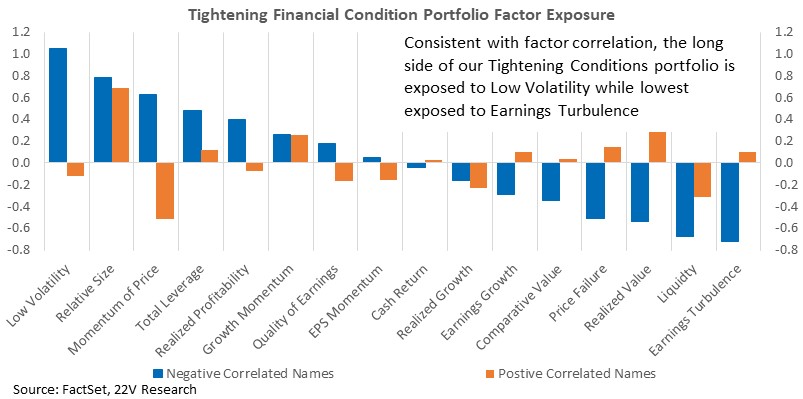
Consistent with the factors that typically perform best during periods of tightening, the long side of our portfolio (negatively correlated with Bloomberg Financial Condition Index) is highly exposed to Low Volatility, Momentum of Price, and Total Leverage, and has less than index exposure to Earnings Turbulence, Liquidity, and Realized Value. The short side (positively correlated) has high Realized Value and Growth Momentum exposure, and less than index exposure to Total Leverage and Liquidity.
Risk factors have been the most correlated with shifts in financial conditions in the post-GFC period. Low Vol and Liquidity/Earnings Turbulence tend to see the largest reactions to shifts in financial conditions. Earnings Quality, a factor that trailed our expectations during reporting season (HERE) also stands to benefit from a retightening. At the margin, tighter conditions also favor Growth over Value, but it is important to focus on names with either 1) high correlations to financial conditions, or 2) those that are also properly aligned with risk factors like Low Vol and Earnings Turbulence. The higher than normal correlation between Growth and Value names makes playing a financial conditions rotation through the style trade more difficult.
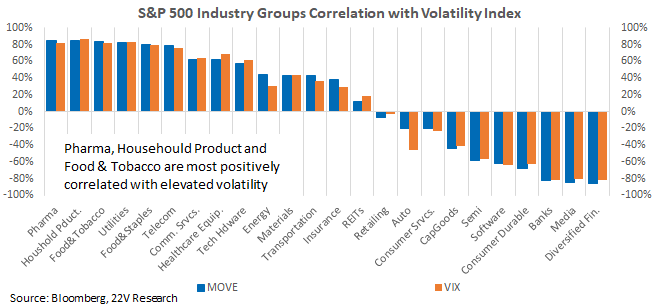
Rather than focusing on Style, the Defensive/Cyclical rotation offers more opportunities. Acute phases of financial condition tightening have been driven by shifts in volatility (details HERE), including equity volatility measured by VIX and Treasury volatility measured by the MOVE Index. Both indices have trended higher over the past year, Treasury Vol in particular (that higher vol also helps explain the increase in yields). After a sharp decline following the FOMC meeting and weaker than expected CPI print a few weeks ago, Treasury vol rebounded last week. The spread between the VIX and MOVE index is very high (85th %tile) and given the near-term outlook for financial conditions, that spread is likely to be resolved through higher equity volatility.

Roughly in line with factor correlation with financial conditions, elevated volatility has been a tailwind for Defensives, including Pharma, Household Product, and Food & Tobacco. Diversified Financials, Media, and Banks are most negatively correlated with shifts in equity volatility.
At the stocks level, below we list the S&P names with the most negative correlation with the Bloomberg Financial Conditions Index. This constitutes the long side of the tightening financial conditions portfolio. We can also run stock correlations to customized basket. Please let us know if you want us to run your portfolio.
Below are the S&P names most positively correlated with Bloomberg Financial Condition Index and are the short side of the portfolio as financial conditions tightened.