The increase in real rates/yields and tightening/easing of financial conditions have been two major forces driving market internals this year. After a volatile period of tightening in the first half, financial conditions stabilized in June and started easing in July, fueling the second stage of the risk-on rally that started in June. Over the medium/long-term, the direction of real yields (growth and inflation) should drive markets, but 70% of the investors we surveyed expect Powell to try to tighten financial conditions during Jackson Hole next week (survey results HERE). Near-term, financial conditions are the macro factor to focus on.
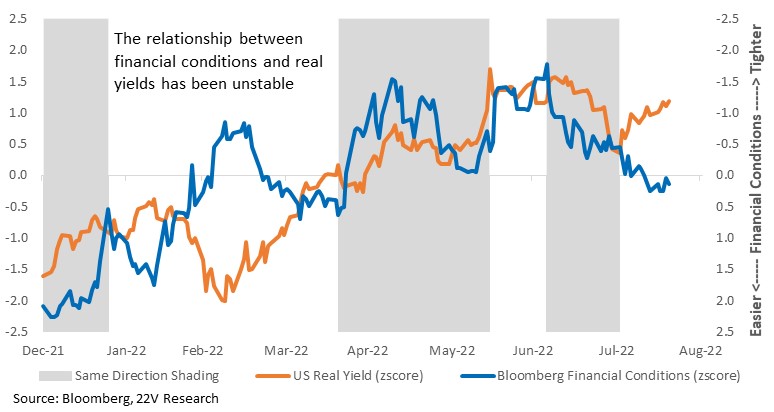
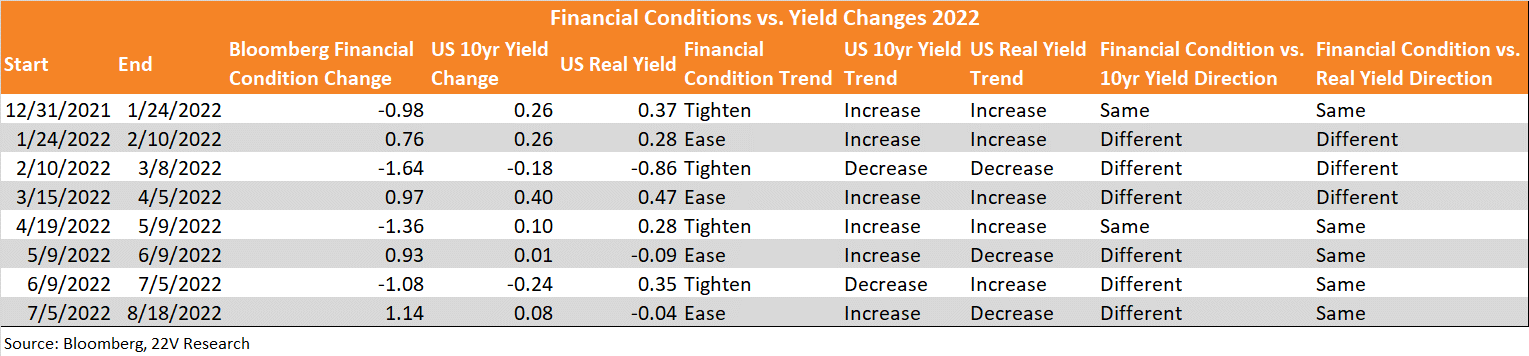
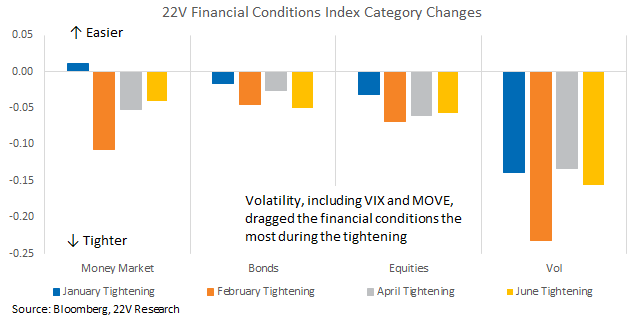
The overall relationship between real yields and financial conditions has been mixed this year, and recently they have diverged again (real yields rising while financial conditions have eased). Breaking down financial condition changes into categories, changes in overall conditions tend to be driven by Volatility, including VIX (equity) and MOVE (bond). That helps explain the divergence of financial conditions and interest rate moves for most of this year.
Overall factor performance trends have been highly influenced by shifts in financial conditions. As we have noted (HERE), the style trade has been complicated this year by higher than normal return and rank correlations between Value and Growth. That helps explain the weak relationship between Value and shifts in financial conditions. Risk factors – Low Vol, Earnings Turbulence – remain an easier way to play a potential retightening of financial conditions.

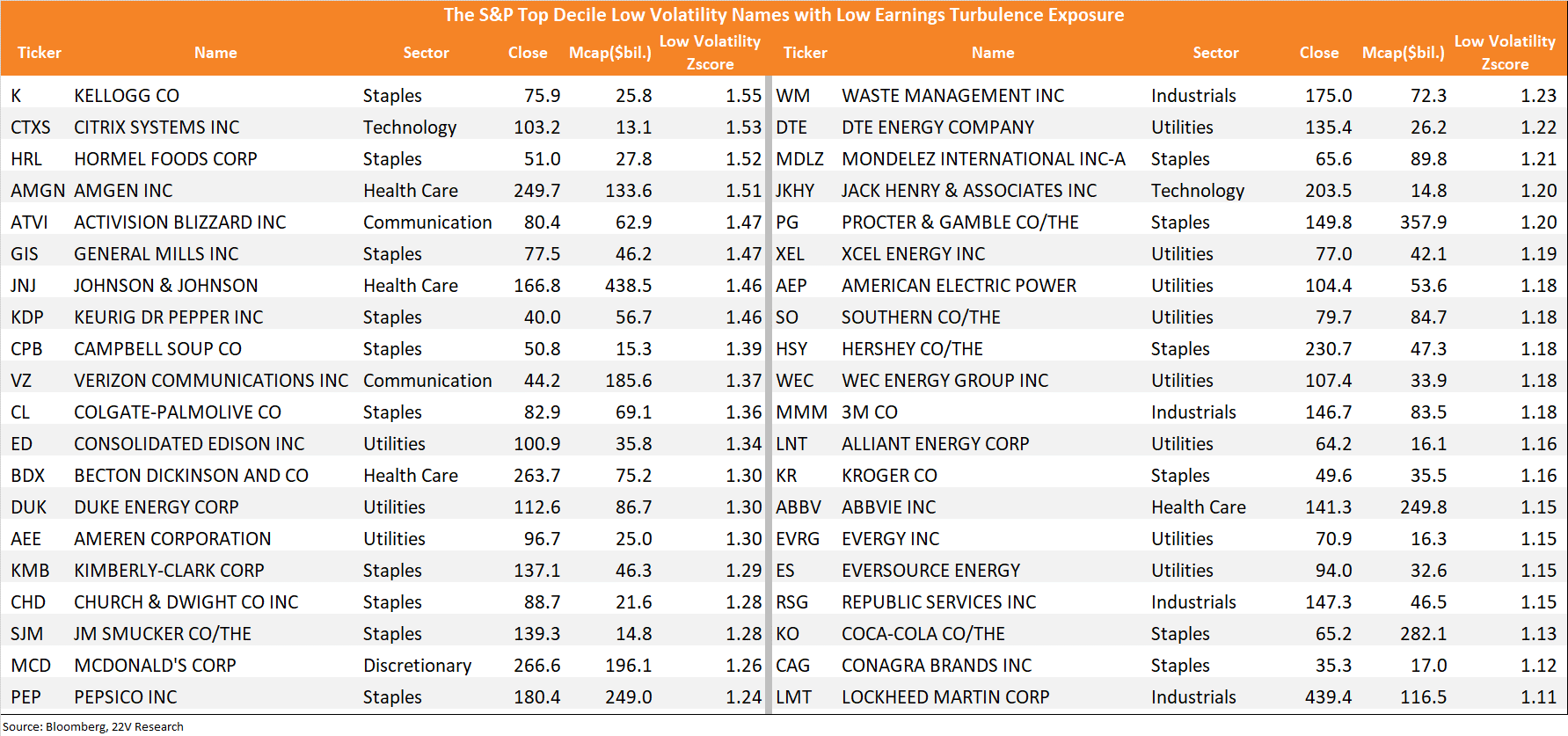
We list the S&P names currently falling in top decile Low Volatility basket with relative low Earnings Turbulence exposure. These names should benefit supposing financial conditions tightening again.
Positioning for Financial Condition Retightening: The increase in real rates/yields and tightening/easing of financial conditions have been two major forces driving market internals this year. After a volatile period of tightening in the first half, financial conditions stabilized in June and started easing in July, fueling the second stage of the risk-on rally that started in June. The overall relationship between real yields and financial conditions has been mixed this year, and recently they have diverged again (real yields rising while financial conditions have eased).
Financial conditions have eased gradually over the past two months and had a modest impact on market internals until recently. Conditions tend to tighten rapidly though and have had a larger impact on markets during those periods. Over the medium/long-term, the direction of real yields (growth and inflation) should drive markets, but 70% of the investors we surveyed expect Powell to try to tighten financial conditions during Jackson Hole next week (survey result HERE). Near-term, financial conditions are the macro factor to focus on.
The easing financial conditions over the past few weeks is in conflict with the Fed’s goal of reining in inflation, and the strategy team anticipates another round of tightening. Breaking down financial condition changes into categories, changes in overall conditions tend to be driven by Volatility, including VIX (equity) and MOVE (bond) vol. That helps explain the divergence of financial conditions and interest rate moves for most of this year.
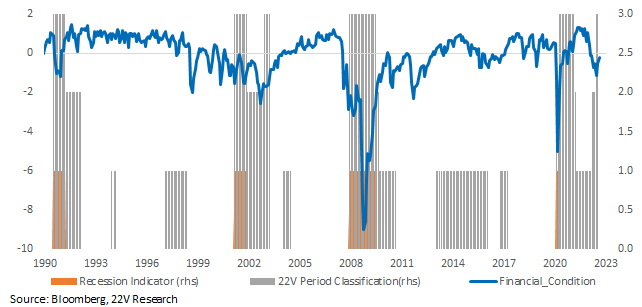
Keep in mind that financial conditions are one of the macro factors causing our Macro Regime Classification Model (whitepaper HERE) to signal the start of a recession. As expected, financial conditions usually tighten rapidly at the start of recessions.
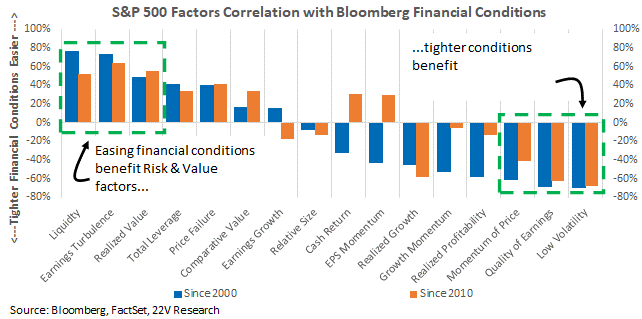
Low Volatility, Quality of Earnings, and Momentum of Price have been most negatively correlated with Bloomberg Financial Conditions (so they rise as conditions tighten) and should benefit more from the tightening while Liquidity, Earnings Turbulence and Realized Value are more likely to face headwinds.
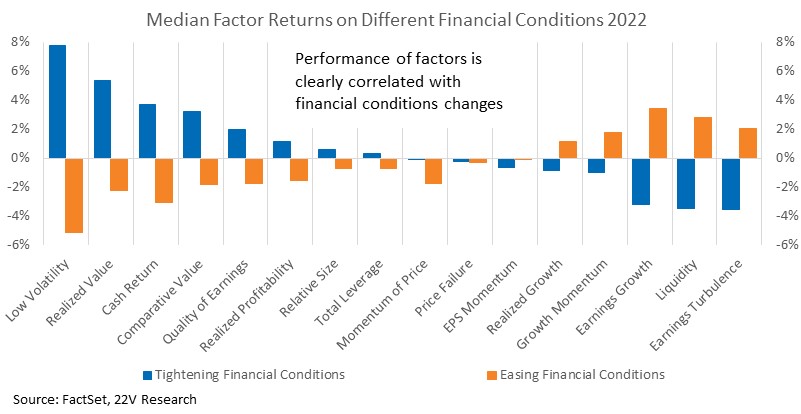
Factor performance trends have been highly influenced by shifts in financial conditions this year. In line with the historical correlation, Low Volatility and Quality of Earnings benefit from tightening financial conditions and Earnings Turbulence struggles. As we have noted, the style trade has been complicated this year by higher-than-normal return and rank correlations between Value and Growth. That helps explain the weak relationship between Value and shifts in financial conditions. Risk factors remain an easier way to play a potential retightening of financial conditions.
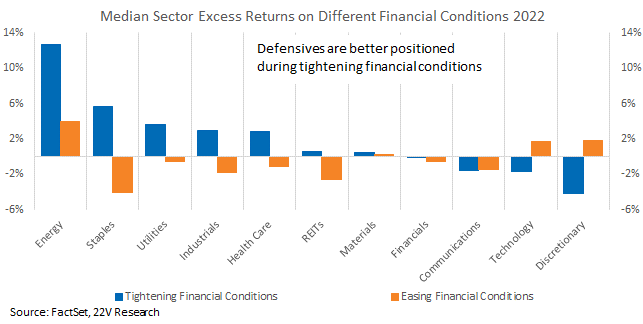
At the sector level, Energy has been the best performer during periods of both tightening and easing of financial conditions. Energy stocks remain HIGHLY correlated and macro influence, leaving them somewhat isolated from changing in financial conditions. Defensives are better positioned during tightening, especially for Staples, Utilities, and Health Care. Discretionary and Technology are the most vulnerable.
In line with the correlation historically and the factor return trend this year, we believe Low Volatility names will benefit the most while Earnings Turbulence names will face headwinds if Powell sounds a hawkish note at Jackson Hole. Below are the S&P names currently falling in top decile Low Volatility basket with relative low Earnings Turbulence exposure.