Bottom Line: Risk-On Positioning
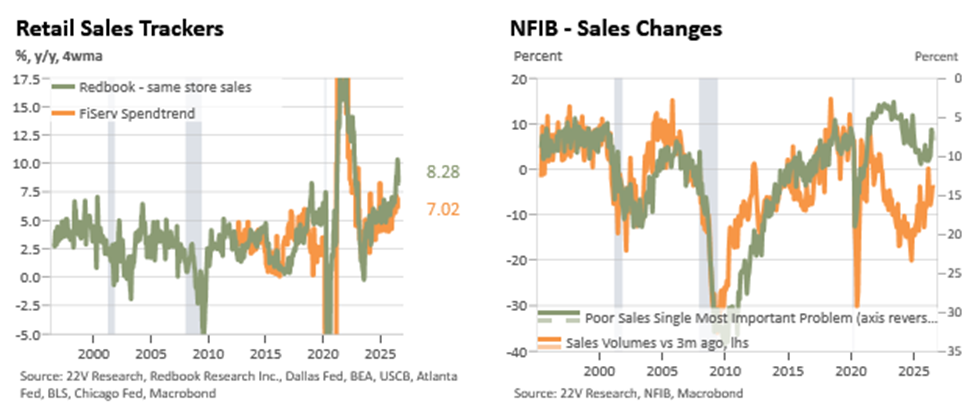
We are comfortable with risk-on positioning over the medium term, even if oil prices remain in the $90-100 range. The rest of the world is likely to bear the brunt of the slowing of economic growth to help reduce the strain of higher oil prices (HERE). The US economy WOULD slow some as another energy shock would not be offset by tax refunds. But the US is not as energy sensitive as the rest of the world, so the impact should be limited. Unless oil prices move well above $110. Also, the lower end consumer is improving now! The lower end of the K if you will. According to PNC Bank internal data, the labor market has been a larger offset for the lower end consumer to the energy shock than tax refunds.
Relevant News: CPI
July’s core CPI came in at 0.22% m/m sa, right in line with consensus expectations. The market response of a small dovish updating seems largely the right one but with PPI tomorrow and a nearly full round of August data to come before the September meeting there is plenty of data still to come. The labor market and strong growth and investment data are placing a high floor on rates, the question, at least for the foreseeable future, is if inflation will force the Fed to hike or not.
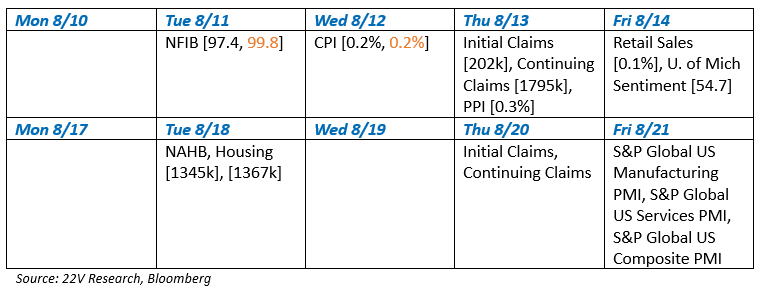
Things to Watch [Consensus, Results]:
Strategy:
More Durable Expansion Setting Up a More Positive Risk-On Skew– (HERE)
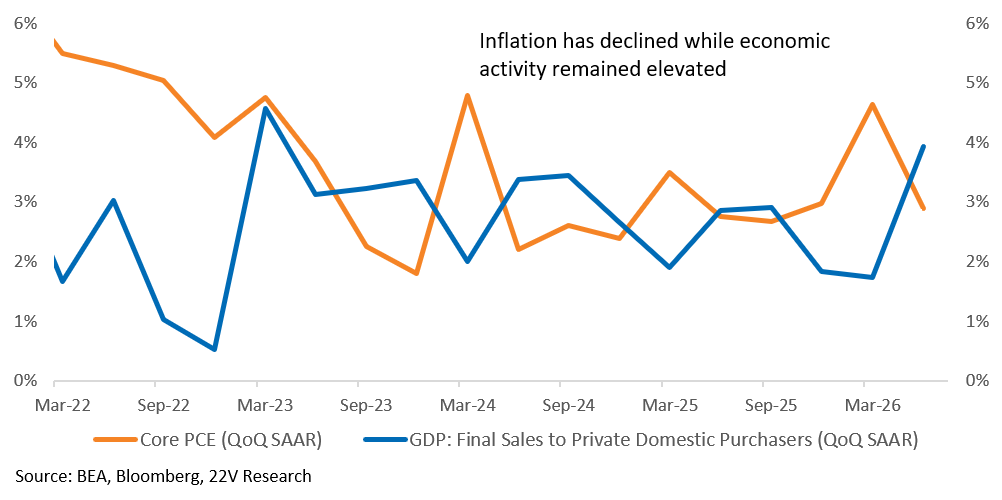
The medium-term case for additional tightening is less about any individual inflation print and more about the accumulating picture: unemployment running below the Fed’s own June forecasts, private final domestic demand still very strong, and rates that don’t yet appear to be doing much visible restraint in aggregate.
Data Infrastructure / Commodities:
Price Discovery in AI: Compute Futures Market Arrives – (HERE)
Compute futures are set to emerge as a significant new market for AI, providing both a price signal for investors and a scalable hedging tool for buyers and sellers of compute. CME will launch cash-settled H100 and B200 futures on October 5, with ICE/Ornn and Architect/Compute Desk expected to follow, while ICE/NATIVX is developing a broader compute-and-power product. We believe adoption could be substantial given the scale of AI infrastructure investment, with compute potentially developing into a major commodity market analogous to power or even oil. The key implications are improved price discovery, new financing and risk-management tools for neoclouds and data-center developers, and a new indicator for the AI capex trade, although index credibility, Nvidia-specific contracts, and rapidly changing GPU generations remain important challenges.
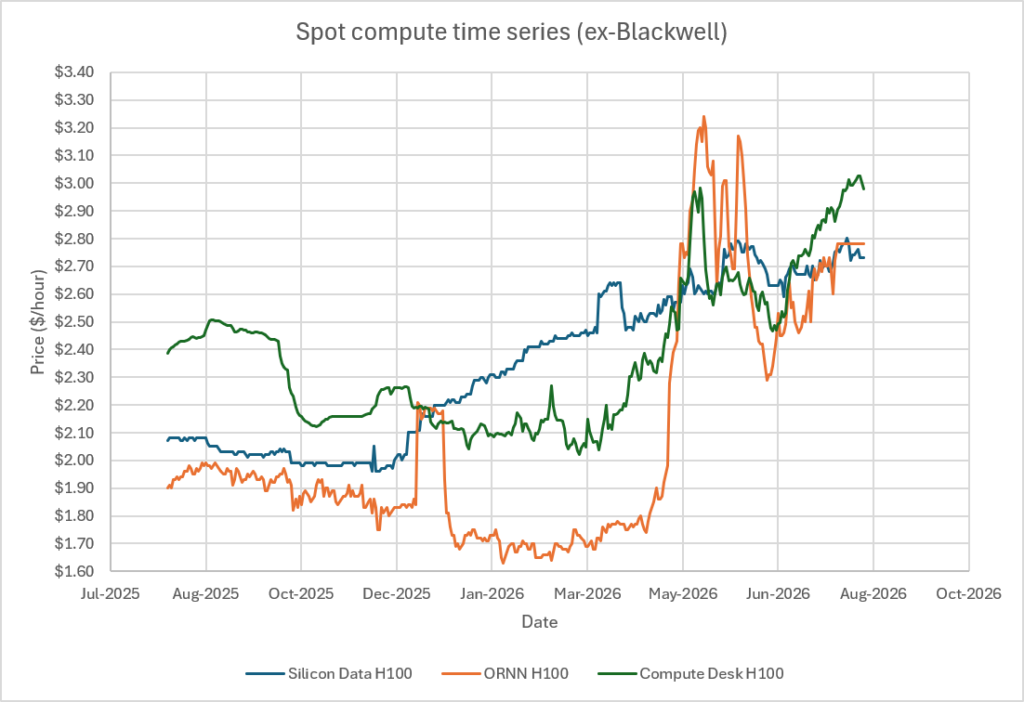 Source: Bloomberg; 22V Research
Economics:
The Latter Part of Earnings Season Continues the Strong Tone – (HERE)
Earnings season continues to point to a resilient and increasingly broad-based US expansion, with consumer spending remaining strong, lower- and middle-income households beginning to catch up with affluent consumers, and travel and leisure particularly robust. June spending appears to have been temporarily boosted by Prime Day and World Cup activity rather than signaling an unsustainable trend, while corporate sentiment, hiring intentions, capex, and business travel are gradually improving as tariff and geopolitical shocks fade. Perhaps most encouragingly, companies are spending less time discussing macro risks and more time on fundamentals, consistent with Carlyle’s proprietary data pointing to 2–2.5% real economic growth and roughly 6% corporate revenue growth.