SUMMARY: First, how DeepSeek news IS macro relevant IF the implications from the DeepSeek hype are to be believed. As Peter Williams pointed out in his 2025 outlook (HERE), “the AI boom is becoming more macro-relevant.” AI capex is significant, so the risk to capex and net worth (Nasdaq going down -10% or more) has implications for expected GDP growth. The bond market seems to be internalizing how risks to AI-related capex and net worth would slow economic growth. The potential for a shift lower in US GDP growth also impacts the USD (lower).
The USD losing ground is directly related to the US exceptionalism trade. The US Exceptionalism trade, as we understand it, is basically defined as long the USD, US large cap Tech, and S&P 100 companies in general. Value, deep cyclicals, and small caps are not considered part of the exceptionalism trade. This latter group benefits relatively.
It is possible to see a negative feedback loop of lower AI capex, downside risk to US economic growth, flatter yield curves (which have been a headwind to mega caps), and a stronger USD. AI capex is not a huge macro deal. Yes, GDP growth slows, but employment growth is firm, household balance sheets are strong, net worth is still +$50tril since Jan 2020. Slowing AI capex would impact market internals. Let’s see what some of the Mega Cap companies say about AI capex this week.

As we noted in the Weekly yesterday (HERE), there is more downside risk to 10yr yields than we previously thought, even without considering AI capex risk. Disinflation is still happening alongside VERY firm demand growth. Longer-term, demand growth is likely to cool organically – meaning without a nudge from the Fed – as slower population growth reduces potential GDP. This adds more downside risk to 10yr yields, WITHOUT RECESSION RISK INCREASING, than we previously thought.
The housing/durable goods sector, which has lagged as 10yr yields increased, would benefit relative. Debt risk names will benefit. Cheaper AI tools should not have a negative impact on credit risk. Hence long debt risk names.
AI Webinar Notes & The Direction of Travel Seems Pretty Clear – We have done multiple webinars with Sultan Meghji, co-founder and CEO of AI Pioneer Frontier Foundry, on the risk to high-powered GPUs. Sultans main point is not exactly in line with the DeepSeek news (and things can change quickly), but the direction of travel is the same. As businesses adopt localized AI models with narrow processes that are specific to their use cases, the need for high-powered GPUs will diminish, cutting costs and boosting internal efficiency, allowing companies to see positive ROIs. The good news is the average company should benefit from AI tools and see higher ROI as the costs come down. The bad news, some mega cap stocks are likely to see a lower return on current capex. You can learn more HERE and HERE.
Full report below…
MARKET VIEWS: 10yr Yields are down significantly on the DeepSeek news and the related -4.5% decline in Nasdaq futures. As Peter Williams pointed out in his 2025 outlook (HERE), “the AI boom is becoming more macro-relevant. With capex numbers growing rapidly and expectations for future earnings moving higher and higher, along with their contributions to overall wealth gains, the boom is primed to be a key contributor to growth and growth risks.” The bond market seems to be internalizing the idea that a sharp decline in AI-related capex and some hit to net worth would slow economic growth.
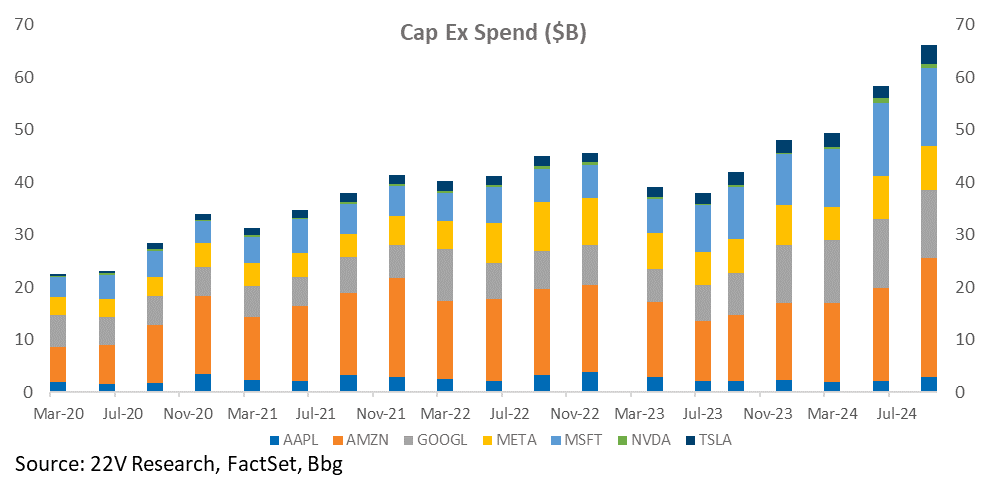
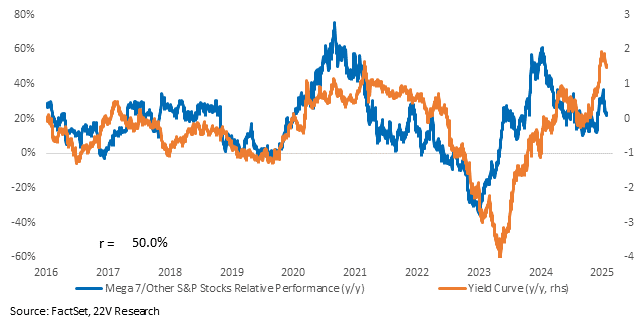
The risk to capex and net worth, which again has implications for expected GDP growth, favors a flatter yield curve. Flatter yield curves have been a headwind for mega-cap stocks. One of our calls to start 2025 was that the aggressive yield curve steepening at the end of 2024, which benefitted mega-caps, would slow. We did not expect a significant risk to AI related capex expectations, though. A negative feedback loop of AI capex lower, downside risk to economic growth, and flatter yield curves is POSSIBLE NOW. Let’s see what companies say about AI capex this week.
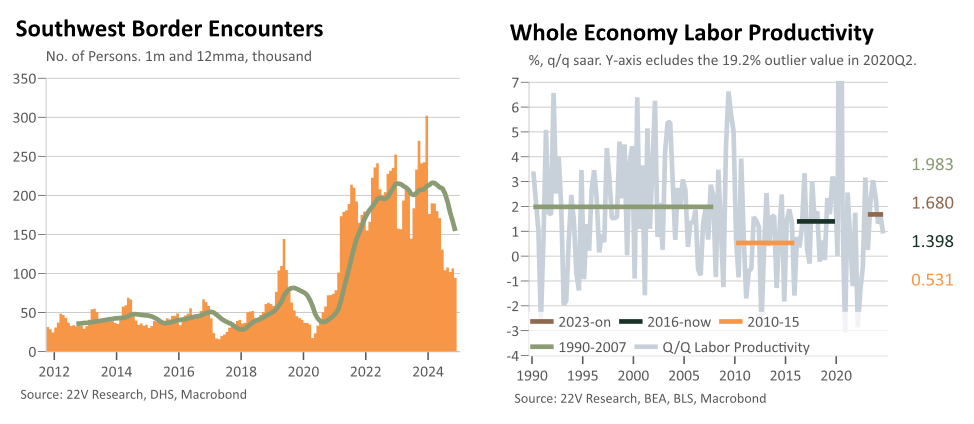
In the category of better lucky than good, we highlighted in our Weekly Report yesterday that the skew around 10yr yields was changing. There is more downside risk to 10yr yields. In short, disinflation is still happening with VERY firm demand growth. And longer term, demand growth seems likely to cool on its own – that is, without a nudge from the Fed – as slower population growth reduces potential GDP growth. This changes the skew around 10yr yields. There is more downside risk to 10yr yields, WITHOUT RECESSION RISK INCREASING, than we previously thought.
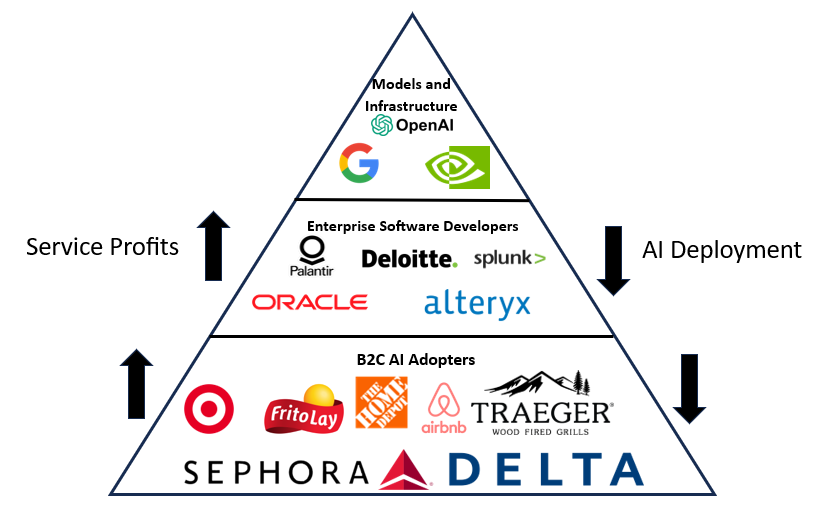
More On AI – We are not experts on AI and especially not the impact of DeepSeek, but we have done multiple webinars with Sultan Meghji, co-founder and CEO of AI Pioneer Frontier Foundry, on the risk to high-powered GPUs. Sultans main point is not exactly in line with the DeepSeek news overnight, but the direction of travel is the same. In short, the idea is as businesses adopt localized AI models with narrow processes that are specific to their use cases, the need for high-powered GPUs will diminish over time, cutting costs and boosting internal efficiency, allowing companies to see positive ROIs. The good news is the average company should benefit from AI tools and see higher ROI as the costs come down. The bad news, some mega-cap stocks are likely to see a lower return on investment. You can learn more HERE and HERE. What the chart below is attempting to show is that among non-tech companies, the smaller, “more nimble,” companies that can apply AI agents will begin to outcompete larger firms within their sector.
Source: 22V Research
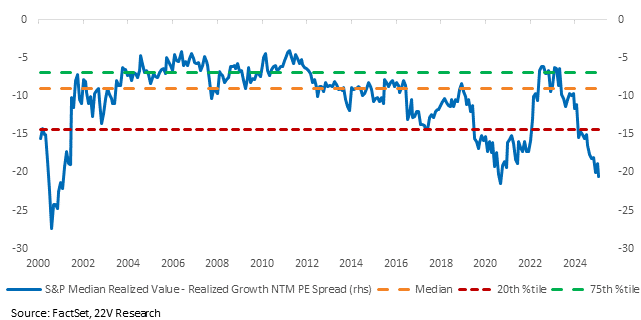
We will see how DeepSeek plays out, but the direction of travel, cheaper but just as efficient, on AI tools seems clear. We are not short mega-cap stocks. We never made that call. But we do think Small caps outperform, and the index broadens out. Today’s news favors that. It also favors the Value factor and Deeper Cyclicals (Energy, Industrial, Materials) relative. Value vs Growth NTM PE spread is becoming more interesting.
Something to keep in mind, if financial conditions tighten with stocks moving lower, that will likely be offset with lower 10yr yields and a lower expected fed funds rate. The housing/durable goods sector, which has lagged as 10yr yields increased, would benefit relative. Debt risk names will benefit. Our assumption is that credit risk doesn’t increase much because AI tools are getting cheaper. Hence, the point that debt risk would work relatively.
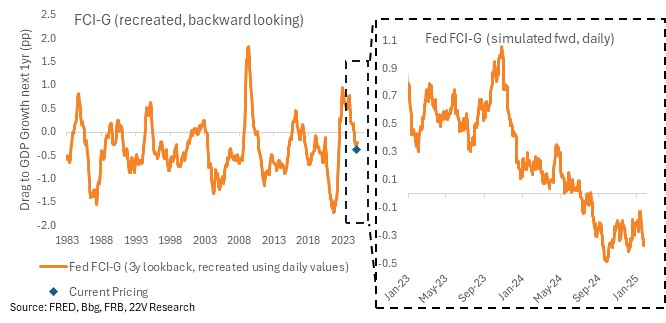
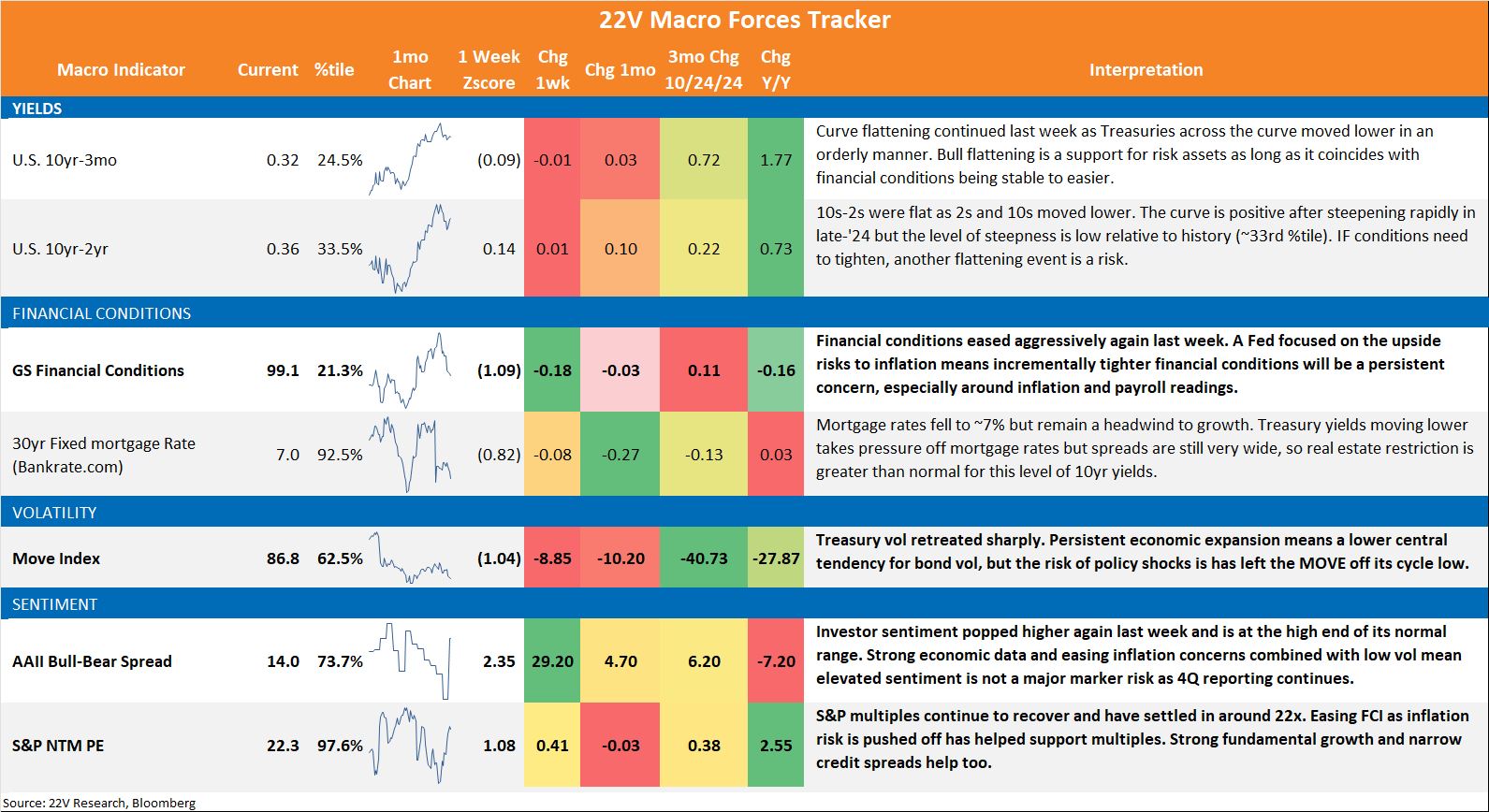
Macro Tracker: Treasuries were stable last week but financial conditions eased materially as spreads narrowed, volatility declined, and stocks moved higher again. Even though the macro backdrop firmed and risk-off factors lagged, market internals collectively were risk averse. Gains were skewed toward Momentum, Size, and Reversals. Reversal is consistent with the reduction in the risk of higher inflation/tighter financial conditions. Better housing data confirmed the easing of core inflation trends, further reducing the risk that the Fed will need to tighten conditions. Treasury yields have moved lower as a result, reducing credit market pressures. The preference for Momentum and Size and the lack of a clear risk-on trend indicate hesitancy to fully embrace risk. Some of that can be chalked up to earning season, which will accelerate over the coming week. There are also lingering concerns about tariffs and the Trump administration’s fiscal priorities. Those latter concerns are likely to be a persistent and unpredictable source of volatility.