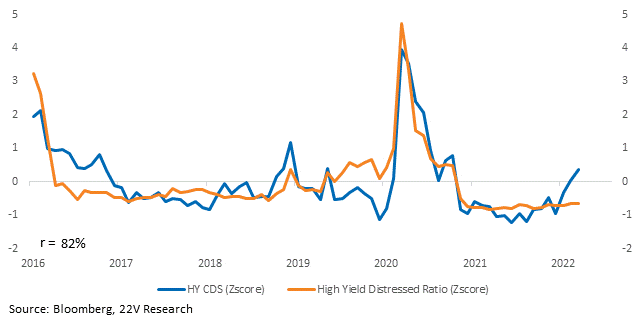
SUMMARY: US 10yr yields have moved significantly higher since last Friday’s low (1.72 on 3/4 to 1.9 today) and Cyclicals outperformed yesterday. We don’t have a good reason as to why, but no NEW significantly negative catalyst is a universally negative sounding backdrop is likely helping. Keep this in mind though. Steep inversions in many commodity curves could signal demand destruction OR some discounting of a less volatile situation and less intense supply constraints longer term. Everyone seems to be focused on the demand destruction part, but 10yr UST yields, 2yr yields, and default risk in general don’t reflect increased demand destruction risk. If the commodity price spike doesn’t lead to a recession, the historically high implied cash return yield on stocks is an important support for the S&P.
As we noted over the last few days and in a Quant report this morning, the backdrop for Value is much less interesting today. Growth should outperform some, but thinking in terms of Volatility and Quality of Earnings is more important now. Sectors and Industry groups with Low vol and high quality of earnings are industry groups to focus on, longer term, as financial conditions tighten.
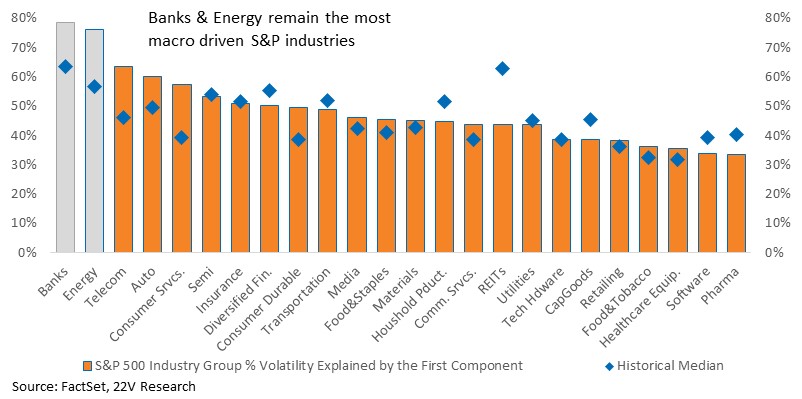
Short term, sensitivity to macro trends is more important than factor calls. Currently Banks and Energy names have the highest IPC, a proxy for macro influence, of any S&P industry group. Banks, regardless of their factor exposure, tend to follow interest rate trends and changes in the Treasury curve. Energy names track shifts in oil prices. Macro influence will remain high for those sectors and the rule of thumb on the macro backdrop now should be 1) in a “peaceful” resolution, rates are likely going higher (favors banks) and oil prices lower (Energy underperforms) and 2) in the not peaceful scenario, demand destruction gets fully priced in and rates are going lower. That is bad for Banks. Eventually it would be bad for Energy when the actual demand destruction happens.
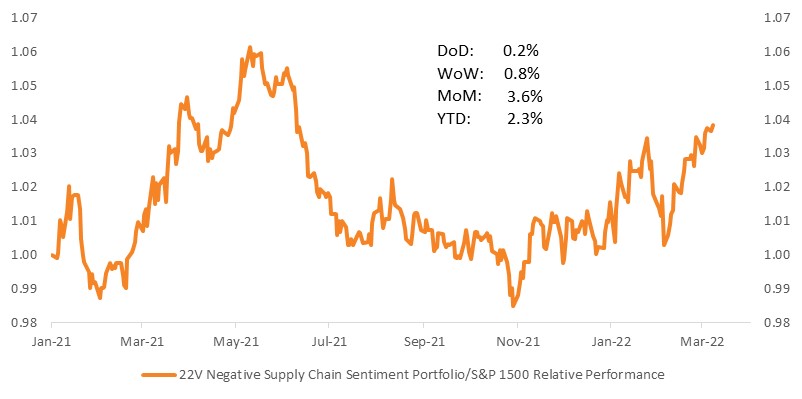
In the body of report we highlight some interesting dynamics in Tech with regards to the Value vs Growth PE spread (NTM PE spread between Tech Realized Value and Realized Growth has rebounded from 16 year low, to its 92nd percentile) and the very strong performance of one of our favorite thematic baskets. Companies that benefit from improving supply chains (rebalanced on Monday). We remain focused on thematic calls vs most factor and broad industry group trades. Those will be tough until the war situation clears up some.
Full report below…
MARKET VIEWS: Steep inversions in many commodity curves could signal demand destruction OR some discounting of a less volatile situation and less intense supply constraints longer term. Everyone seems to be focused on the demand destruction part, but 10yr UST yields, 2yr yields and default risk generally are not currently forecasting demand destruction. And if the commodity price spike doesn’t lead to a recession, the historically high implied cash return yield on stocks is an important support for the S&P.
Value got off to a strong start this year (lasted through early Feb) as investors focused on strong economic activity and rising real rates. Even as Fed rhetoric became more aggressively about tightening financial conditions, the increase in implied real yields supported a Value rotation. The war has led to a disorderly tightening of financial conditions (through vol and lower asset prices, not rate hikes), and market internals reflect that regime shift. Even before the war, high inflation and strong growth were creating the conditions that would require the Fed to significantly tighten financial conditions to slow growth. A resolution to the current conflict should bring a short reprieve from the rapid de-risking of the past few weeks, but the need for tighter financial conditions and slower growth remains.
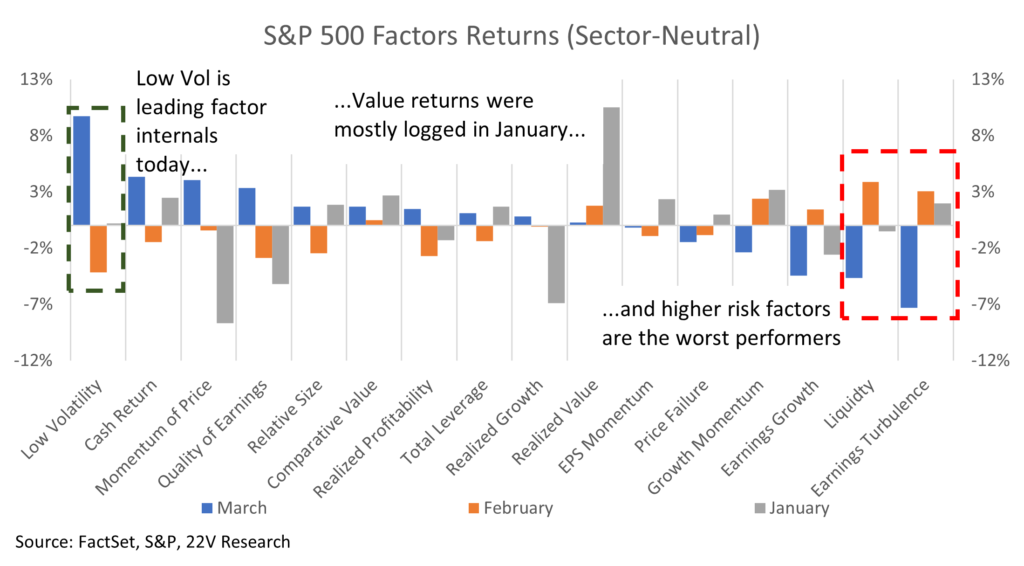
Bottom line, the backdrop for Value is much less interesting now, but we also shouldn’t expect a surge in Growth. Yes, Growth should outperform some, but thinking in terms of Volatility and Quality of Earnings is more important today. Sectors and Industry groups with Low vol and high quality of earnings are industry groups to focus on, longer term, as financial conditions tighten. Interesting that Retailing shows up in Low Vol and high Quality of Earnings. Something to think about if oil prices move lower.
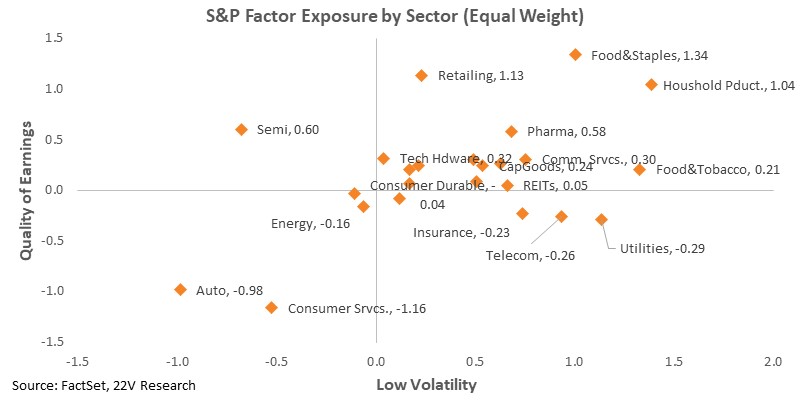
Today, more important than specific factor rotations is industry groups sensitivity to macro shocks. Currently Banks and Energy have the highest IPC, a proxy for macro influence, of any S&P industry groups. Banks, regardless of their factor exposure, tend to follow interest rate trends and changes in the Treasury curve. Energy names track shifts in oil prices. The macro influence will remain high for those sectors and the rule of thumb on the macro backdrop now should be in a “peaceful” resolution, rates are likely going higher (favors banks) and oil prices lower (Energy underperforms) and in the none peaceful scenario, demand destruction gets fully priced in and rates are going lower. That is bad for banks. Eventually it would be bad for Energy as well when the actual demand destruction happens.

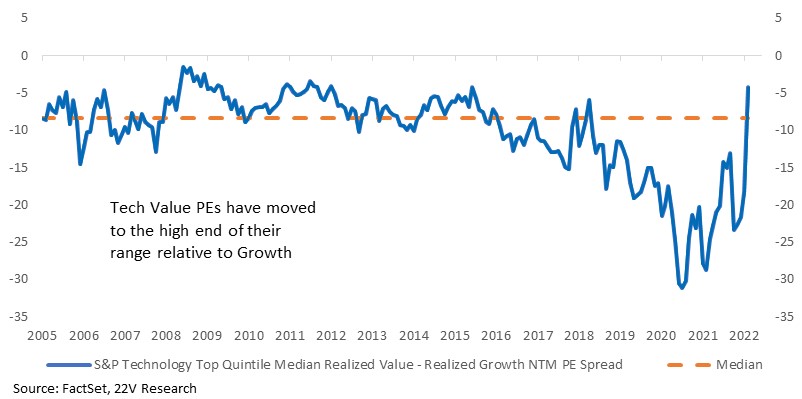
Growth Vs Value Tech: We highlighted this in the Quant report today, but within the Tech sector, Growth’s relative valuation has become more compelling. Since October last year, the median NTM PE spread between Tech Realized Value and Realized Growth has rebounded from a 16-year low, to its 92nd percentile. Many parts of Growth Tech will still face headwinds from a tighter financial conditions backdrop, which is why the focus should be on Quality Growth, not just Growth across the board.
Thematic Update: Value relative to Growth is tricky and gauging risk-on vs risk-off sentiment as it relates to the war is incredibly hard. That is why we remain focused on our thematic portfolios. The portfolio of companies that benefit from improving supply chains continues to outperform significantly. We did a deeper dive and rebalance of the improving supply chain portfolio in a Quant report on Monday.