Even pre-war, the shift in central bank policy and high inflation were weighing on risk appetites encouraging a rotation into low volatility/quality factors. Today, market volatility is being driven by entirely unpredictable events today, and that will remain true until there is some near-term resolution to the war in Ukraine. Into that backdrop, we continue to recommend aligning portfolios to enduring themes – tightening financial conditions, rising real short rates, and easing of supply chain bottlenecks – and factors that are benefit from tightening of financial conditions.
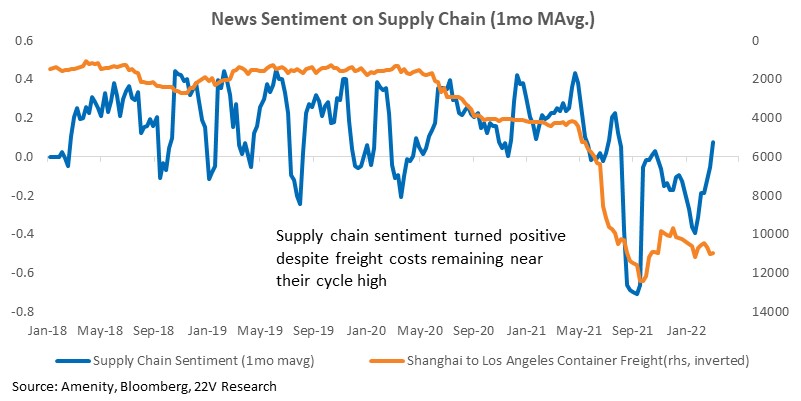
Since last year, we have been using the Amenity natural language processing tool to monitor supply chain sentiment across two fronts. The first is news sentiment. So far though, supply chain news sentiment has continued to rebound, turning positive again, even as freight prices have turned higher. Russia’s war in Ukraine and the West’s response of escalating sanctions risks exacerbating some pre-invasion supply bottlenecks, but broad sentiment continues to improve.
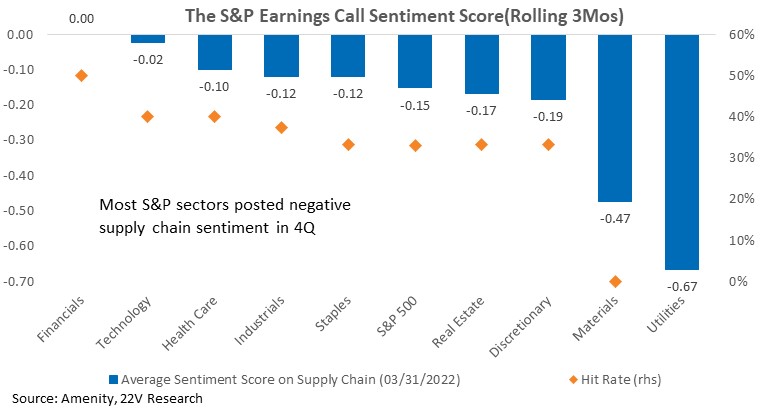
Our second tracker is management sentiment toward supply chains. Within the S&P, management sentiment toward supply chains remains negative. That is true across most sectors as well, except Financials.
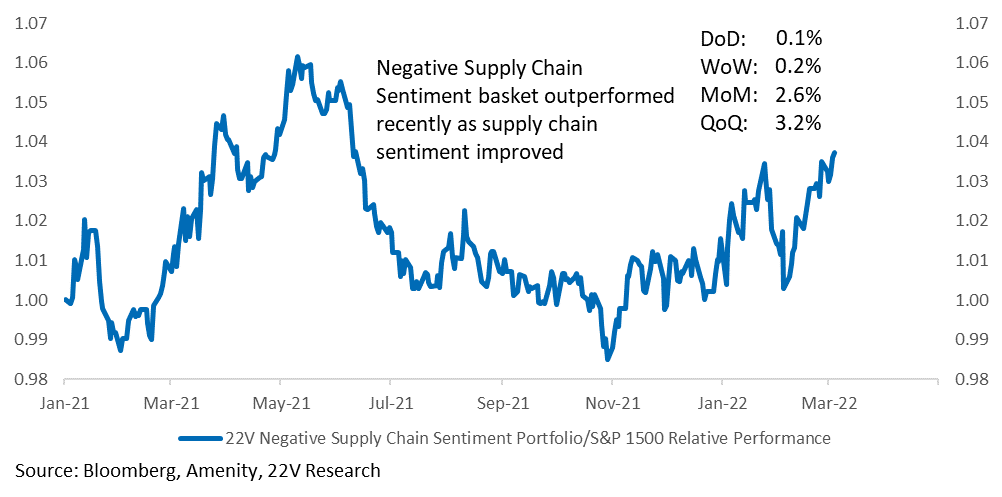
But investors continue to discount better supply chain news ahead. Our portfolio of stocks with the most negative supply chain sentiment, meant to track changes in investor expectations about supply risks, is outperforming. Lost in war headlines is the receding of COVID headwinds across most of world (Hong Kong a noticeable outlier) helping ease supply constraints. The path of the war defies prediction, but further easing of supply bottlenecks would support a further rebound by the names in our portfolio.
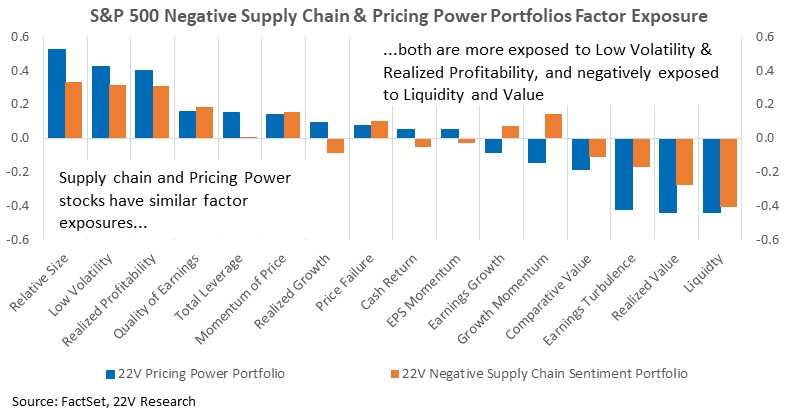
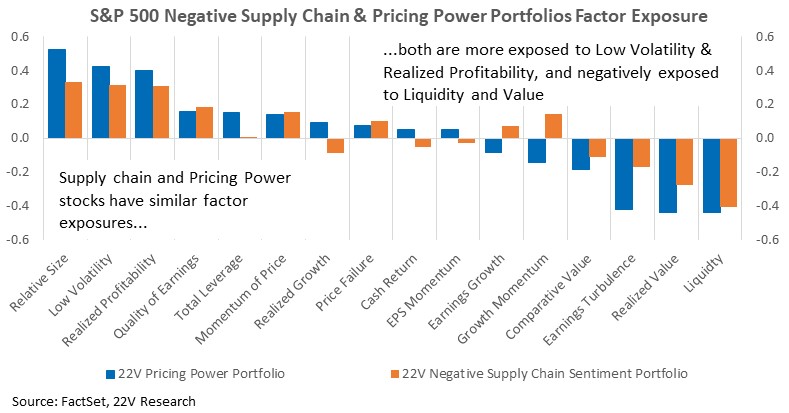
Our portfolio has benefited from its factor composition, which has similar exposures as our Pricing Power Sentiment basket. The Negative Supply Chain Sentiment portfolio is positively correlated with Low Volatility, Realized Profitability and Quality of Earnings, and negatively correlated with Liquidity, Realized Value and Earnings Turbulence. Those are all factors that tend to benefit from a tightening of financial conditions, a trend we expect to continue throughout the year.
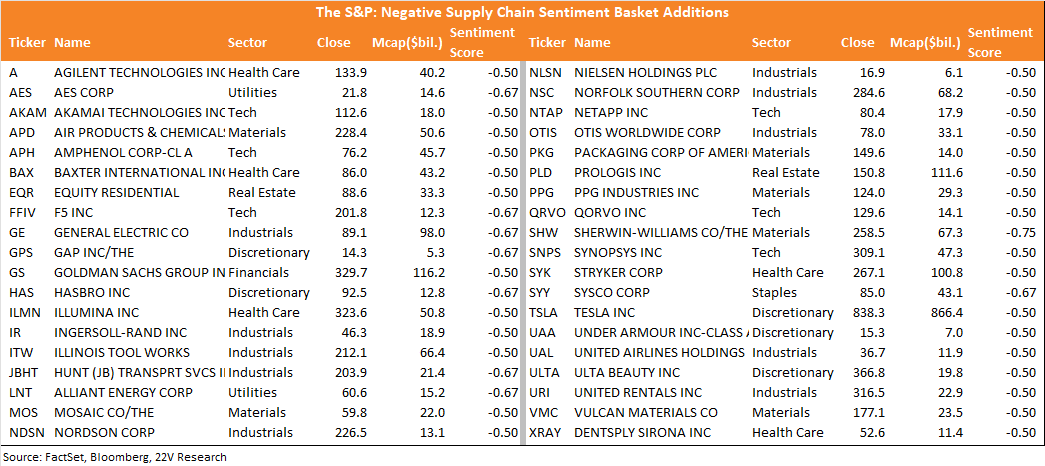
At the end of the report, we list the new names falling in the negative supply chain sentiment basket this quarter. Email us for a complete list of constituents.
Rebalancing Negative Supply Chain Sentiment Basket: Since last year we have been using the Amenity natural language processing tool to monitor supply chain sentiment across two fronts. The first is news sentiment. Russia’s war in Ukraine and the West’s response of escalating sanctions risks exacerbating pre-invasion supply bottlenecks. So far though, supply chain news sentiment has continued to rebound, turning positive again, even as freight prices have turned higher.
Our second tracker is a portfolio of stocks with the most negative supply chain sentiment, meant to track changes in investor expectations about supply risks. Our Negative Supply Chain sentiment portfolio has outperformed MoM and QoQ. Though lost in war headlines, COVID headwinds have receded across most of world, helping ease supply constraints. The path of the war defies prediction, but further easing of supply bottlenecks would support a further rebound by the names in our portfolio.
At the factor level, our Negative Supply Chain portfolio has a similar exposure as our Pricing Power Sentiment basket. The portfolio is positively correlated with Low Volatility, Realized Profitability and Quality of Earnings, and negatively correlated with Liquidity, Realized Value and Earnings Turbulence. Those happen to be factors that tend to benefit from a tightening of financial conditions, a trend we expect to continue throughout the year.
4Q sentiment readings indicate there are some risks to a continued rebound in these names. Even as supply chain news sentiment has improved, the S&P management sentiment toward supply chains remains negative. Most sectors have negative supply chain sentiment except Financials.
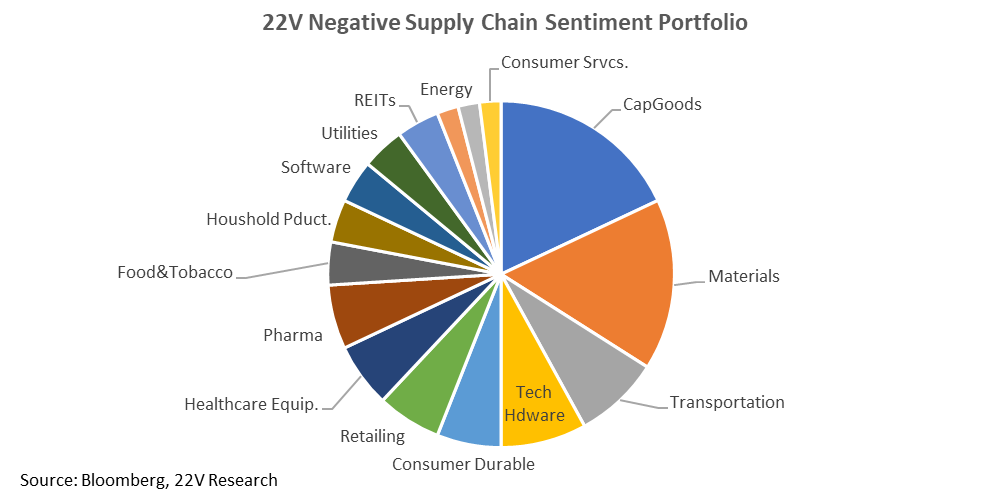
Capital Goods, Materials, and Transportation are largest industry weights within the portfolio. The portfolio is diversified among industry groups, but is more exposed to Cyclicals than Defensives.
Below we list the new names added to our Negative Supply Chain Sentiment portfolio. These names are showing negative supply chain sentiment during their latest earnings releases. These are the new names we would focus on as supply chain sentiment improved and the issue alleviated. Email us for a complete list of constituents.