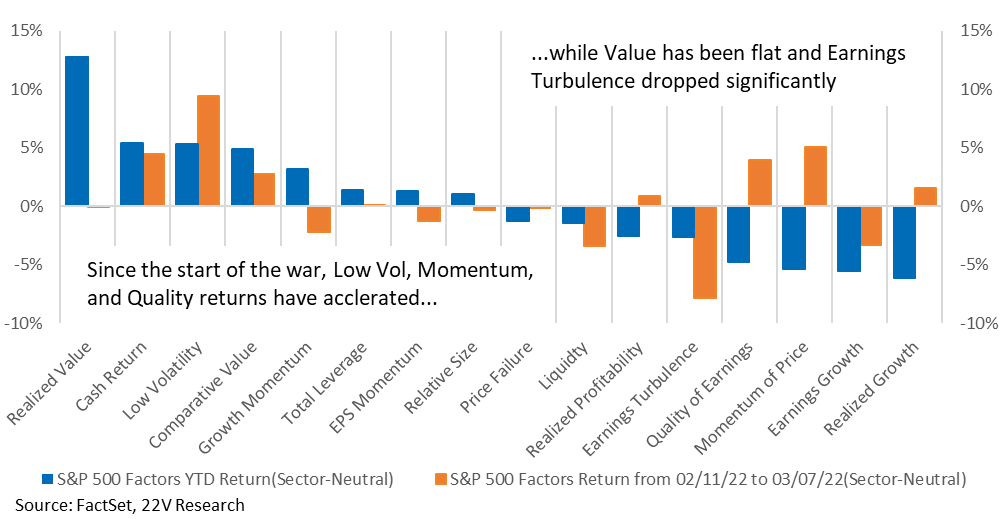
Value has been the best performing factor this year with Realized Value gaining 12.8% YTD. But nearly all that performance came in January before rising inflation expectations started to push implied real yields lower. Realized Growth, which has been the worst performing factor YTD, has stabilized on increasing concerns about an inflation/war/central bank tightening slowing of growth.
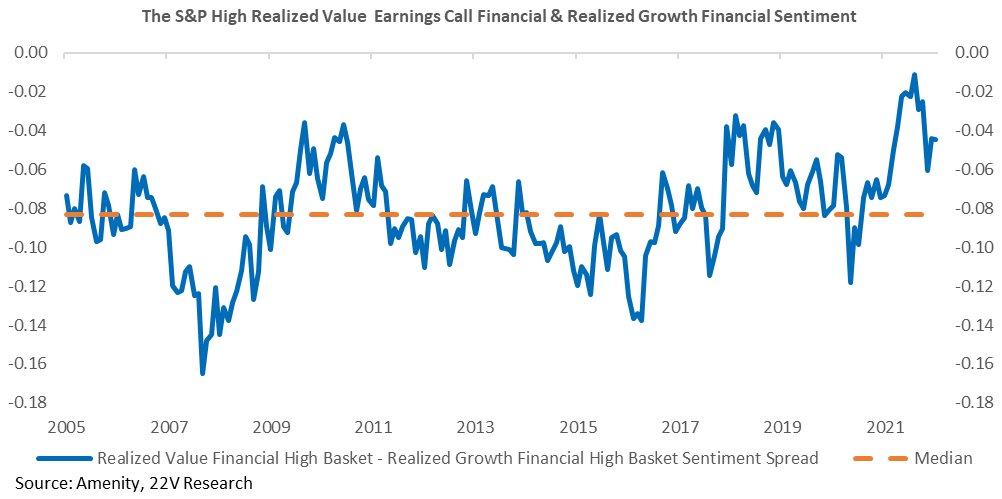
Along with the shift in the macro backdrop, the overall attractiveness of Value, particularly relative to Growth, has deteriorated. Value’s rally closed the wide Value-Growth NTM PE spread from the start of the year, especially within Technology. The Financial sentiment spread between Value and Growth, a measure of how positive corporate managers are about future earnings and business, also deteriorated after reaching an all-time high in late-21’.
Financial conditions have tightened significantly since the War, helping explain the rebound of Growth at the expense of Value. Historically, there is a positive correlation between Realized Value/Realized Growth performance and Bloomberg Financial Conditions index. Tighter financial conditions = Growth outperforming Value.

Inflation expectations have shot higher on rising commodity prices while labor markets remain tight and growth strong. Fed officials have not signaled a change in their tightening bias. Even with the S&P down nearly -13% YTD, investors are still pricing in a rate hike at the next FOMC meeting (March 16th). As we noted at the end of January, before the war accelerated the tightening of financial conditions, that backdrop favors Value over Growth.
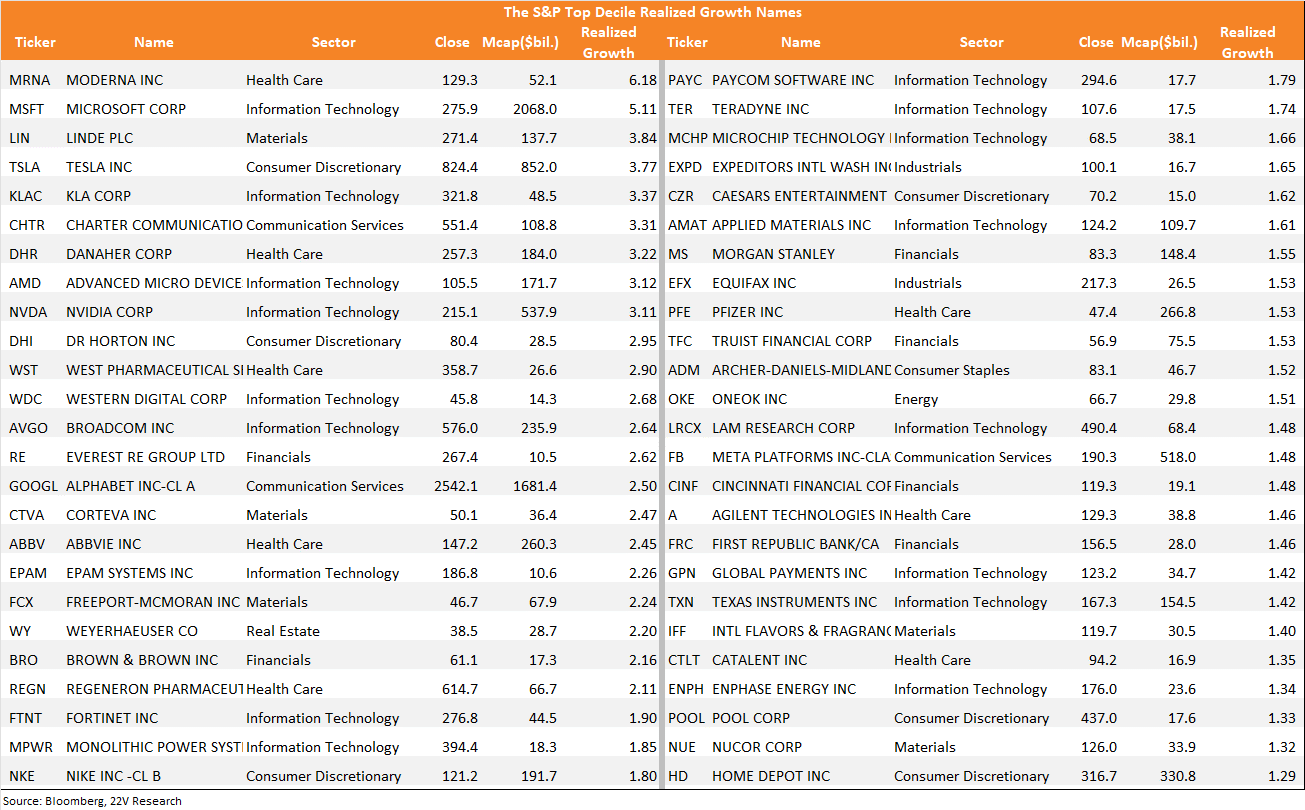
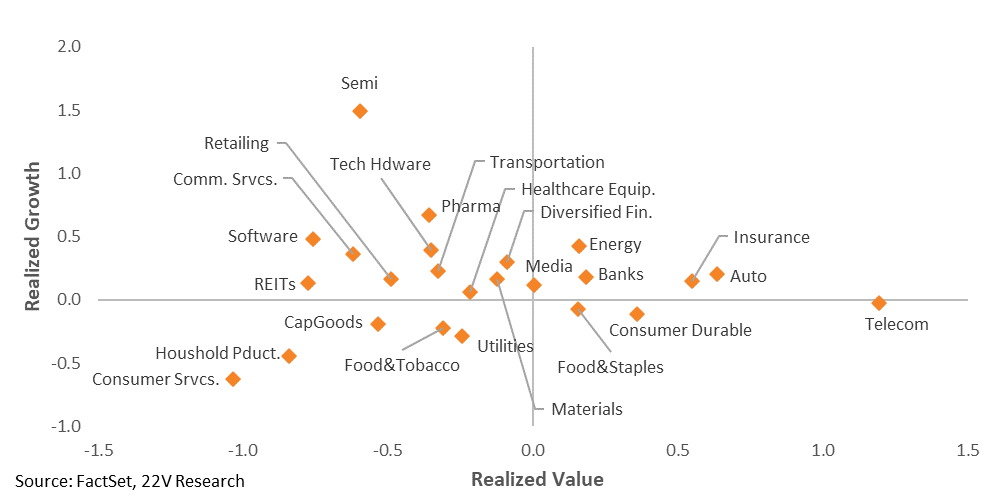
Today there are more industry groups falling into a high Growth and low Value basket. Semis are the group with the most exposure to Realize Growth while Telecom is most exposed to Realized Value. Industry groups with high Realized Growth and low Realized Value exposure are best aligned to today’s evolving regime. We list the current decile of high Realized Growth S&P names at the end of this report.
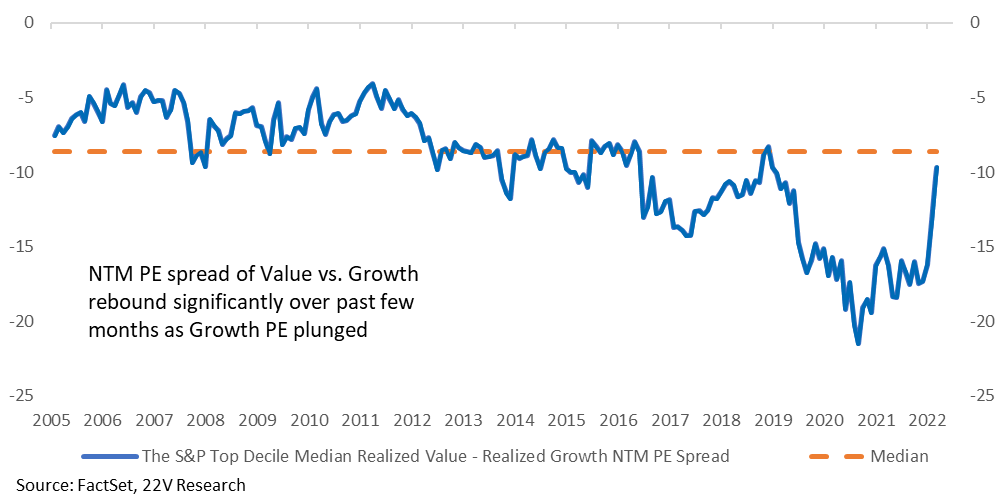
Mounting Value Headwinds: At the start of the year, Value enjoyed multiple macro tailwinds and was significantly undervalued relative to Growth. Since then, the S&P has fallen -13% YTD, led lower by Cyclical sectors, and the valuation of Growth names relative to Value has fallen back to its median level. Growth Valuations are not particularly compelling, but Value has clearly lost its low PE edge.
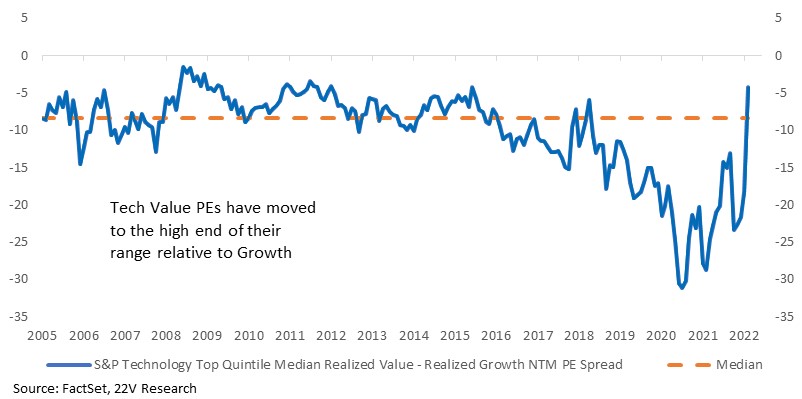
Within the Tech sector, Growth’s relative valuation has become more compelling. Since October last year, the median NTM PE spread between Tech Realized Value and Realized Growth has rebounded from 16 year low, to its 92nd percentile. As investors discount a further tightening of Financial conditions, Tech will have a fundamental tailwind.
In addition to the narrowing of its valuation spread, Growth sentiment has improved relative to Value. Average management toward Financials, measured using the Amenity natural language processing tool, still favors Value names, but the spread to Growth has narrowed. As the Fed pushes rates higher to slow inflation, top line growth and profitability will come under increasing pressure. Companies with stronger fundamentals benefit from that trend.
Russia’s war with Ukraine has rattled markets, driving asset price volatility higher and causing a sudden tightening of financial conditions. At the same time, a flight to quality and increasing inflation expectations have pushed implied real yields lower. Factor performance has been increasingly correlated with changes in financial conditions. The Fed is expected to start its rate hiking cycle this March as inflation continues to climb. Even if war tensions ease, central banks will continue to pursue tighter financial conditions. The positive correlation between Realized Value/Realized Growth and Bloomberg Financial Condition suggests that tightening financial will benefit Growth at the expense of Value.
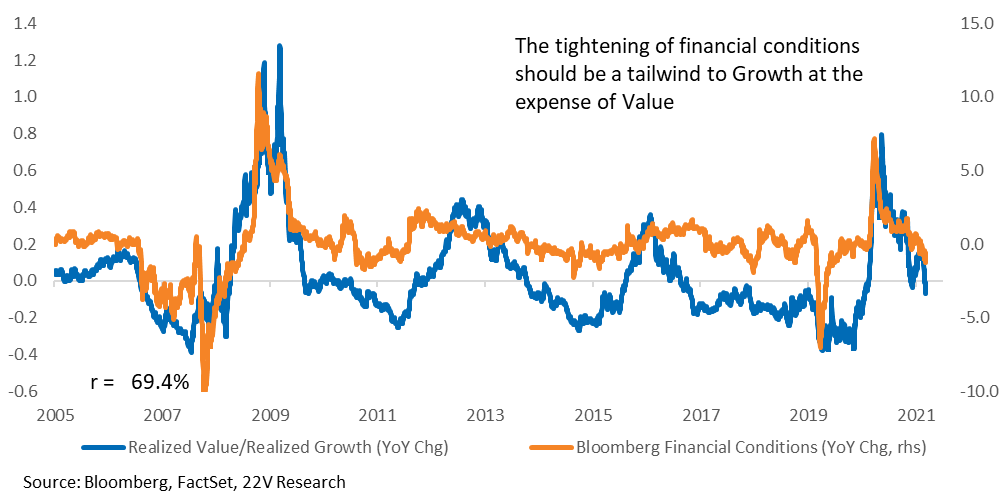
Since the start of the war, Realized Value returns have reversed Realized Growth returns have firmed, and Low Volatility/Quality stocks have rallied. Beyond the firming of Growth relative to Value, while investors are discounting tighter financial conditions, Low Volatility and Quality exposure at the stock, industry group, and portfolio level.
Today there have been more industry groups falling into high Growth and low Value basket. Semis has the most exposure to Realize Growth while Telecom most exposes to Realized Value. Industry groups with a high Realized Growth and low Realized Value exposure should be more benefited and likely to outperform.
Below are the S&P names falling in the Realized Growth basket. Expected tightening financial conditions should be a tailwind to the names.