
Our entire repository of COVID charts is HERE.
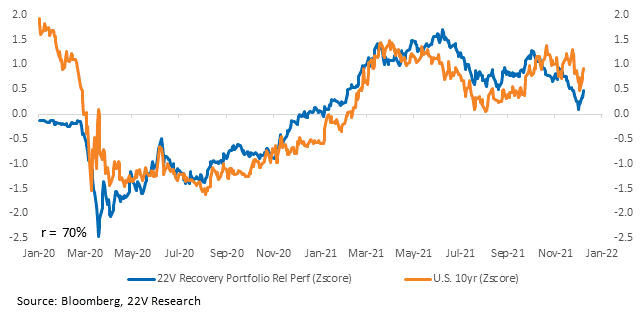
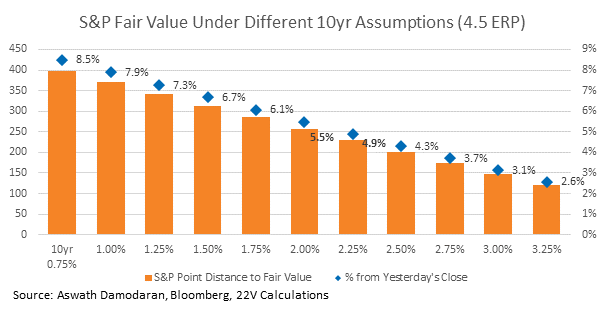
Starting with the news everyone knows: Pfizer’s early findings indicate a booster shot helps against Omicron. Boosters increases antibody response to Omicron 25-fold compared to two doses, while two doses may still prove effective protecting against severe illness. We still do not have a percentage estimate of efficacy. Our two cents is that investors expect ~50-60. Higher would be a tailwind to 10yr yields. FYI, fair value for the S&P implies upside for the index even if the 10yr were to increase to 3.25% (above the maximum estimate in the Blue Chip consensus for 2022 or 2.8%). Higher yields are not a risk for the index.
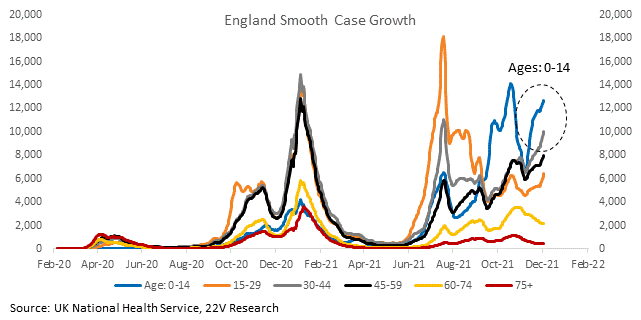
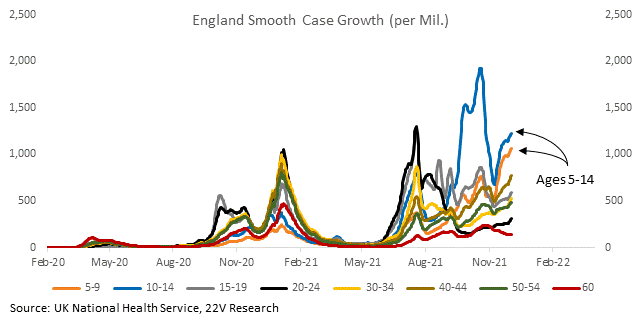
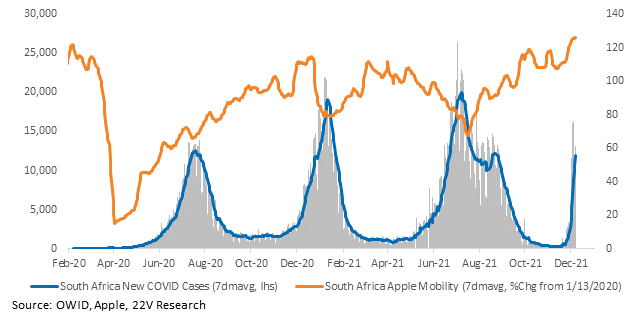
On Monday we warned against extrapolating a dynamic situation in one province of South Africa to the rest of the world. We still caution against extrapolating to the U.S., but other countries – like the UK – are better comparisons. We’re dedicating today’s report to the UK because Omicron is on the rise three, it’s more similar to the U.S., and because the UK is making headlines by once again entertaining partial lockdowns. Specifically, the government is set to announce vaccine mandates for large events and work-from-home orders. The incidence of Omicron in the UK is rising; the percentage of sequenced cases that are Omicron is up over 5% (the rest are Delta). The latest data available is for 12/4.

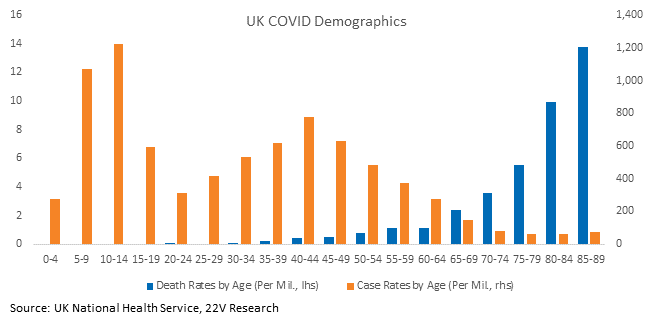
Case growth and case growth rates are once again concentrated in the youth. The rate of cases per million in ages 5-9 is up +12.6% and 10-14 is up +6.7% since 11/24 (the first sequenced date). Case growth rates are also increasing in middle-aged cohorts. But growth rates are not higher in 60+, who are the most at-risk. It’s early, so we will monitor case growth jumping to older cohorts. This data is as of 12/4 as well.
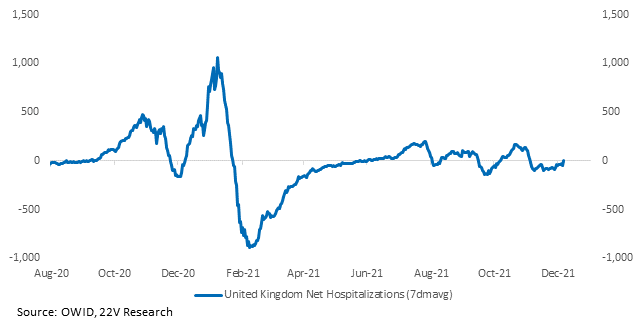
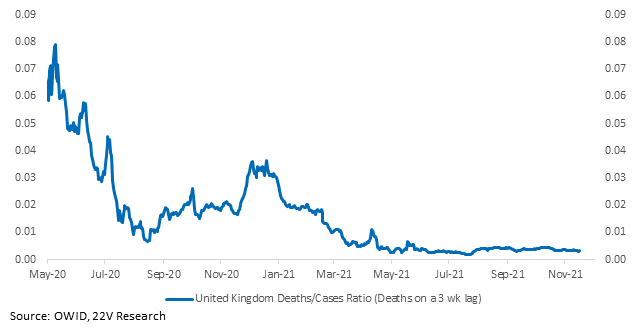
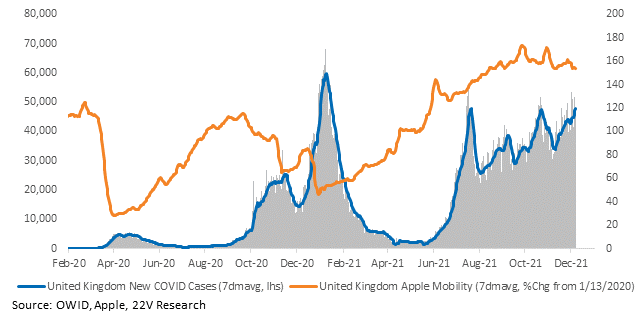
Hospitalizations lag cases by ~1 week and deaths lag by ~3 weeks. So, current hospitalization and death data isn’t helpful towards assessing Omicron. It is useful to note though that net hospitalizations and deaths/cases stayed low during the Delta wave relative to prior waves. If severity is indeed lower than in Delta, as early data suggests and officials have seemingly embraced, that bodes well for hospital capacity as long as case growth doesn’t accelerate to the point that hospitalizations overwhelm despite lower severity.
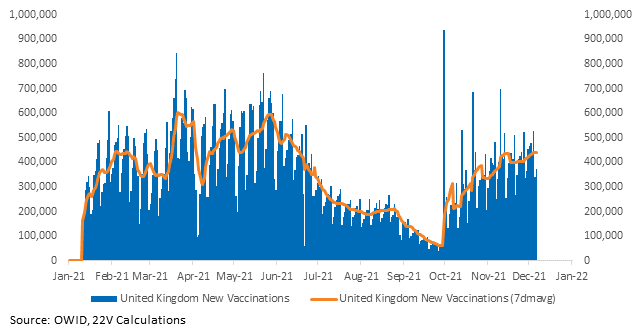
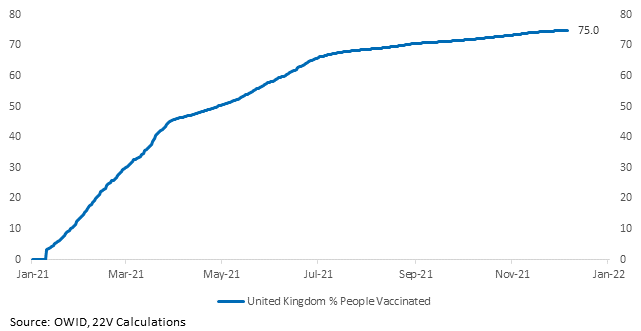
75% of the population in the UK have been vaccinated. Daily vaccinations are increasing as the UK rolls out booster shots. 20 million boosters have already been administered.
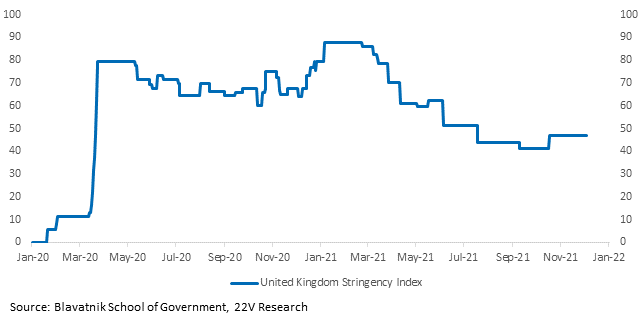
Stringency indices remain much lower than 2020 and early 2021. Mobility is still high as well. Activity is likely to remain elevated and the economic impact minimal as long as severity is low and case growth doesn’t accelerate out of control.
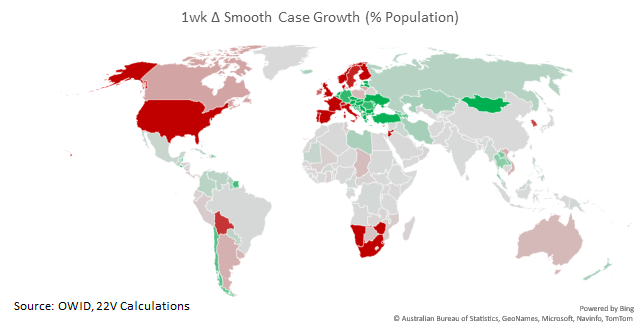
Globally, case growth is increasing in Europe, Africa, and the U.S. We detailed the U.S. in yesterday’s report (see HERE).
Charts for every country and state we have data for are HERE.

