Bottom Line: Fade the Low Earnings Vol or Risk Averse factor
Now seems like a good time to fade the Low Earnings Vol or Risk Averse factor outperformance. Earnings Season has lowered near term AI buildout risk and the 10yr increased 4.73%. The highest level in almost two years. We have highlighted the asymmetric risk related to 10yr yields, and that risk cuts both ways now. Any relief in yields is likely to be associated with upside for fundamental factor (an inline payroll report would be a relief for yields. Consensus estimates are not hawkish).
Relevant News: July PMIs Make Clear the Cyclical Recovery
The July PMIs point to an increasingly strong demand backdrop and broadening out the recovery which, in fits and starts, started roughly 18 months ago. Supply shocks, competitive pricing dynamics, and generally robust demand have been consistent themes across the PMIs. There had been concerns that the nascent recovery this spring, after tariffs damped the rebound last year, was largely driven by inventory restocking following the tariff-related whipsaws of 2025. The evidence increasingly says that is not the case. The comments attached to the ISM report paint a picture of firms which are largely playing catch up to upside surprises in demand and reacting to chaotic supply chains.
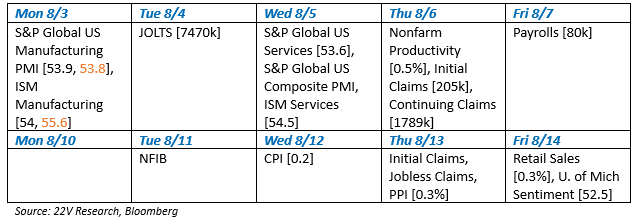
Things to Watch [Consensus, Results]:
Strategy:
Fade Risk Averse Positioning – (HERE)
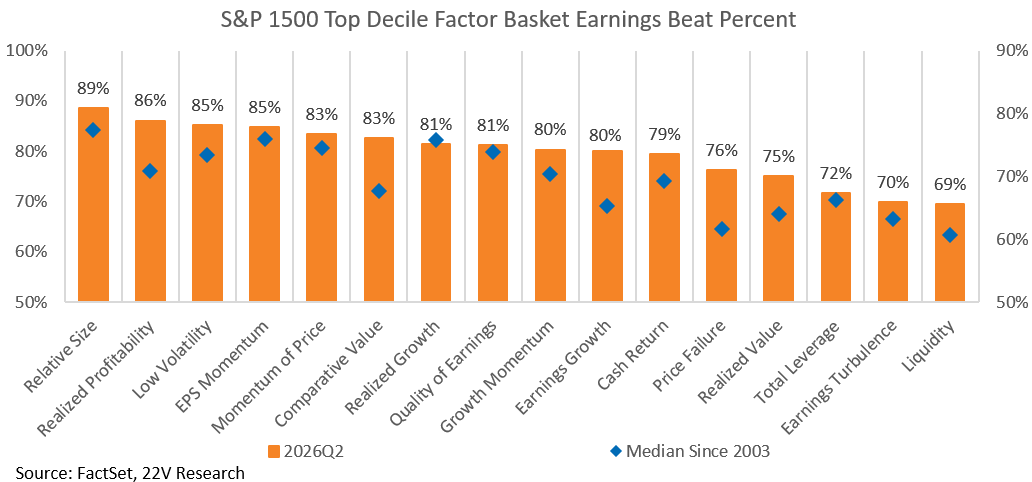
EPS and Sales beats for the Price Momentum factor, which is essentially the same basket as the AI buildout beneficiary baskets, are unusually high. Fundamental factors have unusually strong EPS beat rates as well. A move away from a Risk Averse factor regime would benefit Price Momentum along with Earnings Momentum, Earnings Risk, Growth Momentum and GARP. It’s not just a Price Momentum call.
Economics:
Index data more than fully confirm that earning growth is holding up outside AI – (HERE)
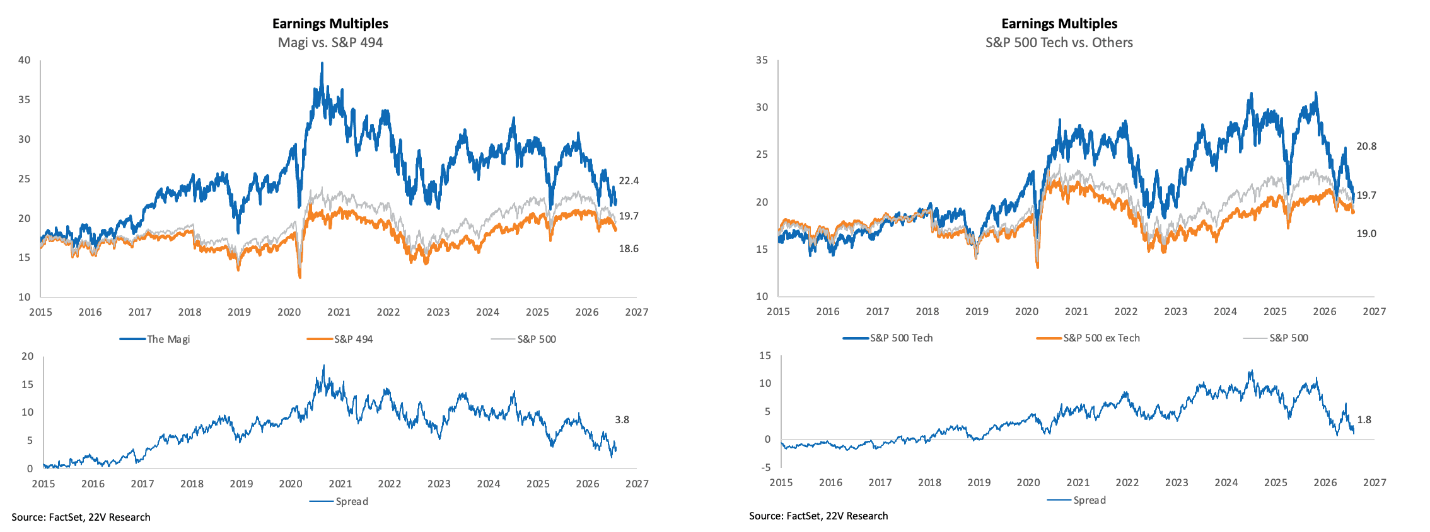
Index-level earnings data confirms the message from the National Accounts: profitability remains resilient well beyond the AI leaders. Forward earnings estimates show broad-based improvement, with S&P 500 companies outside the Mag 7 ex-Tesla up 23% year-to-date and earnings outside the broader technology sector up 15%, supported by high-single-digit revenue growth and expanding margins. At the same time, valuation multiples have gradually compressed, particularly within the technology sector, allowing earnings growth to catch up with previously elevated valuations. As a result, the valuation gap between tech and the rest of the market has narrowed significantly, suggesting the earnings expansion has become increasingly broad-based rather than solely driven by AI-related companies.
Derivatives:
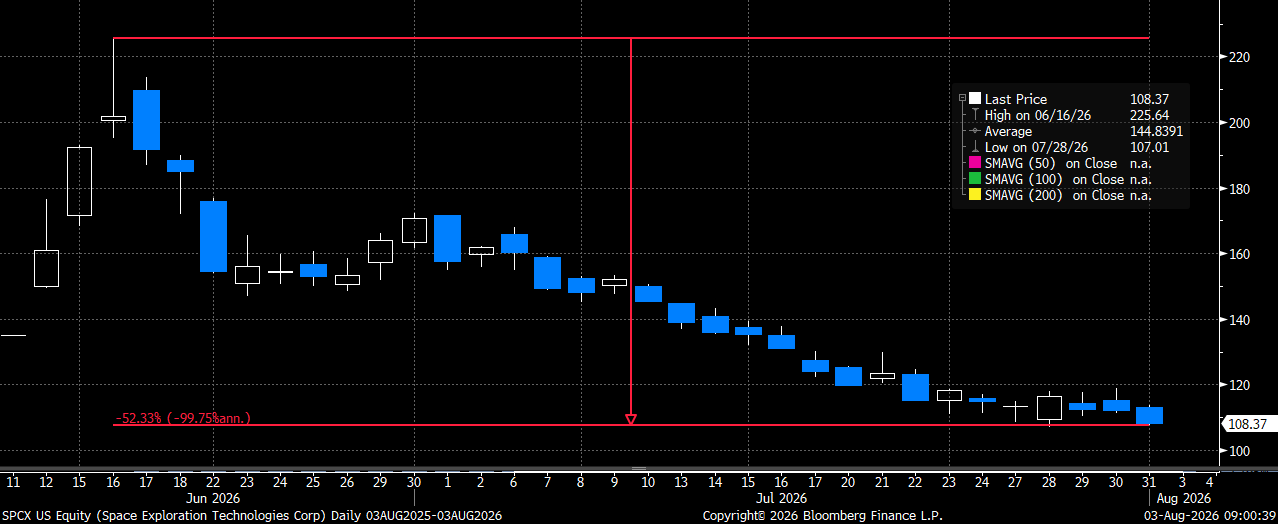
Trading SPCX Earnings With Options– (HERE)
Following a more than 50% decline from its post-IPO highs, 22V’s Dauvin Peterson sees an attractive setup for upside in SpaceX ahead of earnings. Rather than paying elevated implied volatility in August options, Jeff Jacobson prefers an October call calendar that takes advantage of unusually steep call skew while capturing multiple catalysts beyond earnings, including the Starship 14 flight and the Nasdaq rebalance. The structure offers a limited-risk way to gain upside exposure while benefiting from cheaper longer-dated volatility.