Bottom Line: Knowing the number of cuts doesn’t help with market calls (headline or internal) unless we also know the WHY. Fed officials are pushing back on cuts now because growth is firm. That is not bad for risk assets, and it explains why financial conditions have not tightened. If Core PCE forecasts move above 3%, that is a major problem for risk assets. FCI would likely tighten.
Relevant News: Recent Fedspeak, in 22V economist’s view, seems like another example of inflation being the thing, barring a dramatic growth or financial shock, which will be the marginal driver of the next policy move. Inflation will dictate the rate path. Growth shocks may change the number of cuts on the margin, but that is less important (see the above).
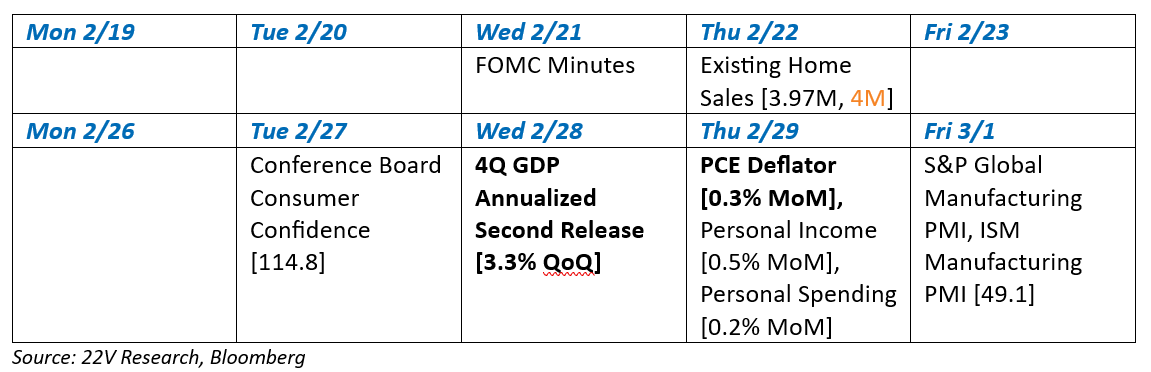
Things to Watch [Consensus, Results]:
Economics: Housing Demand is Looking Up
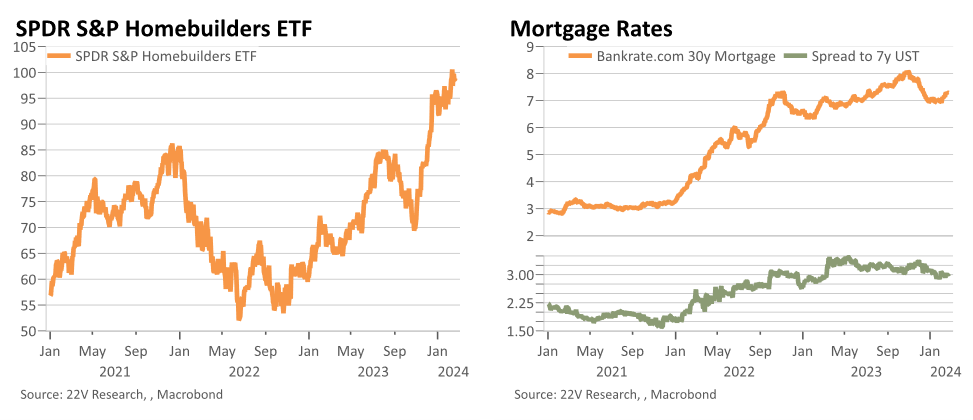
The rebound in housing starts since early 2023 and corporate commentary (HERE) seems to confirm the rates floor (i.e. the level of mortgage rates which below which activity seems to hold up if not boom) in the housing market has shifted up notably. In the near-term, the most rate sensitive part of the economy seems to be weathering high rates surprisingly soundly, which bodes well for overall economic performance even if it raises the odds the Fed ends up underdelivering on expectations for rate cuts in a non-recessionary world. We wouldn’t fade Homebuilder strength as the data is generally bouncing.
Portfolio Strategy: Investor Survey on Small Caps
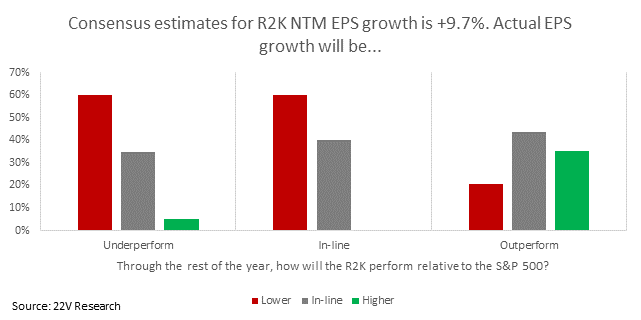
This week we ran a survey on small caps (full results HERE). A majority (62%) of our survey respondents expect small caps to outperform the S&P through the rest of the year. That is a ‘surprisingly popular’ response; 44% of our survey respondents thought other respondents would expect small caps to underperform. Only 25% actually do. We also surveyed clients about why small caps have underperformed to start the year. The general consensus is that since small caps are less profitable (or unprofitable) and need debt to grow, they are more sensitive to higher borrowing costs. Vol is introduced through policy uncertainty.

The cohort that expects small caps to outperform the rest of the year has a more optimistic outlook on fundamentals than the cohorts that expect in-line or underperformance. That’s not surprising, but there is still a group that thinks small cap earnings will disappoint but small caps will outperform. That speaks to the intense valuation gap between small and large caps that we have been writing about (latest HERE).
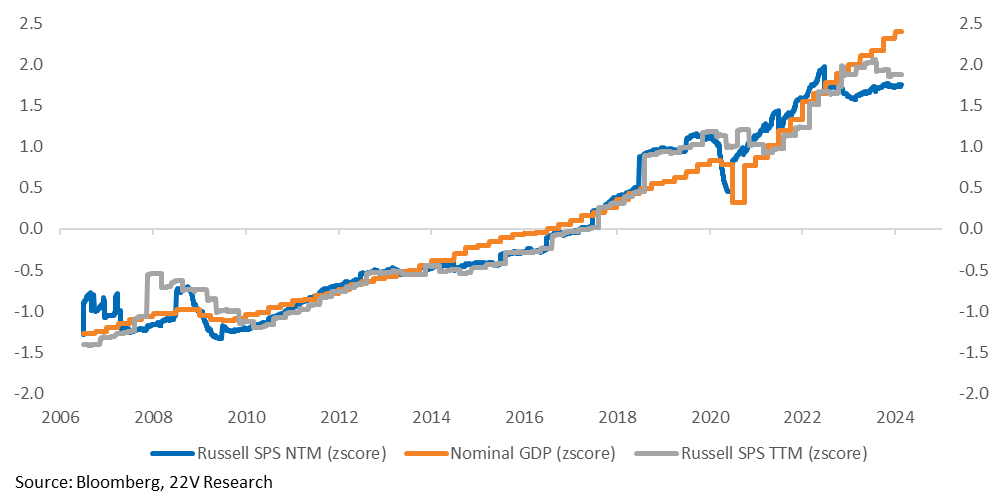
The forward sales outlook for small caps has lagged nominal GDP growth. Trailing sales too. The gap is atypical, and we expect some closing of the gap if the normal expansionary economic backdrop continues, which is still our base case. Higher rates may very well be a headwind, but the sales outlook should improve as macro uncertainty fades. Also, the market has already priced out ~3 cuts this year. Futures indicate 3-4 cuts, not 6.
Technical Analysis: Attractive Non-US Markets
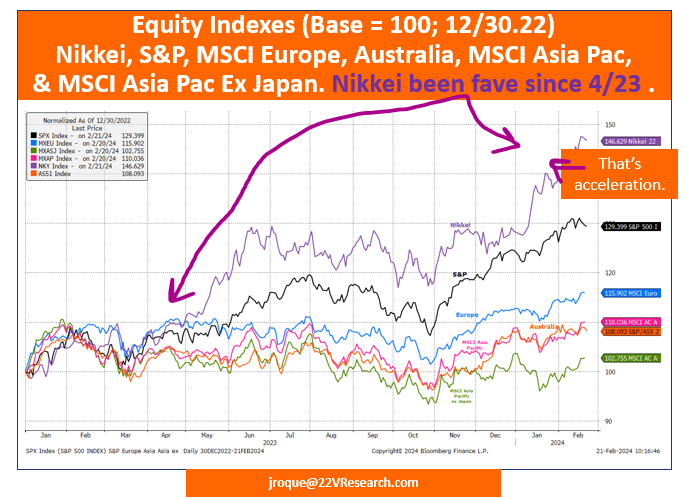
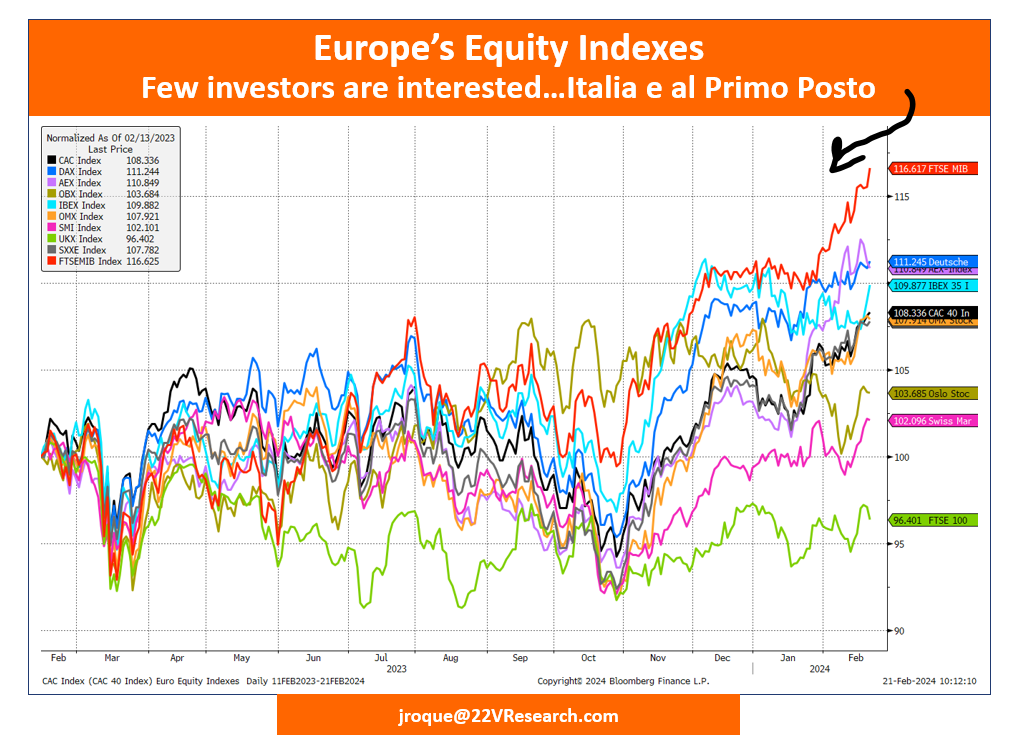
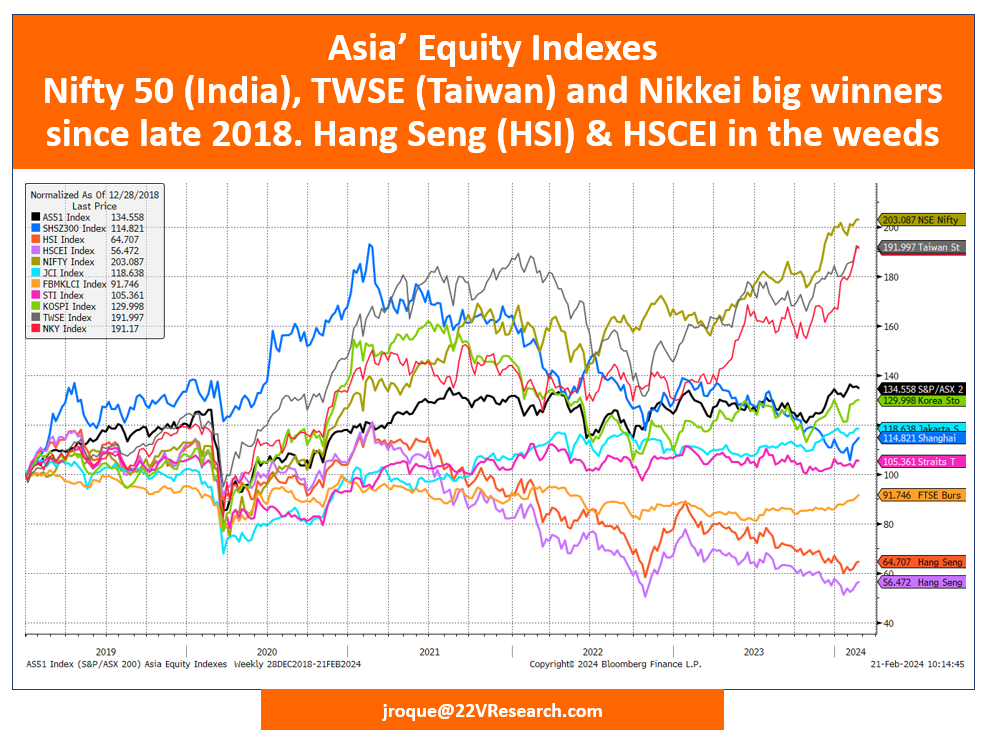
As we noted (HERE), the rapid pace of the S&P rally to start the year is hard to sustain and some consolidation should be expected. 22V Technician has some global markets that he likes and has been watching. He believes that there are – and have been for some time (a la Japan – Nikkei hitting all-time highs) – other markets that offer investors alternatives to the US. These markets include Japan, France, Germany, Italy, Spain, India, Australia, and Taiwan (charts below).