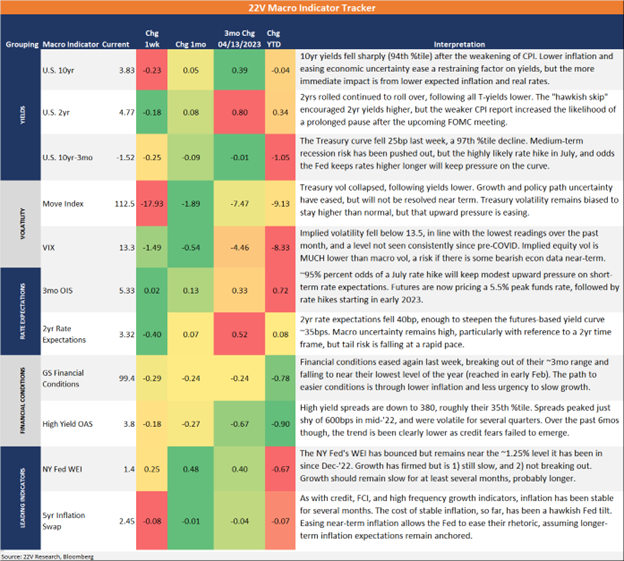
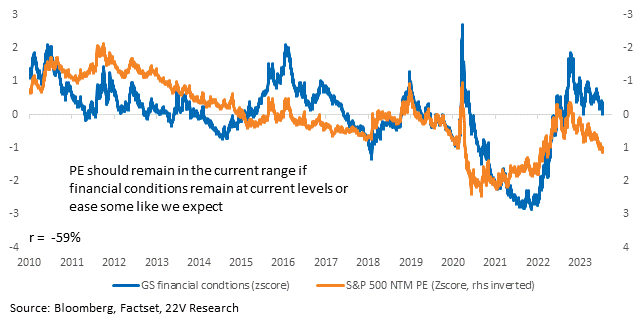
SUMMARY: The main implication of last week’s CPI data for financial conditions is that they are unlikely to tighten and should ease some. That should “hold up” PEs all things equal and earnings will be the driver of returns from here. As Gerard noted following CPI, the Fed “will raise rates on July 28…But they should be very inclined to pause – not just skip, pause – at the September meeting. More to the point, they will signal this at the July meeting.”
The increased soft landing odds – inflation is coming down as the labor market is still tight and demand growth is solid – favors risk-on factors. We are long Earnings Turbulence relative to Low Volatility, Destocking Losers, and Small vs Large.
One Change To Our Call – We No Longer Favor Deep Cyclicals: It was a good month for Deep Cyclicals, but as we noted in our Weekly report yesterday (HERE), lower US inflation and Weak China data make being in deep Cyclicals (Energy, Materials, Industrials) vs. Early Cyclicals (Tech, Discretionary, Communications) tougher. 22V’s China Research head, Michael Hirson, said we should expect only modestly increased stimulus post the weak China data overnight. The fact remains that “China’s leadership is focused on avoiding financial risks and therefore will do only as much as necessary to secure the 5% annual GDP growth target (please see: What to expect when you’re expecting stimulus, 13 July 2023).”
Two Important Points on Deep Vs Early Cyclicals: 1) WE ARE NOT SUGGESTING going short Deep Cyclicals vs Early Cyclicals. They are both likely to work vs Defensives. It is just tougher to be long Deep and short Early. Deep Cyclicals have done very well relative to Defensives and we would expect that to continue given increased odds of a soft landing. 2) Deep Cyclicals still trade at a deep discount to Earlys, so we will be looking for opportunities to go long Deep Cyclicals in the future.
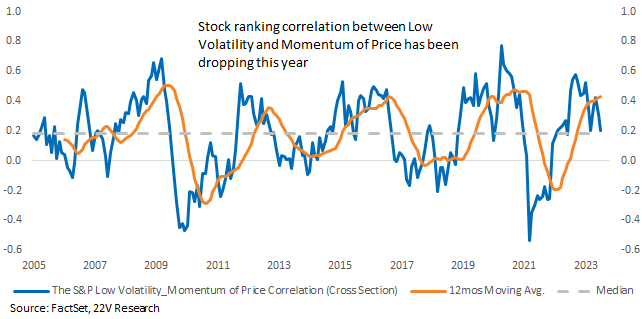
One Point On Price Momentum: As we point out in the Quant report today (HERE), if Momentum stocks work, that does not mean it is a “defensive rally” and that economic growth is about to slow significantly. The correlation between Momentum and Low Volatility was unusually high at the start of the year but has dropped. Today, high Momentum names have more risk-on exposure. Momentum outperforming is not an automatic signal of economic doom (people will continue to say it is though).
Full report below…
MARKET VIEWS: UST yields and Fed rate hike expectations increased after the much better than expected U of Michigan confidence data on Friday but have given it all back on the weak China economic data. UST yields are coming down mainly because inflation is coming down. That increases the odds of a soft landing (inflation is coming down as the labor market is still tight and demand growth is solid) and favors risk-on factors. The main implication from last week’s data for financial conditions is that they are unlikely to tighten and should ease some. That should “hold up” PEs all things equal and earnings will be the driver of returns from here. As Gerard noted following CPI, the Fed “will raise rates on July 28…But they should be very inclined to pause – not just skip, pause – at the September meeting. More to the point, they will signal this at the July meeting.”
We No Longer Favor Deep Cyclicals: 22V’s Head of China Research, Michael Hirson noted (Michael is in China now) that despite the weak economic data we should expect only modestly increase stimulus expectations and that “China’s leadership is focused on avoiding financial risks and therefore will do only as much as necessary to secure the 5% annual GDP growth target (please see: What to expect when you’re expecting stimulus, 13 July 2023.” As we noted in our Weekly report yesterday (HERE), lower US inflation and Weak China data make being deep Cyclicals (Energy, Materials, Industrials) vs Early Cyclicals (Tech, Discretionary, Communications) more difficult. The long Deep Cyclicals vs Early Cyclical is over for us now.
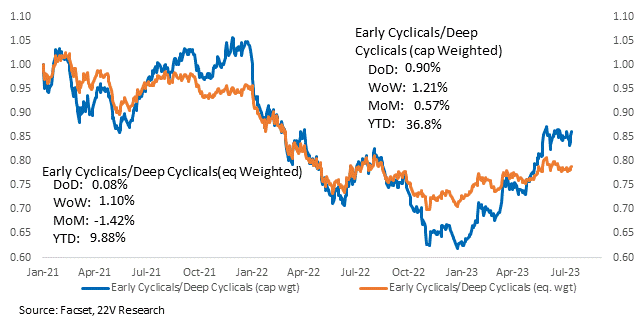
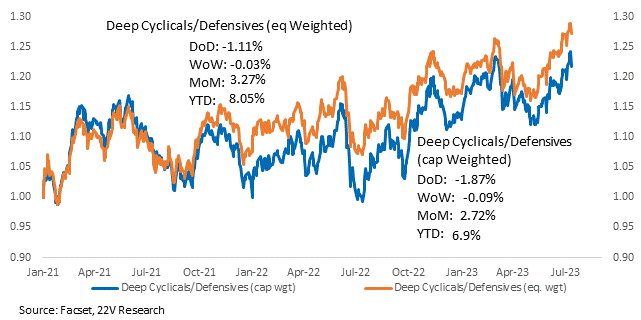
To be clear, WE ARE NOT SUGGESTING going short Deep Cyclicals vs Early Cyclicals. They are both likely to work vs Defensives. It is just tougher to be long Deep and short Early. Deep Cyclicals have done very well relative to Defensives and we would expect that to continue given the increased odds of a soft landing.
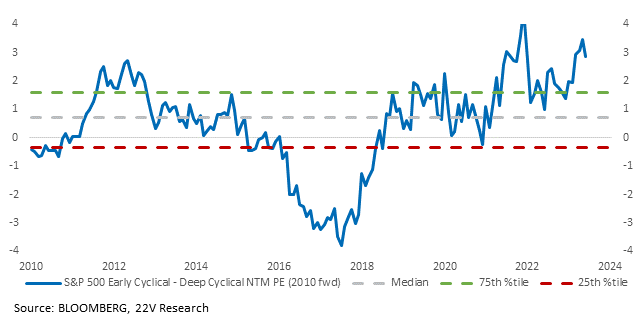
Deep Cyclicals still trade at a deep discount to Early Cyclicals, so we will be looking for opportunities to go long Deep Cyclicals in the future.
Side note, as we point out in the Quant report today (HERE), if Momentum stocks work, that does not mean it is a “defensive rally” and that economic growth is about to slow significantly. Last year and at the start of this year, the correlation between Momentum and Low Volatility names was unusually high. So, it was fair to say Momentum leading signaled economic problems. But that is not the case anymore, as the correlation between the two factors is declining. Currently Momentum basket is positively exposed to both risk-off factors (Low Volatility and Quality of Earnings etc.) and risk-on factors (Earnings Turbulence and Liquidity etc.), which makes it less of a signal on the economic growth backdrop if it outperforms.

Macro Tracker: Economic tail risk and near-term recession odds declined again last week. Direct inflation eased more than expected, and wage growth slowed further in June. Fed officials are trying to avoid a recession, but while inflation trends remained too strong, their first focus was reducing pricing pressures. With signs that inflation is indeed easing, FOMC officials can afford to focus more on feathering the policy breaks to avoid a sharp slowdown. A recession may still be the endpoint of the tightening cycle, but the odds of a hard landing are quickly fading. Stocks continue to trend higher, and multiples are up to 19.6x, their highest level since the first rate hike in March 2023. Those hikes were well-telegraphed, and inflation was VERY high. Investors responded reasonably, discounting the high risk of a recession, and economic data did slow significantly over the past ~15mos. But recession risk is fading and that risk eases, stocks are being repriced higher, led by the risk-on and Cyclical names that struggled most. Fundamentals are helping a little as well. Estimate revisions were more negative than usual leading into reporting season, but guidance remained firm, and management sentiment has strengthened over the past few quarters. That setup suggests a lower bar for earnings and should translate into upward revisions from here. Analyst estimates are starting to reflect that outlook with 2Q EPS growth revised 30bp higher last week. Keep in mind, earnings are still estimated to fall -8.5% in 2Q (y/y). That number should be revised significantly higher over the coming weeks, but EPS will still be lower on an absolute basis. Internal rotations remain our focus (smaller caps, Cyclicals, risk-on factors), but an argument for a directional market call (higher) is getting easier to imagine.