

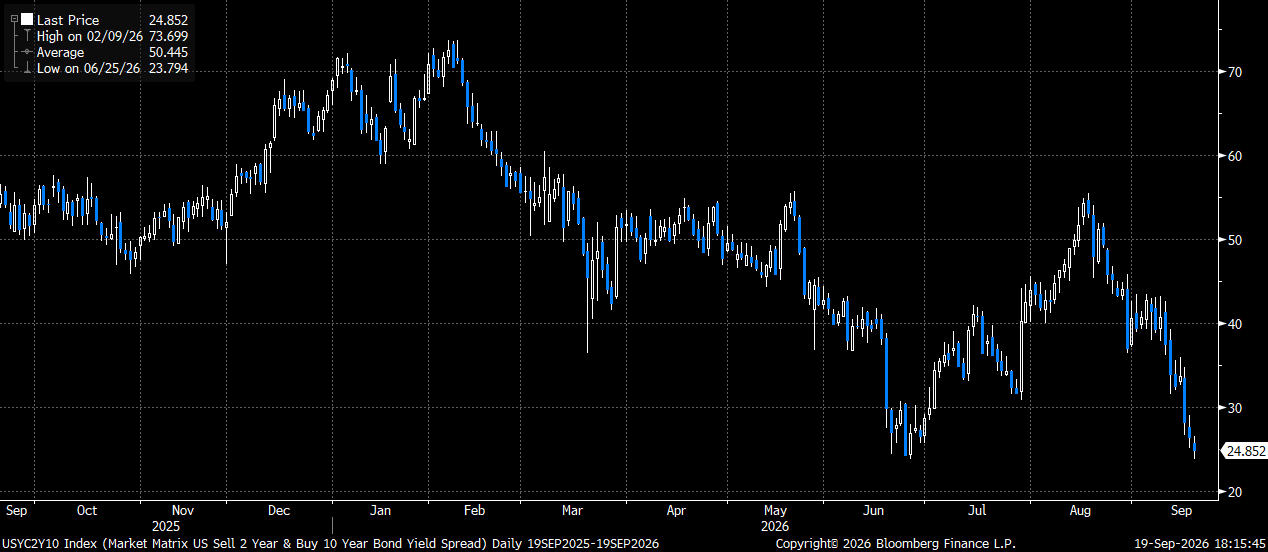
With the Fed hiking rates for the first time in the last three years this past week, the action in the equity markets continued a theme we have now seen play out for the better part of a month. The indices continue to trade sideways to lower, with the more cyclical areas of the market continuing to underperform the tech-heavy S&P. Banks were especially weak last week, with the main financials etf (XLF) down nearly 2.5% (vs a 0.34% decline for the S&P) as the yield curve flattened to the lowest levels of the year. It was my concern about the curve flattening further, and the potentially negative impact on the banks, that made me suggest a tactical XLF hedge trade idea last week (here).
The 2/10 yield curve continued to flatten last week and is now back to the lows from June
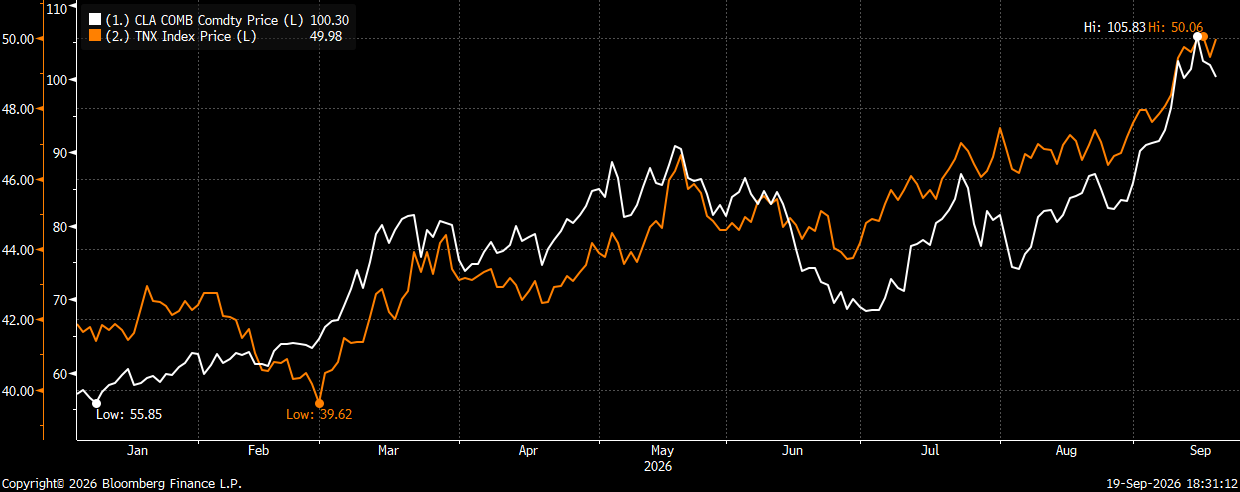
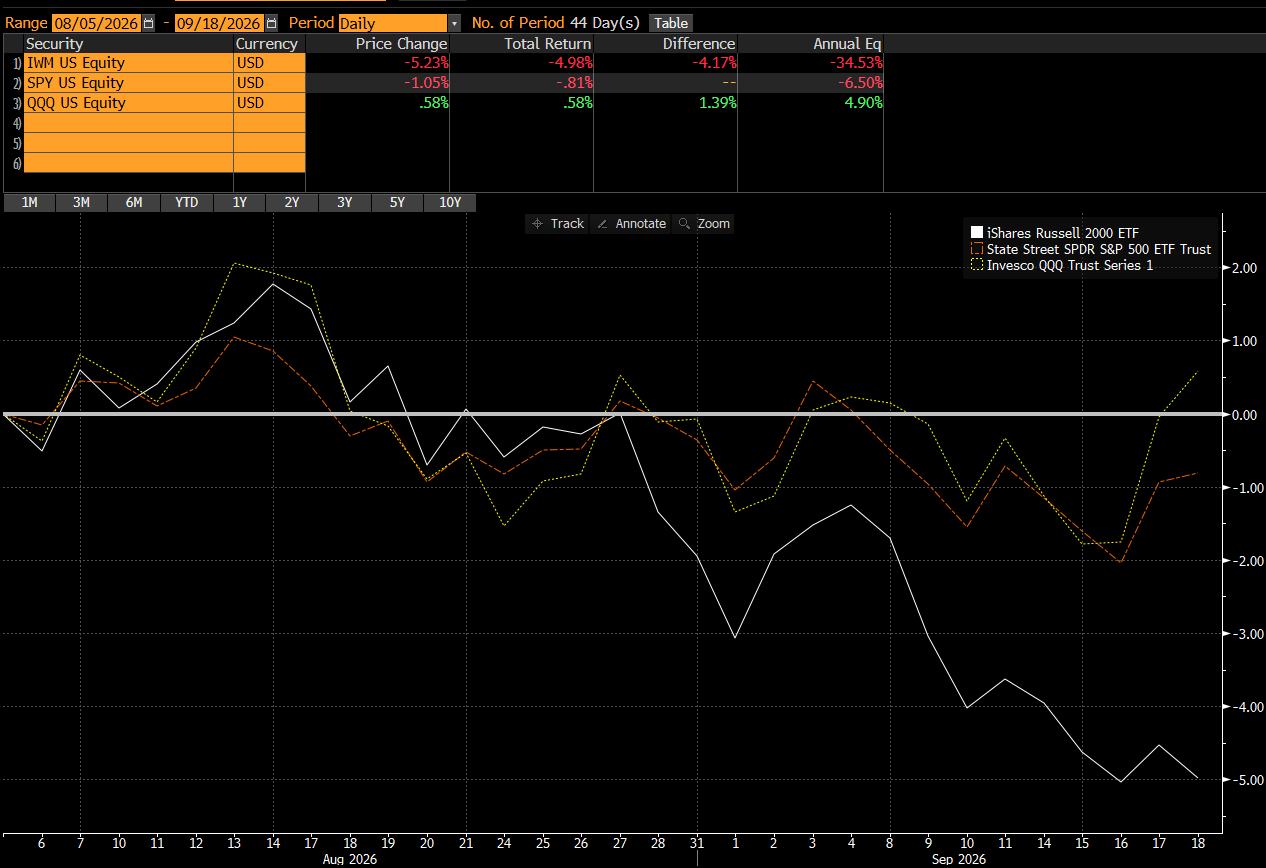
With the Fed out of the way (for now), I continue to believe that oil and rates (which go hand in hand) remain the biggest threat to the market over the short-term. When we overlay the price of oil to the 10-year yield, we can clearly see how oil prices have been impacting yields. This likely explains the underperformance we have seen from the more cyclical areas of the market, specifically since oil started moving back up in early August. Looking at the small caps (IWM) as a barometer for the more cyclical areas of the market, we see they have declined by ~ 5% since oil bottomed on August 5th, while the S&P (SPY) is down less than 1% and the Nasdaq (QQQ) is up nearly 60bps. Back at the start of August, I mentioned higher yields as a potential headwind for the small caps and suggested owning September put spreads (here). Even with the recent underperformance, I continue to believe that IWM hedges look far more attractive than both SPY and QQQ hedges if considering a heavier delta market hedge given the risks of higher oil prices and yields remaining elevated (especially thru early November and the upcoming midterm elections).
Oil and 10-year yields have traded in lock-step with one another for most of 2026
Since oil bottomed in early August, we have seen the small caps sharply underperform both QQQ and SPY
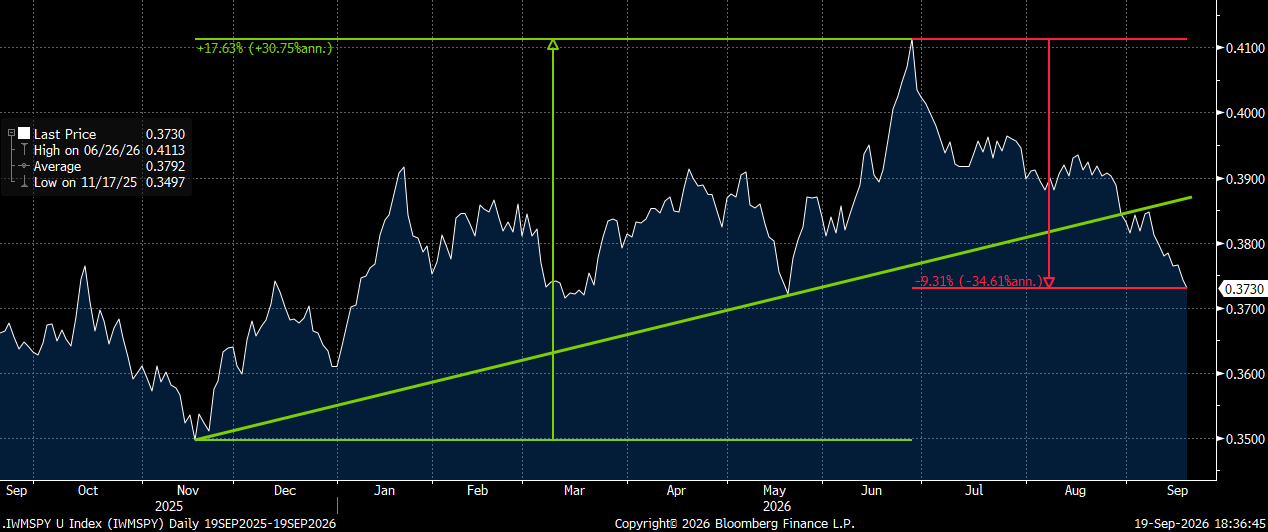
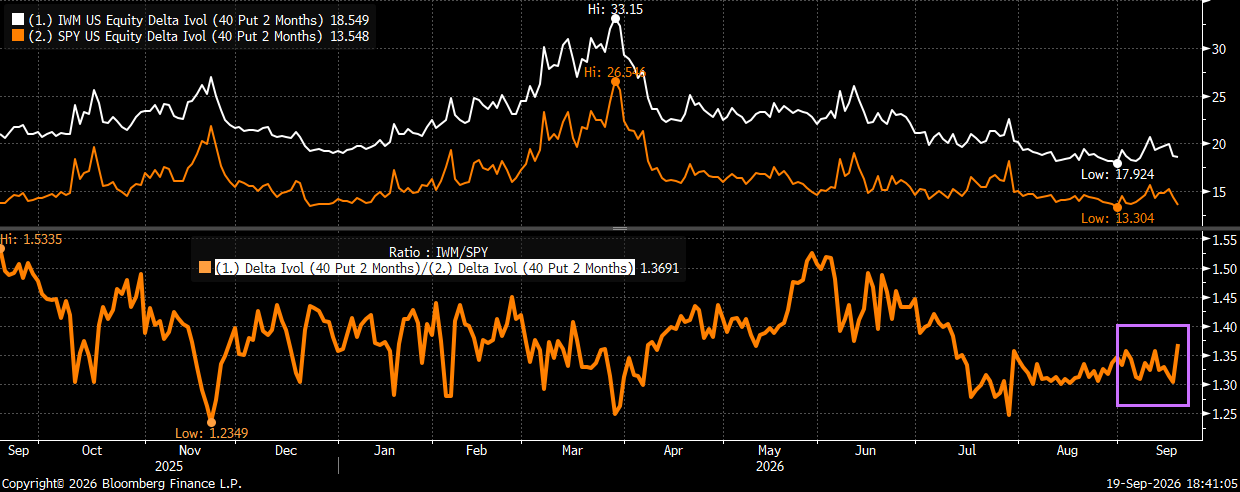
As I mentioned above, if oil and rates remain the largest concern for the health of the market, then IWM put spreads should continue to be the preferred hedging vehicle in my opinion. There are several reasons why I believe IWM hedges make sense over both SPY and QQQ as a macro equity hedge. First, small caps have clearly lost their leadership position in the market. After outperforming large caps (SPY) by nearly 18% from the November lows to the June highs, they have since lagged by more than 9% and the IWM/SPY relative spread has clearly broken below the 1-year support. Second, IWM 2-month put implied volatility was up a bit relative to the same duration/delta SPY implied volatility last week, but it still trades towards the lower-end of the 1-year range (meaning IWM puts are still “cheap” relative to SPY puts). Lastly, should the Mag7 names continue to work (they hit a new high last week) then I would fully expect SPY and QQQ to outperform on any market decline since those names are now viewed as “defensive” longs.
The IWM/SPY relative spread that rallied nearly 18% from the Nov lows to the June highs has declined by over 9% and is below support
IWM 2-month 40-delta put implied vol still trades on the lower-end to SPY 2-month 40-delta puts (bottom chart)
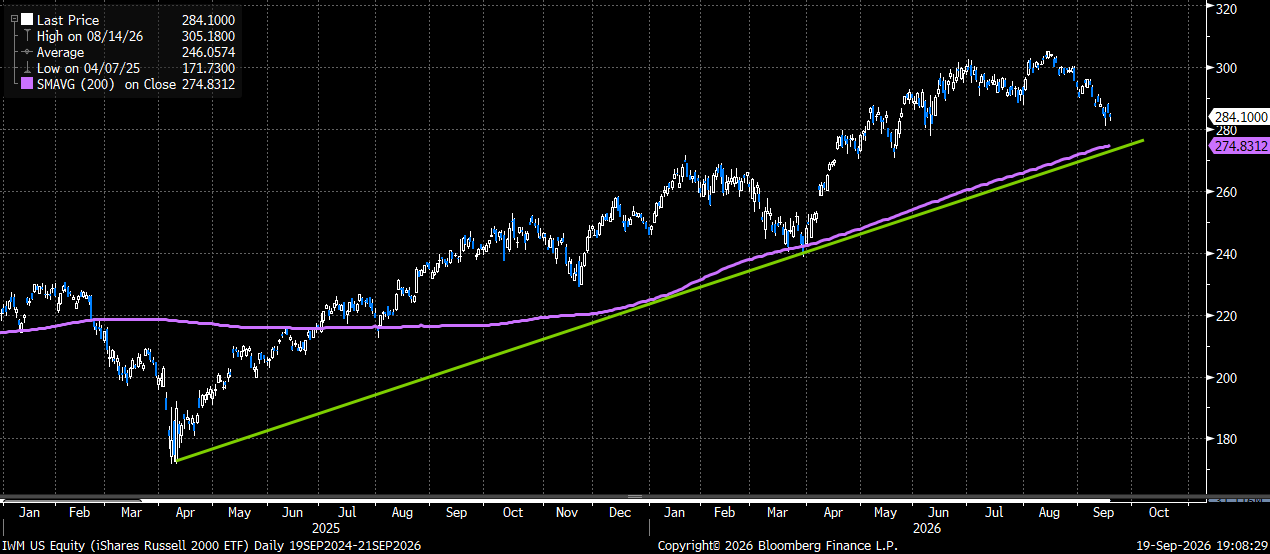
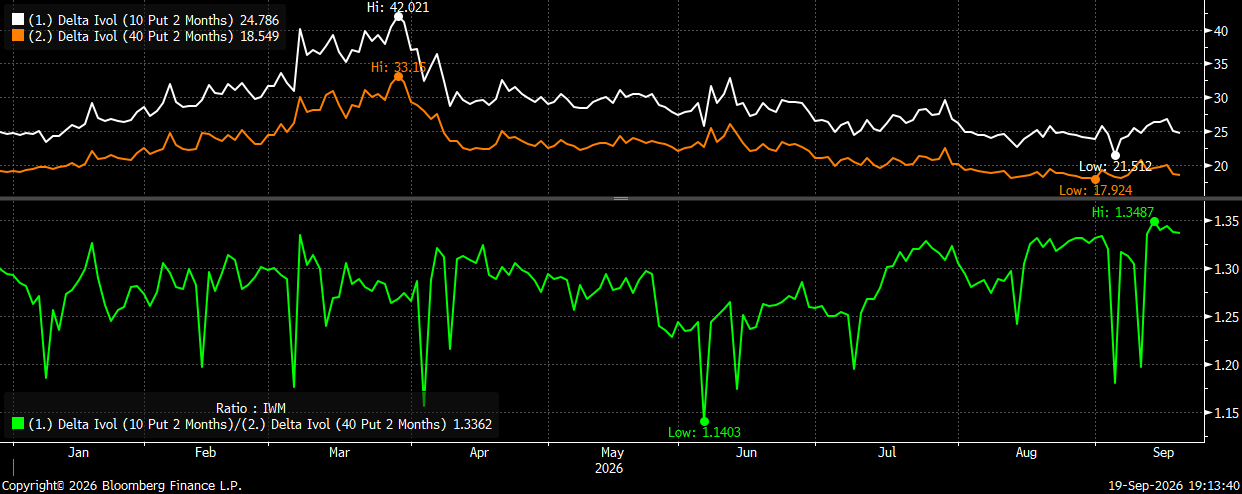
When looking at IWM, I believe the 275 level is the next big area of support. This level is both the 200-day moving average, as well as the uptrend support off the April 2025 tariff lows. Therefore, I would suggest owning put spread hedges that target a potential break of this key support over the next few months. I also prefer put spreads over outright puts as put skew now trades at the 2026 highs.
IWM chart – watching for a potential break of both the 200-day moving average as well as the April 2025 uptrend support
IWM 10-delta/40-delta put skew at the 2026 highs (bottom chart)
Here is a new IWM put spread trade I would now consider owning if looking for a macro equity risk hedge:
Buy IWM Nov 280 puts
Sell IWM Nov 250 puts
Costs $4.95 (IWM 284.10 Fri closing ref)
Trade Details:
- Buying the 2-month 30-point wide put spread that starts just over 1% lower
- IWM continues to underperform both SPY and QQQ as impact from higher oil and rates has continued to weigh on the more cyclical small caps
- I favor November structure as that allows more time for hedge to work while also covering the upcoming midterm elections (assuming Iran may continue to make it difficult on President Trump into the elections)
- Spread offers more than 5x to 1 max payoff on the limited-risk structure
- Selling the nearly 10% lower 250 puts covers 22% of the cost of buying the 280 puts (speaks to the very attractive put skew)
- Please reach out to me or the 22V sales team for updated pricing and execution capabilities

