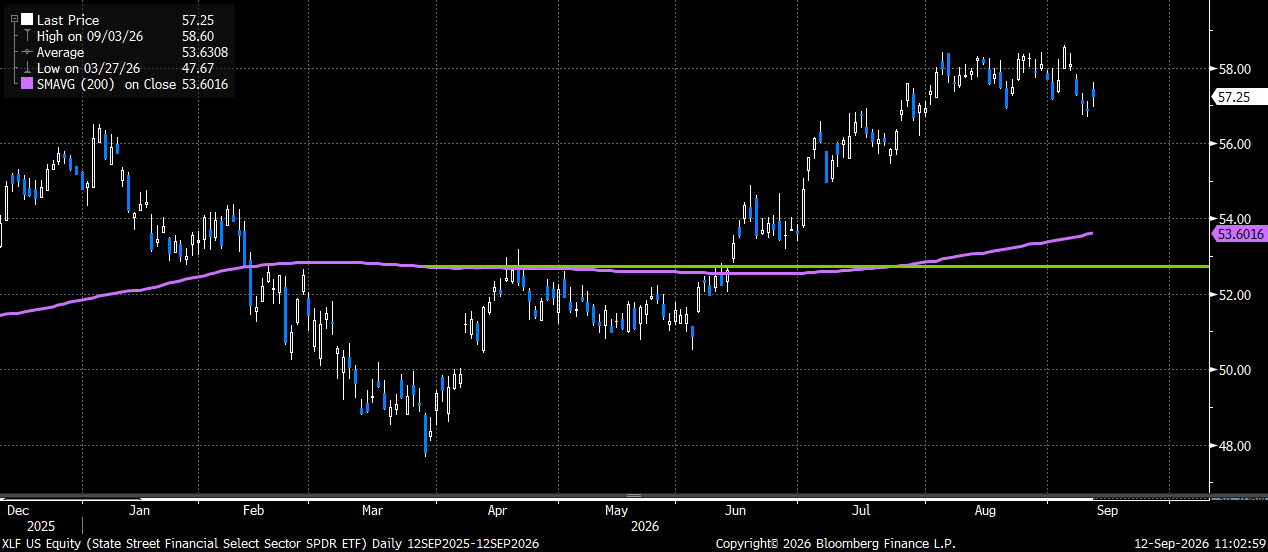
With the main financials ETF (XLF) having rallied ~ 23% off the March lows, and towards the top-end of its longer-term resistance, I believe now is a opportune time to consider owning short-term hedges. Besides the sharp rally into potential resistance, there are several other reasons why I believe XLF hedges make a lot of sense at this time.
XLF with a nearly 23% rally off the March lows
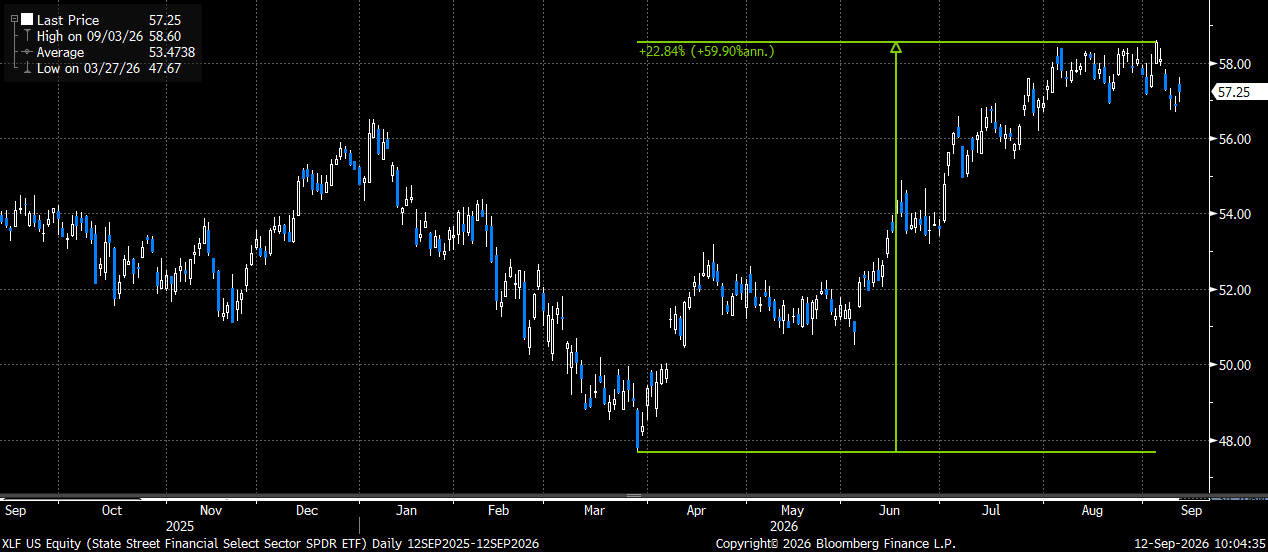
XLF also rallied right into the longer-term resistance on the weekly chart
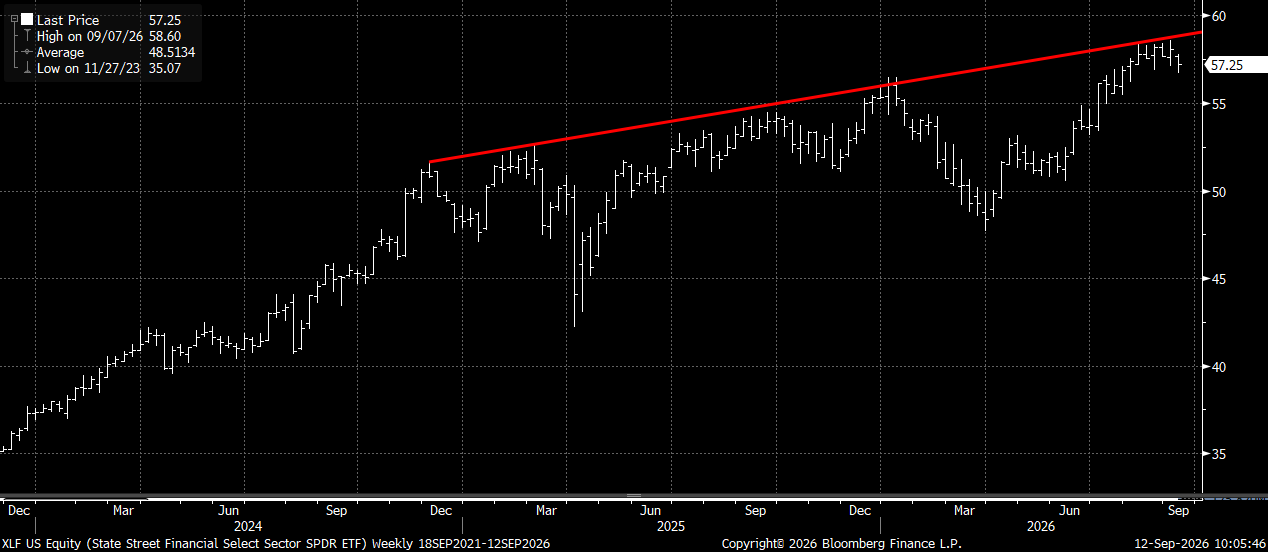
Here are some of the reasons why I favor adding XLF hedges currently:
1) Curve flattening could start to weigh on the banks
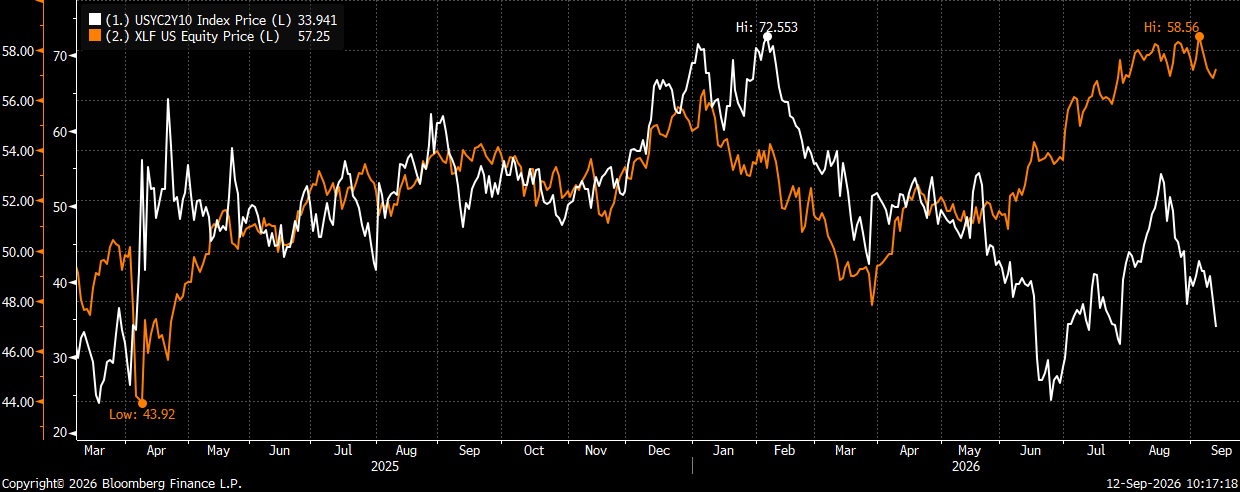
Since mid-August, we have seen the yield curve flatten as odds of a Sept hike have now risen to nearly 90%. The 2/10 spread has contracted sharply and is now nearly as flat as it was at the June lows. Banks have typically moved with the spread as a flatter curve usually is viewed less favorably given impact on earnings. When we overlay the XLF to the current 2/10 spread, we can see a large divergence since late May. Should the curve remain this flat, or flatten even further, then XLF appears to have some downside risk given the historical relationship.
The current 2/10 spread has been flattening since mid-August
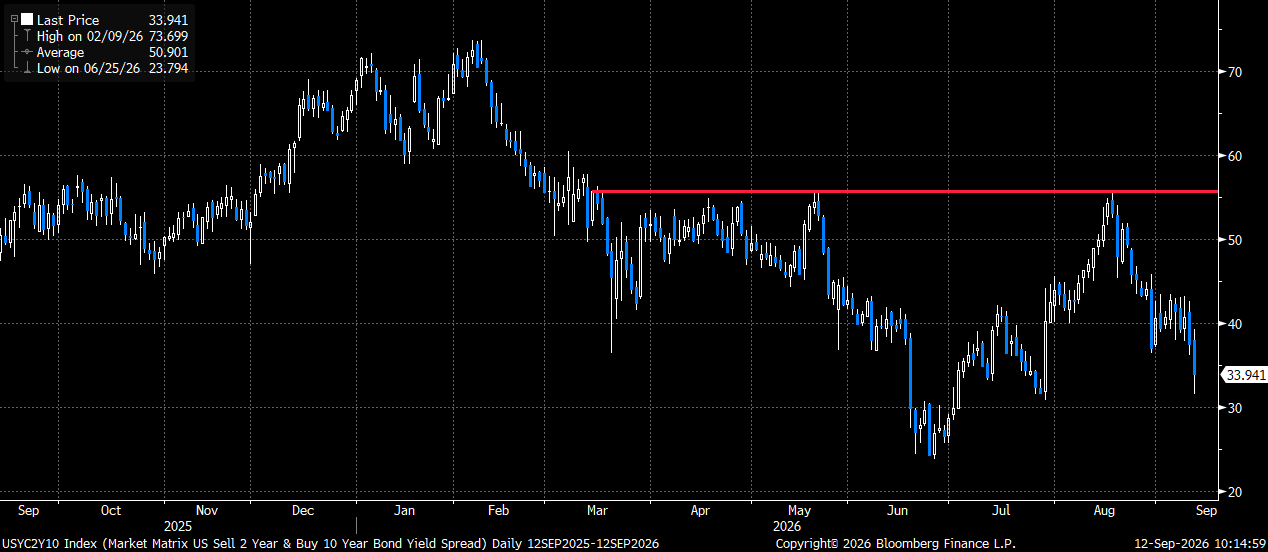
XLF diverged from the 2/10 spread at the end of May and now appears to have some downside risks
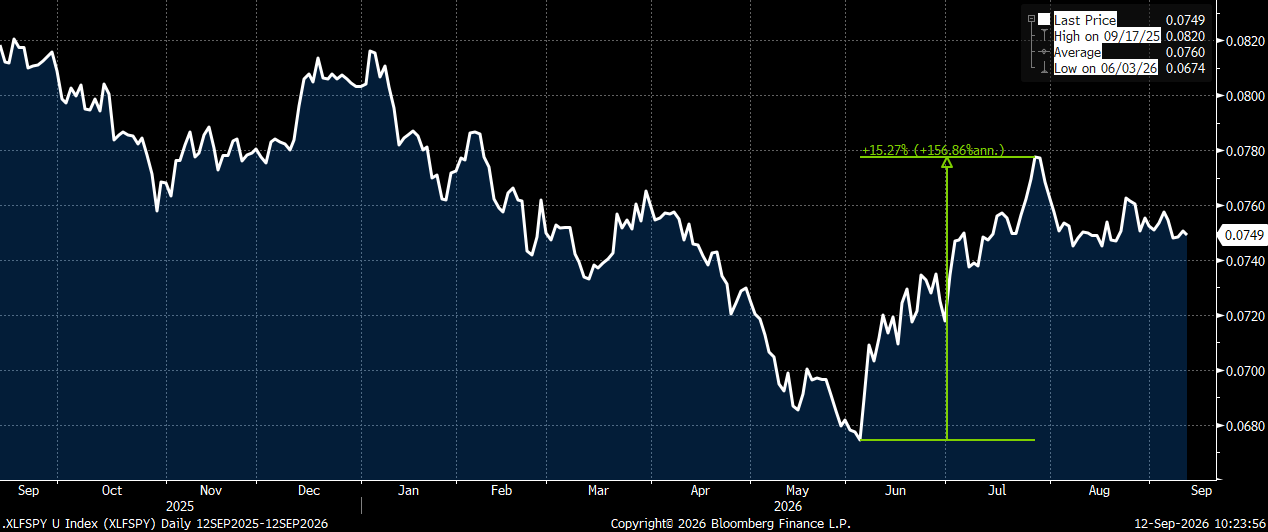
2) XLF outperformed the market by more than 15% from the June lows to the July highs and now could see some unwind
We not only saw the financials rally sharply between late March and August, but we saw a huge relative outperformance to the overall market for much of the summer. I believe the AI/momentum unwind contributed to this outperformance as money rotated sharply from winners to laggards. Now that it appears the AI tech bid is back in the market, perhaps we see a bit of an unwind in the financials trade?
The XLF/SPY relative spread gained more than 15% in less than two months after a large decline for most of the year
3) XLF implied volatility looks “cheap” versus the top weighted names in the ETF as we approach earnings season
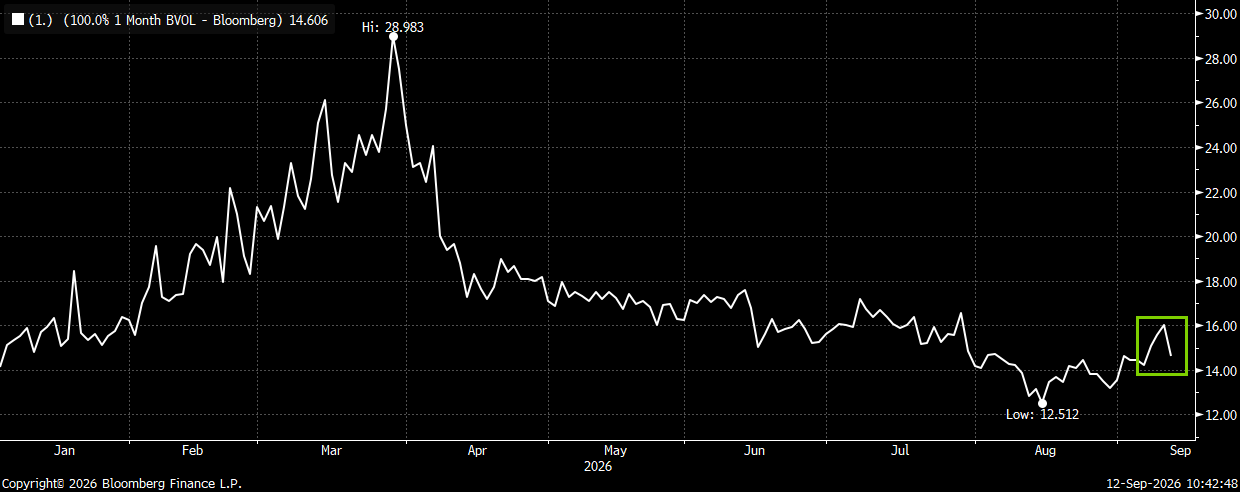
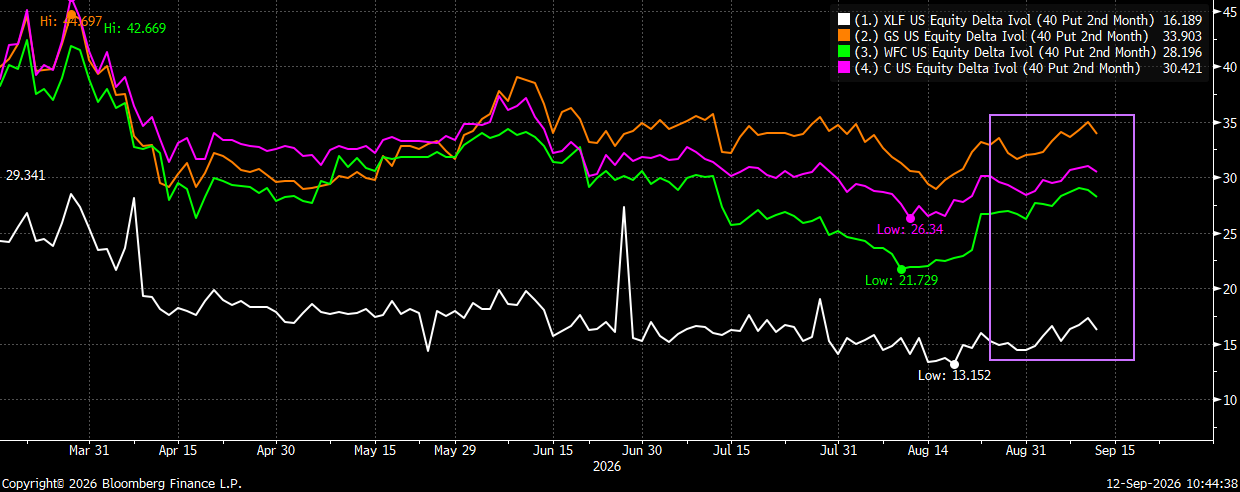
While XLF 1-month (October) implied vol has moved up a bit off the August lows, it still trades near the lowest levels of the year and at what appears to be a decided discount to the main holdings that will be reporting earnings next month. While the XLF Oct 16th 40-delta puts trade at an IV ~ 15, most of the top names trade at a vol that is significantly higher. JPM, BAC, GS, WFC, MS and C are expected to announce their earnings before Oct 16th, and the average implied vol for those names is nearly 29 or nearly DOUBLE the vol of XLF. In addition, these names comprise ~ 30% of the total weight of XLF and should have a significant impact on the direction of the overall sector.
XLF 1-month (Oct) 40-delta put implied vol still near the YTD lows
XLF vol also screens “cheap” to many of the names that will be reporting earnings before Oct 16th
Given this setup of a sharp rally into potential resistance, and a large outperformance to both the overall market and to where banks typically trade versus the yield curve, I strongly advocate owning sector hedges for the upcoming earnings season at this time. While volatility on the higher delta puts remains low, I still prefer to own the lower cost Oct put spread given favorable put skew.
Trade:
Buy XLF Oct 16th 57/53 put spread for ~ $0.80 (XLF Fri closing ref of 57.25)
Trade Details:
- Buying the nearly 5-week protective put spread that starts less than half a percent below current levels
- Put spread offers a 4x to 1 max payoff at expiration
- Targeting a potential pullback to the June breakout and 200-day moving average
- Flattening yield curve could start to weigh on the financials, specifically the largest banks
- XLF put vol near the lows, and trades at a large discount to where many of the single-name financials that will report earnings trade
- Limited-risk structure can be used to hedge exposure thru earnings season, or as a low-cost bearish bet given attractive technical/vol setup
- Please reach out to me or the 22V sales team for updated pricing and execution capabilities
Oct put spread is targeting a potential pullback to the June breakout area as well as 200-day moving average support