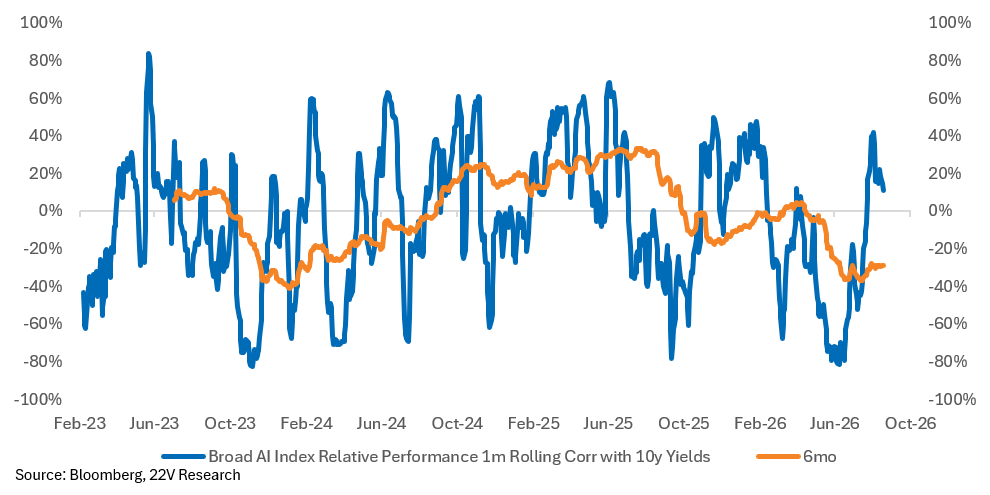
DAILY STRATEGY: A report from Semi Analysis suggests AI-related debt could reach $7.1 trillion. Hyperscaler cash flows won’t build the AI ecosystem on their own. The buildout will be increasingly dependent on lenders and infrastructure investors to meet future AI demand. The more debt financing, the more investors need to take interest rate risk into account.
Our Logic on This – We say logic because we are not making a quantitative point. We will interrogate this logic over the coming days with a deeper dive on the issue. Digital companies, such as Meta/MSFT, etc, consider investing in AI as a requirement for survival (HERE). Some AI spending can be understood as a defensive response rather than a growth bet (HERE). AI threatens to erode the market power and supernormal profits of incumbent tech by lowering barriers to entry. Additionally, massive capex may be an attempt to erect new competitive barriers. To replace the old moats that AI is destroying with new ones tied to infrastructure scale and ecosystem lock-in. In short, the above argues for low AI capex risk over the coming years. It’s in the interest of incumbent tech to keep using cash flows to invest in AI.
But now we have a different type of investor getting involved. Lenders (potentially $7 trillion worth of lenders) do not face the same existential threat. They face demand for returns from investors. AI buildouts funded through debt become more directly exposed to the level of long-term rates. Higher yields raise financing costs, extending payback periods, and lifting the return hurdle on marginal projects. That makes the economics of incremental buildout less attractive at the margin. Cash flow needs to show up sooner. It stands to reason that sensitivity of AI buildout names to 10yr yields will increase meaningfully from here. We should expect AI build out names to suffer, all things equal, if 10yr yields keep grinding higher.
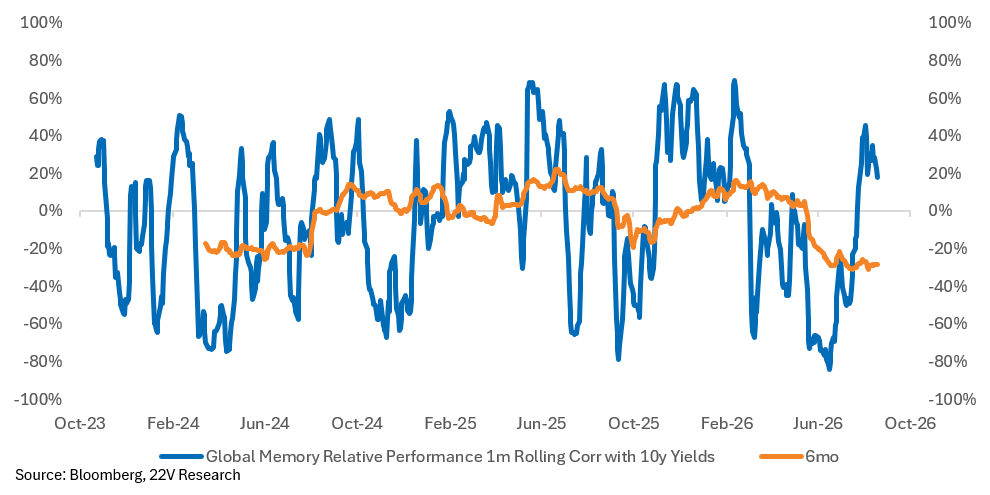
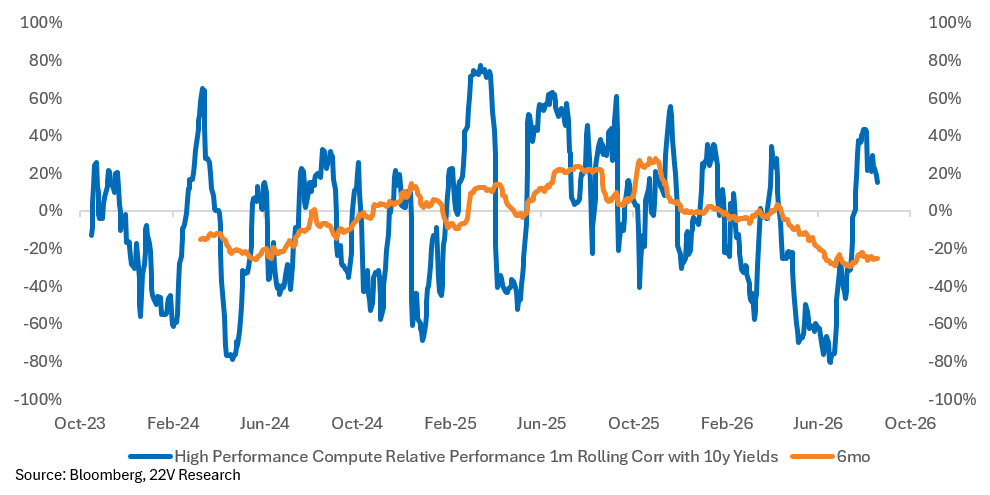
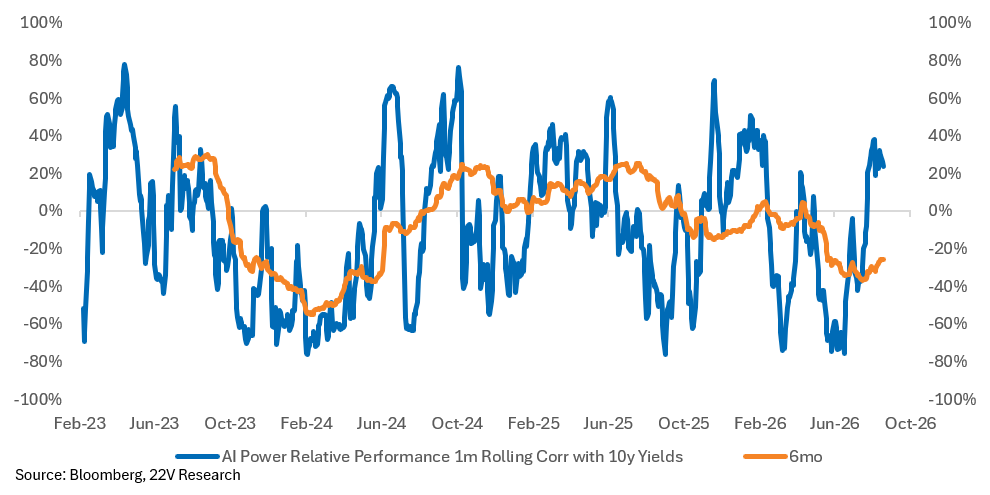
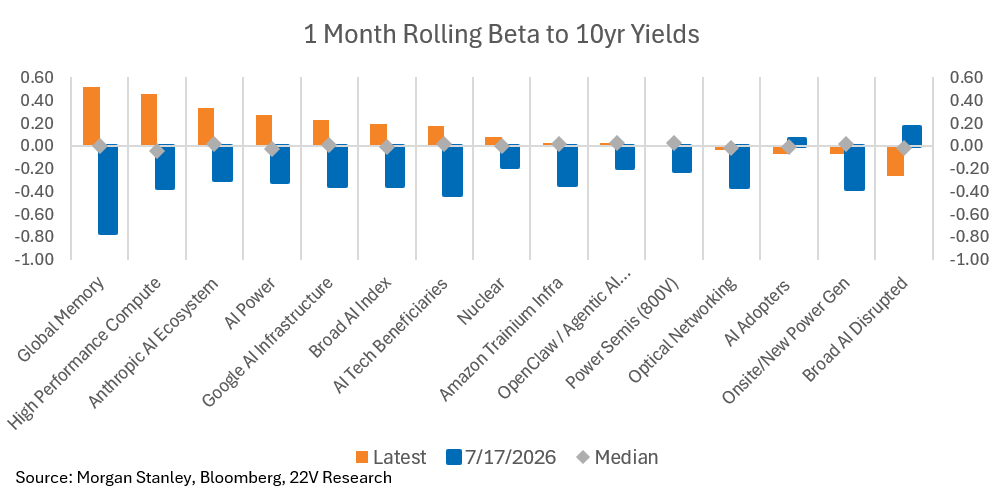
The opposite has happened though. One of the more notable shifts over the past month has been a broad flip in the short-term rolling beta relationship between AI infrastructure baskets and 10y yields moving from negative to positive across many groups. The most pronounced moves have occurred in MS’s Global Memory, High Performance Compute, the Anthropic AI Ecosystem, and AI Tech Beneficiaries baskets.
Rising 10y yields may now partial reflect stronger nominal growth expectations (HERE). If investors are pricing in a more durable AI expansion (higher returns to that capex. Cash flows that show up sooner. We will come back with details on this), that implies greater enterprise investment demand and potentially a longer AI capex cycle. That benefits the buildout layer.
On a 6-month basis, the correlation between these baskets and the 10y remains negative (yields up, stocks down). The recent 1-month flip to positive is therefore moving against that prevailing trend, which raises the question of whether it represents a genuine shift (growth upside of a longer capex cycle) or simply a short-term dislocation. The sensitivity to 10yr yields is a way to monitor AI capex payoff odds.
FYI – We should not be as confident that the impact on 10yr yields increasing will still be felt mostly in housing. 10yr yields might not need to drift higher to keep AI capex expectations from becoming too inflationary.
Charts…
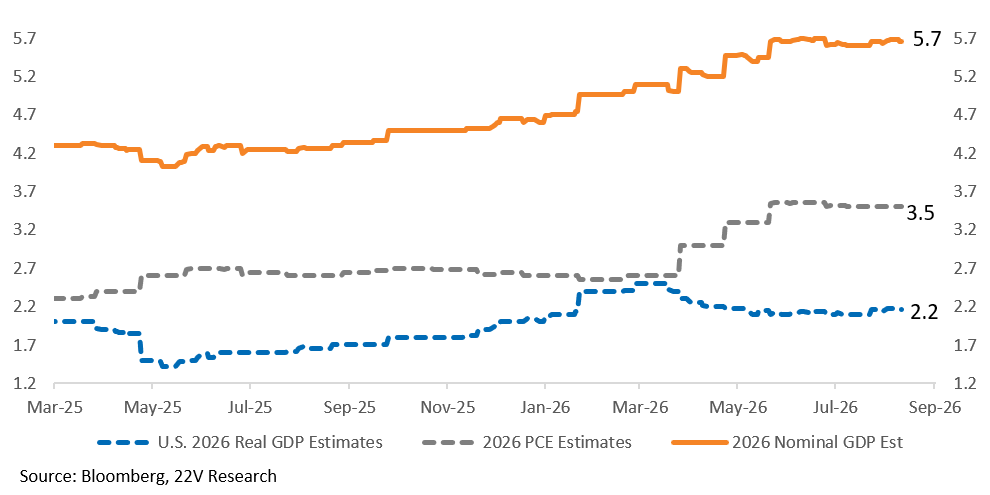
Nominal GDP growth is still running close to 5.7%, so there is little reason for 10-year yields to collapse.
One of the more notable shifts over the past month has been a flip in the 1m rolling beta relationship between AI infrastructure baskets and 10y yields since July.
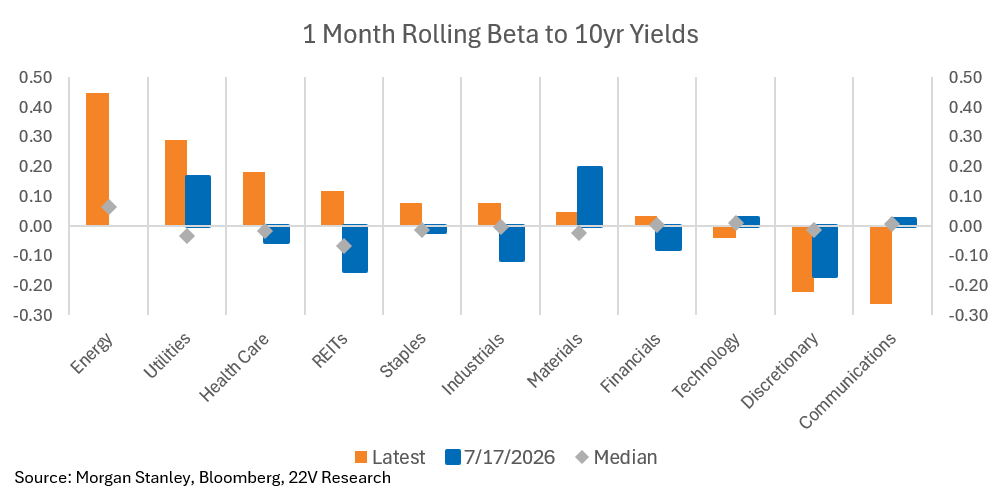
On a sector level, many have also become more positively correlated with 10y yields. Except for Tech, Discretionary, Materials, and Comms creating an interesting divergence between the AI baskets and their sector exposure.
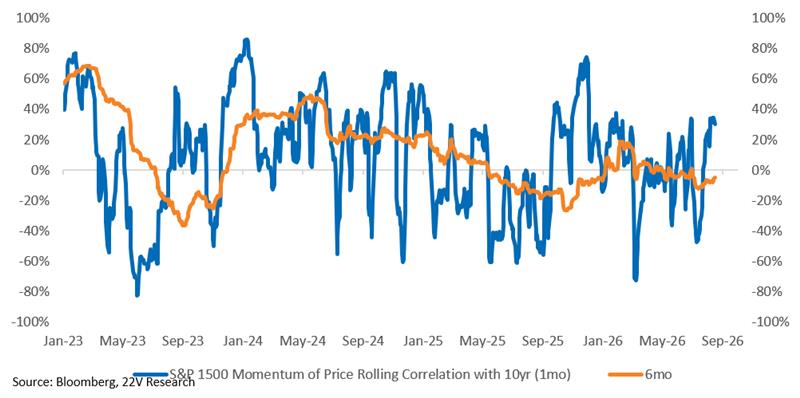
On a 6-month rolling basis, the correlation between AI baskets/ Price Momentum and yields remains negative.