DAILY STRATEGY: Main Point – The Price Momentum factor, which has significant exposure to the AI buildout beneficiaries, has unusually high volatility now, generally leads to the downside in a VAR shock, and a Fed tightening campaign is a real risk. Hedging via options remains our preferred way to manage the risk of Momentum drawdowns. Jeff Jacobson, 22V’s Derivatives specialist, has structured IWM hedges (HERE) – contact Jeff Jacobson, the head of 22V Derivatives team, for updated trades. We are long the AI buildout theme longer term.
In our weekly recap, we argued small caps benefit from a benign growth slowdown – economic growth slowing from ~3% to ~2%, limiting inflation overheating concerns but not increasing recession risk (HERE). This backdrop biases 10yr yields lower and should most benefit small caps.
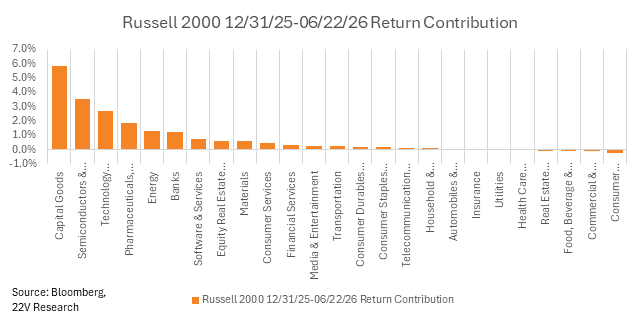
Recently though, the AI buildout is the main driver of recent small cap returns. Cap Goods, Semis, Tech Hardware, and Energy make up 13pp of the Russell 2000’s 20% YTD return. Idiosyncratic risk is the most influential component of returns.
Longer Term we are inclined to lean into small cap outperformance because of our macro framework and indications from earnings reports that AI boosts profitability (HERE). 22V’s AI analysts have noted the latest information on token pricing (HERE) and model improvements (HERE) support demand for AI and the AI buildout theme. What companies say about AI-driven profitability in 2Q earnings will be critical to the current industry groups leading small caps.
There will be volatility though, as demonstrated by the overnight pullback in memory stocks and US equity futures (HERE). Also, there is risk the Fed tightens financial conditions. The most recent comments from Fed Chair Warsh could lead investors to reassess risk exposure (see 2yr yields continuing higher) leading to sharp corrections. Price momentum, which is unusually volatile currently, would likely bear the brunt of a sharp short term corrections.
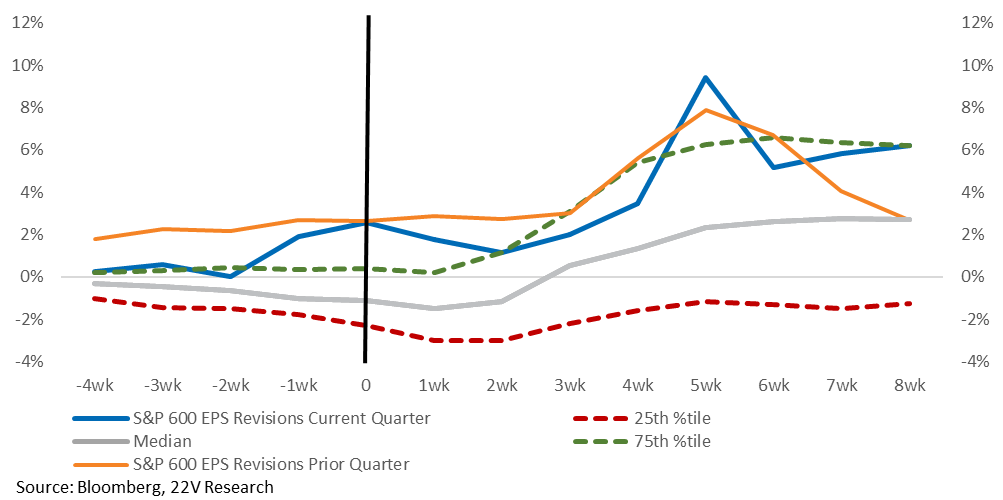
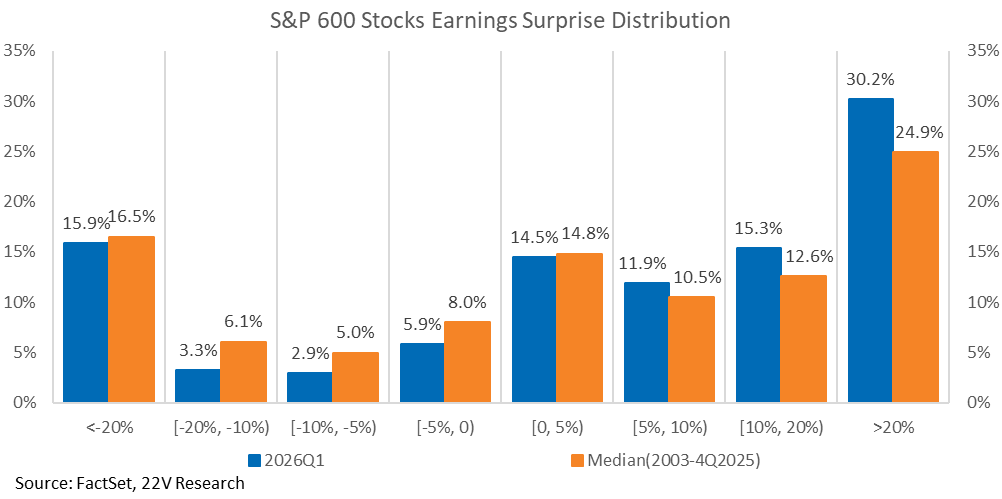
LONG-TERM FRAMEWORK: Small cap outperformance is being driven by fundamentals. The 1Q earnings beat rate (72%) was higher than the long-term median (63.5%) and earnings estimate revisions ended at their 75th percentile. Small cap gains are not just about multiple expansion.
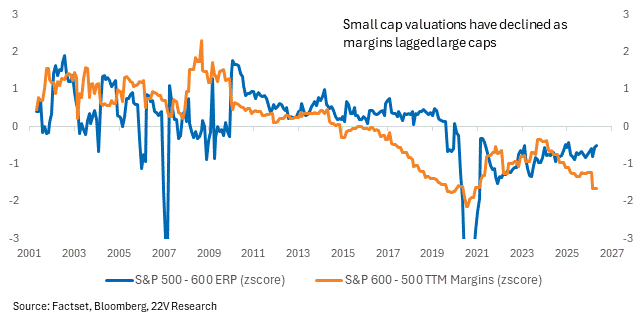
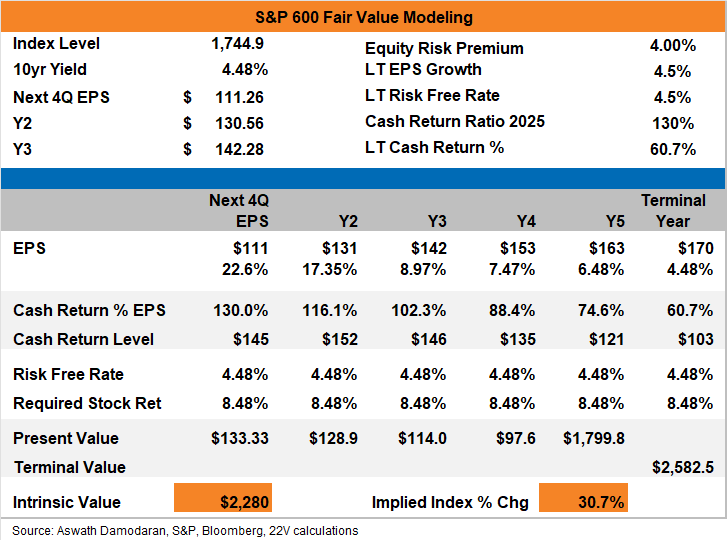
Small cap multiples are still depressed relative to large caps; our fair value work implies a normalization in the multiple spread would lead to +30% upside. For a durable multiple re-rating, track margins. The multiple spread has been a function of the margin spread between small and large caps. Small caps multiples have compressed relative to large caps over time, tracking the widening margin spread between large and small caps. The data from Q1 earnings still favors large caps.
Maybe the AI buildout trade will lead to a fundamental break in the relationship, but so far, it hasn’t.
Charts…
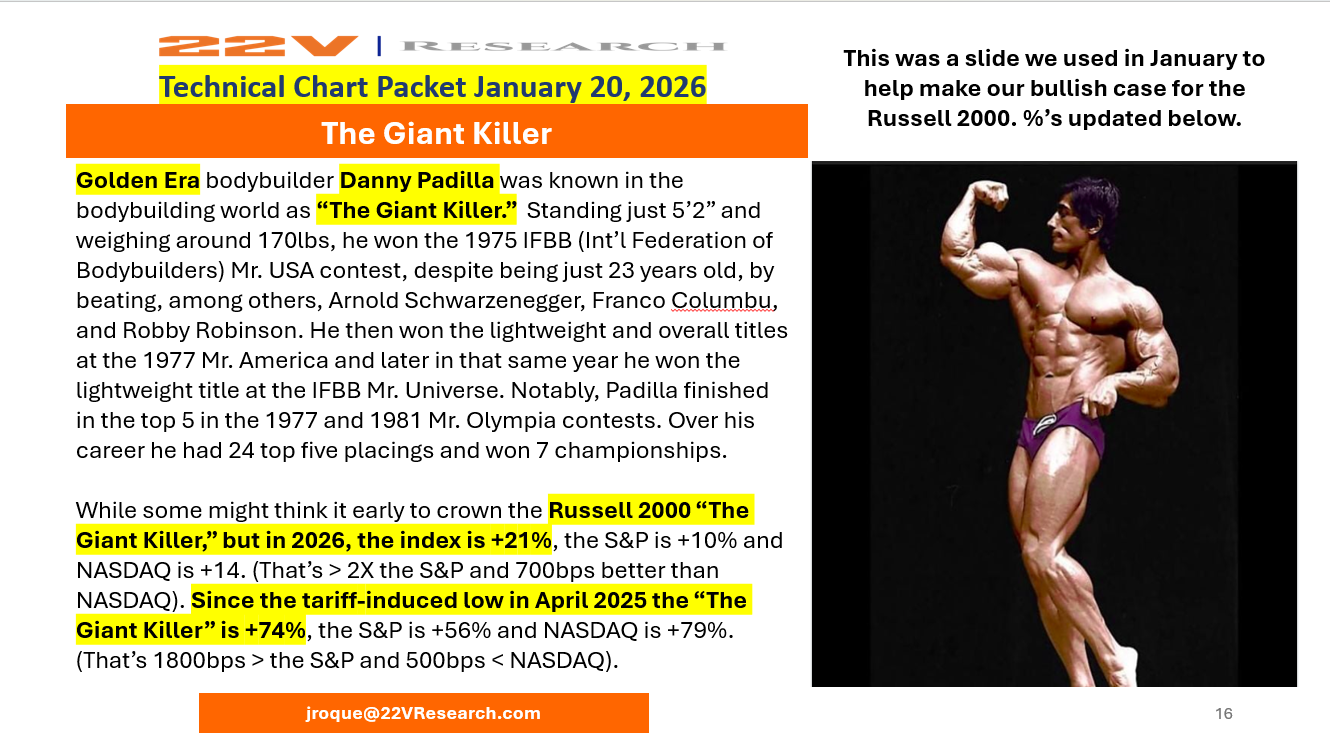
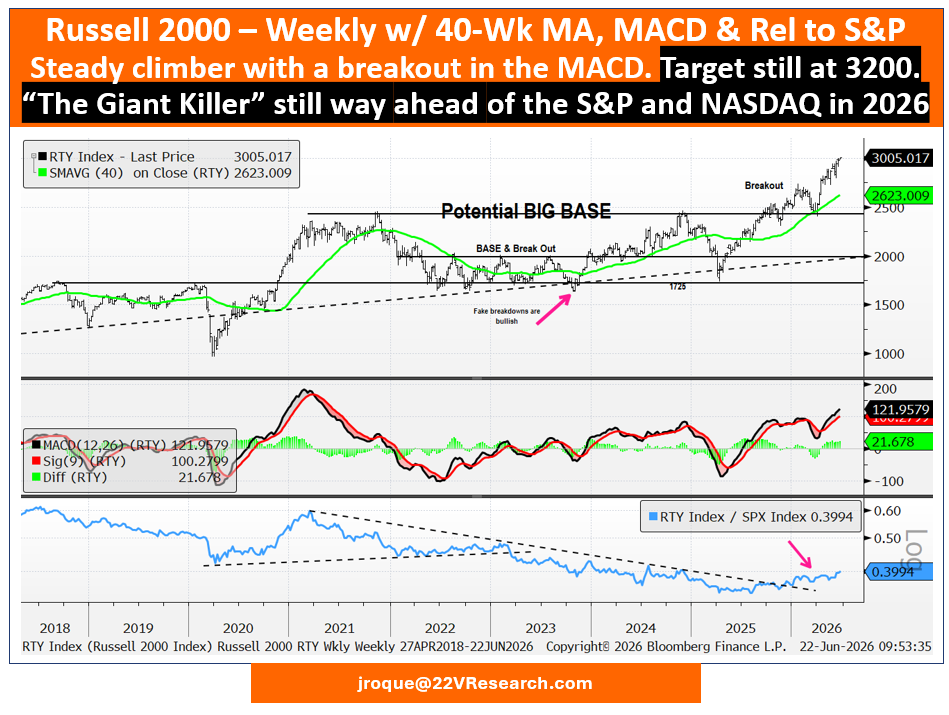
John Roque, 22V’s technical analyst, has a 3200 target on the Rusell (+6% from here).
The spread between the small cap and large cap implied equity risk premium, our preferred cash return-based valuation metric, roughly tracks margins. Small cap margins continue to lag large caps. Improvement in small cap margins, driven by AI or better business practices in general, is the key to a durable multiple rerating.
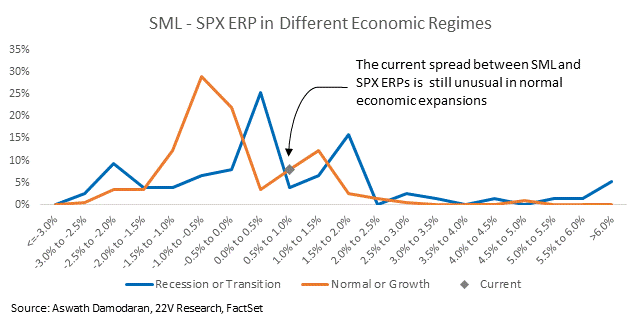
IF the multiple spread closes, likely because of margins, then implied upside in the S&P 500 is +30% relative.
Small caps had a strong 1Q earnings season. Earnings beat rates, beat distributions, and earnings revisions were all better than normal.