Bottom Line: Fed Tightening Main Risk
The risk reward in overall markets is less exciting now that a Fed tightening campaign is a live risk. We are focused on internals, and the Earnings Momentum factor looks interesting to us now. A Fed tightening campaign would be associated with the Fed attempting to “force GDP growth well below 2%” to drive core inflation lower and accepting the risk of a higher unemployment rate as economic activity slows. Investors discounting upside risk to the unemployment rate would increase recession probabilities and risk premiums.
Relevant News: Data that is Important to Watch
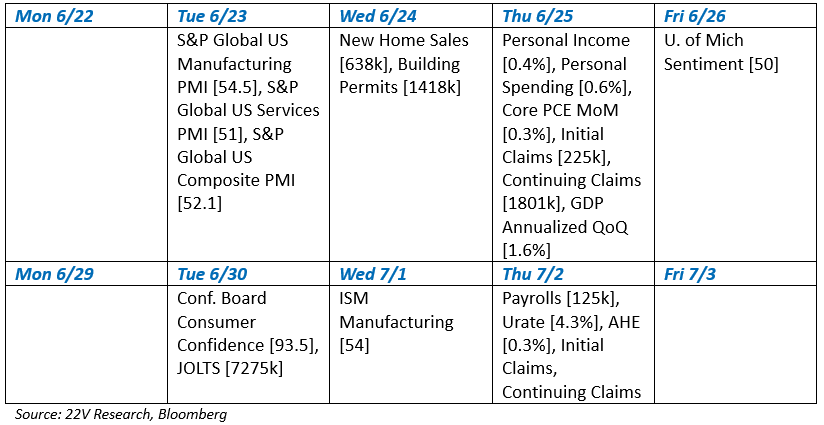
The Fed’s forecast for core PCE in 2026 (3.3%) and 2027 (2.5%). To reach those targets, core PCE (CPCE) needs to print roughly 0.21% per month from June forward. If inflation comes in above 0.21%, starting with the June data released in July, expect higher equity risk premiums as a tightening campaign is likely to happen. If core inflation comes in below 0.21 equity risk premiums will be biased lower as hike risk comes off the table.
Things to Watch [Consensus, Results]:
Strategy:
Expect Flattish Markets Ahead of Key Inflation Data. Market Internals are More Interesting Now – (HERE)
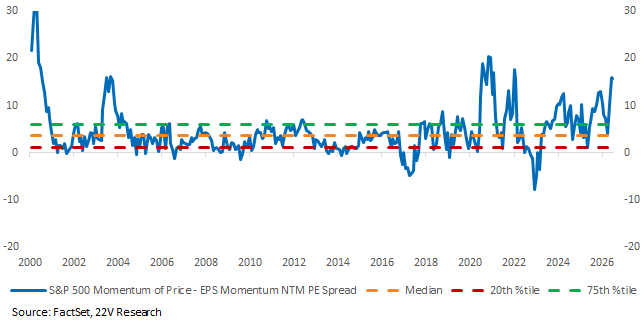
In a range bound market, we are focused on idio or thematic ideas. The Price Momentum factor has accelerated sharply while EPS Momentum advanced at a much milder pace, leaving a usually large performance spread between the two. The NTM P/E premium of the top-decile Price Momentum basket relative to EPS Momentum has reached its 97th %tile. We continue to expect Momentum factors to gain, with EPS Momentum posting a better risk-reward profile.
Quant:
A “Catch-Up” of Fundamental Factors Increasingly Likely – (HERE)
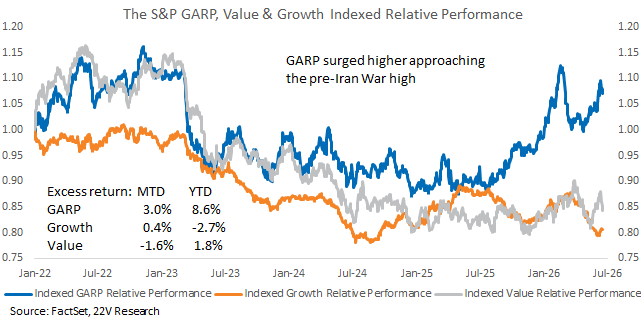
The S&P GARP basket rebound sharply as geopolitical tensions eased since May. Growth remains attractive given the Fed has signaled that slower economic activity is needed to reduce inflation pressures. Banks, Insurance, Media, and Health Care Equipment currently emerge as the industry group most exposed to both Value and Growth. For investors seeking exposure to those areas, the tradable long only Small Cap GARP Swap (MS22GARP) and long-short Swap (MS22LGSM) which long Small Cap GARP vs. short OEX names both benefit from the theme, and have gained 15.6% and 9.2% this year respectively.
China:
China’s “Sleeper” Role in the Global Data Center Buildout – (HERE)
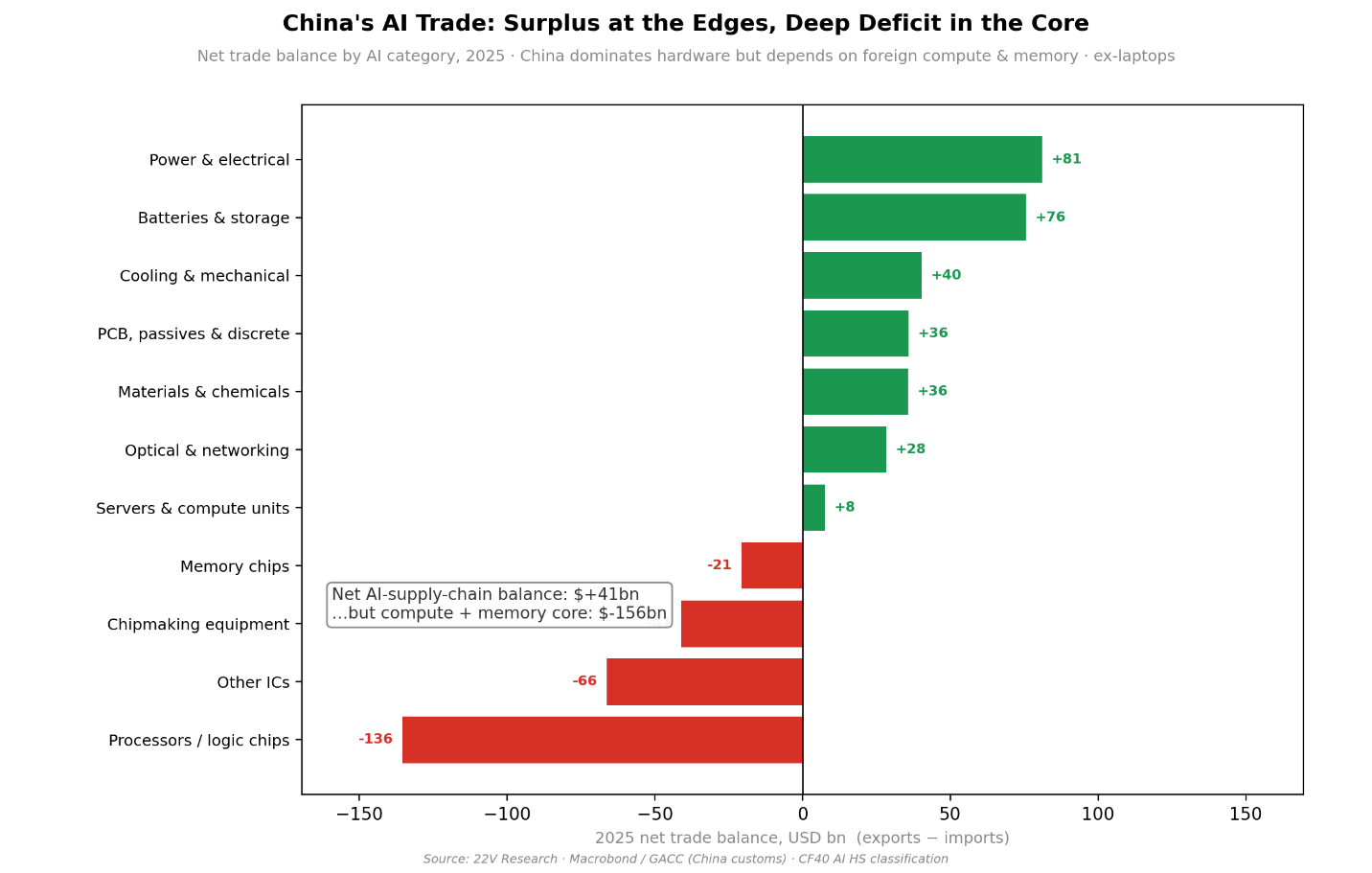
China has become a critical player in the global AI infrastructure buildout, supplying key data center components such as batteries, power equipment, cooling systems, optical networking gear, and critical minerals, even though it remains heavily dependent on imported advanced semiconductors. This has created two major AI investment themes in China: profitable exporters benefiting from global data center demand, and semiconductor firms backed by Beijing’s push to reduce reliance on foreign chip technology. While the U.S. has reduced direct imports from China, Chinese firms still account for an estimated 28% of U.S. AI-related hardware supply when trade rerouting is considered, and China maintains significant leverage through critical mineral and rare earth supply chains. At the same time, China’s aggressive investment across AI infrastructure could help ease global supply bottlenecks and lower costs, making it both a strategic vulnerability and a potential source of supply relief for the AI boom.