

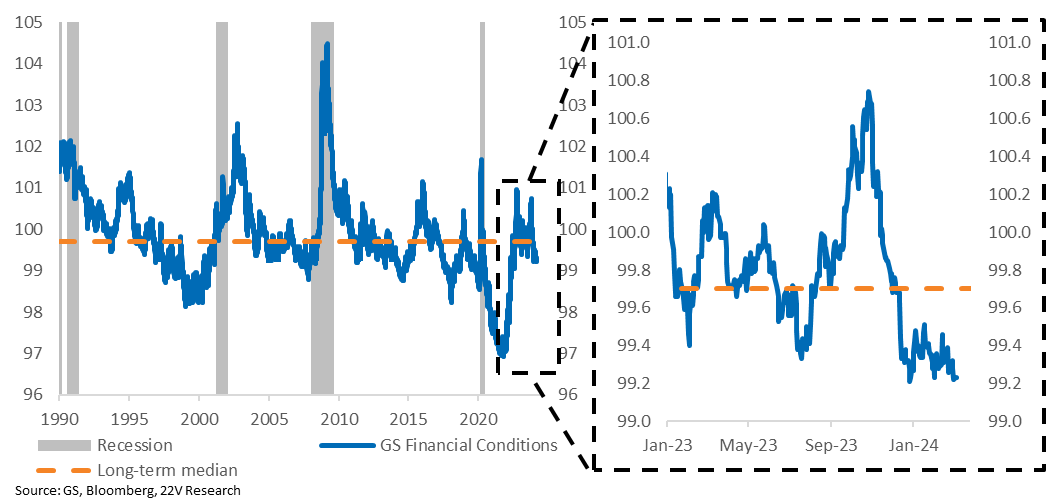
SUMMARY: Recent Fed speeches (see Bostic yesterday) and papers (BIS paper here) continue to press the idea that the LEVEL of interest rates is not the best guide, short term, in determining the direction of policy. In short, R* – the Fed’s estimate of the equilibrium fed funds rate – seems to be much higher than most had estimated. It’s tough to lean on long and variable lags related to historically high short rates when highly interest rate sensitive sectors like housing are improving and demand growth is above trend. You can get a sense of this being true by trying to go out to dinner, buy a house, plan a trip or looking at your Bloomberg screen (bond yields are up, stock prices are up, bitcoin is up, and FCI is stable).
Anyway, what this means according to Peter Williams (HERE), is as follows. “This comes back to my high-level framing of the current Fed outlook: they seem to want to cut at least a bit (partly reflecting their views on r*), the inflation data is what will allow them to start cutting, but the labor market is what will tell them how deeply to cut once 50-100bps of ‘starter cuts’ take place. If the economy can tolerate higher rates in a sustainable way, that is to say if r* has shifted higher, then there ultimately be less need for cuts outside a recession and the Fed is likely to underdeliver on its current medium-term (2025 and beyond) forecasts.”
Bottom line, fewer cuts because the economy can tolerate higher rates IS NOT a problem for risk assets. The Fed turning hawkish, to slow inflation, would be a problem for risk. Wage growth not moving toward 3.5% or economic growth remaining above 2.75% would encourage a hawkish/risk off fed shift. The payroll data on Friday and CPI next Tuesday are important.
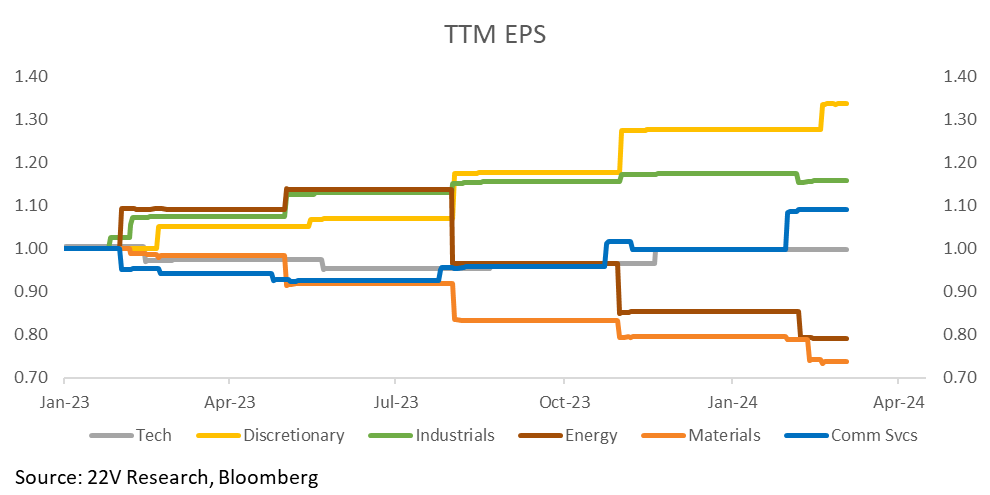
Industrials Fundamentals Lead the Way: Deep Cyclicals outperformed Early Cyclicals (on an equal and cap weighted basis) for most of February. Industrials led the way and are the second-best performing sector YTD (equally-weighted). Other Deep Cyclicals – Materials and Energy – are lagging Industrials significantly. The fundamental tailwinds for Industrials have been stronger. 4Q23 revisions were better, and TTM and NTM EPS growth has been much higher going back to 2023, widening the performance spread. Industrials won’t have much of a China tailwind, but the sector has posted strong without a China tailwind recently.
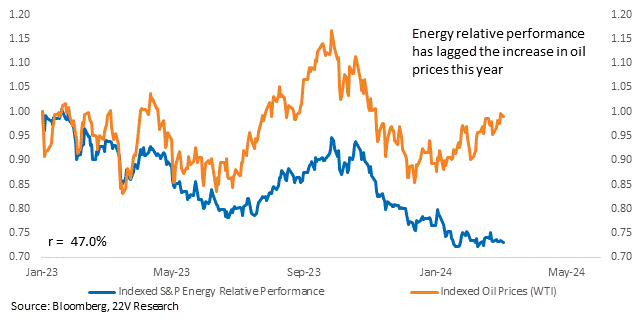
Better Outlook for Energy: Energy has the potential to catch up. Energy earnings growth sagged in 2023 as oil prices fell from their 1H22 levels. The S&P Energy sector price has been tracking oil, but relative performance has lagged. If oil prices remain around current levels (likely if economic growth doesn’t slow sharply), Energy stocks relative performance should improve.
More details in the full report below…
MARKET VIEWS: Yesterday, Atlanta Fed Pres Bostic leaned against quick readjustment cuts and laid out a case for cautiously ‘probing’ downwards, arguing there’s “pent-up exuberance” in the corporate sector. Peter does not think that implies less data dependency going forward. It was more about revisiting the depth of any cutting cycle and that r-r* (policy rate – neutral rate) is much less important than Household Net Worth and broader financial conditions. Basically, the Fed is leaning less on the historically high nominal fed funds rate as a headwind to growth. And the responses to a big labor market shock or upside inflation surprise are still there despite the betas to downside inflation and upside growth falling.
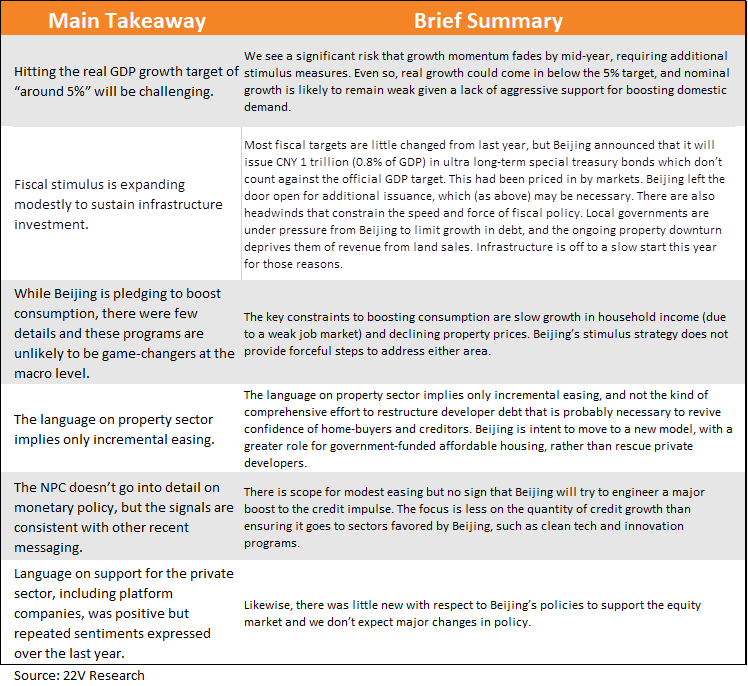
China’s National People’s Congress is underway. Premier Li Qiang laid out China’s growth and stimulus targets for 2024 overnight. The announcements, including the target for real GDP growth of “around 5%” this year, met the subdued expectations in our preview report (link HERE). The market reaction was muted. Per Michael Hirson, “While China’s leadership is keen to revive confidence, it is sticking to a playbook of moderate stimulus and a priority of supply-side measures to advance industrial policy goals rather than aggressive steps to boost domestic demand, particularly household consumption. Economic conditions will remain challenging amid the ongoing property downturn, weak private sector confidence, and deflationary pressures.”
Industrials Fundamentals Lead the Way: Deep Cyclicals outperformed Early Cyclicals (on an equal and cap weighted basis) for most of February. Industrials led the way and are the second-best performing sector YTD (equally-weighted). The other Deep Cyclicals – Materials and Energy – are lagging Industrials significantly. The fundamental tailwinds for Industrials have been stronger. During 4Q23 earnings reporting, revisions to Industrials surged, leaving the group’s earnings +6.4% higher than initial estimates. Energy revisions ended flat and Materials -3.8%. Total S&P revisions ended up +65bps higher.
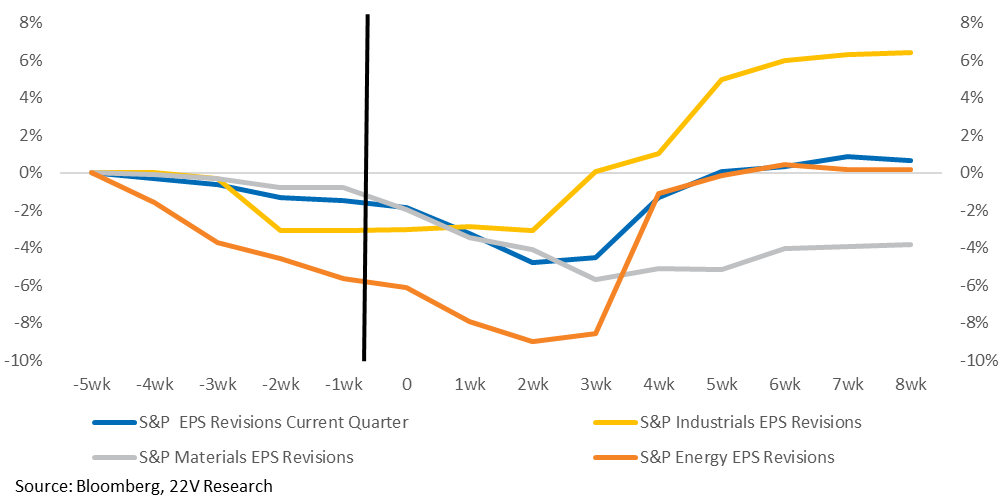
Industrials TTM and NTM EPS have grown way above Materials and Energy EPS back to 2023 too. Stronger-than-expected economic growth has helped Industrials earnings expectations more than oil and commodity prices. Industrials won’t have much of a China tailwind, but Industrials earnings growth has been strong without a China tailwind recently already.
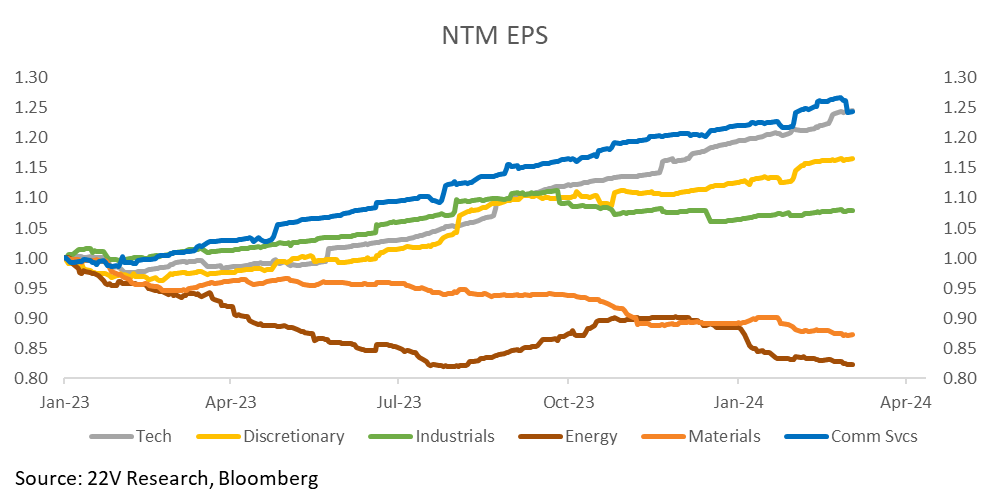
Energy and Materials have had terrible (technical term) earnings growth, widening the performance spread within Deep Cyclicals.
Better Outlook for Energy: Energy has potential to catch up. Energy earnings growth sagged in 2023 as oil prices fell from their 1H22 levels. Per Colin Fenton, 22V’s commodities expert, the outlook for oil prices over the short-term is constructive. Per Colin: “Spot crude prices go up, following the products.” The S&P 500 Energy sector price has been tracking oil prices.
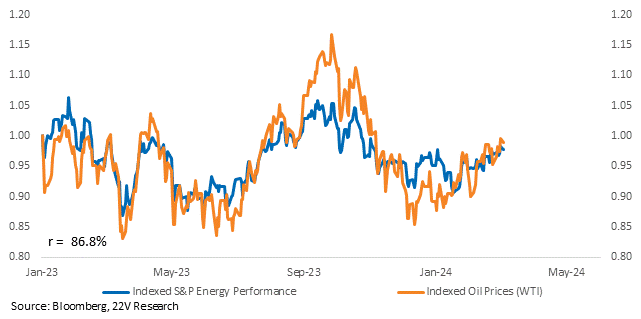
Relative performance has lagged much more. Industrials have led based off strong fundamentals. The case for Energy’s fundamentals is improving over the short-term.


