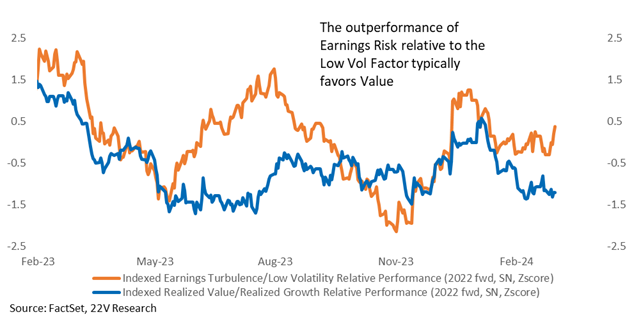
SUMMARY: Value names have lagged steepening of curves, going back to November 23, and are becoming more compelling short term. A benign payroll/AHE report this Friday would set the stage for a recovery in Value. A strong payroll number would encourage further Growth factor gains. The Earning Risk factor has experienced a sharp rebound relative to the Low Vol factor. That is typically associated with Value outperforming Growth. GARP is our favorite factor approach, and we would be leaning into the Value portion of GARP Now. Energy in particular (HERE).
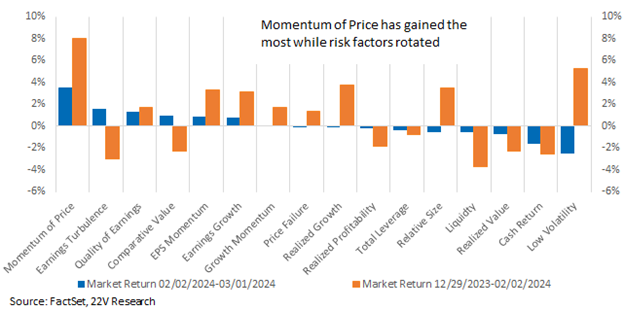
Ex Value, market appetites rotated towards risk-on factors in February as macro readings and earnings remained strong and financial conditions stable. The first two months of the year were more “risk off” internally as interest rates adjusted higher. When it became more obvious that the increase in interest rates was related to a positive economic growth shock, and not an inflation shock, market internals improved.
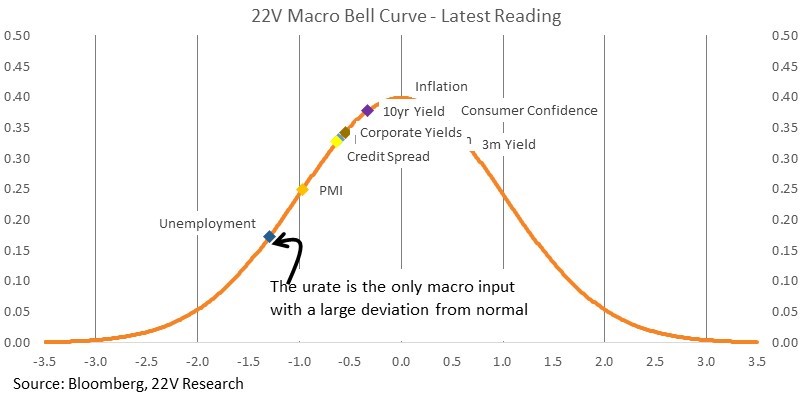
The month of February internals is consistent with most macro indicators having moved back into their normal ranges relative to history (within 1std), including inflation when measured by core PCE (the Fed’s focus). Unemployment remains VERY low relative to history though. We are in a normal economic expansion (HERE) and the market should continue to trade that way. UNLESS we start seeing increased wage and inflation risk. Payroll and CPI are important.

RISK – Consensus Implies a Hawkish Wage Reading On Friday: What we are about to point out is consensus estimates for the workweek and Average Hourly Earnings. Just Keep in mind that estimating the AHE and workweek numbers are VERY hard in normal times. And especially so now given the January weather impacts. We are not saying the Payroll report will be hawkish. Just that investors should understand the point below in advance. It will be a major focus on jobs day.
Anyway, as Gerard pointed out (HERE), the workweek had an unusual decline in January due to poor weather. February weather was fine. Consensus expects a full reversal of the workweek. Consensus also expects average hourly earnings to rise 0.2%. That 0.2% does NOT assume a full reversal of the poor January weather on wages. Recall, wages were much stronger in January BECAUSE the workweek declined. Wages run in the opposite direction of the workweek, so if the workweek fully reverse and wages do not, as consensus assumes, the data would imply that underlying wage growth is accelerating meaningfully. Something to keep an eye on.
Full report below…
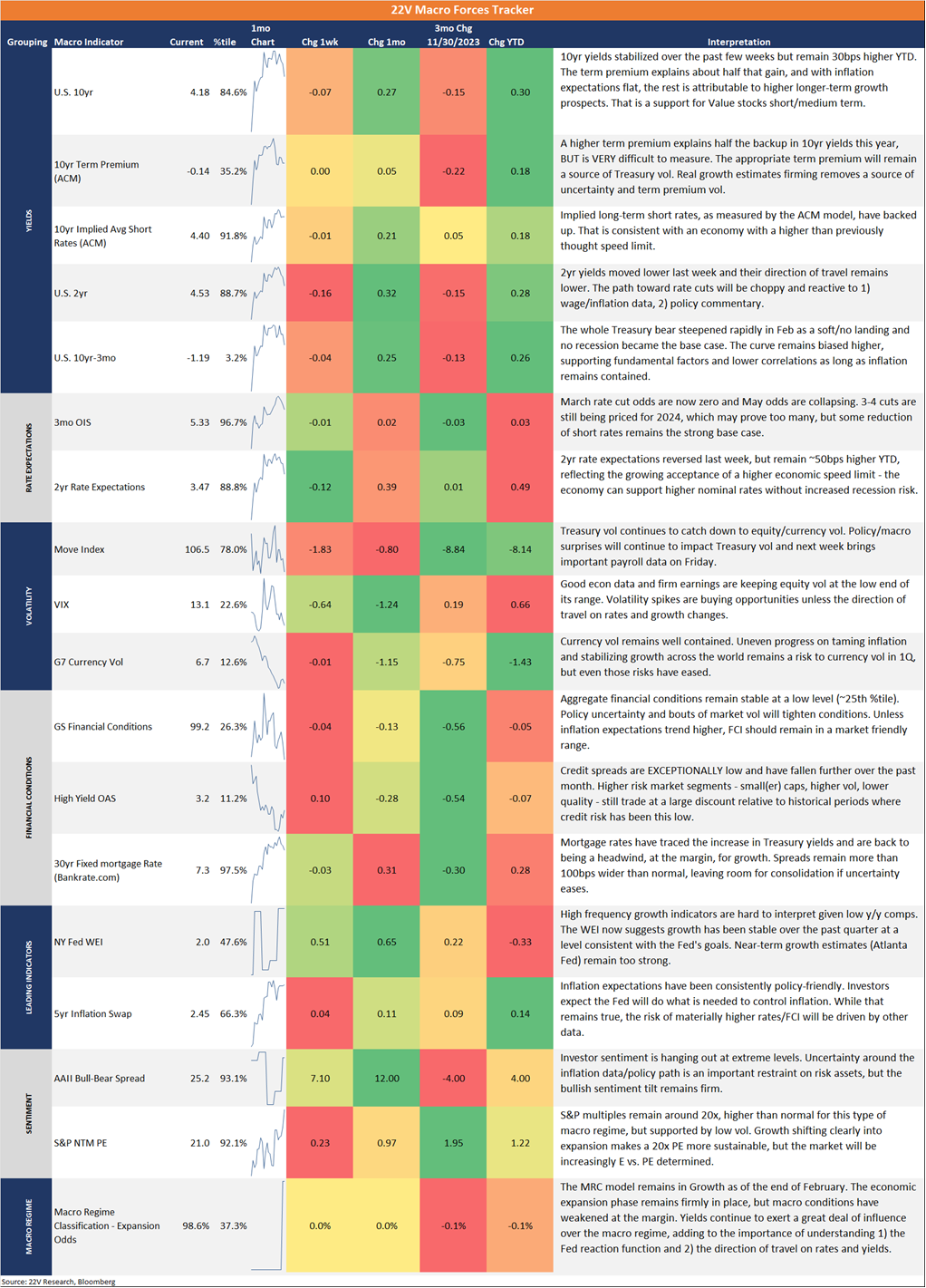
MARKET VIEWS: Growth factors have continued to outperform, aided by the easing of yields last week. Value names have lagged the steepening of curves, going back to November 23, and are becoming more compelling short term. A benign payroll/AHE report this Friday would set the stage for a recovery in Value. A strong payroll number would encourage further Growth factor gains. The Earning Risk factor rebounded relative to the Low Vol factor. That is typically associated with Value outperforming Growth. GARP is our favorite factor grouping, and we would lean into the Value portion of GARP Now. Energy in particular. At the market level, room for gains are limited. PEs are around 21x, the VIX is in the low teens, and investors sentiment is >90th %tile.
Important – Potentially Hawkish – Payroll Point: Consensus assumes the length of the average workweek reverses all the decline recorded in January. The workweek had an unusual decline in January due to poor weather. February weather was fine. Consensus also expects average hourly earnings to rise 0.2%. That 0.2% does not assume a full reversal of the poor January weather on wages. Wages run in the opposite direction of the workweek, so if the workweek fully reverse and wages do not, as consensus assumes, the data would imply that underlying wage growth is accelerating meaningfully. The 3-month growth rate of AHE would look like the below assuming consensus is correct. Keep in mind that estimating the AHE and workweek numbers is VERY hard given the January weather impacts, so it is very tough to lean on consensus estimates. But investors should understand this point in advance as it will be a major focus on jobs day.
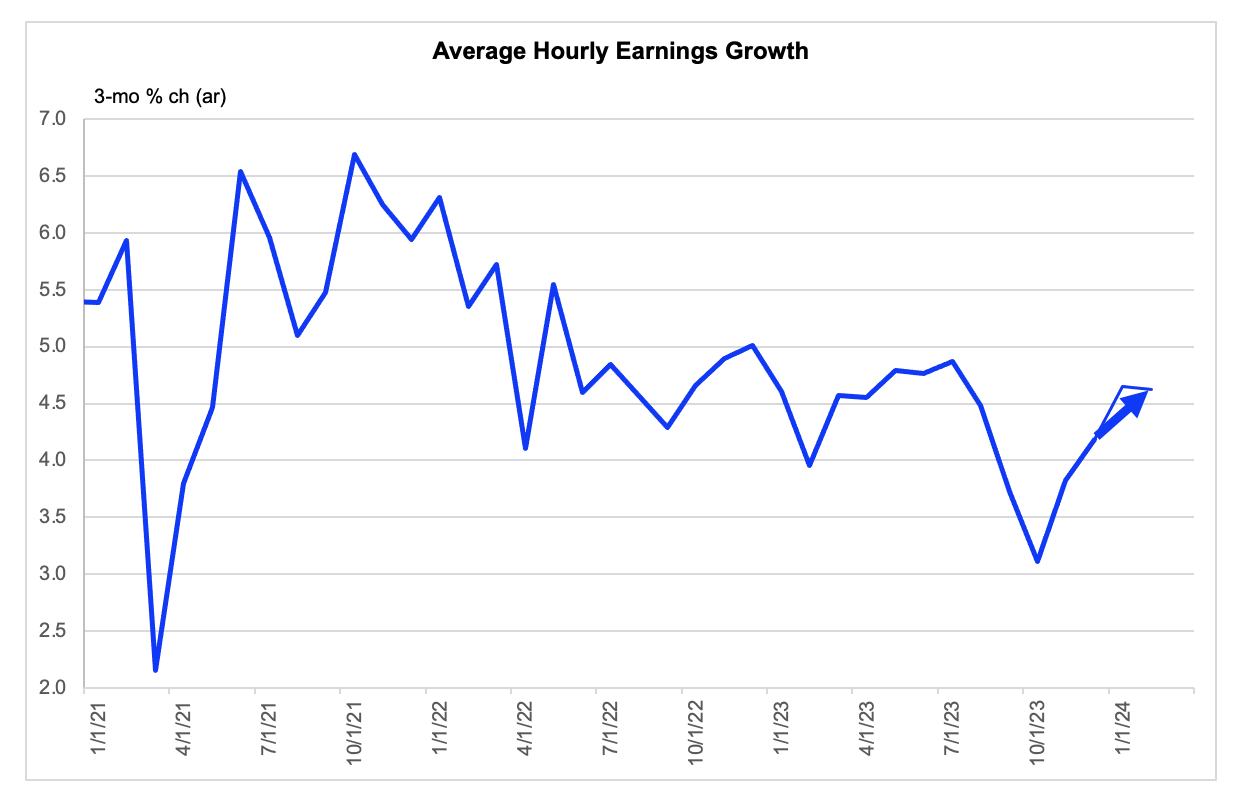
Source: Bloomberg, for historical data and consensus
Data are actual to February
Internals Starting to Reflect a Normal Economic Expansion: Though the S&P gained consistently both in February and January this year, market appetites rotated towards risk-on factors in February as macro readings and earnings remained strong while financial conditions were stable. Fundamental factors gained including Momentum, Quality, Value and Growth. The first two months of the year were more “risk off” internally as interest rates adjusted higher. When it became more obvious that the increase in interest rates was related to a positive economic growth shock, and not an inflation shock, market internals improved.
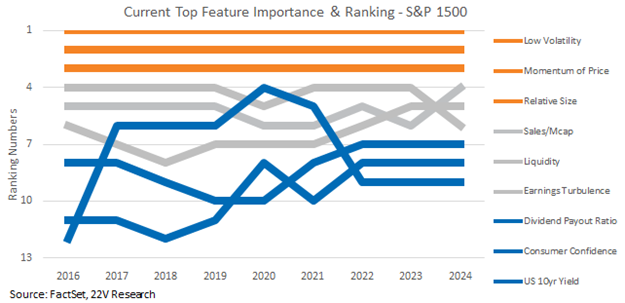
Currently this year, Low Volatility, Momentum, and Size are the factors determining stock rankings under our Macro Modeled Factor Portfolio (LGBM Portfolio. See Today’s Quant update here). That is aligned with their leading/dragging factor contribution. While we have also seen increasing impact from sales vs. market cap. 10yr yields have become a much lower contributor to determining stock groupings. That has served us well as 10yr yields should exert less influence going forward. On of our highest conviction calls to start 2024 was that the intense negative correlation between 10yr yields and Stocks would dissipate. That has happened. We of course will be wrong if inflation stays too high though.
As we noted last week (HERE), most macro indicators have moved back into their normal ranges relative to history (within 1std), including inflation when measured by core PCE (the Fed’s focus). Unemployment remains VERY low relative to history. Basically, we are in a normal economic expansion and the market should continue to trade that way. That is not a problem UNLESS we start seeing increased AHE and inflation. Bottom Line: Higher yields are likely a headwind still, but unless financial conditions tighten from here, which would happen if 10yr yields are increasing because of inflation risk, risk-on, Cyclical, GARP, leadership remains our base case.
Macro Tracker: Stocks continued to move higher last week despite the mega 7 faltering. The average stock gained 1.1%, besting the 0.95% return of the cap weighted index. Easing policy uncertainty combined with firming real growth prospects is a helping lift risk-on factors and other market laggards. There has been a shift in market internals towards a risk-on tone from last week’s and the YTD risk-off stance. Earnings Turbulence worked across the broader market last week at the expense of Low Volatility (the top contributor YTD). Growth factors have continued to outperform, aided by the easing of yields last week. Value names have lagged the steepening of curves and are becoming more compelling short term. A benign payroll/AHE report this Friday would set the stage for a recovery in Value. A strong payroll number would encourage further Growth factor gains. Regardless of the style rotation, Quality factors continue to deliver positive active returns across weeks and market segments. At the market level, room for additional gains is limited. PEs are around 21x, the VIX is in the low teens, and investors sentiment is >90th %tile. Strong earnings, better real growth, and declining vol mean the downside risk to equities remains low, but best place to find alpha remains within market rotations at the factor/industry group level. Stock specific opportunity is increasing too as correlations remain low and factor dispersion increases.