Discretionary has been hit with multiple headwinds over the past several years. COVID lockdowns crushed demand and earnings, supply chain issues weighed on volumes, tight labor market raised costs, and now tightening financial conditions again threaten demand. Discretionary sector EPS fell -8% in 2Q, led lower by a -35% contraction by Retail.
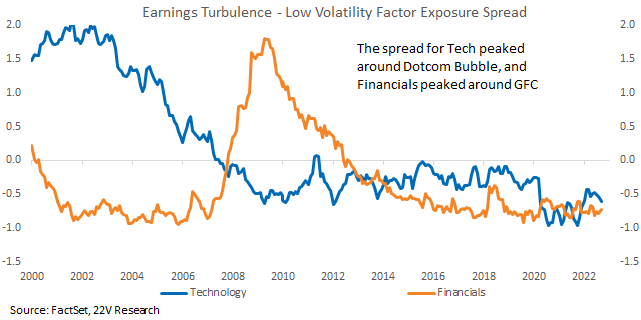
Discretionary exposure to Earnings Turbulence has skyrocketed to its near its highest level in 22 years. And its Low Vol exposure is at an all-time low. Measured against each other, the Earnings Turbulence vs. Low Volatility within Discretionary is at an all-time high. The Earnings Turbulence vs. Low Volatility spread of Technology peaked during Dotcom Bubble. The ET vs. LV spread for Financials peaked during the GFC. On the one hand, the high spread suggests higher volatility and risk for Discretionary names today relative to history. On the other hand, the current 0.72 spread is still much lower than the TMT peak for Tech and GFC peak for Financials. That suggests the risk to Discretionary remains mild relative to those extremes.

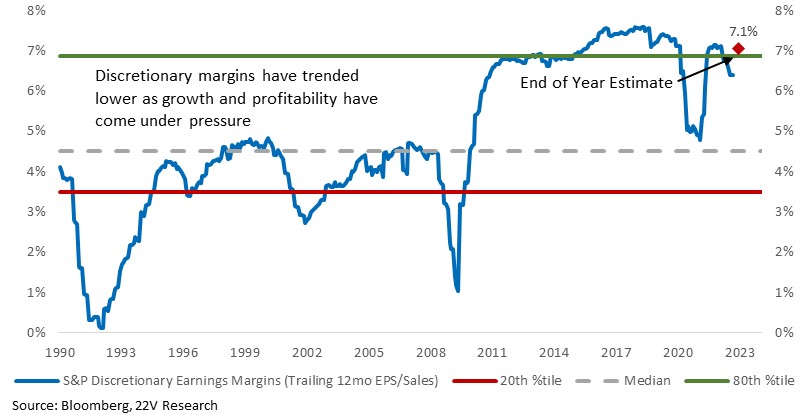
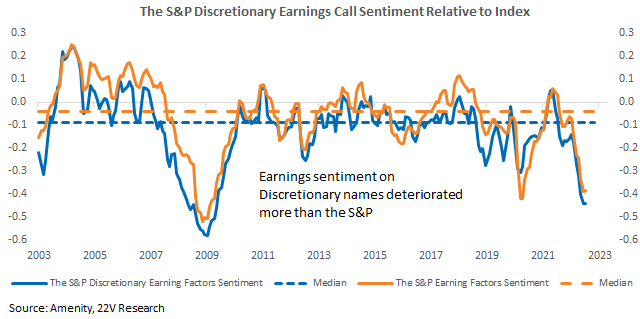
Part of the factor decline has been driven by deteriorating earnings. Margins for S&P Discretionary names fell this year and have been the lowest among all the S&P sectors. Earnings sentiment of the Discretionary names, measured using the Amenity natural language processing tool, has deteriorated more than the S&P names since last year.
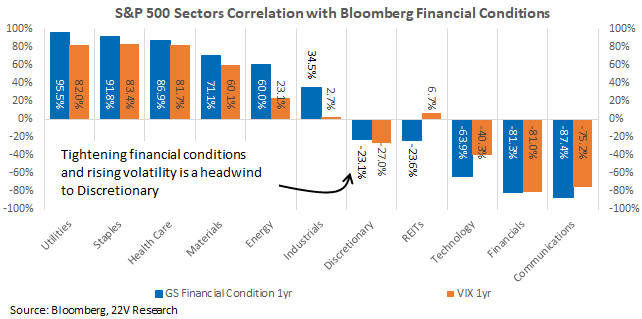
From a policy perspective, the Fed needs demand growth to slow to reduce inflation, so any upside surprise in Discretionary demand increases the risk of more rate hikes and tighter financial conditions. Discretionary is negatively correlated with both tightening financial conditions and implied equity volatility, as a result, macro trends will also bring more downward pressure on the sector, especially Retailing as we discussed (report HERE). Policy is an ongoing Discretionary risk.
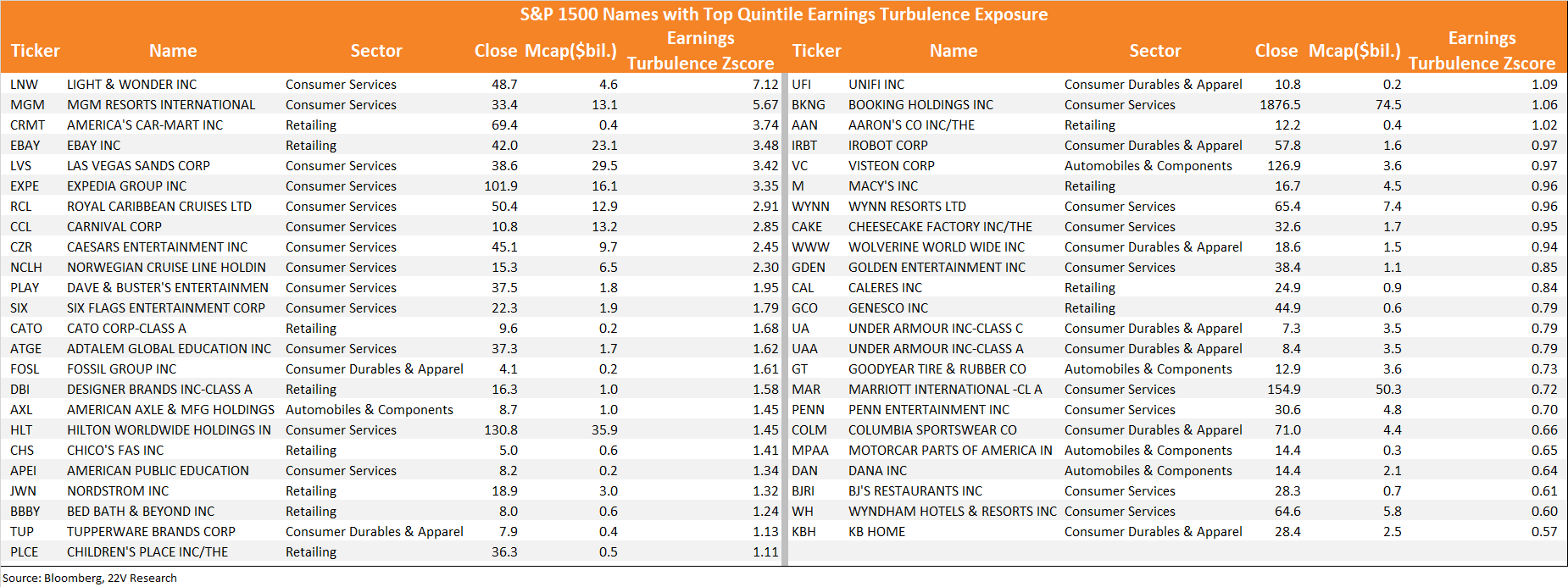
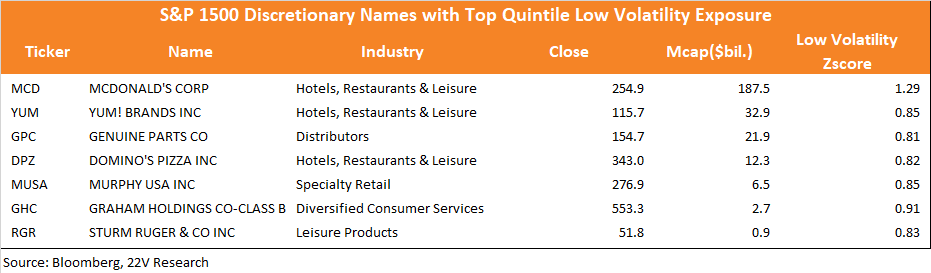
At the end of the report, we list the S&P 1500 names with high Low Volatility scores. There are very few names in that grouping. The Discretionary names with high Earnings Turbulence exposure, and face ongoing headwinds, are listed as well.
Higher Volatility Risk for Discretionary: Discretionary has been hit with multiple headwinds over the past several years. COVID lockdowns crushed demand and earnings, supply chain issues weighed on volumes, tight labor market raised costs, and now tightening financial conditions again threaten demand. Discretionary sector EPS fell -8% in 2Q, led lower by a -35% contraction by Retail. Weak earnings helped make Discretionary the second worst sector this year, underperforming the S&P by -4.5%, second only to Communications. Discretionary risk factor exposure has become extreme. Discretionary exposure to Earnings Turbulence has skyrocketed to its near its highest level in 22 years. And its Low Vol exposure is at an all-time low.
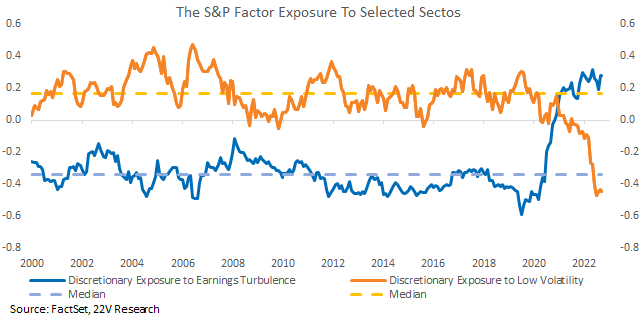
The diverging factor exposure changes on Earnings Turbulence and Low Volatility led to the spread between them reaching the highest level historically, staying at 0.72. High economic uncertainty means more risk-on/off rotations (HERE), and Discretionary is the sector most levered to those rotations (benefiting from risk-on, struggling during risk-off).
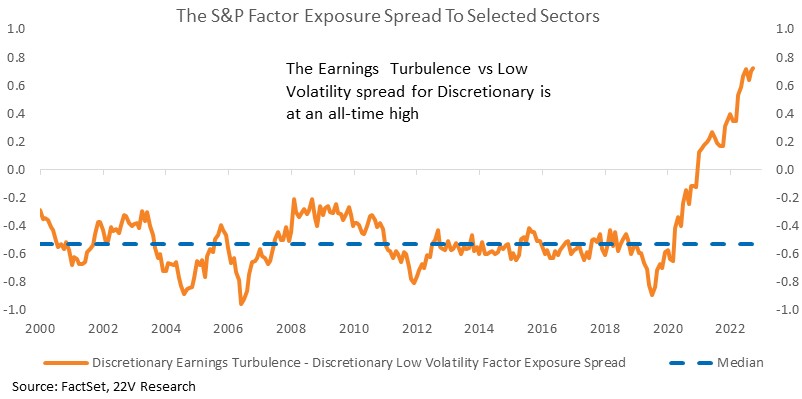
The Earnings Turbulence vs. Low Volatility spread of Technology peaked during Dotcom Bubble. The ET vs. LV spread for Financials peaked during the GFC. On the one hand, the factor spread is an indicator of sector volatility and risk historically. On the other hand, the factor spread for Tech and Financials reached peaked around 2 (in normalized terms), while the factor spread for Discretionary is still below 1.
Part of the factor decline has been driven by deteriorating earnings. Margins for S&P Discretionary names fell this year and has been the lowest among all the S&P sectors. Tight labor markets, some lingering supply chains issues, and slowing economic growth are still headwinds for Discretionary earnings and profitability. From a policy perspective, the Fed needs demand growth to slow to reduce inflation, so any upside surprise in Discretionary demand increases the risk of more rate hikes and tighter financial conditions. Policy is an ongoing Discretionary risk.
Earnings sentiment, measured using the Amenity natural language processing tool to “read” management sentiment during earnings calls, shows Discretionary earnings sentiment deteriorated faster than the S&P. Managers across U.S. large cap companies are worried about earnings and margins, and management at Discretionary names are more worried than most.
As we discussed in the latest quant report (HERE), volatility is likely to continue rising together with tight financial conditions as reining inflation remains the top priority for the Fed. Discretionary is negatively correlated with both macro readings over the past one year. Rising volatility and tightening financial conditions will likely bring more downward pressure on Discretionary, especially for Retailing as we discussed (HERE).
Below we list the S&P 1500 Discretionary names falling in top quintile Low Volatility basket. There are only 7 Discretionary names in the basket as the sector’s exposure to Low Volatility has collapsed. These names tend to perform better within Discretionary as investors favor Safety factors (HERE) and Low Volatility outperformed during bear market declines (HERE).
The S&P 1500 Discretionary names falling in top quintile of Earnings Turbulence are listed below. As Earnings Turbulence is expected to underperform as financial conditions tightened, Discretionary names in the following basket are more likely to face headwinds.