SUMMARY: Brent crude is up to $125 this morning as the U.S. mulls an outright import ban on Russian oil. Stagflation headlines are surfacing as inflation expectations gap higher alongside energy prices. Shorting the market is getting tougher as the S&P continues to fall and the equity risk premium rises. As we wrote last week, the skew is increasingly towards the upside. News this morning hit that Russia is willing to halt its military action in exchange for neutrality, Crimea, Donetsk, and Lugansk. If its legitimate, there could be a sharp reversal given backwardation in energy, equity vol, bond vol, and general oversold conditions.
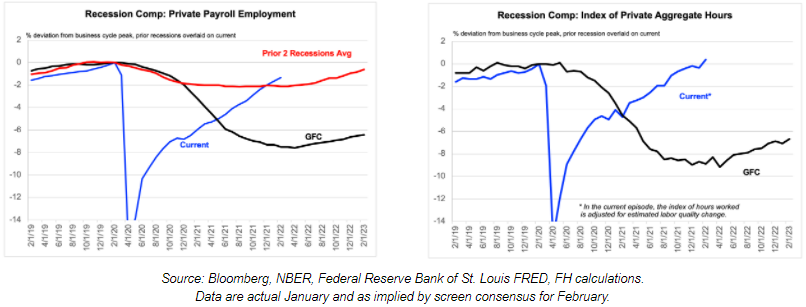
Heading into the oil/commodity spike, consumer trends were strong. Labor input growth and labor income growth are outpacing the prior two recoveries and likely to remain high for some time. And consumer spending on energy goods and services has been in a downward trend, which provides some insulation for consumer activity, which is ~70% of U.S. GDP growth.
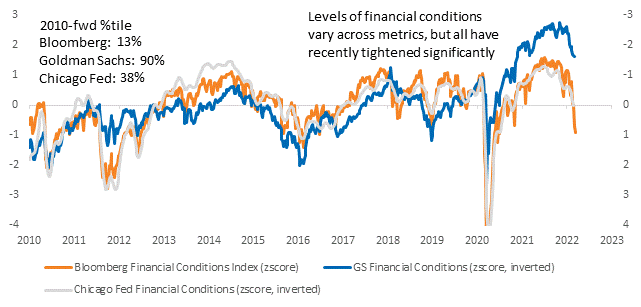
What we don’t know is very clear, and the list of what we do know is growing shorter. 1) Risk appetites will be under pressure while there is concern the war will expand, leaving volatility elevated across assets (equities, bonds, commodities). 2) U.S. growth and inflation trends remain too strong for the Fed, so financial conditions will have to remain tight and likely tighten further even if the war is resolved.

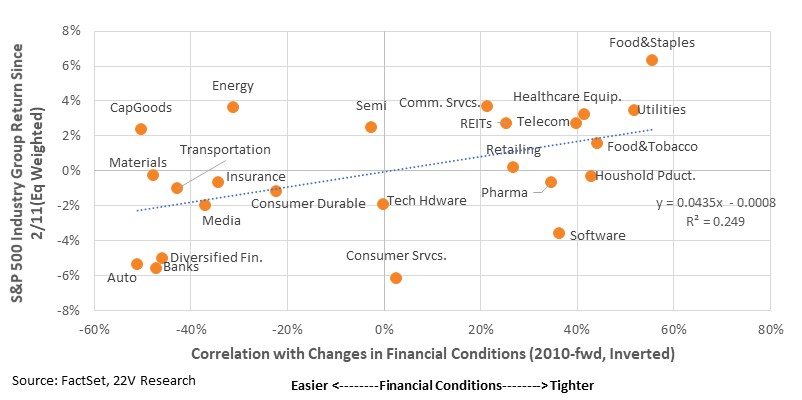
We are sticking to persistent themes we have confidence in: tightening financial conditions, pricing power, and rising real rates. S&P factor and industry group performance has been consistent with tightening financial conditions. John Roque is still bullish commodities and commodity equities, which has been an effective trade.
MARKET VIEWS: Brent crude is up to $125 this morning as the U.S. mulls an outright import ban on Russian oil. Stagflation headlines are surfacing as inflation expectations gap higher alongside energy prices while the growth outlook becomes less clear. But as Gerard has been arguing, economic momentum is still pro-growth. Labor input growth and labor income growth are outpacing the prior two recoveries and likely to remain high for some time. And consumer spending on energy goods and services has been in a downward trend, which provides some insulation for consumer activity, which is ~70% of U.S. GDP growth.
Kim has been spot on; negotiations while shelling/bombing is carrying on are very likely to fail. How long Russian can/will continue its attack is unclear. What we don’t know is very clear, and the list of what we do know is growing shorter. 1) Risk appetites will be under pressure while there is concern the war will expand (other countries joining) or that Russia will be cut out of most global trade (oil, gas, metals, food). Volatility should remain elevated across assets (equities, bonds, commodities). 2) U.S. growth and inflation trends remain too strong for the Fed, so financial conditions will have to remain tight even if the war is resolved.
Shorting the market is getting tougher as the S&P continues to fall and the equity risk premium rises. As we wrote last week, the skew is increasingly towards the upside. News this morning hit that Russia is willing to halt its military action in exchange for neutrality, Crimea, Donetsk, and Lugansk. If its legitimate, there could be a sharp reversal given backwardation in energy, equity vol, bond vol, and general oversold conditions. We don’t know how to measure the authenticity of such reports and negotiations. So, we are sticking to persistent themes we have confidence in: tightening financial conditions, pricing power, and rising real rates. S&P industry group performance has been consistent with tightening financial conditions.
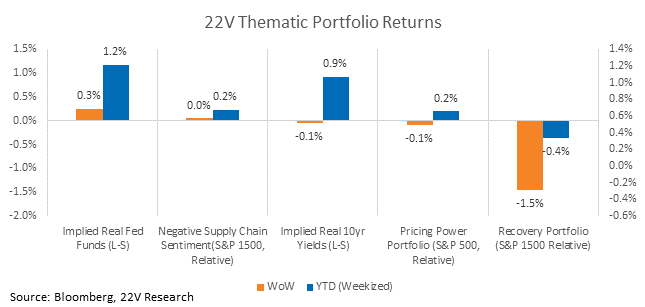
Outside of the recovery Portfolio, which has a poor factor composition for tightening financial conditions, our thematic portfolios are performing well.
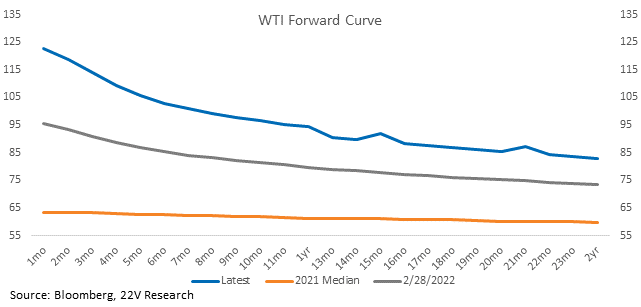
Oil is in severe backwardation and the curve is rising across duration as investors weigh Russia being cut off from global trade. Investors are beginning to price in persistently higher prices to accompany severely higher prices short-term. John Roque is still bullish commodities and commodity equities, which has been an effective trade.
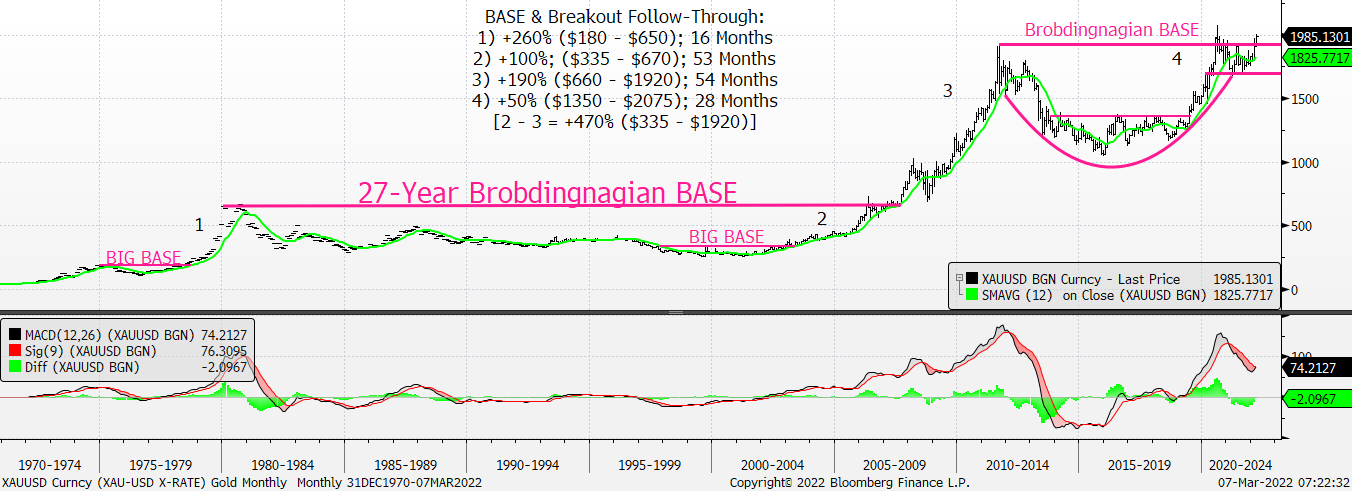
John is also bullish gold. Per John, “Gold closed @ 1970.7, up 4.3% last week and up for four of the last five weeks. Gold has only ever traded higher than 1970 during three weeks in August 2020. We’ve been looking for a new all-time high since November, but it’d be hyperbolic to offer post-breakout targets now when gold hasn’t yet broken out. Our chart shows gold’s history after a breakout has been pretty darn spectacular. We still believe it is not widely owned.”
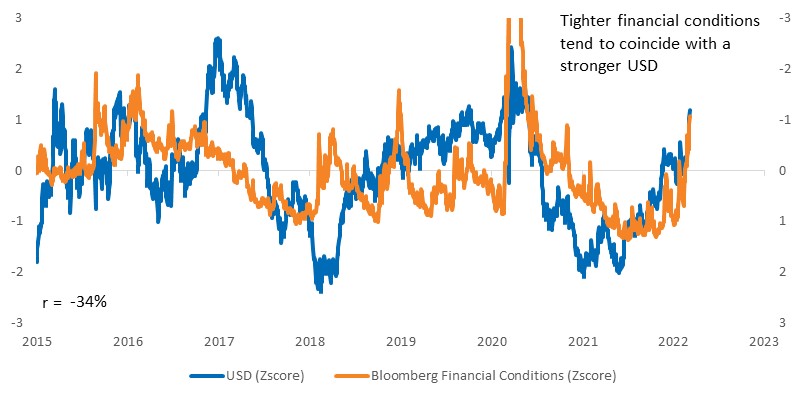
Over the weekend, Gerard broke down concerns about the USD becoming less of a reserve currency due to sanctions on Russia, seizing of assets, etc. His point is that “what we can observe on the screens is that the combination of the Russia shock itself and the US policy response to it are putting upward pressure on the foreign exchange value of the dollar, and downward pressure on the risk-free real interest rate here, in outright terms and relative to domestic economic conditions.” If financial sanctions ultimately result in lower demand for the USD and dollar denominated assets is an interesting philosophical question, but not one that is moving asset prices today.
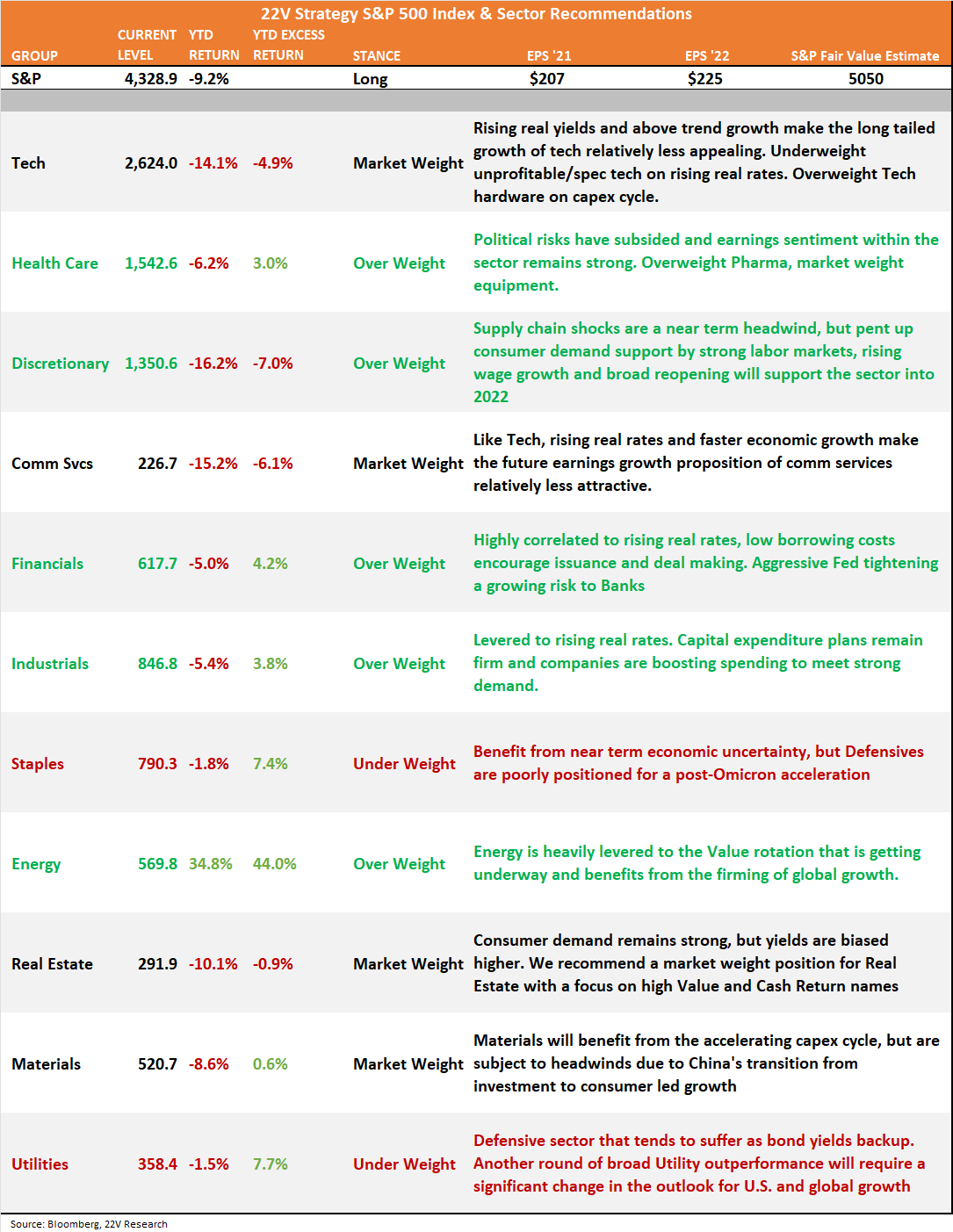
Sector Comments: After rallying mid-week the S&P closed Friday down -1.3%, which was still modestly off its low, leaving the index down -9.2% YTD. That was in a week where the war in Ukraine intensified, culminating in Russia firing on a nuclear power plant that subsequently caught on fire. As we highlighted this past week, the overall market skew has improved unless Russia’s war sprawls further. Energy was up 10% last week as oil prices jumped higher. Utilities were also strong, gaining 6% as Treasury yields fell another 5bp, bring their drawdown to -27bp. Financials were the worst performing sector as Rebound risk is increasing, but the bid to safety trades won’t fade until there is some resolution to the war. Peace breaking out is entirely unpredictable, but what we know today is that U.S. growth and inflation remains too strong, so even if the war ends and some sanctions are rolled back, the Fed will still need to tighten financial conditions to significantly slow growth (how much remains uncertain). We will stick to aligning to stocks well positioned to weather a persistent tightening on financial conditions, and themes related to that idea. We rebalanced our Pricing Power Sentiment portfolio last week. Earlier this morning we rebalanced our Negative Supply Chain sentiment portfolio, designed to benefit from easing of COVID related bottlenecks.