
Our entire repository of COVID charts is HERE.
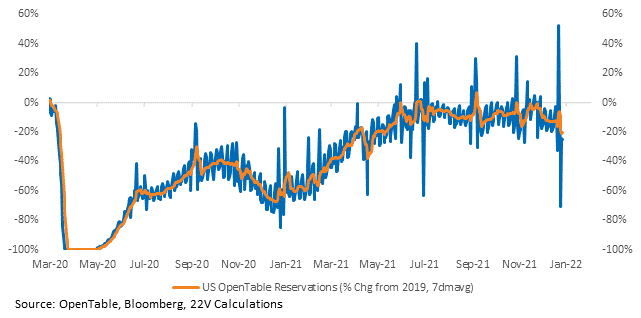
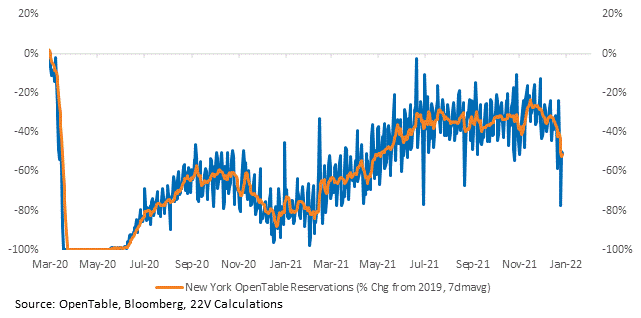
We are still waiting for holiday reporting from the UK. A number of states are still behind too. So, today we’ll focus on consumer behavior. TSA crossings have been steady around -17% below 2019-levels. Airline traffic has not been able to sustain levels above -10%, although the current readings are near a post-pandemic high. Flight cancellations likely did not help. OpenTable data, also relative to 2019, have fallen from even with 2019 to -20% below since the beginning of November. Omicron does not likely represent a significant macroeconomic risk but Omicron is a headwind to COVID-sensitive spending.

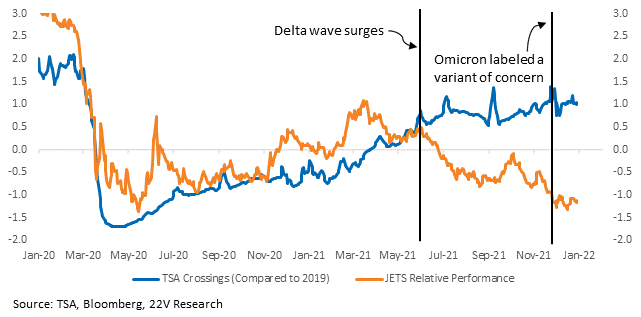
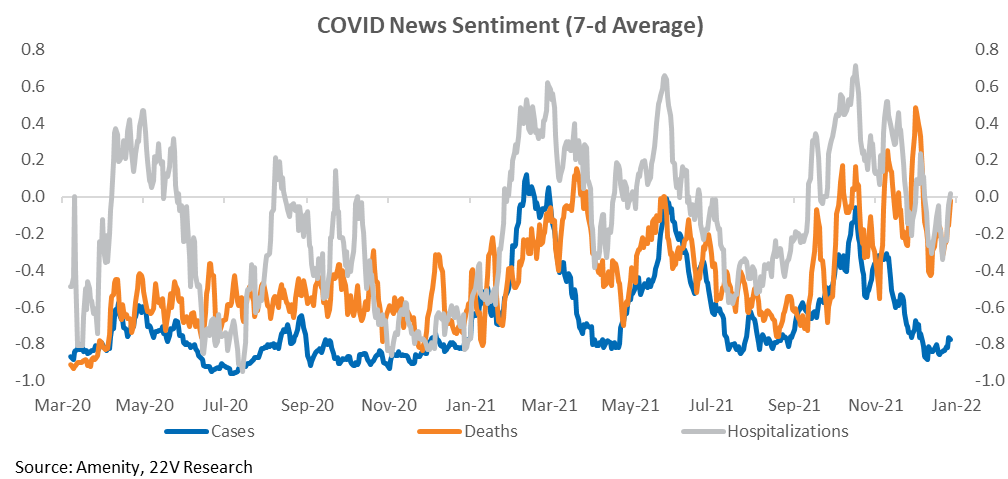
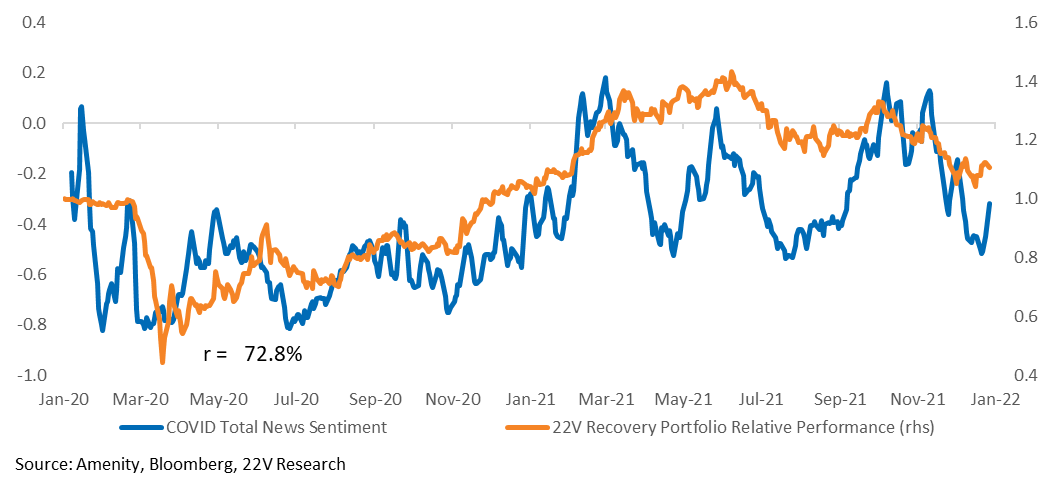
As we mentioned yesterday, JETS relative performance is still poor. TSA crossings are near a post-pandemic high, around -10% lower than in 2019. Airline demand is outpacing airline equity performance. International travel is still a headwind. Investors need to get more comfortable with travel restrictions and travel demand amid new variants, but as we also highlighted yesterday, COVID sentiment is improving (particularly concerning severity). Better sentiment should also benefit our Recovery Portfolio.
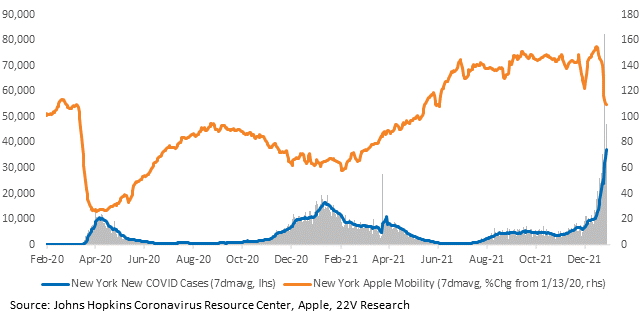
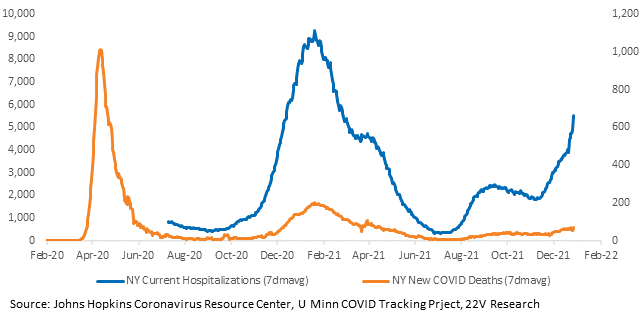
New York is providing up-to-date data. Case growth continues to accelerate and mobility has yet to rebound from its Christmas drop. Hospitalizations are increasing too but deaths, just like during the Delta wave, are still relatively low.
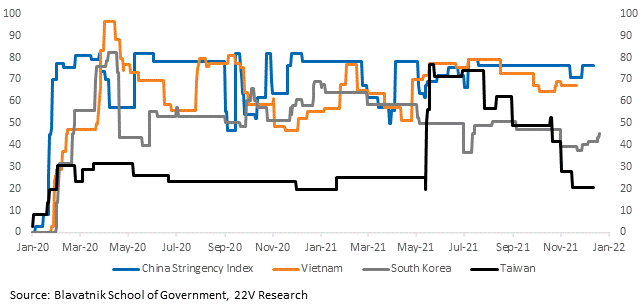
Severity data has taken the worst-case scenarios off the table. The primary risk, as long as those severity estimates are roughly accurate, is now whether an Omicron outbreak in Asia disrupts supply chains. So far, case growth is still benign. We are monitoring Oxford’s stringency indices to track the level of restrictions. China and Vietnam are both have elevated COVID restrictions while South Korean and Taiwan do not. Case growth in Xian, a city of 13 million currently under lockdown, continues to increase. China is maintaining its zero-COVID policy.
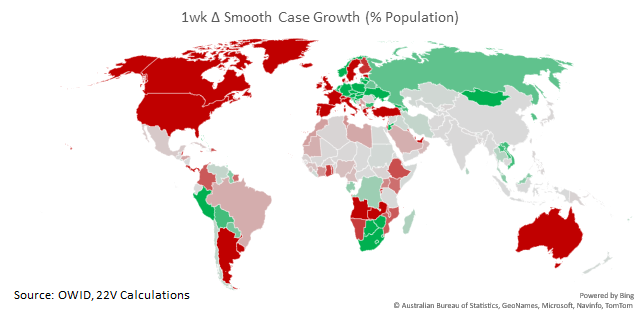
Charts for every state and country we have data for are HERE.

