
Our entire repository of COVID charts is HERE.
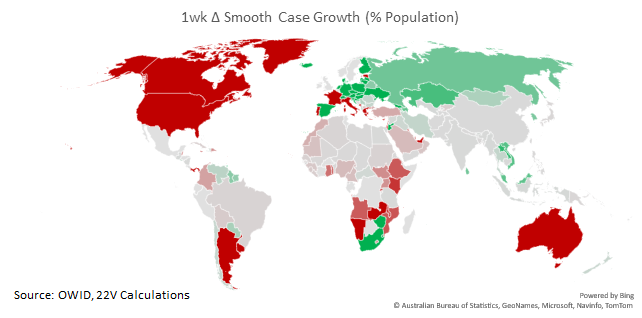
FYI, it will be difficult to analyze COVID data early this week. There is a Christmas reporting lag that will make interim data look artificially good for most developed countries. The UK, for example, hasn’t reported case growth since 12/24. Nearly every state in the US has 0 new cases reported on either 12/25 or 12/26. That will be revised. We caution against extrapolating trends from the last few days. Simultaneously, there is an artificial drop in mobility data every major holiday that should not be extrapolated either (see the below chart).
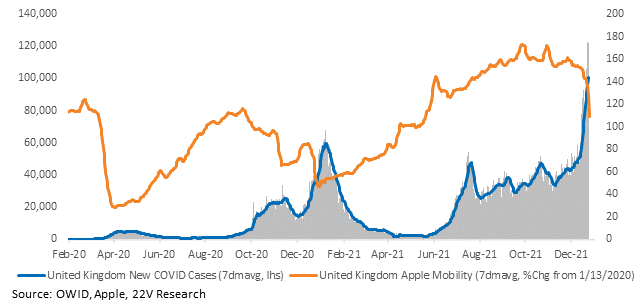
So today we are going to highlight some work done on COVID and the Fed by 22V’s economist, Gerard MacDonell (see his full Fed report HERE). The Fed has shifted tone the last few weeks and is no longer single-mindedly trying to stimulate the economy. Gerard notes that COVID is one emerging issue that clearly bears on the rate path. Per Gerard, “The scientists have long assured us that the severity of Omicron disease would be quite low, leaving aside whether that was because of its inherent properties or because of immunity built up in various ways, along with advanced treatment. We also knew that the economy was in a better place to handle whatever mitigation might be required.” We would add that the bulk of severity data indicates the wide range of hospitalization outcomes is narrowing as the worst case scenarios are taken off the table, even under pessimistic assumptions about transmissibility and length of stay. A large shock to growth is very unlikely.
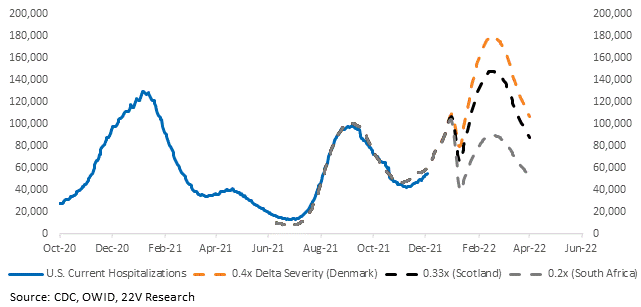
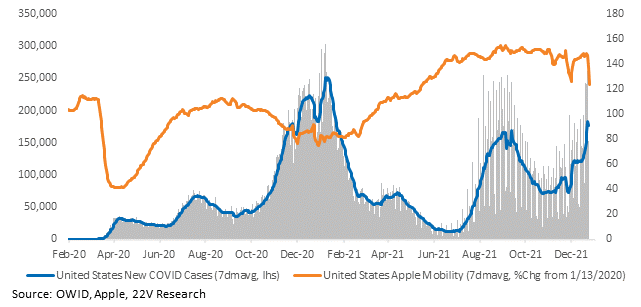
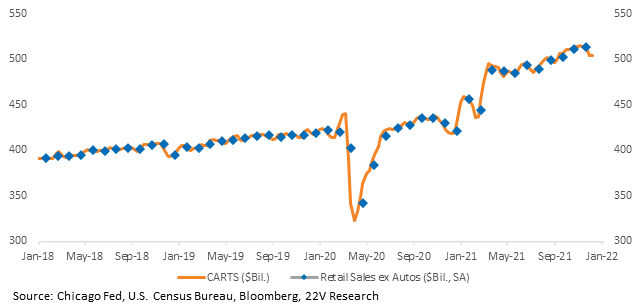
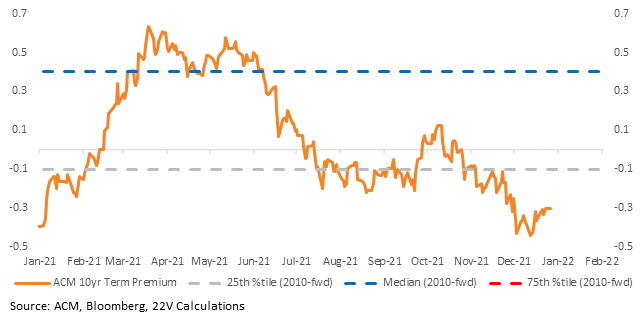
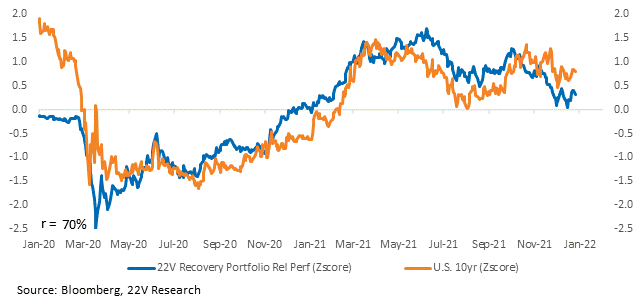
Back to Gerard: “However, the transmissibility has come in probably on the high end relative to what the scientists were guessing, which means that endogenous social distancing is likely to have some minor effect on the data about to be printed over the next couple months. Those data will reflect a cooling in Covid sensitive sectors that is already occurring and then what remains in front of us as well. With markets no longer pricing the Fed pinned indefinitely to zero, that is a complicating issue. (It is probably also one reason the rise in yields further out the curve stalled a while ago.)” We add COVID sensitive and insensitive spending are both currently running above post-GFC trends, though the sensitive spending has cooled from its rapid (and unsustainable) recovery in 1H21. Mobility data in the US has cooled a little but remains at high levels (Christmas drop excluded in the chart below). And CARTS data indicates a contraction for retail sales ex autos in December. None of the data indicates a major slowdown, however. We agree with Gerard that Omicron is a headwind to longer-dated treasury yields and, as we have been saying, that is reflected in the ultralow term premium and the high correlation between our Recovery Portfolio and 10yr yields.

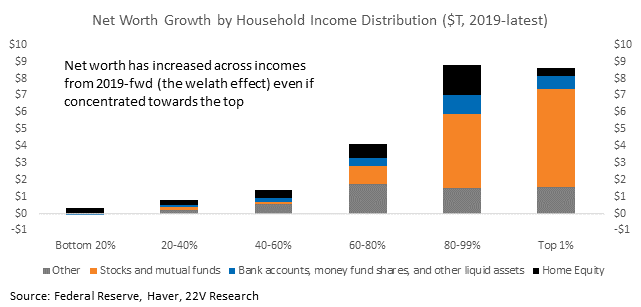
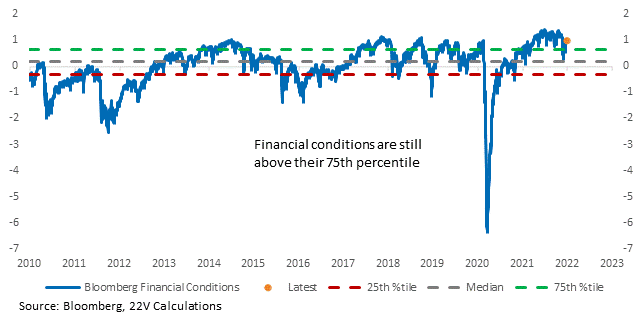
Per Gerard again, “On the other hand, the Omicron wave seems likely to burn itself out quickly, according to the scientists, which means it will probably not last enough to disrupt what looks like a fairly powerful cyclical upswing in economic activity. And momentum or self-reinforcing considerations aside, there is a powerful wealth effect behind consumption, financial conditions are generally quite stimulative by all accounts, and re-opening effects should resume fairly soon. Meanwhile, inflation remains an issue, as I will elaborate / update on in a follow-up note shortly. To me, this suggests that a further repricing of the rates outlook remains the base case, even if the “easy” – or really qualitative – part is mostly over. Perhaps another way to put this is that people now get that the Fed probably has to tighten, but what they have in mind is still fairly perfunctory, as if the old strategy of merely waiting it out was not wrong. In contrast, I would say that the Fed is now on a mission to guide demand growth down pretty close to trend. That has implications for rates as well as for the medium-term growth outlook, in my view.”
Zero-COVID is still in effect in China, but the PBOC is also stepping up policy support for the real economy. Omicron sentiment appears to be turning as more studies support early estimates of lower severity. The primary risk, as long as those estimates are roughly accurate, is now whether an Omicron outbreak in Asia disrupts supply chains. Case growth in Asia ex-China is, for now, tame.
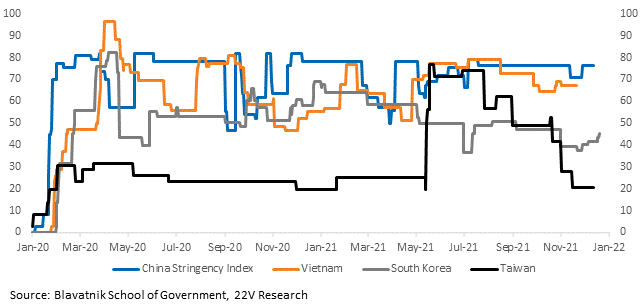
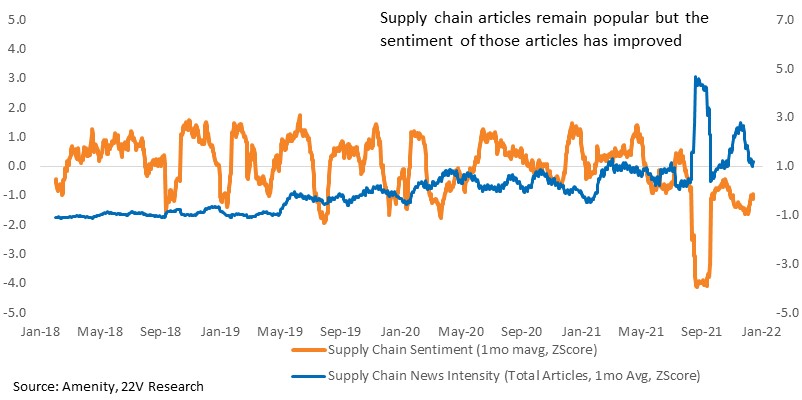
How countries respond to Omicron will have an important impact on supply chain issues near term, but there is not yet enough data to determine which way that will break. We are monitoring Oxford’s stringency indices to track the level of restrictions. China and Vietnam are both have elevated COVID restrictions while South Korean and Taiwan do not. As we mentioned in a quant report yesterday, supply chain news intensity remains high, but the negativity of articles has eased some. Investors still need to worry about bottle necks and negative news reports, but there should be fewer negative shocks.
Charts for every country and state we have data for are HERE.

