SUMMARY: Hawkish BOE comments and another surge in commodity prices is pushing global bond yields higher. BOE Governor Bailey said although he thinks inflation is mostly transitory, monetary officials need to prevent higher inflation expectations from becoming entrenched.
China missed on headline GDP and Industrial production, but retail sales were much better than expected and the unemployment rate dropped. China’s data is not as bad as many have feared and combined with still strong US consumption and labor market data (all things wages and retail sales are firm), suggest firm demand. The combination of relatively firm demand and persistent supply constraints are increasing rate hike expectations globally and US 2yr yields have gapped higher again.
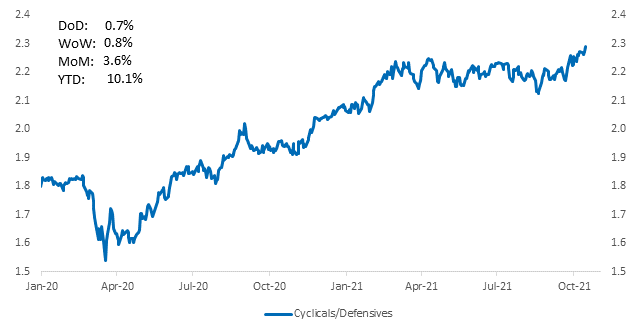
Normally, increasing short rates would be considered bad thing for equities. But the increase in short rates is happening with narrow credit spreads and 10yr yields increasing. In short, investors are viewing the move in short rates as necessary given the relatively firm growth backdrop and near term supply issues, but investors have not changed their view on the Fed’s pro-growth stance. As long as the Fed is pro-growth and demand destruction is not an issue, UST yields are biased higher and Cyclicals will outperform Defensives. We continue to like Tech through earnings season and have a call for a near term consolidation in 10yr yields. That doesn’t look great today, but keep in mind 10yr yields are back to last Tuesday’s high. Not surging yet.
The key question for sectors and factors going forward is if/how much demand destruction will take place. If the answer to that question is minimal demand destruction, Value, Materials, Energy and Financial will outperform. If demand destruction starts to be discounted, longer term inflation expectations will fall, credit spreads will move wider, and Defensives will outperform. The answer to the demand destruction question will depend on how the supply outlook evolves. Supply outlook news has been improving at the margin, but the weekend news on that front were negative.
We walk through inflation expectations influence on Value and how to think about that in the report. We also note the upward bias of real rates and Biden potentially giving up on the clean-power provision in the spending package is likely bad for solar (TAN).
Full report below….
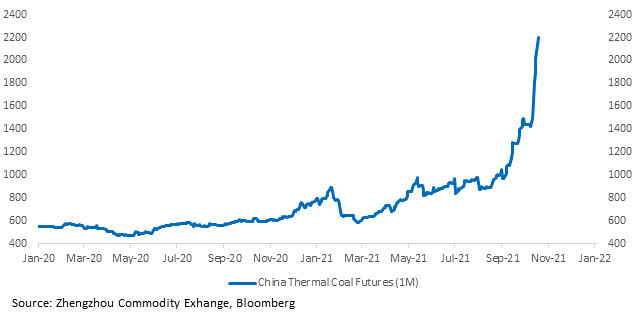
MARKET VIEWS: Bond yields are higher across the curve and across the world. Hawkish BOE comments and another surge in commodity prices is having an impact. BOE Governor Bailey said although he thinks inflation is mostly transitory, monetary officials need to prevent higher inflation expectations from becoming entrenched. China coal prices have gapped significantly higher (cold weather being blamed) despite efforts from Chinese officials to increase production at all costs.
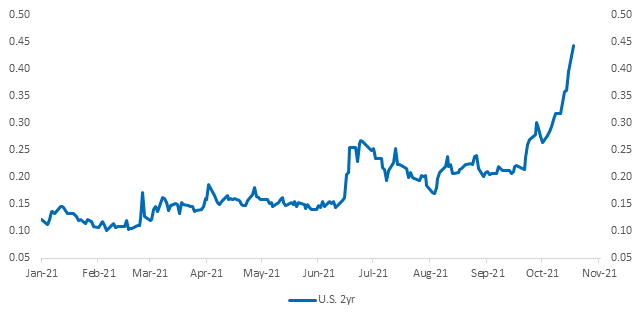
China missed on headline GDP and Industrial production, but retail sales were much better than expected and the unemployment rate dropped. The Chinese data is not as bad as many have feared and combined with still very strong US consumption and labor market data (all things wages and retail sales are firm), suggest firm demand. The combination of firm demand and persistent supply constraints is increasing rate hike expectations globally. All the above help explain the sharp increase in 2yr yields.
Normally an increase in short rates would be considered bad for equities. But the increase in short rates is happening with narrow credit spreads and 10yr yields increasing. In short, investors are viewing the move in short rates as necessary given the relatively firm growth backdrop and a near term persistent supply issues, but investors have not changed the view on the Fed pro-growth stance. As long as the Fed is pro-growth and demand destruction is not an issue, UST yields are biased higher and Cyclicals will outperform Defensives.
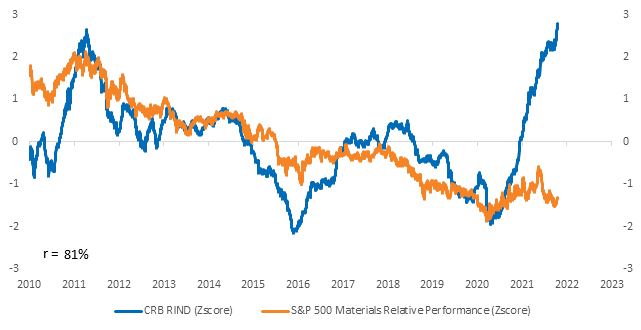
We have called for a consolidation in 10yr yields near term but that call looks is at risk. We are not giving up on the idea, but supply constraints will need to point to more demand destruction for 10yr yields to remain anchored. Something to keep in mind, if the global economy does not suffer from demand destruction, Materials have significant upside relative to Commodity prices. They have lagged meaningfully and we are overweight Materials.
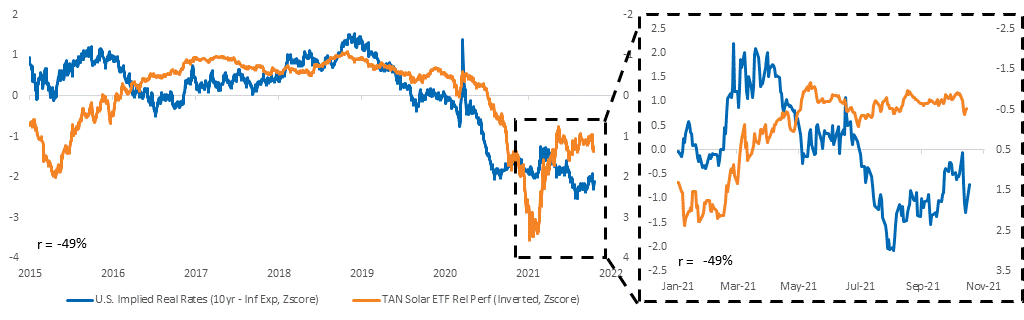
We have pointed out the impact of real rates on Ark funds, which have suffered significantly. The Solar ETF (TAN) has diverged from Ark near term and the potential for fiscal support for Solar has likely helped. With Biden potentially giving up on the clean-power provision in the spending package, TAN is likely to suffer.

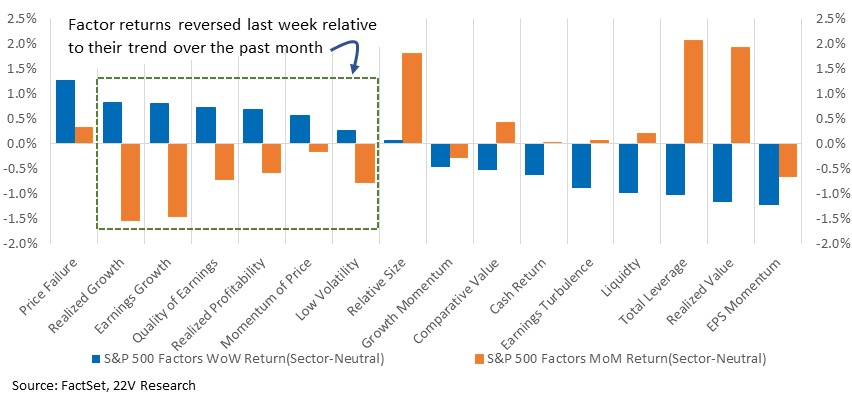
As we noted in the Quant report earlier today, factor returns have been unstable recently with sharp reversals across a number of factors. Our Factor Momentum Portfolio, which generated consistent gains for most of the GFC period, has been trendless over the past few years. Even as equities in general rose over the past week, market internals moved risk-off. Easing of supply constraints and lower odds of a policy shock (rate hike expectations have already moved higher, monthly inflation trends are slowing) should clear the way for a Value and Cash Return factor rebound longer term. Near term, uncertainty will remain high as investors sift through competing narratives and await a clear signal on growth/the outlook for risk assets.
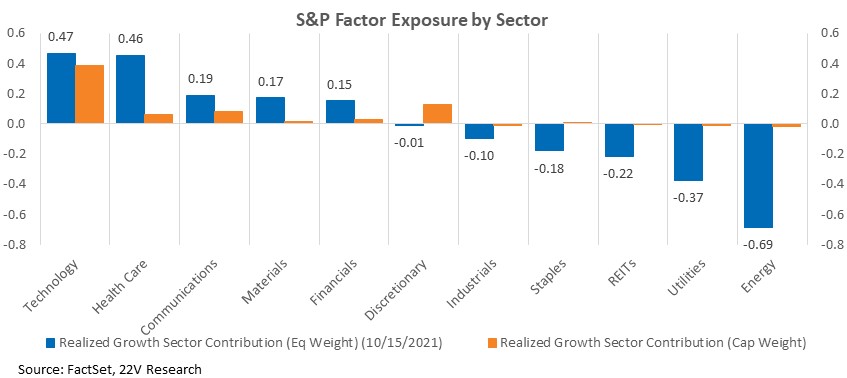
Growth, on a cap and equally weighted basis, is highly levered to Tech. As the sector rallied, rising 1% relative on an equally weighted basis, Growth was carried higher as well. We like Tech through earnings season, but the sector would suffer is UST yields continue to gap higher. We will give it a few days though as the post weekend supply chain worries tend to fade as we through the week.
Something to think about on inflation expectations. The Inflation swap continued to climb after the FOMC minutes last week as investors expect Fed policy remains supportive. Though Value faced headwinds last week, the overall backdrop still favors Value over Growth longer term. A risk would be UST yields moving up too quickly and inflation swaps starting to slow as investors discount the impact of higher rates on economic growth.
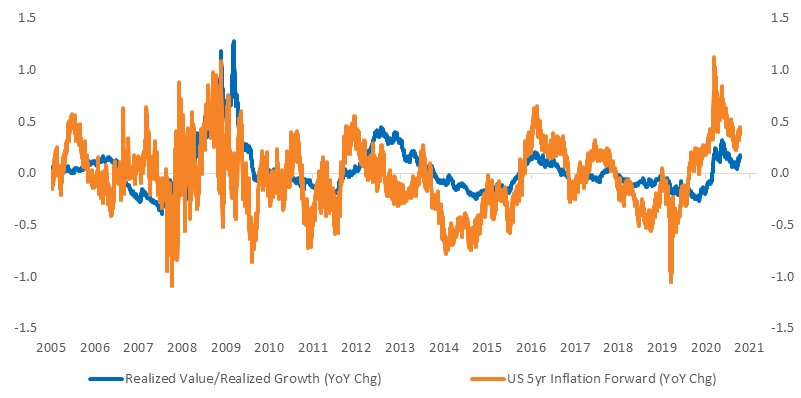
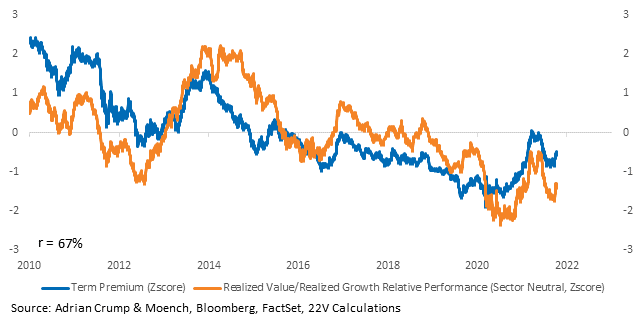
Offsetting inflation swaps being range bound are increasing Term premiums. In the post-GFC, zero lower bound era, the real term premium, the extra compensation investors demand for uncertainty about the future level of real yields, has been 1) generally negative and 2) exceptionally volatile. As ZLB risk declines (inflation and real growth normalize), the real term premium should become less volatile and put upward pressure on yields. Near term economic uncertainty could continue to restrain yields near term, but the skew over time, assuming growth remains above trend as we expect, is higher not lower.
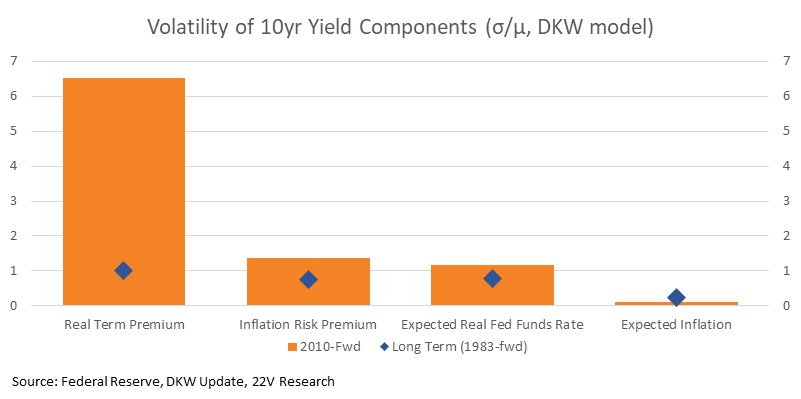
In the strategy outlook, we talked about the term premium normalizing as COVID and some of the COVID economic weirdness fades. That would be a tailwind to Value. Consistent with Value and the 10yr commentary from today. Below is a chart of Value/Growth and the term premium explicitly. The risk is the same with inflation swaps. Will supply constraints lead to decreasing consumer real incomes and slower spending growth (demand destruction). If that happens, it would put downward pressure on term premiums.