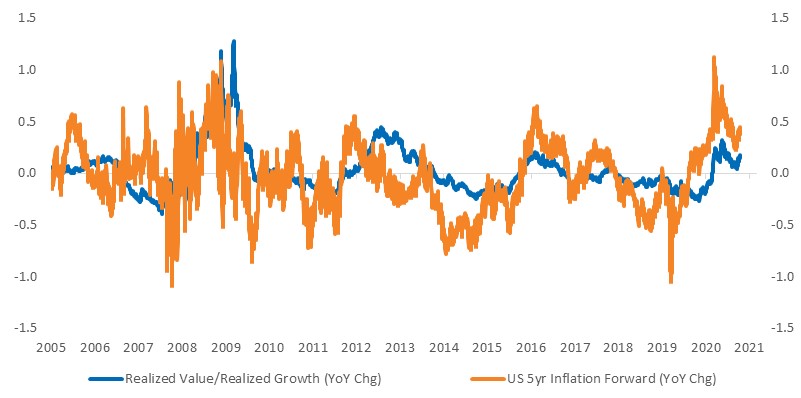
SUMMARY: As we noted in the Strategy Today report last Friday, profit margins are likely to remain strong given the trends in PPI and the non-financial corporate value added deflator. Another strong earnings season would bias equities higher, encouraging the year-end, risk-on, high Value/Cash Return rotation we talked about in our Quant outlook.
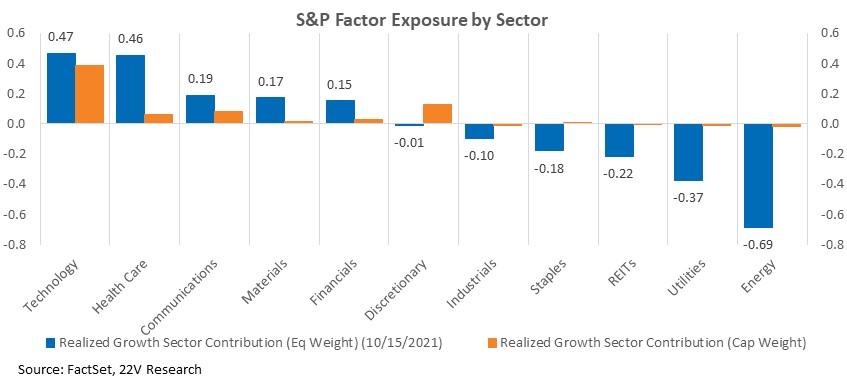
Keep the distribution of factor rankings in mind when considering how to position for a rotation into Value and Cash Return. On a cap weighted basis, which is the construct of most sector ETFs, sector exposure to factors tends to be very similar to market level exposure. WITHIN sectors though, there are broad skews, which is readily apparent when looking at equally weighted factor distributions.

U.S. hard economic data (retail sales) have remained disconnected from soft readings (consumer surveys) this week, providing fodder for both the “growth is firm” and “growth is slowing” camps. At the same time, S&P earnings reporting season is getting underway, and though still early, the data on that front has been clearly strong; 87% of reported companies have beat analyst earnings expectations and the average beat percentage has been almost 13%.
As earnings season matures, we expect to see two developments. First, short term correlations should move lower, which typically happens as companies release EPS and investors reallocate money based on new fundamental data. Second, investors will have hard data about the impact of supply chain disruptions. If the sharp increase in supply chain sentiment readings are any indication, companies will prove less negatively impacted by supply disruptions than feared, clearing the way for a Cyclical, risk-on, Value rotation.
As we noted in the Strategy Today report this Friday, profit margins are likely to remain strong given trends in PPI and the corporate sector value added deflator. Another strong earnings season would bias equities higher, encouraging the year-end, risk-on, high Value/Cash Return rotation we talked about in our Quant outlook and is typical of fourth quarters in general.
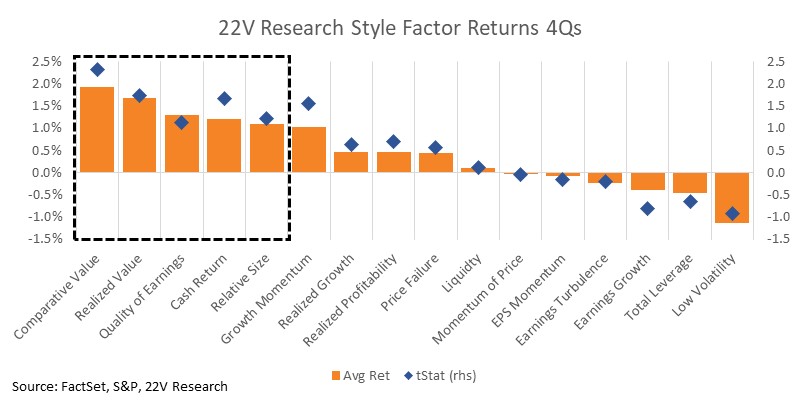
When thinking about positioning for a rotation into Value and Cash Return, it is important to keep the distribution of factor ranking in mind. On a cap weighted basis, which is the construct of most sector ETFs, sector exposure to factors tends to be very similar to market level exposure. In other words, it is difficult to get express factor calls though sector ETF positioning. WITHIN sectors though, there are broad skews, which is readily apparent when looking at equally weighted factor distributions (blue bars in the chart below).
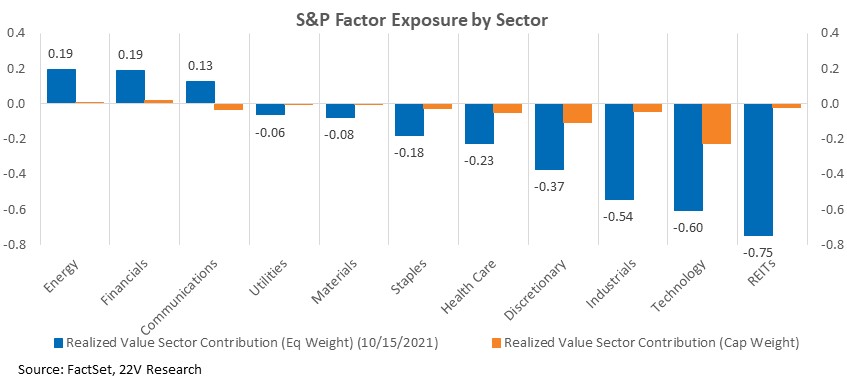
Value and Cash Return factors were the worst performers during the 3Q growth/policy scare market decline. As the uncertainty of 3Q fades (easing COVID trends, supply chain responses, strong earnings, positive developments in China), we expect to see a rotation into the risk-on factors that led the market rally in 1Q21. For those looking for names with high Value, high Cash Return rankings, Energy and Financials contain the greatest numbers.
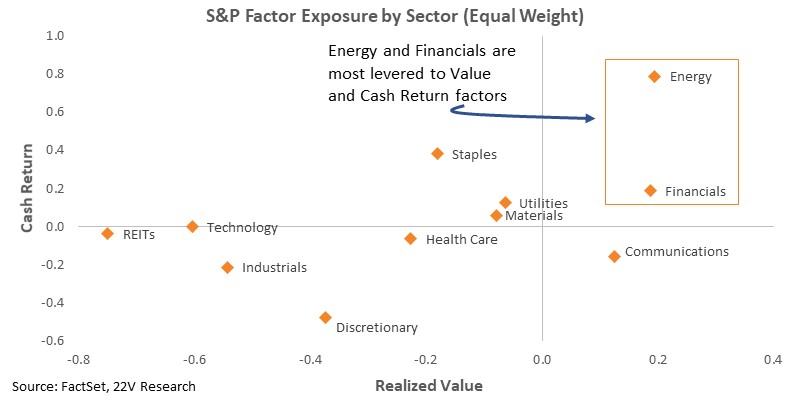
After two weeks of gains, Energy and Financials faltered last week, underperforming by -0.2% and -0.4% respectively. Factor returns have been unstable recently with sharp reversals across a number of factors. Our Factor Momentum Portfolio, which generated consistent gains for most of the GFC period, has been trendless over the past few years. Even as equities in general rose over the past week, market internals shifted toward risk-off. Easing of supply constraints and lower odds of a policy shock (rate hike expectations have already moved higher, monthly inflation trends are slowing) should clear the way for a Value and Cash Return factor rebound longer term. Near term, uncertainty will remain high as investors sift through competing narratives and await a clear signal on growth/the outlook for risk assets.
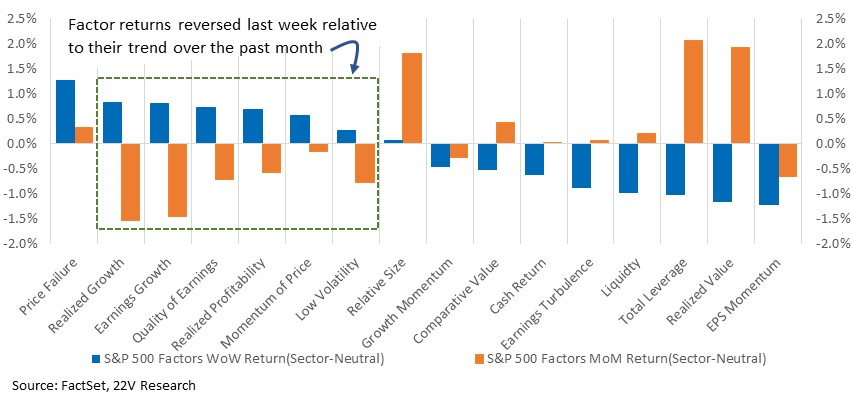
Growth, on a cap and equally weighted basis, is highly levered to Tech. As the sector rallied, rising 1% relative on an equally weighted basis, Growth was carried higher as well.
U.S. hard economic data (retail sales) have remained disconnected from soft readings (consumer surveys) this week, providing fodder for both the “growth is firm” and “growth is slowing” camps. Economic growth has remained firm with retail sales better than expected and more companies posting positive earnings and sales surprise than normal. At the same time, S&P earnings reporting season is getting underway, and though still early, the data on that front has been clearly strong; 87% of reported companies have beat analyst earnings expectations and the average beat percentage has been almost 13%.
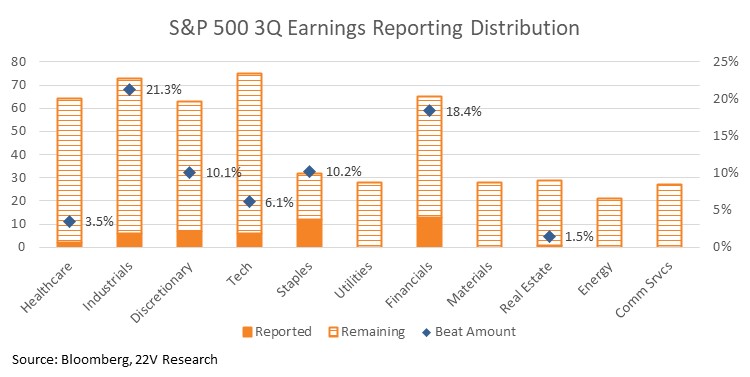
Economic growth remains firm with retail sales reading better than expected and more companies are posting positive earnings and sales surprise than historical median level in the current quarter. Inflation swap continued to climb after FOMC meeting last week as investors expect Fed policy remains supportive. Though Value faced headwind last week on factor rotation, the overall backdrop still favors Value than Growth longer term.