Global equities have struggled heading into the end of 2021 as investors deal with a barrage of macro risks including the risk of a U.S. default, China economic transition, supply chain disruptions, and Fed tapering. Popular market narratives have been headwinds as well; analysts have increasingly embraced arguments about supply disruption-induced demand destruction, peak growth, and stagflation.
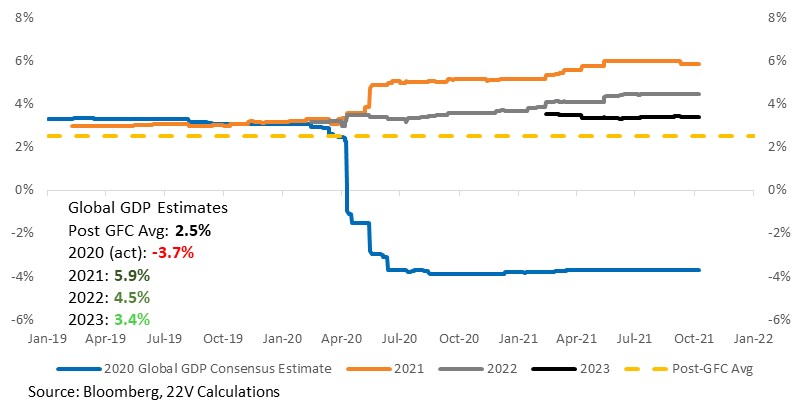
Stagflation as it is broadly understood is NOT a macro reality in the U.S. today. Longer-term inflation expectations indicate a steady decline in inflation, hiring is robust, and global growth is forecast to remain above its post-GFC trend levels through 2023. If supply constraints prove binding and goods inflation forces central bank tightening, then a stagflation-like backdrop is possible, but that is a situation to monitor, not a likely outcome that needs to be discounted today. A slower growth backdrop and higher inflation is more of a micro issue for companies than a macro issue for the global economy.
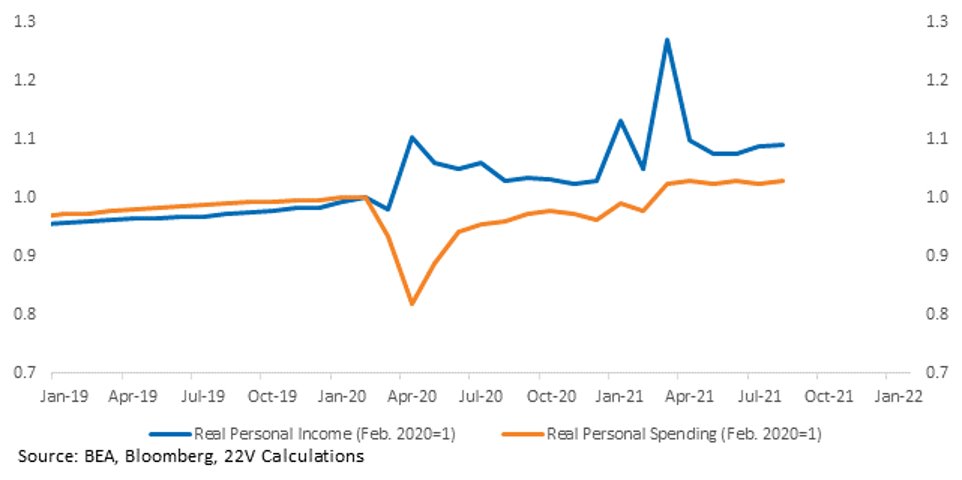
Today’s economic backdrop remains constructive. Consumer demand is strong, supported by incomes that are growing faster than spending, strong job growth, high-income growth expectations, and abundant consumer credit availability. Corporate cash spending is ramping higher as well; dividend and buyback spending is approaching pre-pandemic levels. Importantly, companies are also increasing their capex spending. Over a 5yr+ time horizon, companies are preparing for above-trend GDP and increasing production.
After 17 months of rolling shocks, better knowledge and increased vaccinations are helping transmute COVID from an existential economic threat into a potentially reoccurring but relatively mild shock. COVID news sentiment has turned sharply higher and U.S. mobility readings are near their pandemic-era high. Case growth has eased across a number of supply chain countries and mobility has increased as well. Bottlenecks will take time to clear but slowing case growth paves the way for increased production.
Financial conditions remain extremely accommodative. Volatility is moving lower, credit spreads remain narrow, and real yields are deeply negative. Treasury yields have backed up and are skewed higher over the coming quarters, but robust earnings and high cash return leave S&P fair value higher.
3Q earnings reporting season will get underway this week, providing investors with important signals as to the depth of supply chain issues. Macro indicators suggest top-line growth remains firm and corporate profitability high. EPS are forecast to reach $49 in 3Q, putting the S&P on track to earn $199 in 2021. Those forecasts are likely too low.
Over the near term, correlations will move lower as 3Q earnings reporting season provides hard data on how and where supply disruptions have caused the most damage. Supply chain commentary within earnings reports is unstructured. We use the Amenity natural language processing tool to “read” all earnings reports and objectively gauge manager sentiment toward a broad array of topics, including supply chain issues. How companies sound about supply chains will be critical.
Significant headwinds do exist and uncertainty is likely to remain elevated. Sky-high shipping costs are keeping upward pressure on inflation and creating micro headwinds. Soft economic data (surveys) are very weak. Persistent inflation and a decline in growth expectations could reduce investor risk appetites, putting downward pressure on equity prices. That is not our base case but those issues are keeping equities’ risk premiums elevated today. If those headwinds fade, UST yields will increase, but equity risk premiums will decline at the same time. Put differently, multiples would not move significantly lower.
Full report below….
STRONG BUT NOT TOO STRONG: A core component of our market outlook is that U.S. and global economic growth remain well above their post-GFC trends, though clearly slowing from the pandemic-rebound, fiscal-stimulus-fueled surge. Supportive conditions include fading COVID risks, a strong consumer, high corporate profits, increasing cash return, rising capital spending, and easy financial conditions. With those forces in place, economic activity should remain above trend for several years.
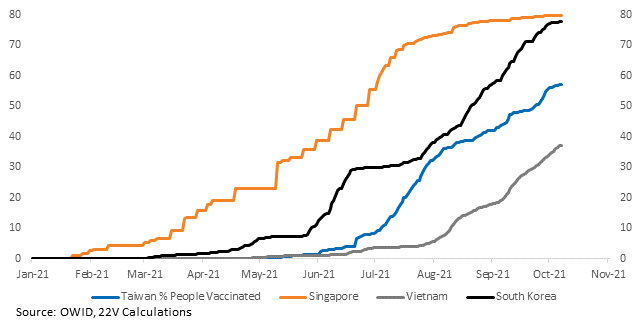
Persistent supply chain constraints would be a meaningful headwind for global growth, putting upward pressure on inflation and calling into question the commitment of central banks to maintaining accommodative policy. Leading indicators of supply chain pressure are starting to ease. Vaccination rates in major exporting countries are climbing toward levels seen in much of the developed world (greater in some instances).
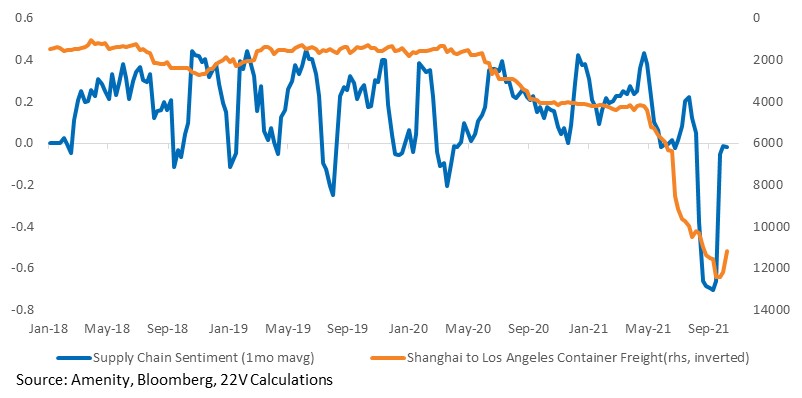
Freight costs are starting to move lower and supply chain sentiment, measured using the Amenity Natural Language Processing tool, has improved significantly. Earnings reporting season will provide important data and sentiment insights into the impact of supply constraints, how they have influenced corporate profitability and how management has responded in terms of capex, cash usage, and hiring plans.
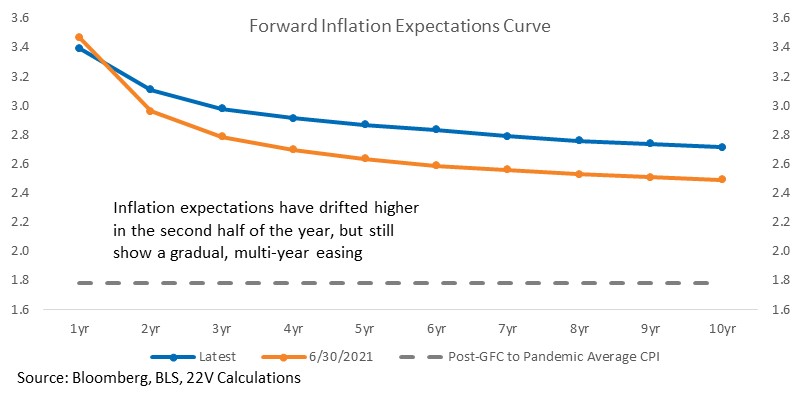
The broader economic impact is tied to the corporate experience with supply shocks. So far, reopening induced growth, supply bottlenecks, delta wave lockdowns, and easy comps have pushed near-term inflation sharply higher. But we are a long way from “unanchored” inflation. Swap markets are still consistently pricing in a gradual decline in inflation over the coming years. Higher expected inflation puts upward pressure on bond yields (more on that later in the report) and is important when thinking about monetary policy, but anchored and the declining forward curve is one of many reasons that stagflation is not a likely outcome.
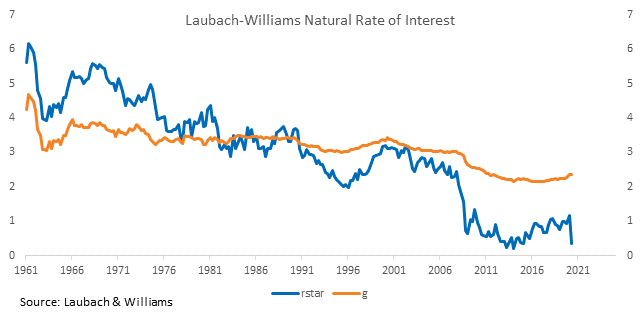
The spread between r-star (estimate of the real neutral interest rate) and economic growth has been a key driver of the economic and market backdrop since the global financial crisis. Collapsing r-star encouraged central banks to reduce policy rates to zero, and after reaching that lower bound, to come up with new ways to make monetary policy accommodative. Putting ZLB policy risks aside, as long as r-star is well below growth, investment is supported and risk assets should trend higher.
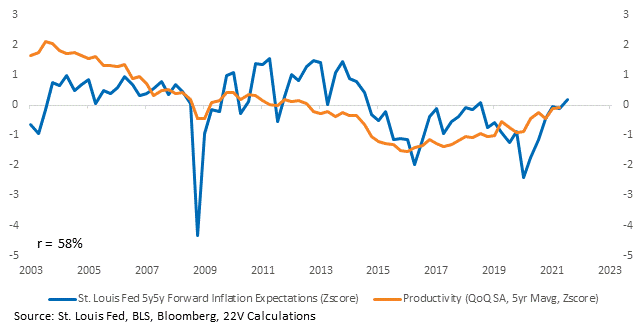
The risk to the above thesis is a liquidity trap. One sign the U.S. is poised to avoid that outcome is the rising level of productivity. That may sound counterintuitive (“doesn’t productivity keep inflation low?”), but a liquidity trap occurs when a lack of investment options leads to no pricing pressure. Productivity suggests opportunity for investment that causes the type of activity that leads to inflation. In the long run, productivity will help keep inflation under control, but that is an issue for another year.
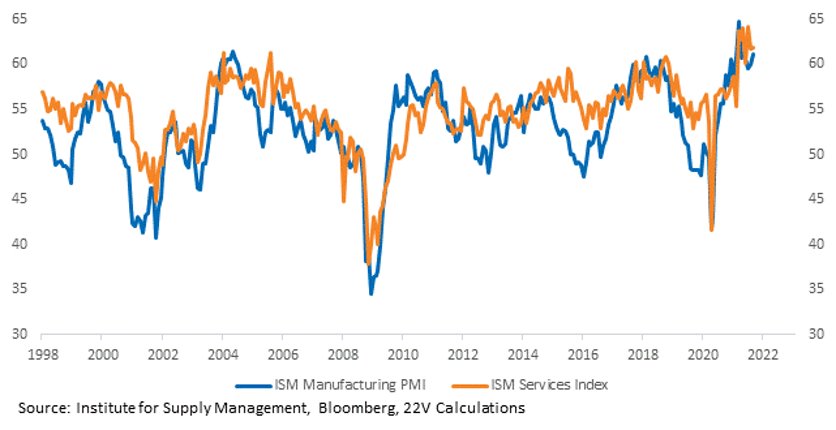
Increased productivity suggests more attractive investment options. Strong leading indicators are one indication that supply shocks have had a limited impact on macro-level economic activity. September’s services PMI came in above expectations at 61.9 (99th %tile historically). New orders and business activity increased MoM. The Manufacturing PMI was stronger than expected as well.
Regional Fed surveys are a way to monitor corporate investment plans. Within the N.Y., Richmond, Dallas, Philly, and Kansas City Fed surveys, corporate capex plans have remained at an exceptionally high level. NFIB small business capex plans, though at a lower level, have strengthened recently as well. Overall, companies appear to be investing in anticipation of strong growth ahead.
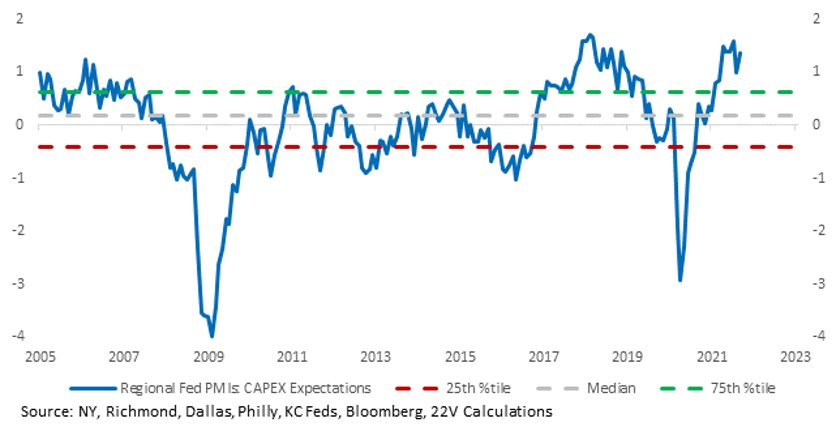
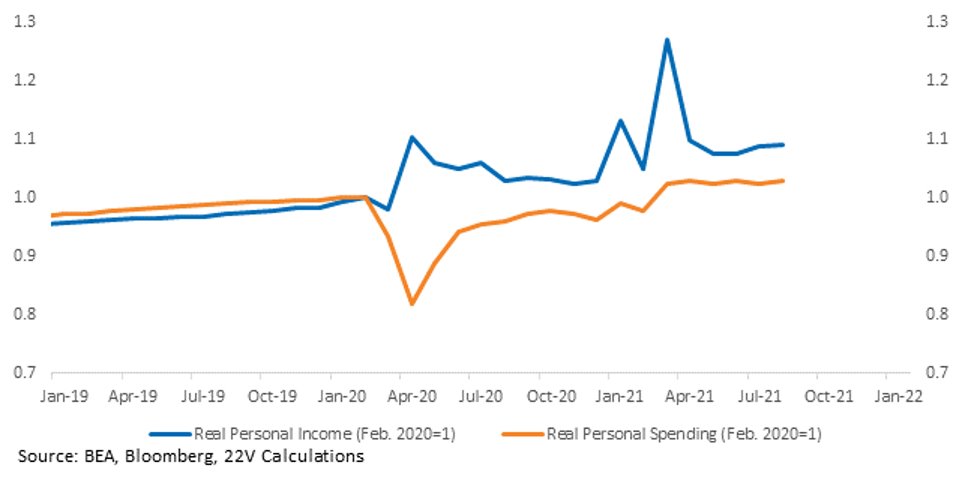
Business investment and hiring plans have been supported by strong consumer demand growth. Inflation backing up is a headwind for real consumer incomes, but retail sales are expanding at a robust pace. Part of the reason for strong consumer demand is the rapid expansion of incomes, relative to spending, in the pandemic era. The flow of income remains above the flow of spending, leaving consumers in a strong position as the global economy reopens to travel and heads into the end-of-year holiday season.
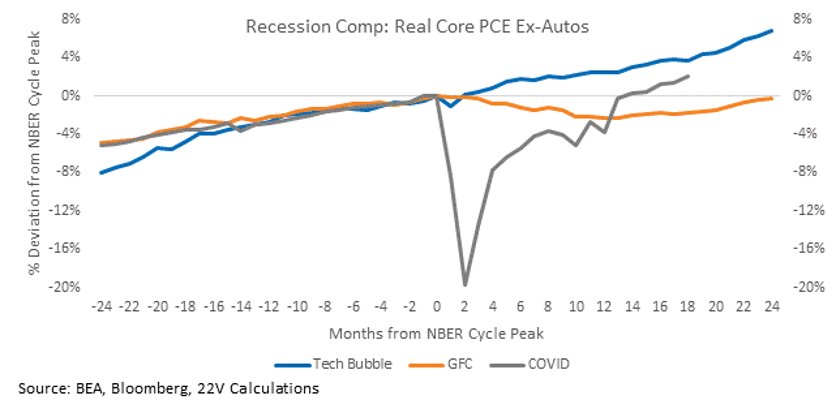
Global growth was slow coming out of the GFC. That experience is shaping the post-COVID recession outlook. But there are important differences. As Gerard MacDonell, 22V’s economist, pointed out, the 5-month rate of growth of real ex-auto PCE since March has been 5%, and “consumer demand growth has remained solid, although clearly less boomy…”. Stronger demand growth is another reason to expect above-trend economic growth.
Economic activity has unquestionably slowed from its COVID recession rebound peak. We caution against extrapolating that trend. Recent weakness in economic readings has largely been confined to soft (survey) data. Hard data have also declined some but remain at the high end of their post-GFC range. As delta wave, debt ceiling, China policy, and runaway inflation narratives lose steam, survey data can rebound quickly.
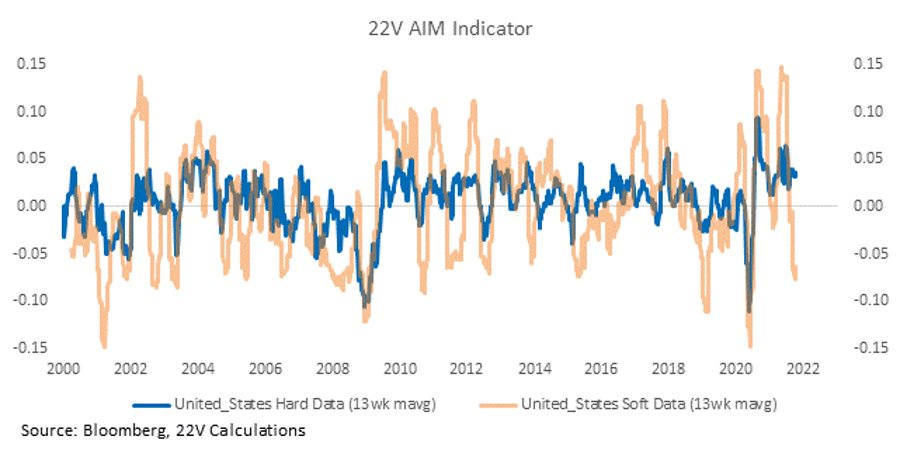
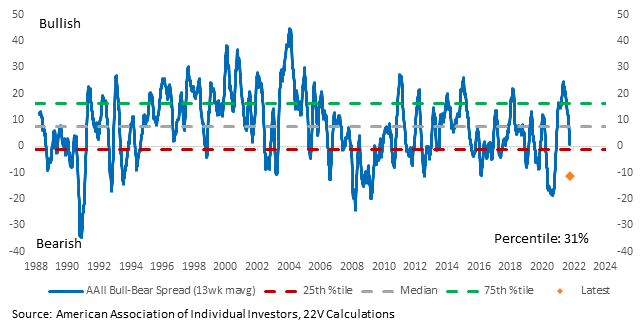
Both consumer and investor sentiment readings have moved sharply lower over the past several months, weighing on U.S. soft data. The fourth quarter is traditionally the strongest for equity markets. A rebound in sentiment as depressed soft data recovers relative to hard data would help lift risk assets in general.
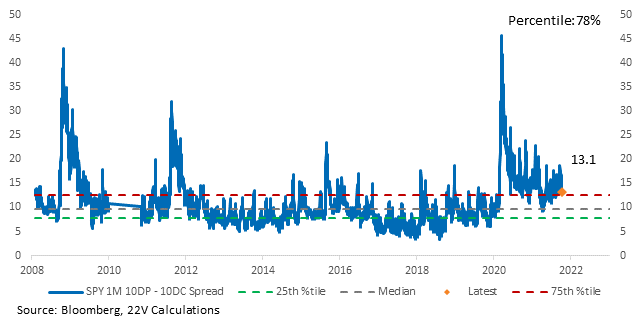
Investors are also still over-indexed on chaos hedges. 10 Delta S&P put positioning is in its 78th percentile relative to 10 delta call positioning. In other words, investors are paying far more than usual to protect against the possibility of a dramatic market downturn than for the opportunity to benefit from a dramatic market gain. The put skew is generally positive because investors use options to hedge out risks to long positions. But today’s skew is abnormally high, particularly at extreme (5, 10, 25 delta) levels.
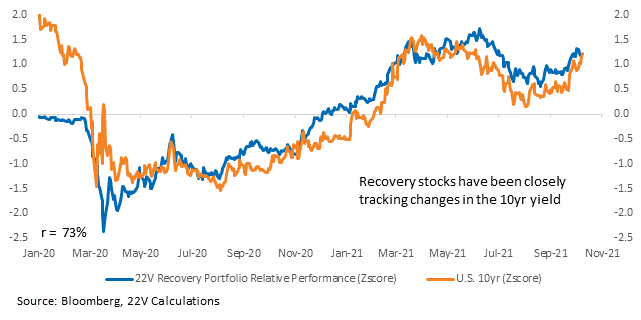
At the same time, market internals indicate investors are positioning for a rebound in survey and expectations data. Reopening stocks are outperforming the broad market and bond yields are trending higher. Index level gains face headwinds as bond yields trend higher, but low correlations and micro trends (reopening, supply constraints, strong consumer demand, rising investment) create opportunities for gains at the industry, factor, and stock level.
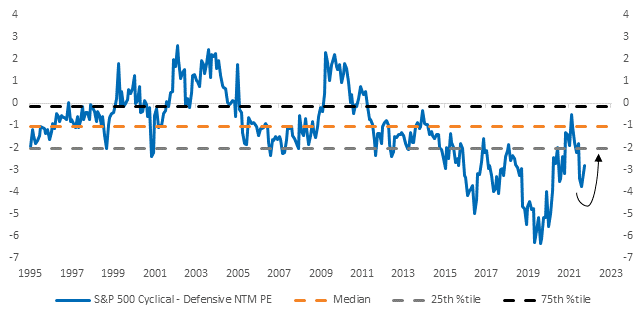
Cyclicals are particularly well-positioned into the end of 2021. Corporate cash spending and investment plans have remained strong during the Summer/Fall malaise. Broad supply chain concerns have weighed on Cyclicals despite heterogeneous exposure within the group (supply issues have led to higher profitability within some industries while others face weakening demand). A firming growth outlook and further economic reopening will help lift the group more broadly, specifically relative to Defensive names.
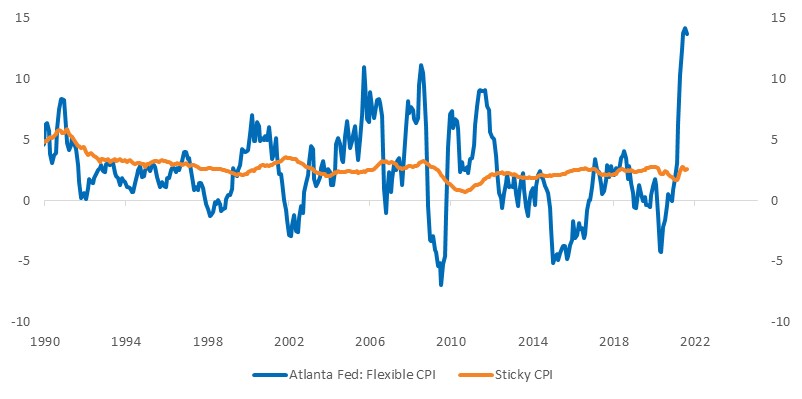
INFLATION, YIELDS & FED POLICY: As we noted above, inflation has clearly moved higher and though inflation expectations show price level gains moderating over the coming years, a return to the persistent sub 2% inflation of the post GFC era appears unlikely. Near-term inflation is uncomfortably high (September core CPI released later this week is expected to come in at 4.1% y/y). Much of that increase is due to high prices for “flexible CPI” items – those that are most sensitive to changes in economic activity. “Sticky CPI”, which is more forward looking, has remained relatively stable.
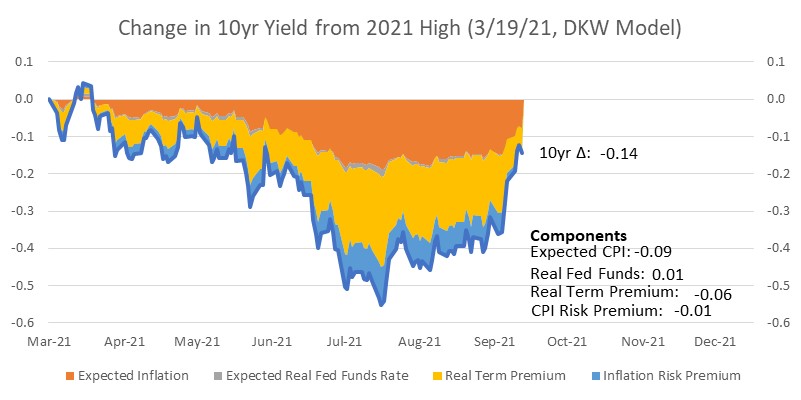
The 10yr Treasury has rebounded from its early August low, but 14bp (using the DKW fitted estimate) below its March peak. Assuming inflation expectations remain stable, normalization of the real term premium will be the driver of 10yr yields going forward. Especially if COVID risk fade, which likely had a large impact on bond risk premiums.
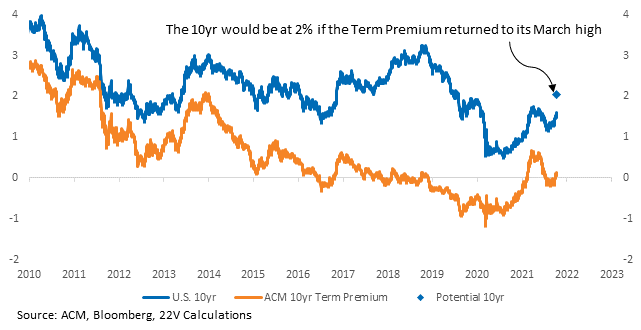
The term premium remains negative today but is volatile. A return of the term premium to its March ’21 level would push 10yr yields to ~2%. Though we expected yields to be trendless over the coming weeks as supply chain constraints ease, investors should internalize the risk that Treasury yields could keep climbing in early 2022. We realize the term premium is almost impossible to measure, but we wanted to point this out as a guide.
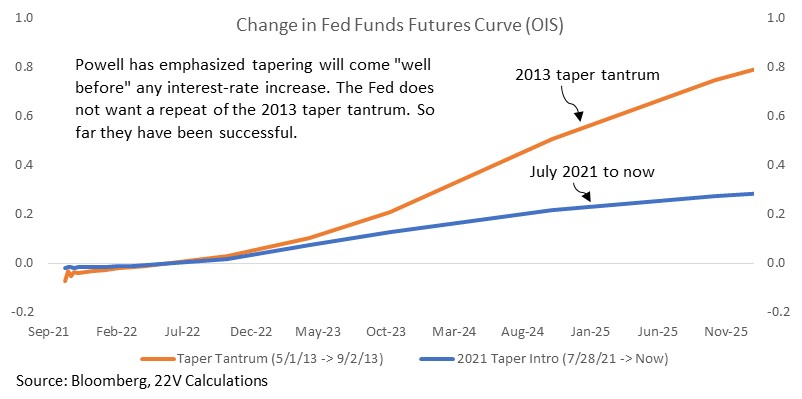
Time will tell if inflation proves transitory, but futures markets and bond investors appear to have accepted the FOMC’s attempt to decouple tapering from rate hikes. The Fed began signaling a reduction of asset purchases back in July and so far, rate hike expectations have moved a fraction of what occurred during the 2013 taper tantrum.
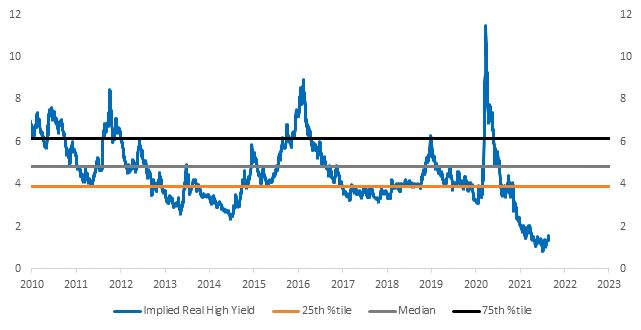
Anticipation of persistently accommodative fed policy has helped keep financial conditions in general easy and credit spreads in particular narrow. High inflation and narrow credit spreads have left implied real high yields rates near their lowest level in history. Low borrowing costs across the corporate spectrum from high to low quality are a support for risk assets in general. While real yields are this low it will be hard to be outright short equities.
ROBUST CONSUMER DEMAND: The household sector has the financial resources to increase spending well beyond personal income growth, which is rising smartly. As our economist Gerard MacDonell has noted, the excess savings argument is largely the result of an accounting misunderstanding, but the flow of real income growth remains well above spending. We used the chart below in the opening section of this report, but it is important enough to justify repeating. Consumer spending, which remains by far the largest contributor to U.S. GDP growth, remains well supported.
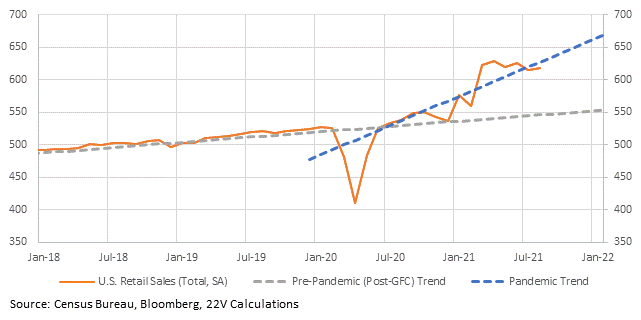
The level of retail sales should be acknowledged. Every short-term investor will note the rate of change is lower. That is correct and GDP estimates are likely to come down. Our counter to that is 1) it is well known (see UST yields, Value relative performance etc.,) and 2) the skew in rates is still to the right given the likely hood of above-trend growth and the Fed’s willingness to accept higher inflation.
U. Mich income expectations continued to collapse, attributed to a combination of negative COVID headlines and higher inflation. Falling income and earnings growth expectations are a particular concern for investors who are worried about U.S. consumer spending turning lower, weighing on business sentiment, capex, and short/medium-term growth expectations.
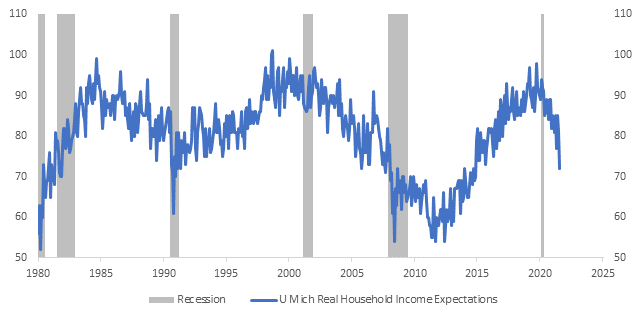
Ultimately, the path of consumer spending tends to follow job market trends, which remain very strong. That helps explain why retail sales growth has remained unusually strong even as consumer sentiment readings have fallen.
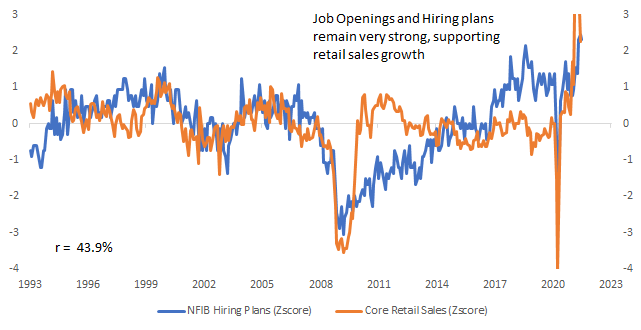
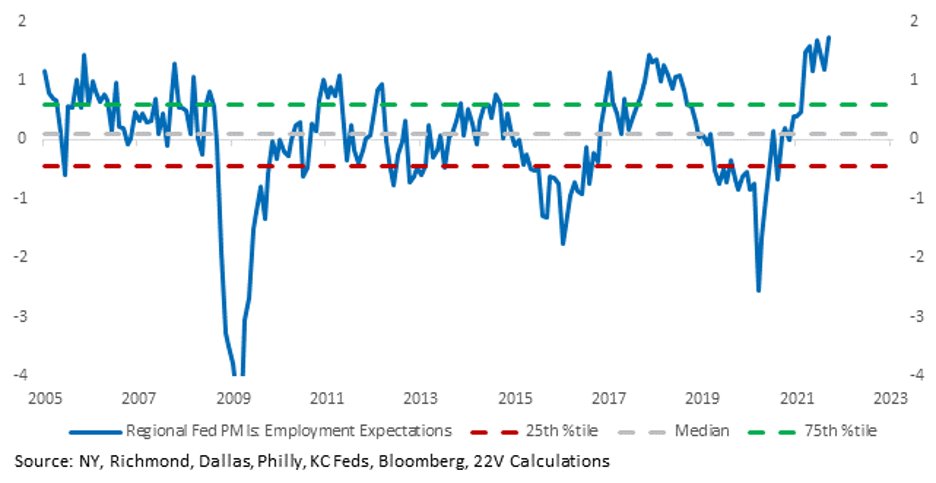
Broad measures of hiring plans have remained robust even as economic growth has moderated some over the summer. Regional Fed surveys show hiring intentions are near their highest level in more than 15 years. Falling unemployment, rising wages, and further economic reopening all support spending growth. Supply chain disruptions need to ease before spending can move materially higher.
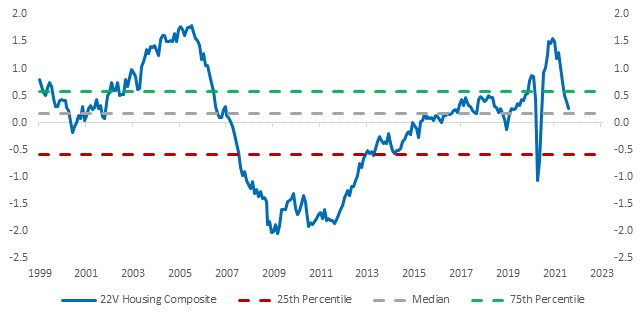
Housing data in the U.S. has been mixed recently and our housing composite indicator has fallen from a cycle high to its long-term median over the past five months.
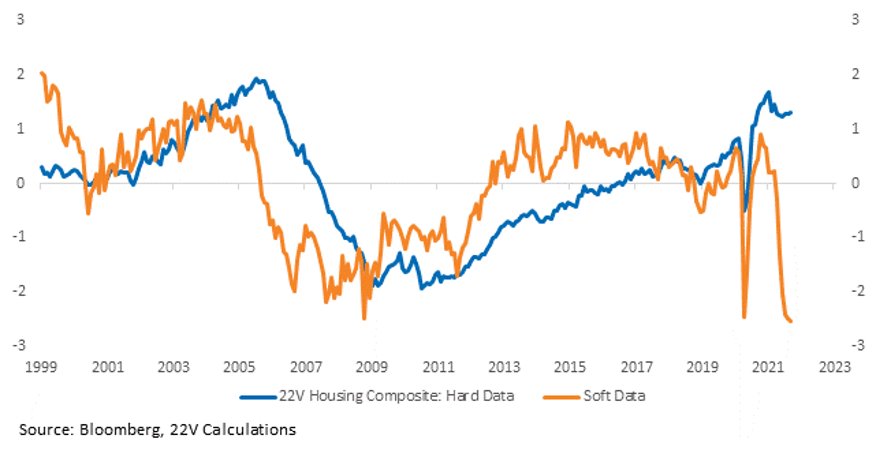
Housing data has seen the same dynamic as plagues the overall economy; Hard data remains strong while ‘soft’ housing data (surveys) have collapsed. For housing in particular, hard data is near historically strong levels.
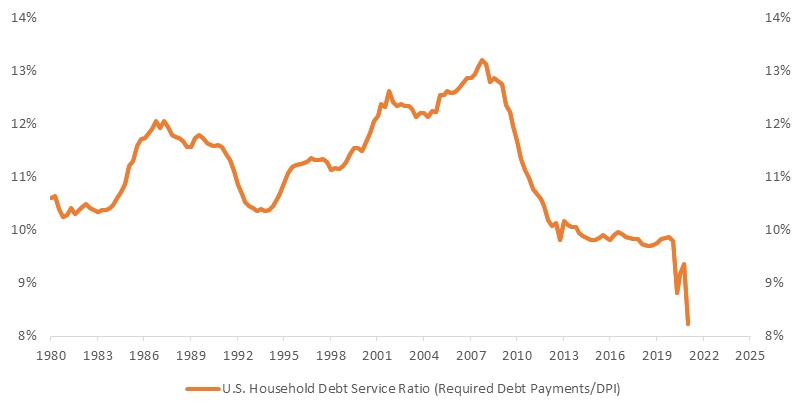
Low mortgage costs, rising consumer incomes, and strong labor demand have kept housing affordability high even as housing prices have surged. Overall household debt servicing costs were at a 40 year low through the end of 1Q21 (latest data). As long as employment remains strong, expect consumer sentiment to rebound as supply bottlenecks ease over the coming quarters and inflation slows.
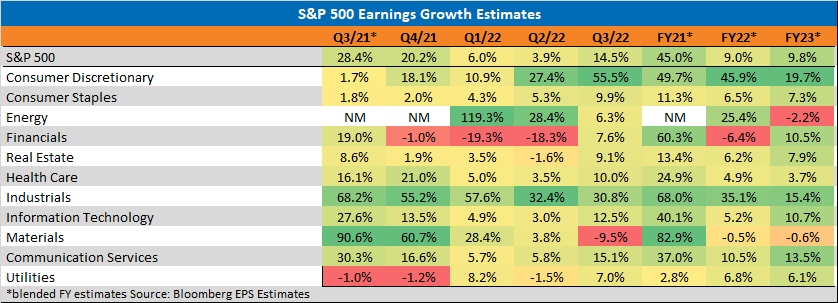
EARNINGS: Fundamentals remain a support for equities with S&P EPS forecast to grow 44% in 2021, 9% in ’22, and 9.8% in ’23. A lowered-than-feared corporate tax rate would make those numbers more achievable. Earnings have remained incredibly strong so far in 2021 with 2Q growth currently tracking +95% (with 94% of companies reported) versus a start of reporting season estimate of +45%.
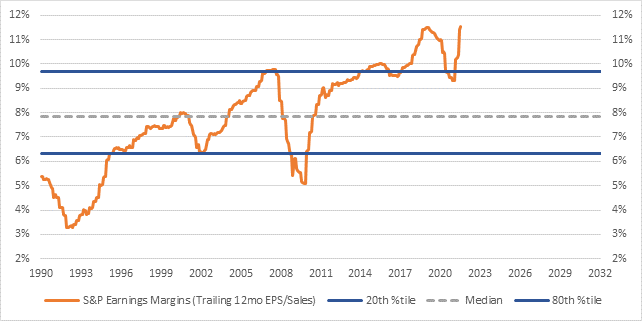
Importantly, even as labor demand has accelerated and wages have ticked higher, S&P profit margins have stayed near all-time highs. Earnings growth will slow over the coming year, but index EPS surpassed pre-pandemic highs in 2Q21 and are expected to grow in the mid-double digits in 2H21.
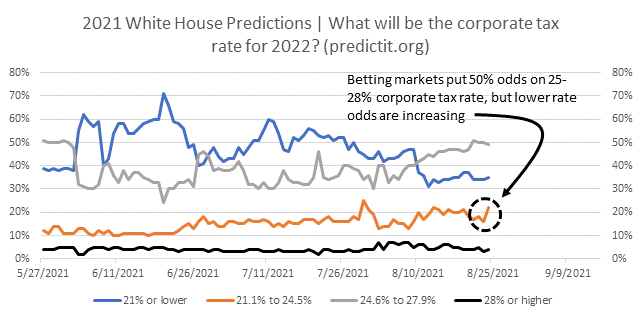
Fiscal stimulus is set to deliver a tailwind for economic activity. Kim Wallace is still looking for $2-2.5trillion in stimulus enacted by the end of 2021 and spent out over several years. Kim also expects an increase in the corporate tax rate to 25%. Importantly, as Democratic spending plans have moved forward, odds of a 28% corporate tax rate have remained depressed. PredictIt odds of a sub-25% rate are increasing, but 25-28% remains the odds on favorite.
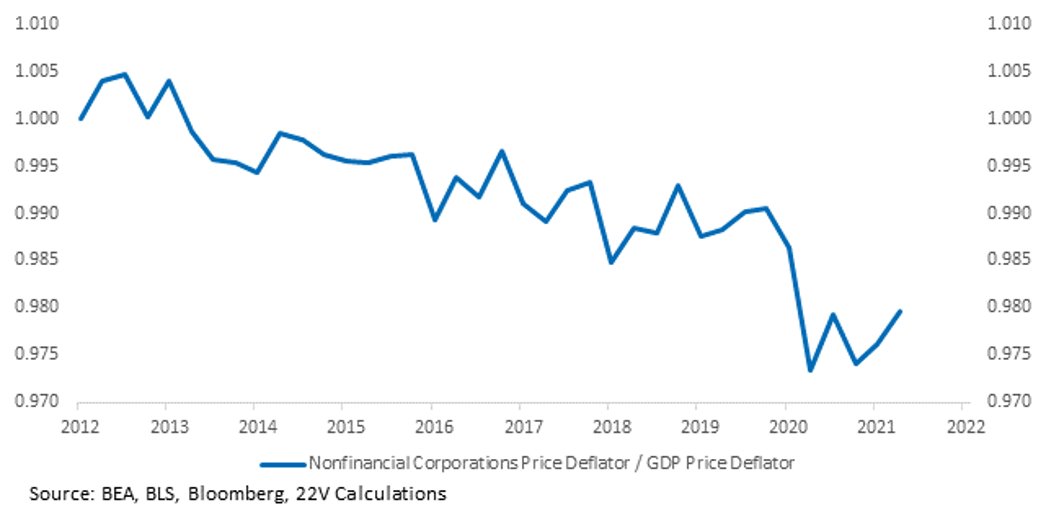
Supply chain issues and rising producer price inflation has lead to growing concerns about corporate profitability. It is important to keep in mind that the corporate value-added deflator is increasing faster than the GDP price deflator. Put another way, companies are increasing their prices faster than prices are rising in the overall economy. That is an unusual situation and suggests margins will remain stronger than expected into 2022.
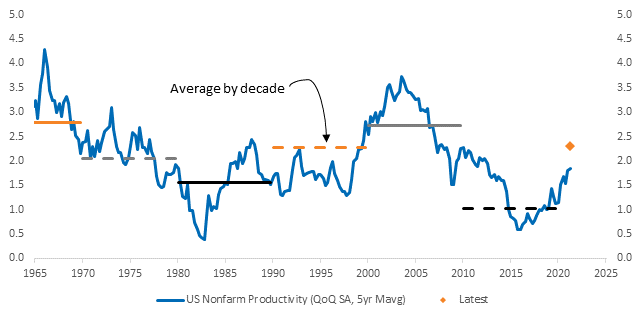
Gerard made an important point about productivity. 1) Underlying trend productivity has inflected higher and this level of productivity is likely persistent given that the level of productivity has been achieved during a period of cyclical weakness in output growth 2) This gives us more confidence in sustainably higher profitability going forward.
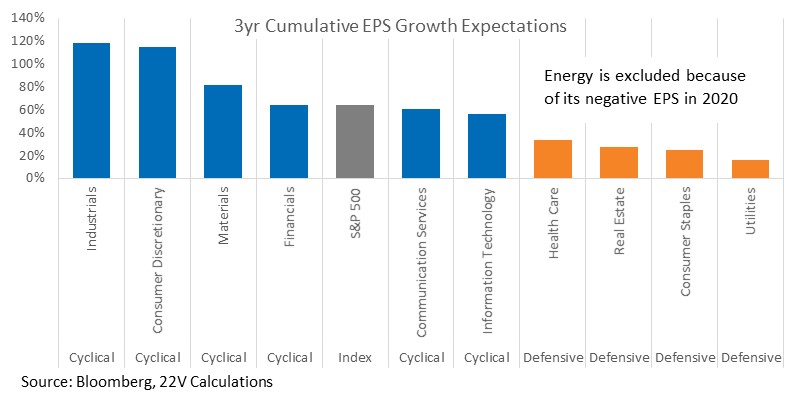
Cyclical sectors earnings growth expectations remain WELL above those of defensives over the next few years, providing a fundamental support for macro trends that favor stocks most levered to global growth.
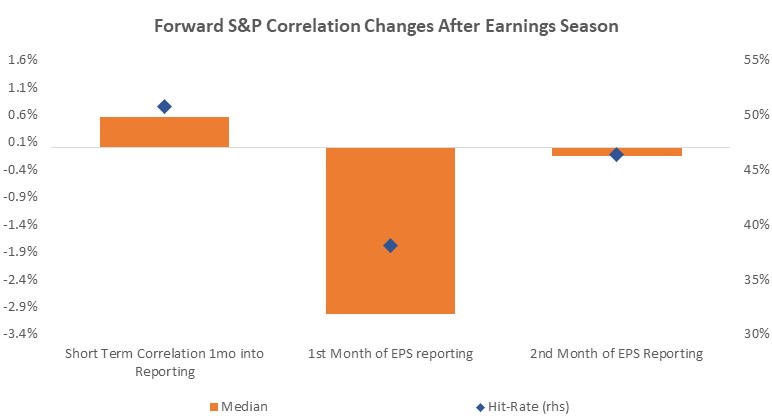
S&P correlations have increased during the market turmoil of the past month, but that trend is set to reverse over the coming weeks. Earnings reporting season typically puts downward pressure on earnings as investors adjust positioning to reflect new fundamental data and outlooks. That trend should be stronger than normal during this reporting season give the addition of important data on supply chain issues.
MARKET VIEWS: 3Q earnings reporting season will provide important information on the impact of supply chain issues on revenue and margins. In addition, corporate plans for investment and cash return will impact the outlook for EPS and fair value into next year. Our market and sector positioning assumes that profitability remains high, cash return continues to increase, and earnings growth remains strong. We are looking for S&P EPS to reach $205 in 2021 and $220 in 2022 and modeling a 10yr yield of 1.75% through year-end. That leaves us with an S&P fair value of 4750. If bond yields or the equity risk premium climb higher, fair value would move lower. Stronger than expected GDP and EPS growth or a general increase in investor risk appetites would push fair value higher. The overarching point of this exercise is that top-line gains are likely to be more limited going forward and that the focus should be on market internals and stock picking.

Stagflation, as it is typically understood, is not a macro economic reality today. BUT aspects of the stagflation idea, particularly supply chain bottlenecks and the economic transition underway in China, are important to micro trends. Below is a table of our index and sector level market views heading into the end of 2021 as is meant to reflect those important market dynamics.
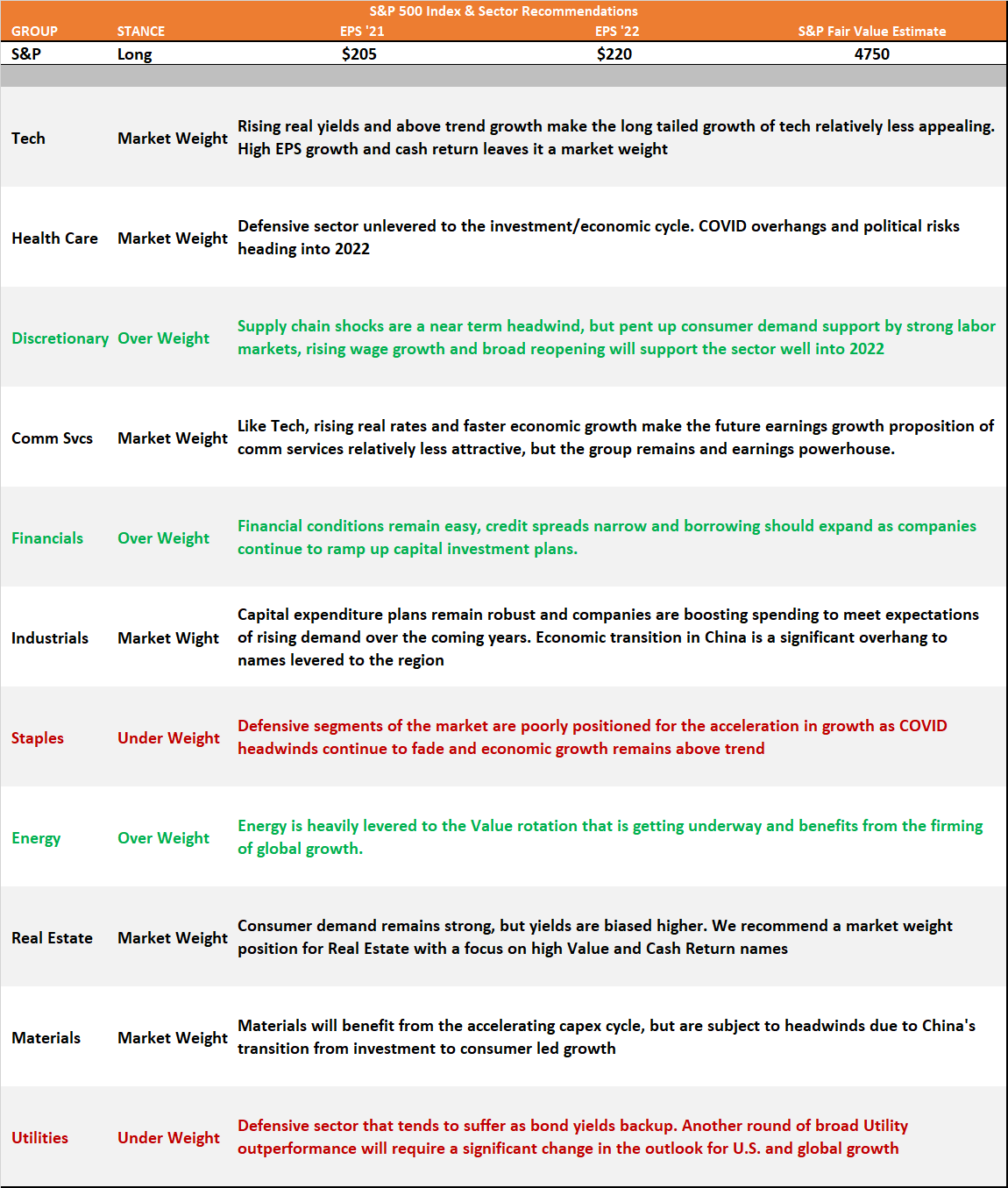
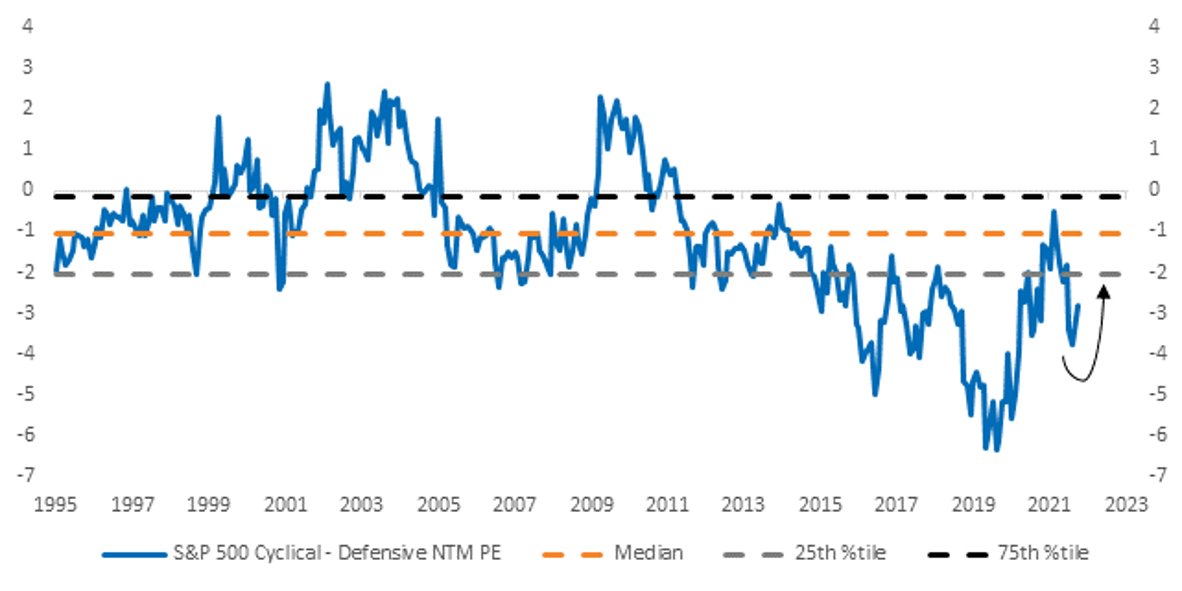
LONG CYCLICALS – Mobility is firm, the employment outlook remains strong, and the economy will get see support through pent-up demand into next year. Cyclicals are depressed relative to Defensives on a PE basis and should trend higher over the coming months. The caveat is that we are market-weight Industrials and Materials given China overhangs. 1Q22 should be a much better period for Industrials.
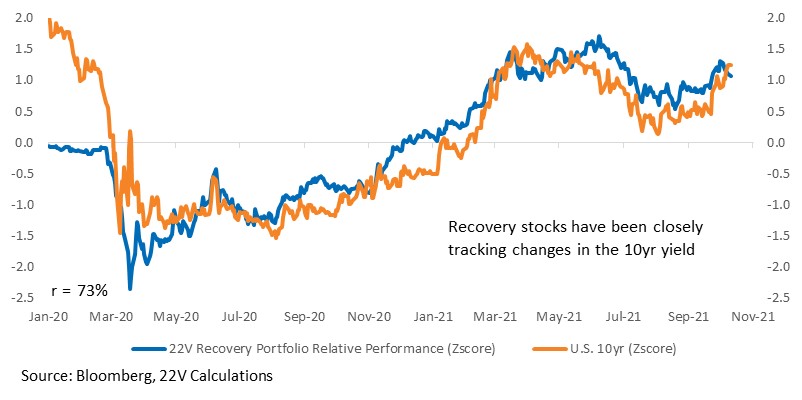
RECOVERY STOCKS: Recovery struggled as the Delta variant spread across the globe and China concerns increased. Recently, Recovery names have fared better as near-term downside risks (U.S. debt ceiling, Evergrande, etc.) have eased. As bond yields trend higher and the growth outlook for 2022 improves, Recovery names are well-positioned to outperform.
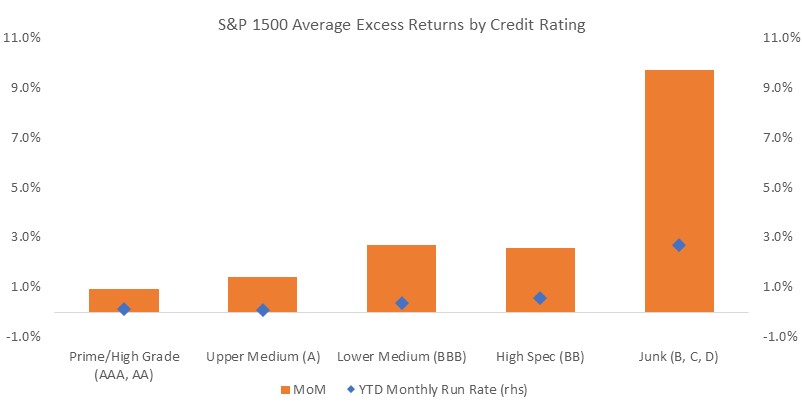
LOW-QUALITY LEADERSHIP: Improvements in Delta trends, the Fed’s accommodative policy stance in a strong economy, and odds of increased fiscal stimulus by year-end are all supports for risk assets. Lower quality names, which have been trending higher all year, took a significant leg higher over the past month (led by Energy names). Lower quality names will continue to outperform as it becomes clear that growth is on track to remain above trend for the next several years.
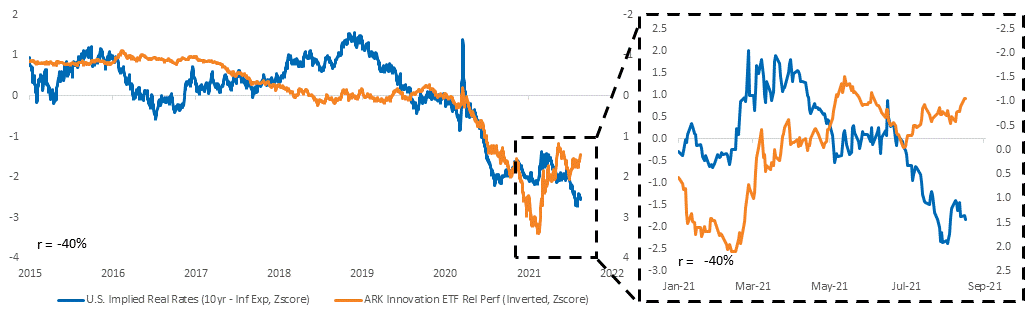
AVOID SPEC TECH: Implied real high yield rates have remained near their lowest levels on record. The charts show ARK Innovation and TAN (solar ETF) relative to implied real rates. As real rates plunged last year and early this year, both ARK and TAN outperformed significantly. Fast forward to today and real rates have plunged to new lows and both ARKK and TAN are still underperforming. Retail support for spec names appears to be waning.