SUMMARY: Markets are bouncing some, but we continue to be skeptical of market rallies that come along with higher commodity prices. We know revenue growth will slow because that is what the Fed is demanding. If input costs stay unusually high, there is a potential for a sever earnings crunch. In short, one of the biggest risks to the market now is oil prices going significantly higher as S&P topline growth slows.
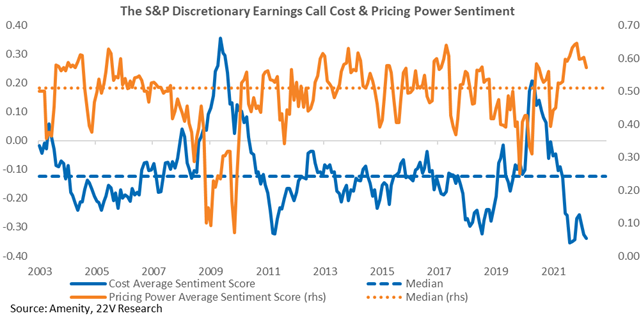
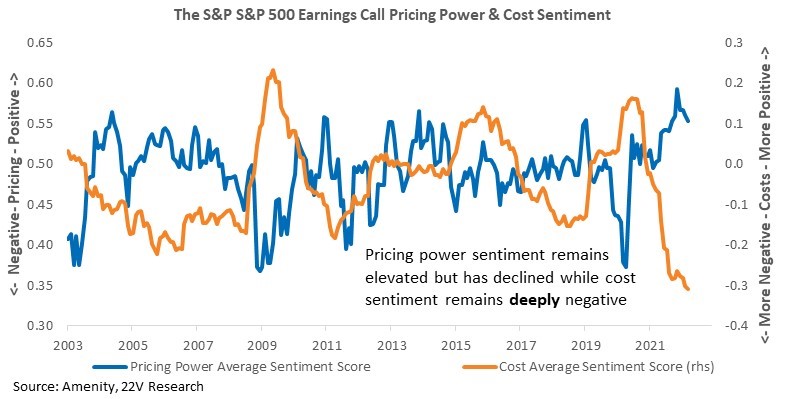
S&P sentiment readings toward pricing and costs, powered by the Amenity natural language processing tool, illustrate how the rising rates = slower demand/lower margins mechanic is playing out. Pricing power, which trends with inflation, peaked in early 2022 and has moved lower. Negativity toward costs was extremely high early in the year but has declined over the past few months. A really bad combination for earnings is deteriorating cost sentiment as pricing power rolls over. As you would expect, Discretionary has a particularly negative cost vs pricing backdrop.
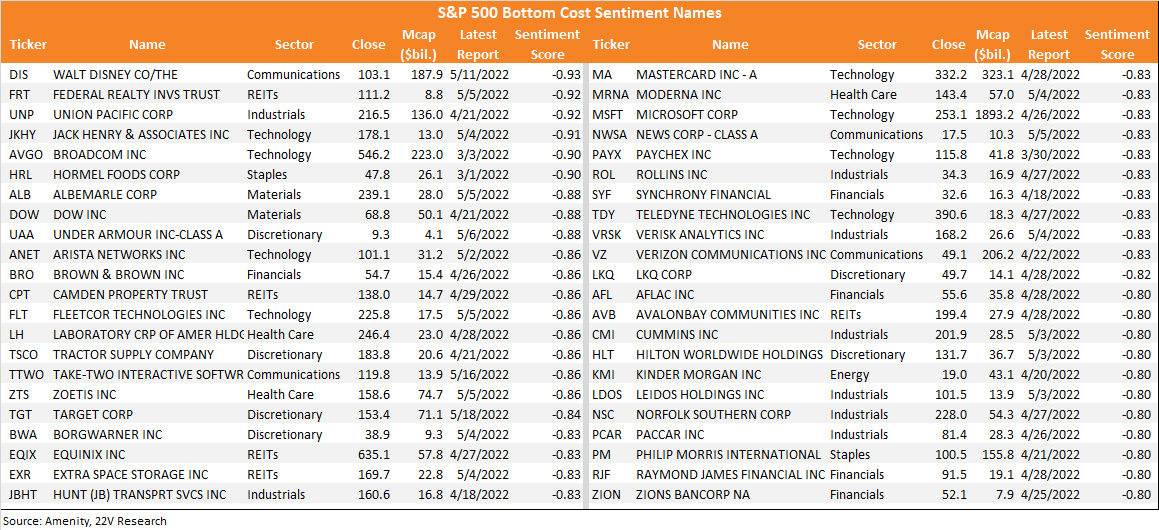
We are going to do a deeper dive into how the overall S&P is impacted by input cost pressures (tech tends to have less labor/energy cost exposure as an example), but at the individual stock level, we highlight a short list of companies with the most negative cost sentiment. If earnings declines rather than financial condition tightening is the driver of markets now, companies with the most greatest cost drags will underperform.
Good News on PE Headwinds: Earnings are becoming a much bigger focus for investors, but at least some of the headwinds facing PE should abate. Inflation expectations continue to trend lower, and 2yr rate hike expectations fell an unusually large 12bp last week. That indicates a lower endpoint for the funds rate, consistent with the decline in GDP estimates for 2023/24. Global GDP estimates have moved significantly lower for 2022, which should remain a headwind for 10yr yields globally. Our call is that 10yr yields are likely to move lower from here.
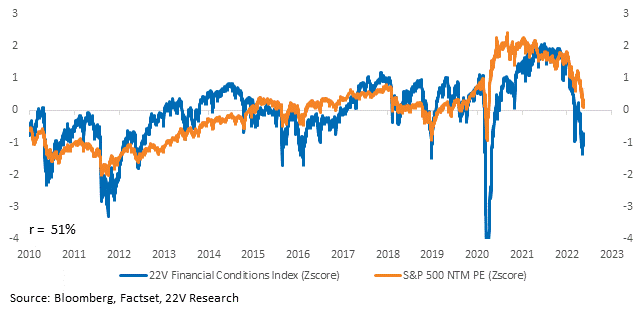
The swift tightening of financial conditions over the past two months, the rolling over in the breadth of economic data points and sharp revisions lower to 2022 GDP estimates suggest financial conditions WILL NOT need to tighten much more from here. That would favor Growth in theory (the need for much higher real rates is reduced) and reduces some of the PE headwinds. It would also favor specific companies/sectors that have lower earnings risk. Investor focus should move away from sectors and factors levered to macro inputs (real rates, financial conditions etc.,). That helps explain why Staples fell sharply last week. A low volatility sector that declined in a poor market.
Full report below….
MARKET VIEWS: Risk assets are bouncing overnight and AT THE MARGIN, the inputs into financial conditions are improving. Inflation expectations continue to trend lower, and 2yr rate hike expectations fell an unusually large 12bp last week. That indicates a lower endpoint for the funds rate, consistent with the decline in GDP estimates for 2023/24. Global GDP estimates have moved significantly lower for 2022, which should remain a headwind for 10yr yields globally. 10yr yields are higher overnight on some hawkish comments from ECB President Lagarde (Euro +1% vs the USD), but GDP estimates are likely headed even lower.
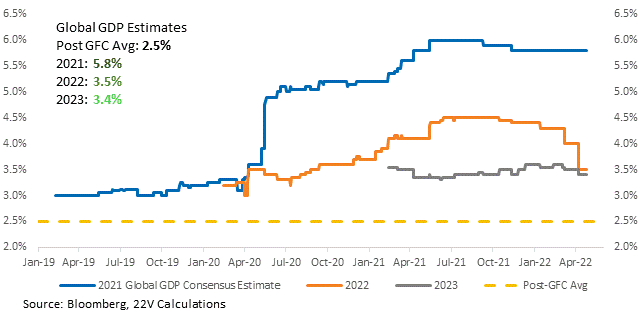
We officially reversed our call for higher bond yields a month ago and that has worked out, but not in a straight line. A higher-than-expected core CPI reading, lower participation rates in payroll and strong retail sales data all pointed to the need for tighter financial conditions and higher real yields. That was felt most acutely in mid-May as 10yr yields gapped higher and Value/Low Volatility/Deeper Cyclicals outperformed. The swift tightening of financial conditions over the past two months, rolling over in the breadth of economic data points and sharp revisions lower to 2022 GDP estimates have suggest financial conditions WILL NOT need to tighten much more from here. That would favor Growth in theory and reduce some of the PE headwinds facing the market.
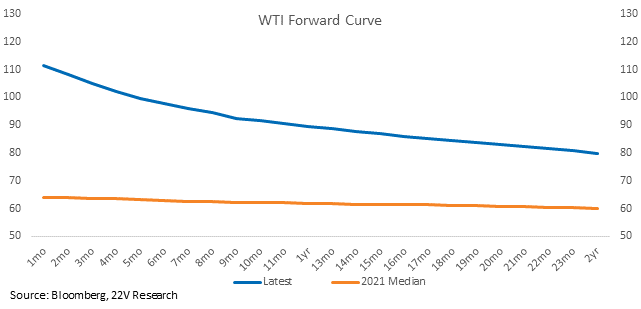
The PE headwinds could be reduced some, but earnings headwinds remain. That is the next phase of uncertainty. We know that revenue growth will slow because that is what the Fed is demanding. If input costs stay unusually high at the same time, there is a potential for a sever earnings crunch. In short, one of the biggest risks to the market now is oil prices going significantly higher as S&P topline growth slows.
Earnings Crunch – How Bad: S&P sentiment readings toward pricing and costs, powered by the Amenity natural language processing tool, illustrate how the rising rates = slower demand/lower margins mechanic is playing out. Pricing power, which trends with inflation, peaked in early 2022 and has moved lower. Negativity toward costs was extremely high early in the year but has moved LOWER over the past few months. It is a really bad combination for earnings to have cost sentiment getting worse as pricing power rolls over.
As last week showed (see TGT / WMT) Discretionary sector cost sentiment declined to historically low levels and its pricing power sentiment has started to roll over. Increasing cost together with deteriorating pricing power of Discretionary names both is a margin killer.

We are going to do a deeper dive into how impacted the overall S&P is to input cost pressure (tech tends to have less labor cost exposure), but at the individual stock level, we wanted to highlight a short list of companies with the most negative cost sentiment. Managers at these companies expressed the most negative sentiment toward costs during 1Q reporting calls.
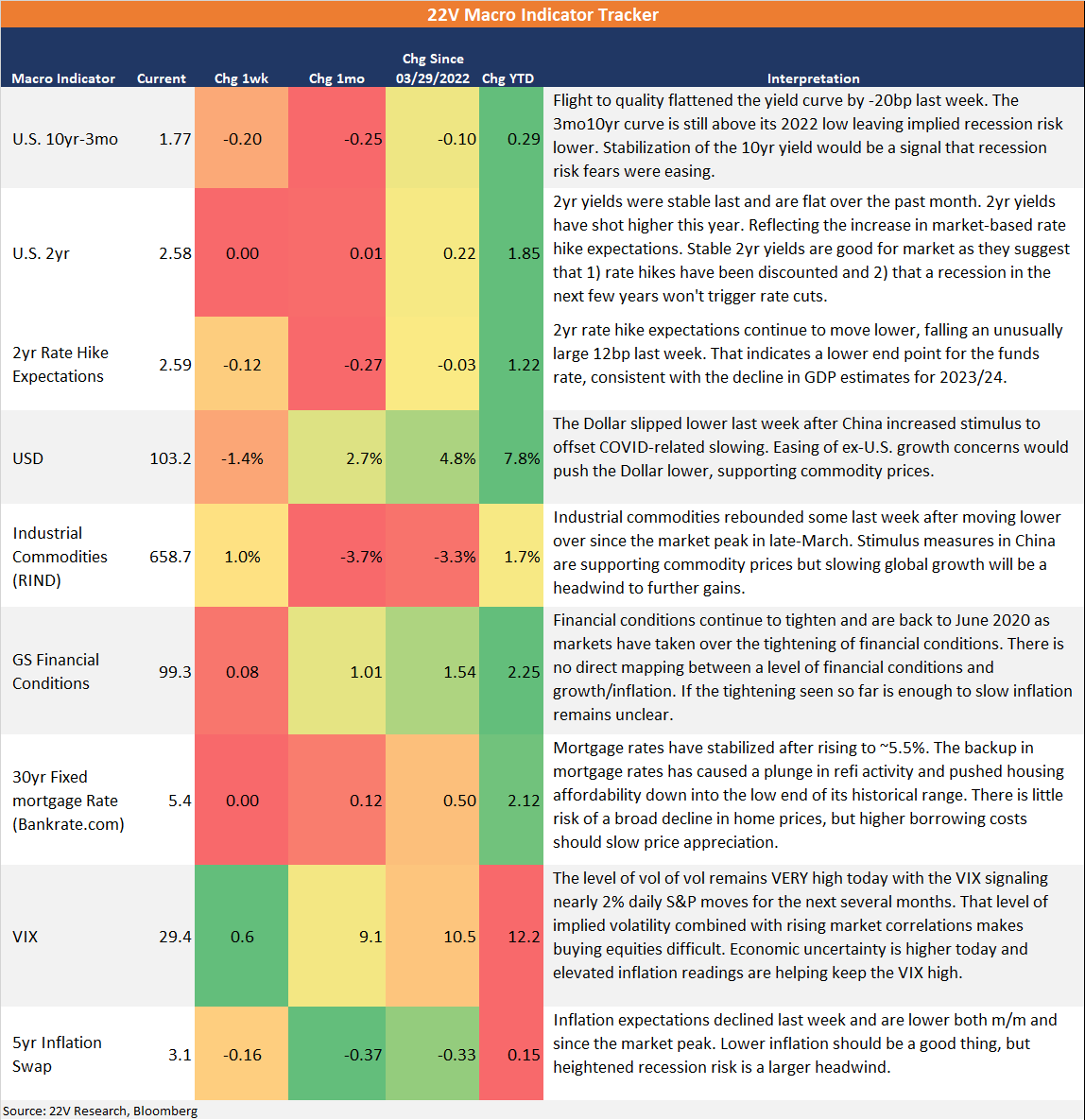
Macro Conditions Tracker: The S&P fell -3% last week, bringing the string of weekly declines to 7 in a row. The market has fallen almost -16% from its March peak, and the combination of still too strong growth and too high inflation continues to exert downward pressure on risk assets. Inflation expectations and Treasury yields also moved lower last week. Financial conditions continue to tighten and are back to June 2020 as markets have taken over the tightening of financial conditions. 2yr rate hike expectations are now declining, falling an unusually large 12bp last week. That indicates a lower endpoint for the funds rate, consistent with the decline in U.S./global GDP estimates for 2023/24. There is no direct mapping between a level of financial conditions, so it is still unclear if the amount of tightening will be enough to slow growth, but negative revisions to GDP growth suggest financial conditions may have tightened enough. The level and vol of vol remains VERY high today, with the VIX signaling nearly 2% daily S&P moves for the next several months. That level of implied volatility combined with rising market correlations makes buying equities difficult.