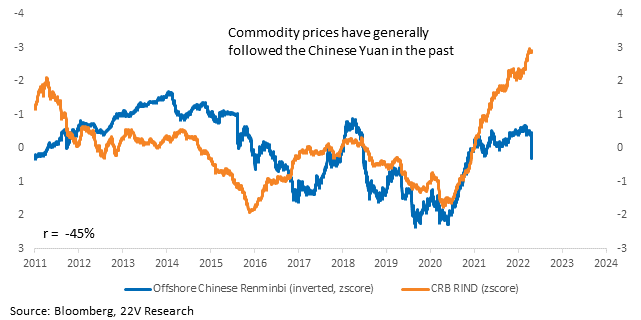
SUMMARY: Most investors believe China will eventually pivot to tolerating higher case growth and living with COVID, but that is highly unlikely to happen before the 20th Party Congress in the fall. Low vaccinations rates among the elderly and little herd immunity generally could cause a major health crisis ahead of the 20th Party Congress. How do they avoid a health crisis until the fall, and stimulate economic growth at the same time? The answer is you can’t, which is why commodity prices have potentially significant downside risks if war impacts start to fade.
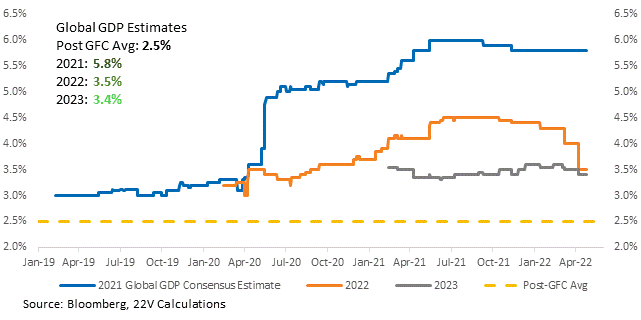
Financial conditions, measured by the GS Financial conditions index, moved to a new cycle high Friday, suggesting growth will slow. Remember, we think that series UNDERSTATES the actual level of financial conditions given the exceptionally high level of mortgage spreads. CDS spreads are not back to 2018 levels but are heading in that direction. Bottom line, tightening of financial conditions has broadened out recently (vs being concentrated in mortgage rates). Hard data in the US remains firm and we don’t know if the current tightening of financial conditions is enough to change the demand outlook meaningfully (and by extension the outlook for fed rate hikes). But headwinds to global growth are adding up. China shutdowns, European war impacts, and tightening financial conditions in the US are leading to a sharp deceleration of global growth estimates. If that continues (which it should), there is downside risks to 10yr yields and rate hike expectations.

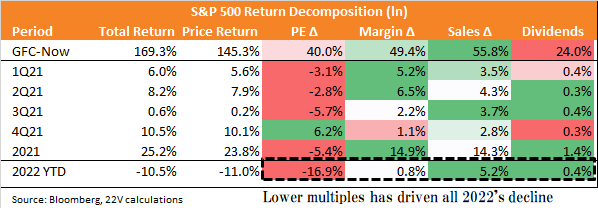
The above being said, assuming a recession doesn’t become the base case, being short the market around 4200 level with unusually high Implied ERP is tough. PE contraction has taken -17pp off the market this year. Strong fundamentals have added 6.5pp, leaving the market down -11%. Those fundamentals are at risk (earnings growth and margins are moving lower), but keep in mind that positive stabilizers tend to kick in. As demand growth slows and companies lose pricing power, earnings expectations decline, but 10yr yields will face increasing headwinds.
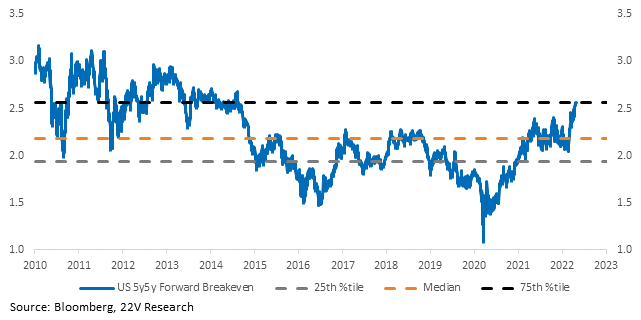
At the same time, longer-term expected inflation expectations are BELOW current core inflation. While inflation expectations remain around these levels (2.5%) and don’t collapse, a recession will not be the base case. That biases us to be buyers of large market declines (around the 4200) and not pressing shorts here. FYI…our base case is the Fed wants to avoid a recession, which is why it can’t drive core inflation to 2%. Trying to do that would cause a recession. That explains the firmness of inflation expectations.
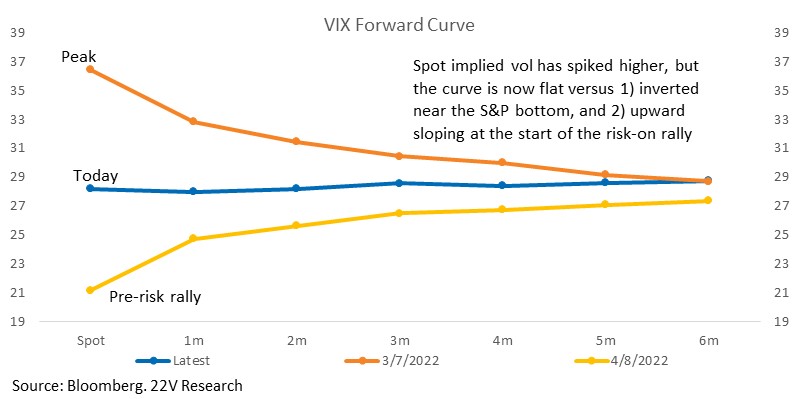
Short-term, buying the market is still risky. The VIX curve is flat and we would like to see it more inverted to make the overall market buy call like we did around 4200 the last time.
Full report below…
MARKET VIEWS: The Chinese Yuan remains under intense pressure as increasing odds of a hard lockdown in Beijing and other cities increase the odds of a sharper economic slowdown. The PBOC cut the forex rrr by 1 percentage point this morning. Chinese officials have argued for policy support to offset the COVID impacts, but investors are more focused on the likelihood of rolling lockdowns for the next 4-6 months. Most investors believe that China will eventually pivot to tolerating higher cases and living with COVID, but that is highly unlikely before the 20th Party Congress in the fall. Low vaccinations rates among the elderly and almost no herd immunity generally could cause a major health crisis ahead of the 20th Party Congress. If they want to avoid a health crisis until the fall, how do they stimulate economic growth at the same time? The answer is they can’t really, which is why commodity prices have downside risk. Potentially significant downside risk if the war impacts start to fade.
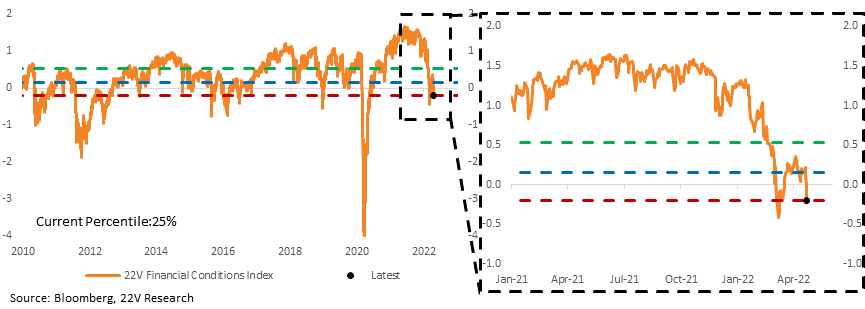
Demand data in the US remains strong and pricing power at companies remains firm, suggesting the Fed will need to do more to slow growth. Consistent with the extreme volatility of equity market internals, though, that is not the whole story. Financial conditions, measured by the GS Financial conditions index, moved to a new cycle high Friday, suggesting growth will slow. Remember, we think that series UNDERSTATES the actual level of financial conditions given the exceptionally high level of mortgage spreads. Below is our imperfect attempt to show the change in financial conditions including mortgage spreads to US treasuries. Financial conditions have clearly tightened, we just don’t know that is enough to slow demand growth and lower the odds that the Fed will go 50bp a meeting for 4 meetings. Or 75 bp in June.
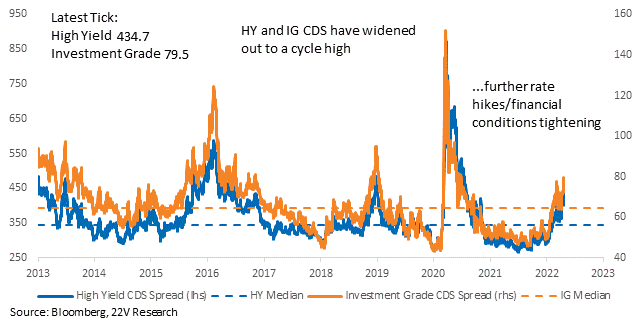
CDS spreads have started to move wider as well. Credit spreads are not back to 2018 wides, but are heading in that direction. Bottom line, the tightening in financial conditions has been more broad-based recently (vs concentrated in mortgage rates).
Major global growth headwinds are growing with China’s shutdowns, the war’s impact on European growth, and the tightening of U.S. financial conditions. That is why global growth estimates continue to move lower. Economic growth WILL SLOW and that continues to favor Earnings Quality and Low Volatility Factors.
The above being said, assuming a near-term recession doesn’t become a base case, being short the market around the 4200 level with unusually high Implied ERP is increasingly tough. S&P returns are still ALL about willingness to pay. PE contraction has taken -17pp off the market this year. Strong fundamentals have added 6.5pp, leaving the market down -11%. Those fundamentals are at risk, but keep in mind that positive stabilizers kick in. As demand growth slows and companies lose pricing power, earnings expectations decline, but 10yr yields will face an increasing headwind. That will make stocks look increasingly attractive, assuming the multi-year trend in earnings growth expectations remains firm.
Inflation expectations remain firm and haven’t budged during the sell-off. At 2.5%, that is not a problem for the Fed. The longer-term expected inflation rate is SIGNIFICANTLY BELOW the current core inflation rate. If the Fed wants to avoid a recession, it likely can’t drive core inflation to 2%. As long as inflation expectations don’t collapse significantly, a recession should not be the base case. That would bias us to be buyers of large market declines, not pressing shorts.
Markets are deeply over sold, but today isn’t the time to buy. We would like to see a large inversion of the VIX curve. Vol has spiked, but it has spiked across the curve, so we don’t have the typical short-term buy signal from a deeply inverted VIX curve. That could change in a few days though.
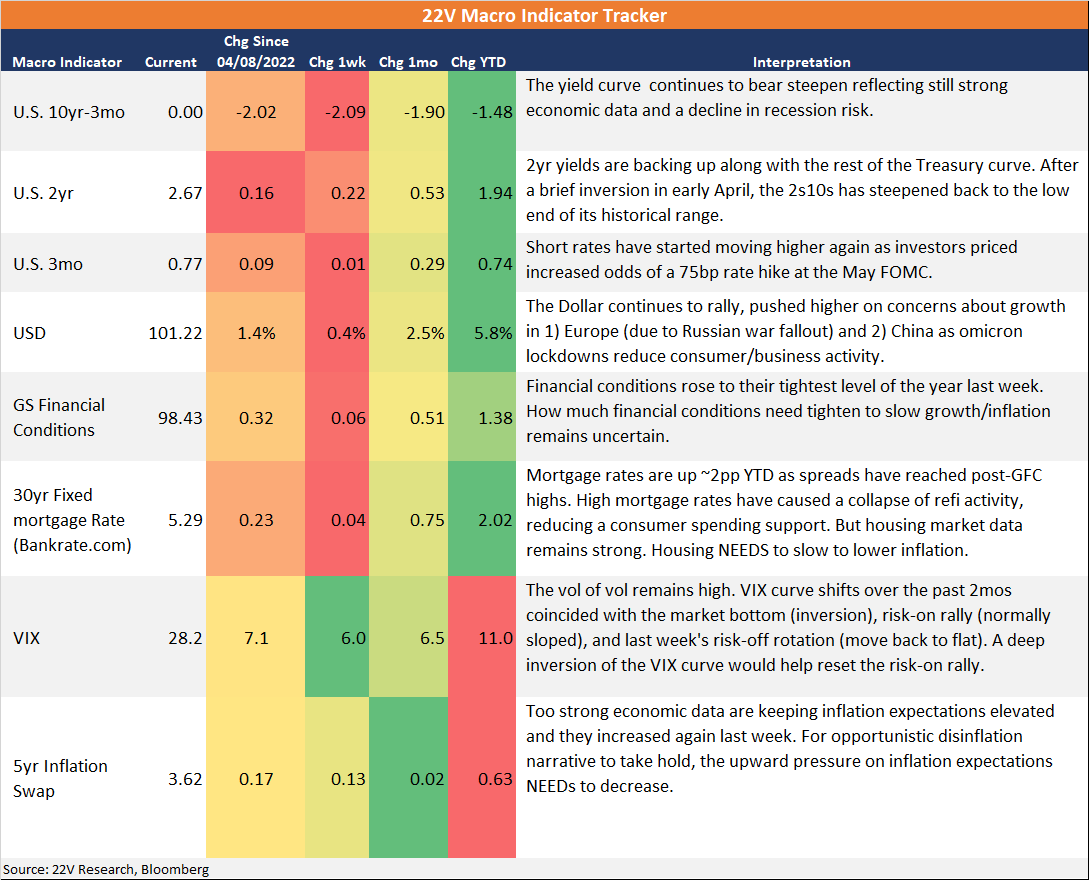
Macro Tracking Too Strong: Hard data (actual activity) remains MUCH stronger than Soft data (sentiment). Actual economic activity continues to outpace expectations. Both readings have improved recently, reflecting the ongoing decline in recession worries. Today’s backdrop is not entirely “good news is bad news,” but firming growth == too high inflation == need for more Fed tightening. Markets started reflecting that reality with 1) Treasury yields backing up (bear steepening the curve), 2) equities falling (S&P was down -2.8% on the week), and 3) inflation expectations moving higher. Last week, Powell would not comment on the accuracy of market-based rate estimates or if financial conditions have tightened enough for the Fed. But he did indicate that in the absence of supply increases, the Fed will need to push demand lower. Demand data remains strong, and inflation expectations have moved higher, and those suggest the Fed will need to do more to slow growth. Consistent with the extreme volatility of equity market internals, though, that is not the whole story. Financial conditions, measured by the GS Financial conditions index, moved to a new cycle high Friday, suggesting growth will slow. Remember, we think that series UNDERSTATES the actual level of financial conditions given the exceptionally high level of mortgage spreads. Strong labor markets support consumer activity, but rapidly rising rents and a 5.25% mortgage rate have led to a collapse in refi activity (cash out and straight), removing a pandemic-era spending booster. At the same time, inflation expectations moved higher, and near-term rate hike expectations have increased (higher odds of a 75bp hike at the May 4th FOMC). Financial markets are pricing in a more aggressive Fed, which is why spot VIX climbed higher last week and the VIX curve flattened. A step inversion of the VIX curve and lower inflation expectations, combined with the backup in financial conditions, would set up another risk-on rally. Near-term, investors need to see 1) if growth will slow and 2) how aggressive the Fed signals the need to slow inflation NOW.