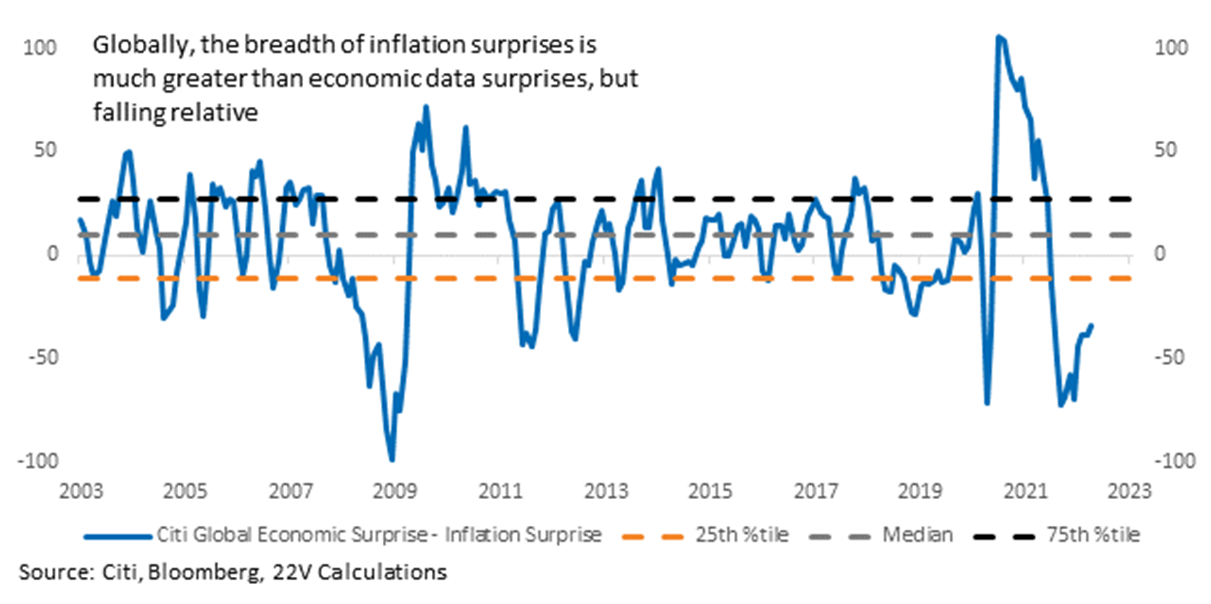
SUMMARY: Moving from a world of persistent upside inflation risk, which means financial conditions need to tighten more and more and recession is an obvious end game (Larry Summers view), to one of economic slowing, inflation expectations starting to ease, and financial conditions not needing to tighten more, FROM HERE, is an important shift. A recession could very well be in the cards still if recent financial condition tightening is enough to cause a recession. OR, economic growth will remain firm and markets will need to price in a 4% Fed funds rate to slow inflation/growth, leading to more financial condition tightening.
For now, the breadth of economic data is rolling over, equity market internals are consistent with a slowing of economic growth/inflation, PEs have moved significantly lower as earnings sentiment has declined, and investor sentiment has declined well ahead of the rolling over of economic data. Keep in mind that recessions are 1) rare events and 2) something Fed officials would like to avoid. They may not be able to avoid a recession, but that is the goal.
Given the two points we mention on recession above and knowing that recession is not an immediate risk (if there is one it is likely to be in 2023) we have a problem with the idea that investors will go straight from economic growth slowing (which we need) to making a recession their base case.
If we are correct on the slowdown in economic growth, which we have high conviction in, expect late cyclicals to underperform. They have been some of the best performers recently. And if we have a short-term rally in risk assets, which seems likely unless CPI comes in much higher than expected, Low Volatility (Defensives) to underperform near term (see Quant here). A key chart… economic data will slow and inflation should as well. What is critical for risk assets is that inflation surprises stop outpacing data surprises. If inflation surprises start to fall and at a faster rate than data surprises, it will be bullish.

Quickly on CPI: consensus seemed to shift the risk of a higher-than-expected number. We don’t have a strong view, just an FYI. From our point of view, it is more important the breadth of economic data slows and inflation expectations decline. Slower econ growth means lower inflation going forward. The CPI is a big deal given the VIX and VXN (Nasdaq vol) are implying over 2% daily moves for the next 6 mos. Markets are likely to have large reactions to the number, but unless the rent component shifts higher (the big risk), we will continue to focus on the breadth of data and what the means for CPI going forward. We suspect Mr. Market will as well.
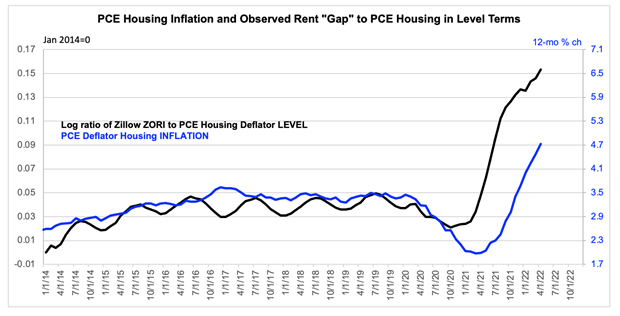
CPI is released before the open today and focus will be on rents, a key determinant of core inflation. Gerard argues the increase of rent inflation is likely to persist beyond consensus estimates (though there may be some weirdness in today’s CPI rent data because of Utility costs). Official government rent series should catch up to private data in level terms. Private data are more prone to lease turnover, overstating the rate of change at first but reflecting the new market rate in level terms that the government series will settle around.
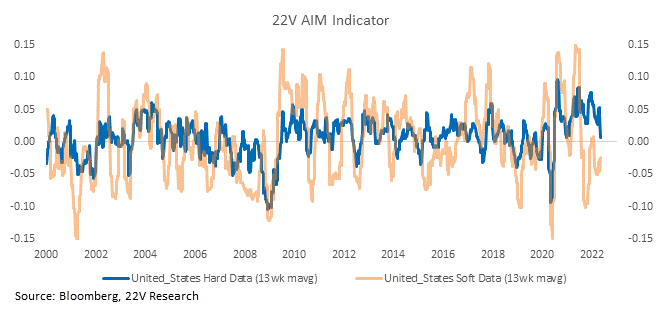
MARKET VIEWS: UST yields are lower again, the USD has been flat since for 2 weeks and commodity prices have started to roll over (oil is higher today though). The negative vortex of higher 10yr yields, higher oil, and a higher USD has faded away. It could come back, but given the economic slowdown that appears increasingly obvious (FINALLY), it is not clear that financial conditions need to tighten more FROM HERE. That should reduce some of the headwinds facing PE. Specifically, on what encourages us on the data rolling over, the most recent decline in the breadth of economic data has been led by the hard data. I.e., the decalin in the breadth of economic data is not the product of crummy sentiment (economic sentiment has been a misleading indicator for the last year). The breadth of economic data needs to fall if inflation is going to start to move lower.
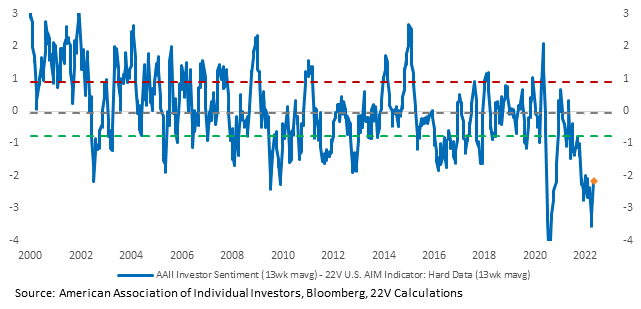
The question now is if investors begin to discount a recession as the base case. Keep in mind that recessions are 1) rare events and 2) something Fed officials would like to avoid. As the entire world knows, investor sentiment is extremely poor. We like to look at sentiment relative to economic indicators though. Sentiment is still unusually poor relative to the now weakening breadth of economic data. Sentiment plunged ahead of the data….
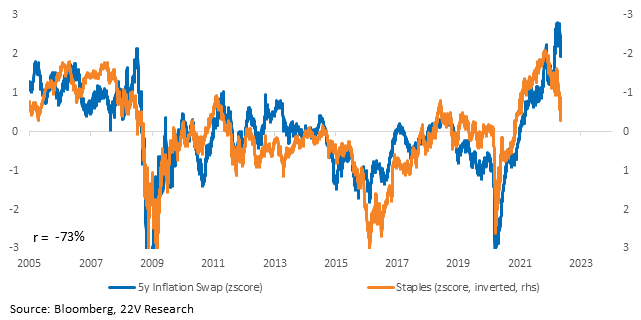
…market internals have been ahead of the data as well. The relative performance of Staples has taken off as financial conditions tightened. We are finally starting to see that tightening financial conditions and associated Staples outperformance show up in inflation expectations, which have finally hooked over.
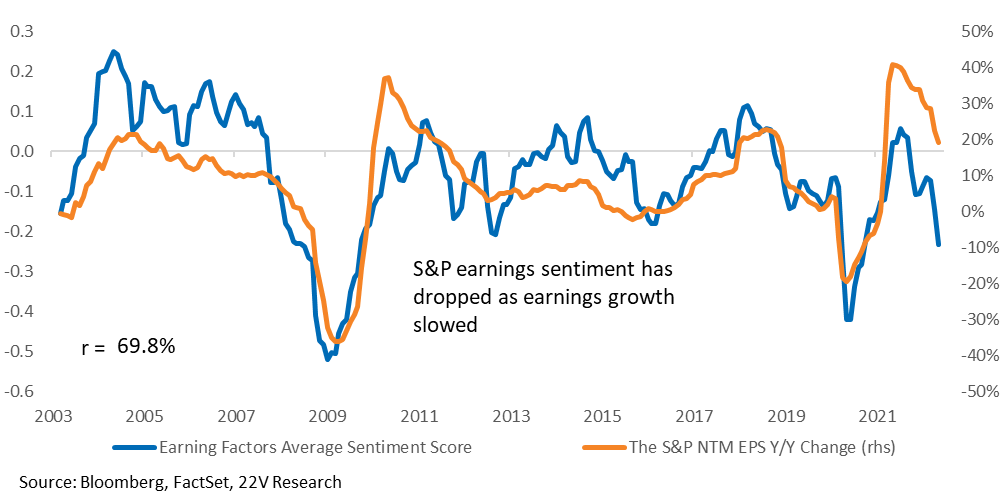
PEs have moved lower in anticipation of slower earnings growth as well. Earnings are going to slow and margins will face pressures. The Fed NEEDS that to happen. Without lower margins, pricing (inflation) will stay too high. Our question is if the coming slowdown in earnings growth, economic growth, and tightening of financial conditions has been priced in. We think the answer to that question is yes. Basically, you need a recession to get stock pricing meaningfully lower from here
If we are correct on the slowdown in economic growth, which we have high conviction in, expect late cyclicals to outperform. And if we have a short-term rally in risk assets, which seems likely unless CPI comes in much higher than expected, expect the low volatility factor (Defensives) to underperform near-term. A key chart…we know that economic data will slow and inflation should as well. What is critical for risk assets is that inflation surprises stop outpacing data surprises. If inflation surprises start to fall and a faster rate than data surprises, that will be bullish.