SUMMARY: The combination of COVID shutdowns in China, economic uncertainty related to the war (see the collapse in the German ZEW overnight), and a Fed that is going to guide economic growth lower is a headwind for commodity prices. All things equal. All things are not equal of course, and the very recent weakness in commodities requires oil/gas to keep flowing and the war stay confined to Ukraine. There are MANY headwinds to global growth (Fed, ECB, War, China COVID) and that will show up in economic data over the coming months. We favor higher quality growth, companies that benefit from higher real yields (for this trade to work, equities need to hold up), low volatility, high cash return and low earnings risk factors. Expect the breadth of global growth indicators to trend lower.
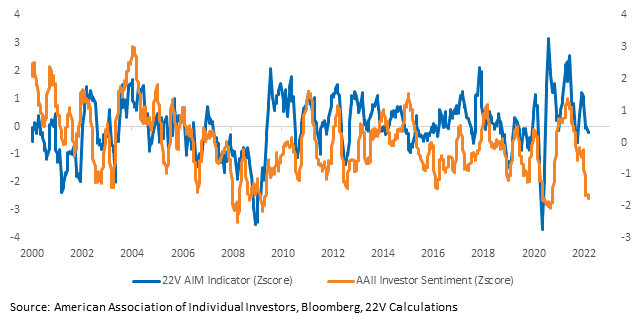
The breadth of economic data has declined some, but held up well relative to investor sentiment, which has collapsed. Some cooling of economic growth and reduced war tension would help stabilize equities. Markets have largely discounted the weaker economic growth backdrop. It’s really a question of the Fed or some other factor causing a recession or not

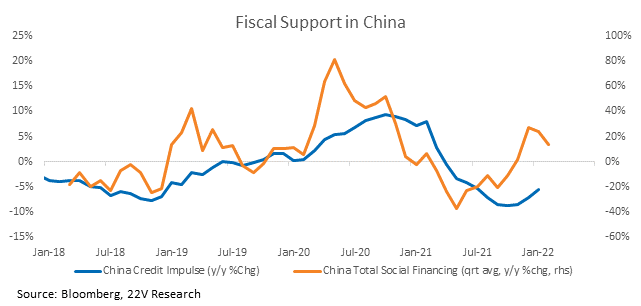
The PBoC unexpectedly did not cut rates and although most of the data came in better than expected, the trends in total social financing and the credit impulse are not enough to offset the major headwinds facing China’s economy now (COVID shutdowns and the war through European export exposure). Investors will need some sign of 1) significantly more stimulus and 2) much less tension with the US before reentering Chinese stocks again.
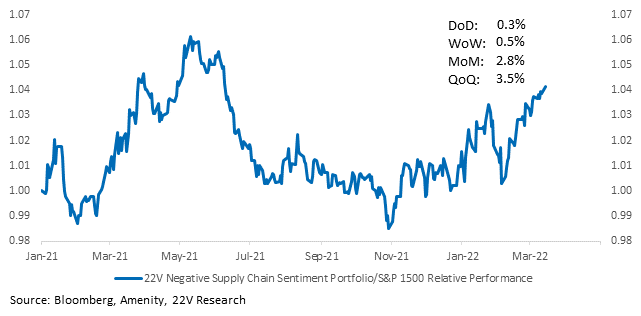
There is some risk to our negative supply chain portfolio, but companies whose management teams flagged trouble with supply chains have continued to outperform recently, despite China shutdown news. Continued strong performance of companies that benefit from improving supply chains likely has to do with the shutdowns in China being more impactful for a few very high value add companies (APPL as an example) rather than a broader set of companies (NKE cited Vietnam last year, but that problem is largely resolved), the increase in inventories over the past few months and some expectations that a shift to service spending is coming, which would help limit another round of intense supply chain pressure. Supply chains are by no means clear, but the rate of change is not nearly as bad as it was.
Full report below…
MARKET VIEWS: Equity markets are bouncing off the overnight lows as oil prices move below $100 and Ukraine/Russia negotiations start again. The combination of COVID shutdowns in China, economic uncertainty related to the war (see the collapse in the German ZEW overnight), and a Fed that is going to guide economic growth lower is a headwind for commodity prices. All things equal. All things are not equal of course. for recent commodity headwinds to continue oil/gas needs to keep flowing and the war confined to Ukraine. There are MANY headwinds to global growth (Fed, ECB, War, China COVID) and that will show up in economic data over the coming months. We favor higher quality growth, companies that benefit from higher real yields (for this particular trade to work, equities need to hold up), low volatility, high cash return and low earnings risk factors. Expect the breadth of global growth indicators to trend lower.
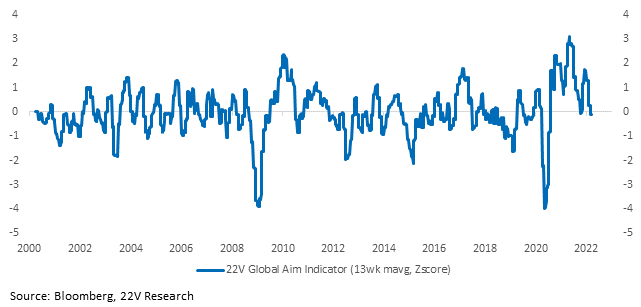
FYI…the breadth of economic data has declined some, but has held up well relative to investor sentiment, which has collapsed. Some cooling of economic growth and reduced war tension would help stabilize equities. Markets have largely discounted a weaker economic growth backdrop. It is really a question of the Fed or some other factor causing a recession or not.
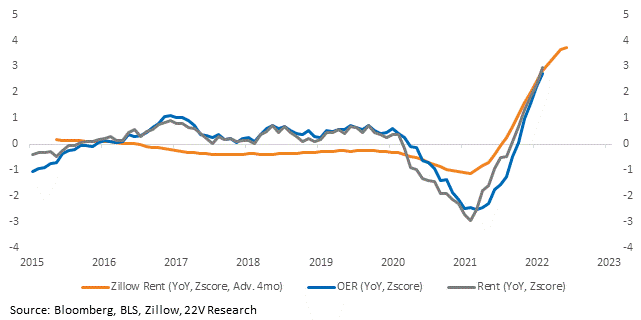
Rents, one of the major trends impacting core inflation, remains strong. Gerard sees no evidence of a moderation in rent inflation. Zillow’s latest data remains very strong, and private rent data is accelerating beyond the government’s series. We think the bottom line is that core inflation is still too hot and the Fed will have to address it through further tightening of financial conditions, unless there is a shock from the Russia-Ukraine situation large enough to distort economic growth here in the U.S. This probability has increased some, which makes being short the short end of the curve, relative to what is priced in, tougher right now
The PBoC unexpectedly did not cut rates and although most of the data came in better than expected, the trends in total social financing and the credit impulse are not enough to offset the major headwinds facing China’s economy now (COVID shutdowns and the war through European export exposure) . John Roque notes that the Hang Seng is oversold on a monthly basis, but he’ll wait for it to stop declining before getting interested o the long side. The CSI is not oversold. FYI, John is hosting a webinar on his latest theses today at 10:30 AM ET (register HERE). Investors will need some sign of 1) significantly more stimulus and 2) much less tension with the US before entering into Chinese stocks again.
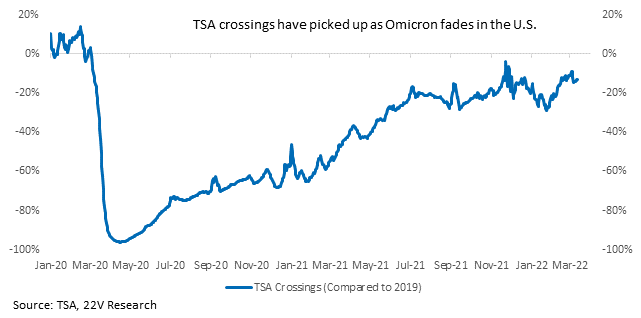
Yesterday, we covered how this bout of lockdowns is unlikely to generate as intense inflationary pressures as in 2021 given tighter financial conditions, lower real wages, and some normalization of consumer spending back into services. It’s also important to keep in mind Omicron is much less severe than prior strains, providing policy a potential out. Spending on goods vs services in the U.S. has been stickier than most anticipated but there is evidence of behavior slowly shifting; OpenTable data and TSA crossings are at or near post-pandemic highs. As long as the improvement in service trends continues, expect less supply chain pressure related to goods. Also, inventories are in a better place now than last fall and other supply chain countries (Vietnam) are fully operating.
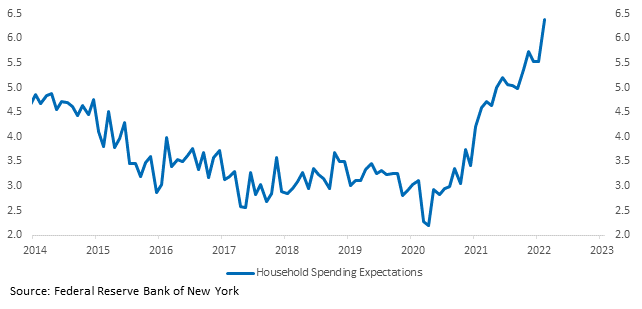
The consumer is still an important economic support, even if there is some downside risk to the overall level of spending. According to the NY Fed’s Survey of Consumer Expectations, consumers are anticipating bad inflation, but are also anticipating strong wage growth and expect to spend more in the year-ahead as well. Unfortunately, the Fed will actively be trying to offset this.
There is some risk to our negative supply chain portfolio. Companies whose management teams flagged trouble with supply chains have outperformed as Omicron 1) did not have as disruptive an effect as feared and 2) faded. COVID lockdowns are a short-term headwind. If the lockdowns do not meaningfully disrupt supply chains though given Omicron’s severity, then the longer-term thesis remains intact. Even yesterday these companies outperformed. It likely has to do with the Shutdowns in China being more impactful for a few very high value add companies (APPL as an example) relative to a much broader set of companies (NKE cited Vietnam last year, but that problem is largely resolved). We are more worried about top line sales from China shutdowns than broad supply chain issues.