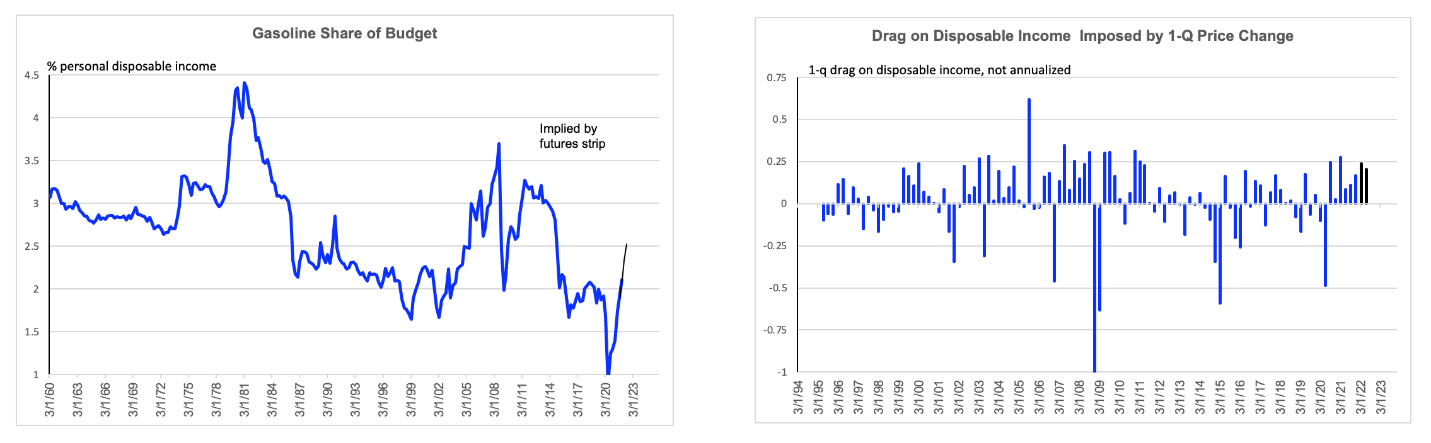
SUMMARY: The war is still the major swing factor, but to the extent that oil/gas continues to flow (barrels are not lost) and the US and NATO don’t escalate, the question is how much damage will be done to rest of world economies. From a US point of view, the damage will be much less than feared. As our friend Noah Smith pointed out overnight, high oil prices are not the threat they once were and unless they go significantly higher, the impact on US economic growth will modest. 22V economist, Gerard MacDonnell, who has been right on the big economic calls this year notes that the rise of energy costs are unlikely to overwhelm strong demand growth. As Gerard notes, “given the prices on the screens now, the higher retail gasoline price is likely to reduce discretionary income by about 24 bps (not annualized) in Q1 and by 21 bps in Q2.”
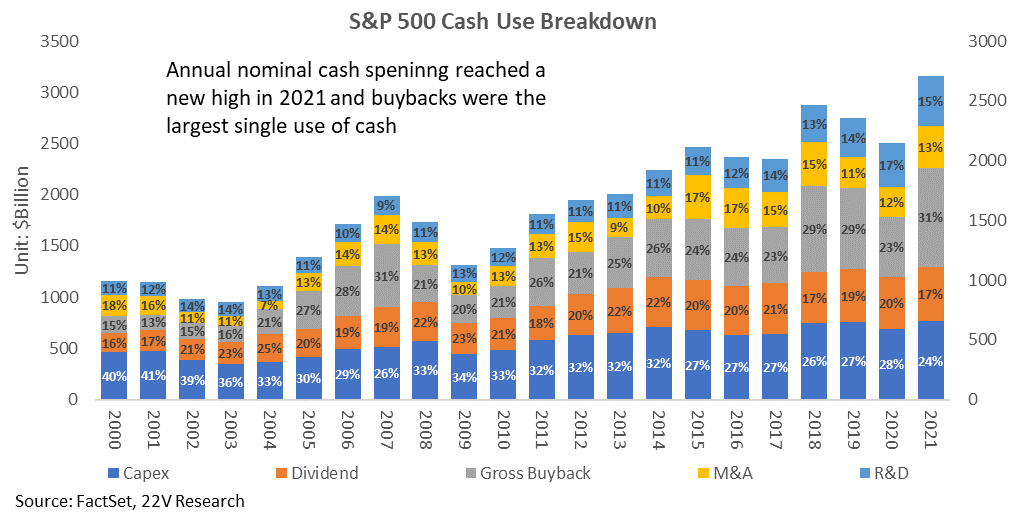
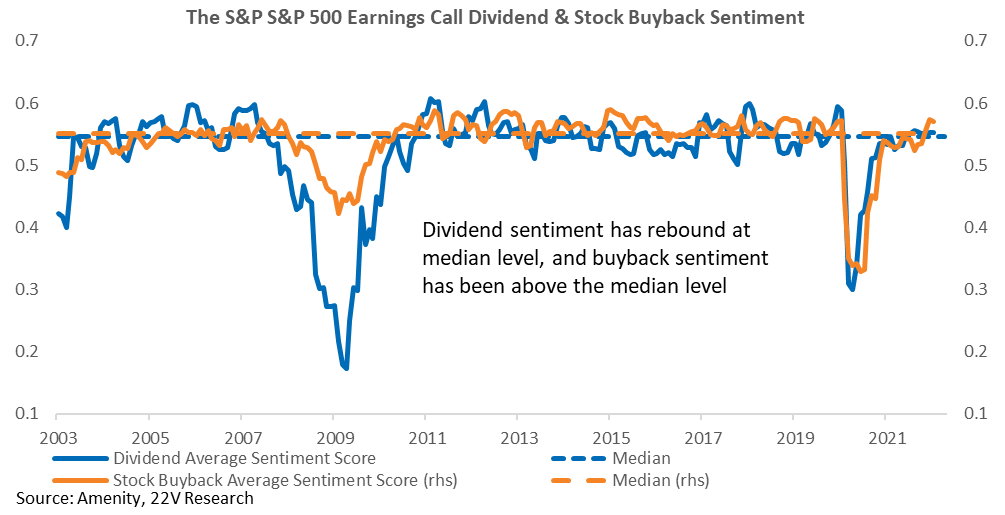
If a commodity price super spike is avoided (seems likely as oil/gas continue to flow), we reiterate our call that the S&P is a tough short now. How much it can rally is a different question, but implied cash return yields are unusually high and buybacks are climbing. Total share repurchases reached an all-time high in 2021 even as all other forms of spending moved higher. Buyback sentiment was above its long-term median at the end of 4Q reporting season, which is consistent with yesterday’s announcement by AMZN to buy back $10B of their stock. 67% of S&P companies have cash return yields above 10yr yields, which is unusually high relative to history.

On CPI, the impact of a higher than expected headline number is tricky given the impact of oil prices and the entire world expecting a high number. Most of the energy impact should be felt in March and the Fed will likely look through the energy impact for at least this month. Keep in mind that the payroll report was on the hawkish side. So, if services inflation and rents continue to point to above 3% PCE this year, then the Fed will continue to push to lower demand growth and inflation, meaning tighter financial conditions. The risk to our call is if the service inflation reading is lower than expected, which could imply wage growth easing and would moderate the need for tighter financial conditions.
The rest of the report focuses on what people actually spend money on and we have a specific idea on being long Retail stocks that have high pricing power sentiment. The US consumer is in a better place than generally assumed, the retail sector has been pummeled and assuming macro influence subsides some (should happen unless war continuously escalates), Retail stocks with pricing power are interesting. Particularly on a relative basis.
Full report below…
MARKET VIEWS: After the sharp increase in risk assets yesterday, some reversal is taking place again this morning. The war is still the major swing factor, but to the extent that oil / gas continues to flow (barrels are not lost) and the US and NATO don’t escalate, the question is how much damage will be done to rest of world economies. From a US point of view, the damage will be much less than feared. As our friend Noah Smith pointed out overnight, high oil prices are not the threat they once were and unless they go significantly higher, the impact on US economic growth will not be significant. Our economist, Gerard MacDonnell, who has been right on the big economic calls this year notes that the rise of energy costs is unlikely to overwhelm the underlying conditions for strong demand growth. As Gerard notes, “given the prices on the screens now, the higher retail gasoline price is likely to reduce discretionary income by about 24 bps (not annualized) in Q1 and by 21 bps in Q2.”
To the extent that a commodity price super spike is avoided (seems likely as oil / gas continue to flow), we reiterate our call that the S&P is a tough short now. How much it can rally is a different question, but implied cash return yields are unusually high and buybacks or cash returns remain firm. Total share repurchases increased to an all-time high in 2021 even as all other forms of spending moved higher. AMZN’s announcement to buy back $10B of its stock is the latest example.
With profitability likely to come under pressure as the Fed fights inflation, we expect to see buybacks accelerate in 2022 (inorganic source of earnings growth). But they should remain firm. Buyback Sentiment analysis moved back above its long-term median at the end of 4Q reporting (consistent with the AMZN news). High cash return yield helps keep put a floor under the S&P.
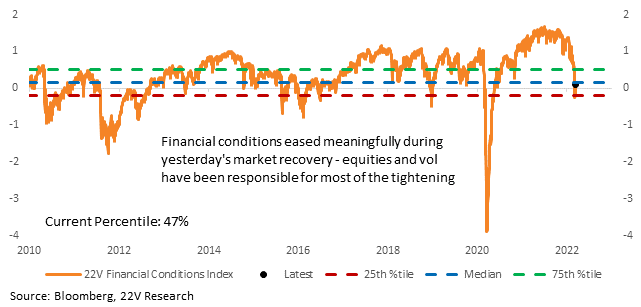
Regarding CPI, watch the rent and service inflation components. The headline is tricky given the impact of oil prices, and the Fed will likely look through that for at least this month. Keep in mind that the payroll report was on the hawkish side. So, if service inflation and rents continue to point to above 3% PCE for this year, then the Fed will continue to push to lower demand growth and inflation, meaning tighter financial conditions. The risk to our call is if the service inflation reading is lower than expected, which could imply wages easing some and would moderate the need for tighter financial conditions. Assuming the war remains contained to Ukraine and oil and gas continue to flow, financial conditions will ease near term and rates will increase (Banks/ Unprofitable tech work). Longer term, financial conditions will tighten and favor Quality Growth, companies with pricing power, companies that benefit from higher real yields.
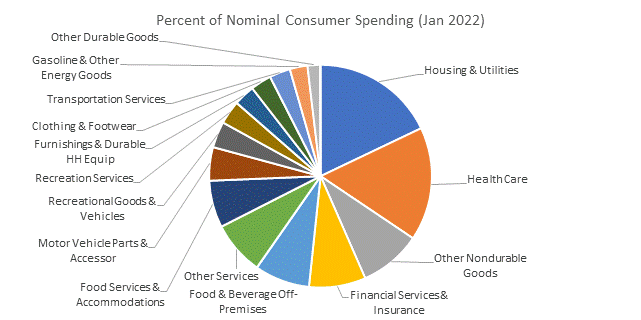
HOW PEOPLE SPEND MONEY AND LONG RETAIL PRICING POWER IDEA: here’s what people spend money on. Lower income quintiles spend a higher percent on gas, food, and rent. Economically that might not matter much, but there are political ramifications. Housing and Healthcare are by far the biggest outlay.
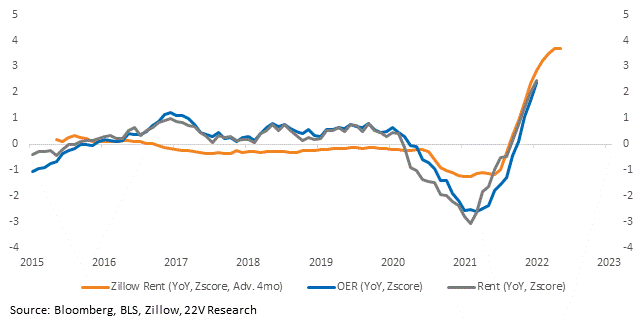
Rent inflation is high and the latest data does not show much evidence that significant moderation has begun. Affordability is high too, but rents will keep core inflation above the Fed’s comfort level. Per Gerard, “Private [rent] data are meaningful to us to the extent that they link predictably, even if with a lag, to government data. Ultimately, the government data are the best measure of truth. But we need to know now what they later will show… If rent is quickening, do not expect it to slow meaningfully soon — and probably expect it to continue quickening.”
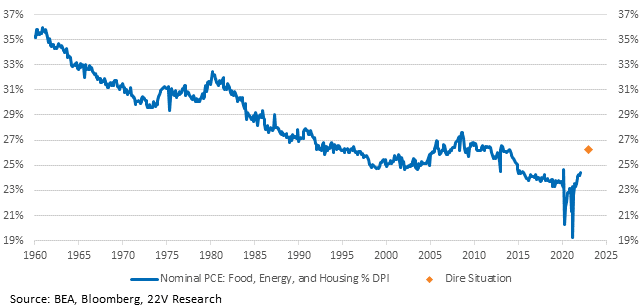
Energy, food, and housing account for a significantly smaller percentage of DPI than in the past. Cost of living inflation is obviously meaningful (and will have some difficult-to-estimate effect on consumer confidence) but not to the extent it once was. In other words, it’s not eating into DPI as much. If the recent trend of energy, food, and housing inflation were extrapolated out through the next year (a dire inflation scenario), the three would eat up ~26% of CPI, which would roughly match 2006-2014. Importantly, real labor income is growing at a strong rate, outpacing the post-GFC recovery. Consumer buying power is being sustained by a tight labor market.
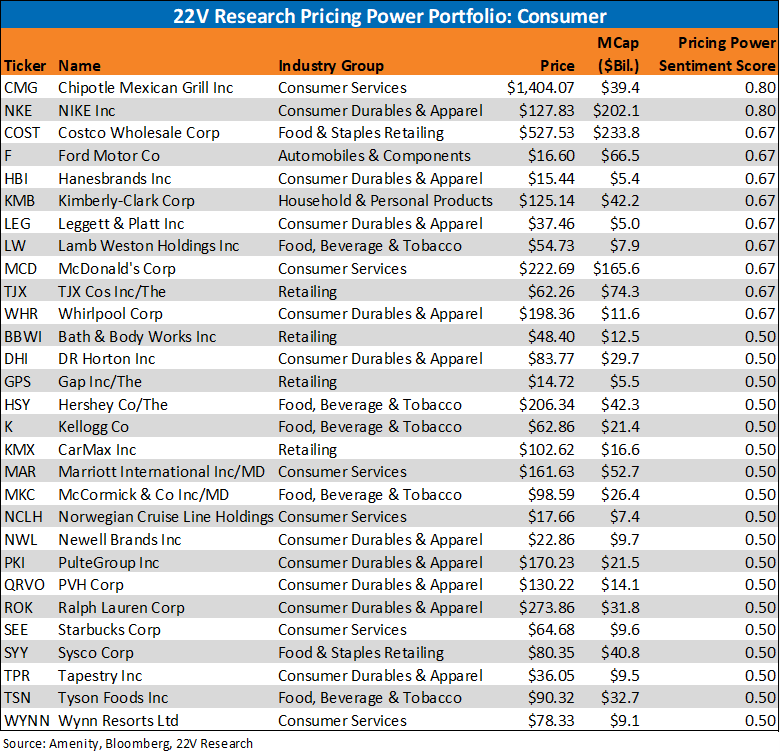
The XRT is down -27.3% from its peak in November 2021, underperforming the S&P by -20% since then. The consumer is likely in better position than is consensus thinks, but retail stocks will still face headwinds from tightening financial conditions. The Fed is explicitly targeting pricing power, which means worse margins. Using the Amenity Natural Language processor, we constructed a basket of stocks whose management teams have positive sentiment about pricing power. We think this basket will outperform as the Fed targets inflation.
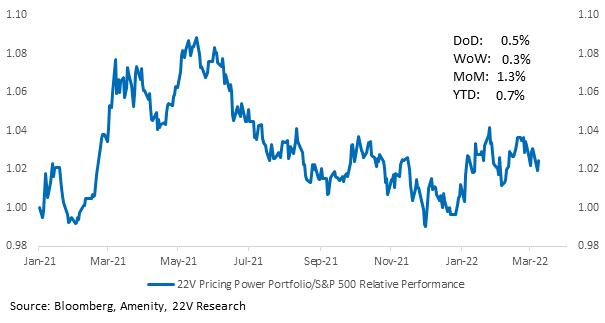
Consumer stocks with good pricing power scores are listed below. This is a good screen to start with. Macro influence is high, but will eventually normalize, leading to more opportunities for alpha generation via stock picking.