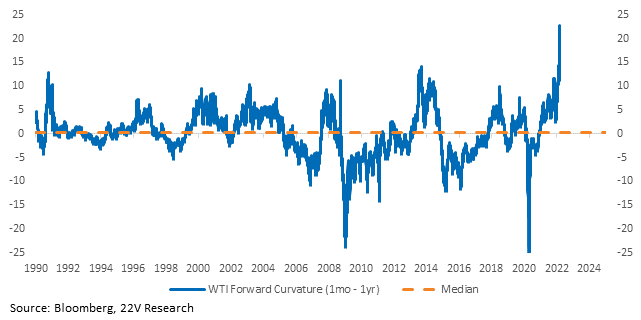
SUMMARY: China’s involvement in the Russia-Ukraine crisis could help stabilize risk assets. We will see if China has influence. Investors focused on crude oil yesterday as odds of sanctions on Russian oil and gas increased significantly in light of Ukrainian civilian causalities. That leads to increased risk of a significant slowdown in European economic growth and knock-on effects to the US economy. Spot Oil is being priced at its highest premium in at least 30 years to deliveries one year ahead. If the backwardation eases AND oil prices keep trending higher (pointing to a sustained high level), that would be significantly negative for the growth outlook.
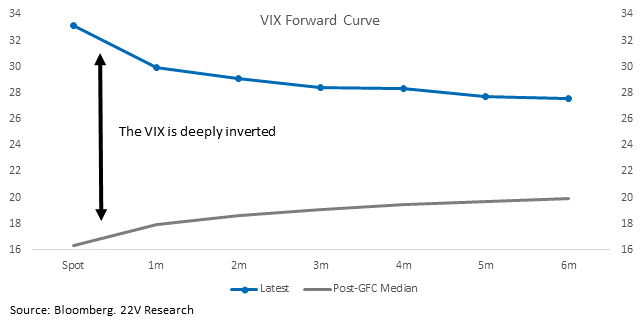
The same scenario is playing out in the VIX curve. The level shifting higher is a sign the general level of uncertainty has increased, but near-term implied vol is much worse than longer-term. As we learned during COVID, the curve is not a useful timing tool. And off ramps to the Ukraine crisis are not immediately obvious while civilians are being bombed. But with VIX inverted and oil in historic backwardation, any resolution will lead to a SHARP reversal higher in risk assets.
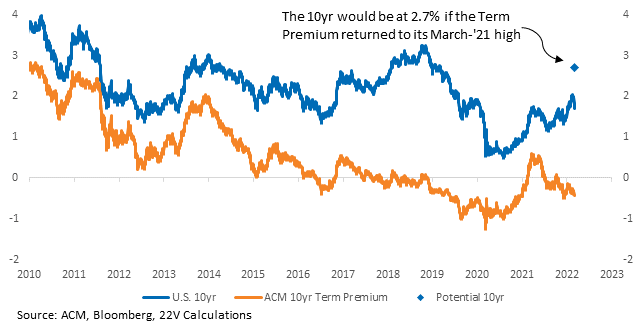
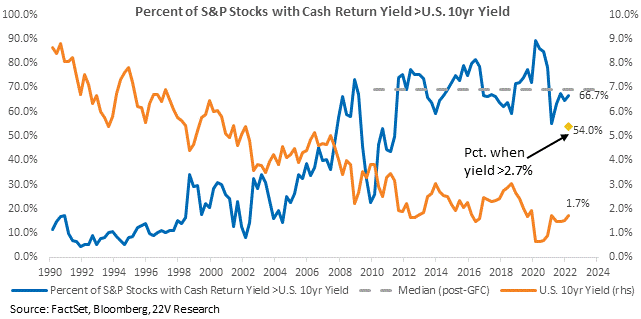
The outlook for inflation and short rates still biases the 10yr yield higher, but the collapse in the term premium is driving the 10yr yield lower. If a resolution comes to fruition, 10yr yields could reset quickly higher. If the term premium returned to its March 2021 high, the 10yr would be at 2.7%. Even with a 2.7% 10yr, 54% of the S&P would have a larger cash return yield. That’d be lower than the post-GFC ‘normal’, but still substantial and we suspect an underappreciated fundamental tailwind.
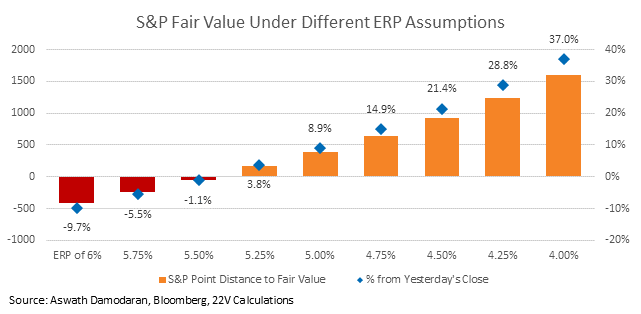
The 10yr yield changes fair value estimates but pales in comparison to the importance of the equity risk premium. Based on yesterday’s close, the ERP is currently around ~5.5. If the ERP rose to 6% (near the COVID high when investors were grappling with a shutdown of the global economy) while the 10yr yield, earnings growth, and cash return ratio remained flat, fair value would be ~-10% lower than the current levels. A 5% equity risk premium (very high historically) gets you about 9% upside. The bottom line, the skew is increasingly to the right on returns (assuming some off-ramp is found) with an implied ERP at these levels.

MARKET VIEWS: News that China is becoming increasingly vocal in calling for a resolution might be helping stabilize risk assets overnight. China foreign minister Wang Yi and Ukrainian foreign minister Dmytro Kuleba had a phone call and the statement from Wang Yi following the call noted that China was “extremely concerned about the harm to civilians” and that “Ukraine is willing to strengthen communications with China and looks forward to China playing a role in realizing a ceasefire.” We will see if China will have an influence. Investors focused on crude oil yesterday as the odds of sanctions on Russian oil and gas increased significantly in light of Ukrainian civilian causalities. That lead to increased risk of a significant slowdown in European economic growth and knock-on effects to US growth. Financial conditions tightened as a result. HY and IG CDS are around their 70th percentiles. They were at their 6th percentiles at the beginning of the year.
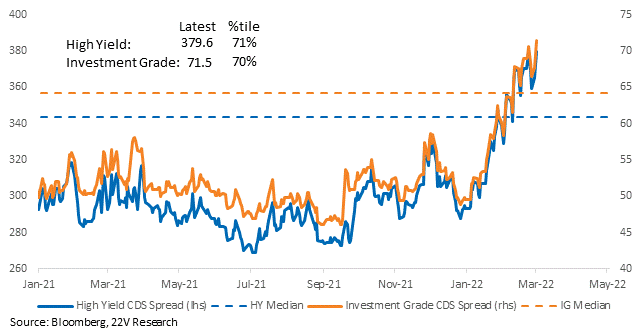
Crude oil is at record backwardation. In other words, spot oil is being priced at its highest premium in at least 30 years relative to deliveries one year ahead. Prices in the out-months have been increasing too, so investors are pricing in intense demand destruction. But future are indicating the forces currently and intensely disrupting prices to persist longer-term. If the backwardation starts to reverse AND oil prices keep trending higher (pointing to a sustained high level of oil prices), that would be significantly negative for the outlook.
The same scenario is playing out in the VIX curve. The level shifting higher is a sign that the general level of risk has increased, but near-term implied vol is worse than longer-term. As we learned during COVID, the curve is not a useful timing tool, regardless of the intensity of its inversion. And off ramps are not immediately obvious while civilians are being bombed. That being said, with VIX inverted and oil in historic backwardation, any resolution will lead to a SHARP reversal higher in risk assets.
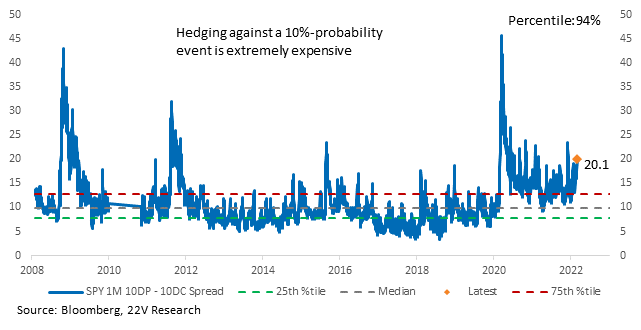
Backwardation is consistent with extremes in skew. The cost of hedging against a 10%-probability event (the chaos scenario) is in its 94th percentile. It is not surprising that chaos hedging has increased meaningfully. If Russia’s attack continues and financial sanctions increase further there is more downside risk, but investors are hedging that risk. Again, that indicates positive developments would lift asset prices sharply.
Treasury yields are falling as the 10yr term premium has turned more deeply negative. If the term premium returned to its March 2021 high, the 10yr would be at 2.7%. So, the outlook for inflation and short rates still biases the 10yr yield higher, but the collapse in the term premium is driving the 10yr yield lower. If a resolution comes to fruition, expect a sharp move higher in 10yr yields.
LONGER TERM EQUITY TAILWINDS: The percent of S&P stocks with a cash return yield above the 10yr has risen to 67%. But even if the term premium returned to its March ’21 high and the 10yr hit 2.7%, 54% of the S&P would have a cash return yield greater than the 10yr. That’d be lower than the post-GFC ‘normal’, but it’s still substantial and we suspect an underappreciated fundamental tailwind.
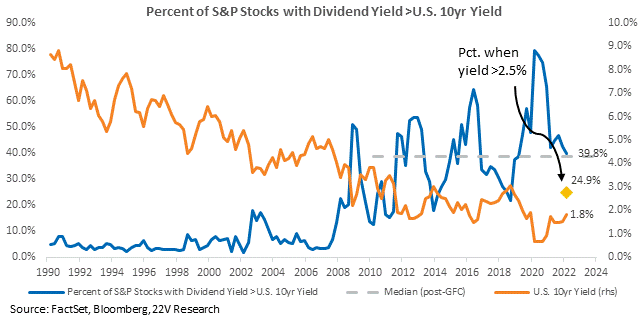
Currently 40% of S&P companies have dividend yields above 10yr yields, right at the post-GFC median. Assuming a recession is avoided, it is difficult to be negative on the market with 67% of S&P companies with cash return yields above 10yr yields and 40% of S&P companies with dividend yields above 10yr yields.
The 10yr yield changes fair value estimates (which we calculate using Aswath Damodaran’s implied cash return model) but pales in comparison to the importance of the equity risk premium. Based on yesterday’s close, the ERP is currently around ~5.5. If the ERP rose to 6% (the COVID high when investors were grappling with a shutdown of the global economy) and 10yr yields, earnings growth, and cash return ratio estimates remained flat, fair value would be ~-9.7% lower than the current levels. A 5% equity risk premium (very high historically) gets you about 9% upside. The bottom line, the skew is increasingly to the right on returns (assuming no catastrophe) with an implied ERP at these levels.