SUMMARY: Oil and commodities continue to surge; John Roque likes staying long commodities and commodity-related equities. BOE and ECB officials emphasized the risk the war poses to growth. But there are more risks in Europe than the US; per Gerard, Powell sounded like a guy trying not to get forced off message by external events, highlighting inflation and describing a series of rate hikes as a done deal in his testimony.
Implied treasury vol has surged; the MOVE Index jumped to its 80th percentile. Implied vol in Treasury markets is in backwardation just like the VIX. Implied vol curves are poor timing tools but they suggest there could be a snapback in 10yr yields if there is a market-acceptable resolution to tensions. Considering oversold conditions, a high equity risk premium, backwardation in energy, vol, and yields, and extremes in hedges, risk assets should rebound if things improve. This is a skew trade not a hope trade.

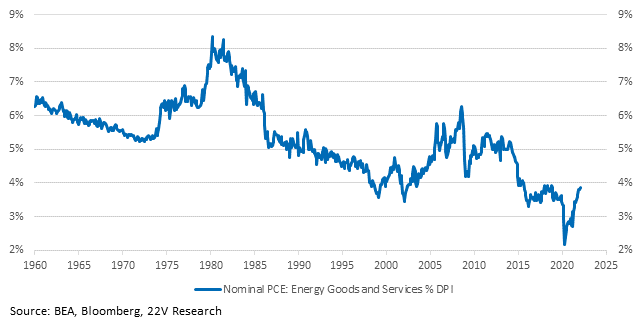
Energy goods and services spending is roughly 4% of disposable income, half what it was in 2006/2007. And as Gerard wrote on Sunday, the hit to real income from higher gasoline prices has already been felt. Equities can still go down, but today that requires much higher oil, a more chaotic war scenario, systemic risk from SWIFT removal, or much higher US recession odds.
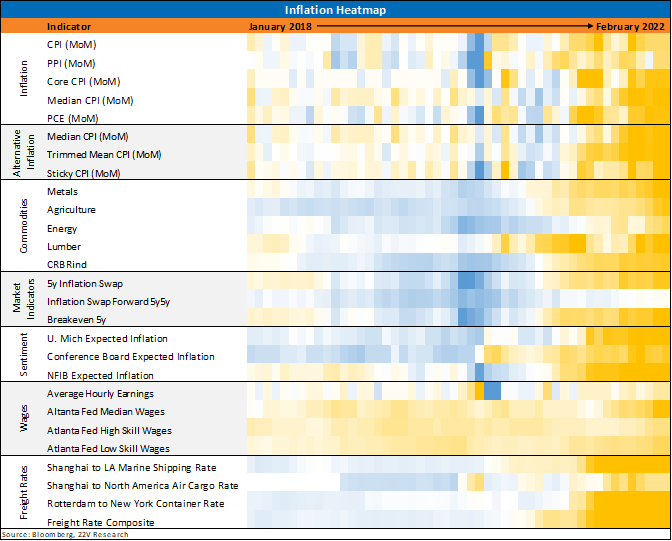
But a sustained asset price rally is tough. We like a reversal trade if things improve until the Fed communicates it will tighten financial conditions because the conflict in Europe isn’t. Commodity inflation is catching headlines, reinforcing the admittedly well-understood notion that inflation is everywhere. Highlighting that inflation is everywhere is not valuable, but (as we wrote last week) because geopolitical tensions tend to ease, as far as the markets are concerned, and then prior market trends reemerge. the prior trend is rising inflation and the Fed will combat inflation by tightening financial conditions.
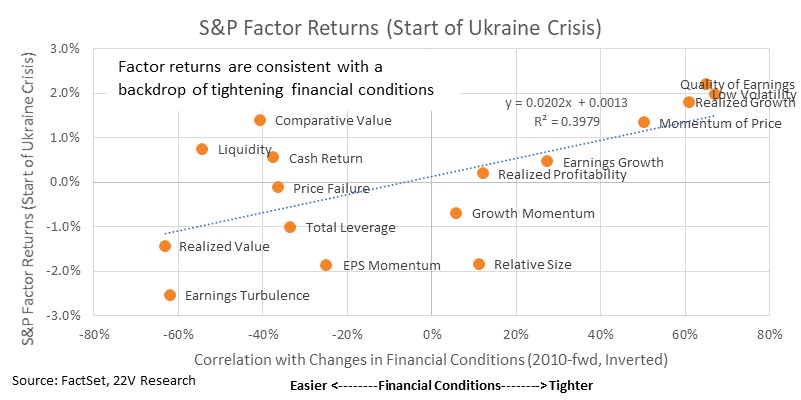
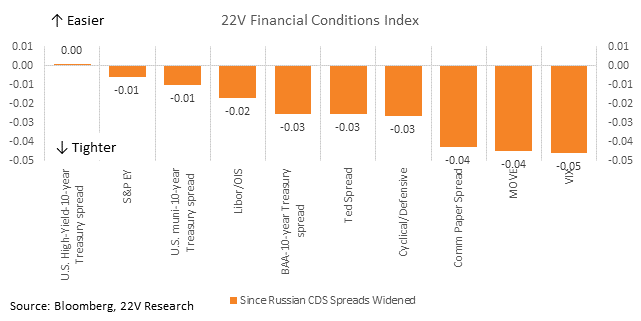
Since the start of the war, financial condition tightening has primarily been a from the MOVE (Treasury volatility) and the VIX (implied equity volatility). Factor returns have been consistent with a backdrop of tightening financial conditions. A cease fire/some other reduction in tensions, would likely see a short-term factor reversal that favors Value at the expense of Low Vol. Longer-term, a backdrop of tightening financial conditions and rising real rates supports a Quality rotation.
MARKET VIEWS: Ukraine and Russia will hold a second round of talks today, but Russia has continued its aggression on the ground, so we don’t expect meaningful results. Oil and commodities continue to surge; John Roque likes staying long commodities and commodity-related equities. BOE and ECB officials emphasized the risk the war poses to growth. But there are more risks in Europe than the US; per Gerard, Powell sounded like a guy trying not to get forced off message by external events, highlighting inflation and describing a series of rate hikes as a done deal. Implied treasury vol has surged; the MOVE Index jumped to its 80th percentile.
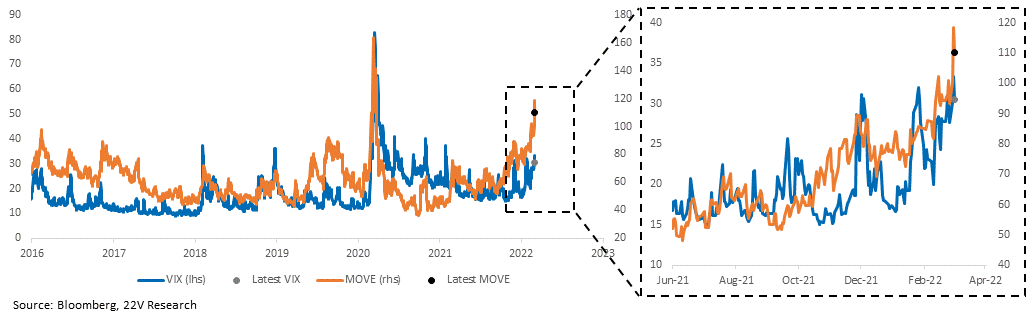
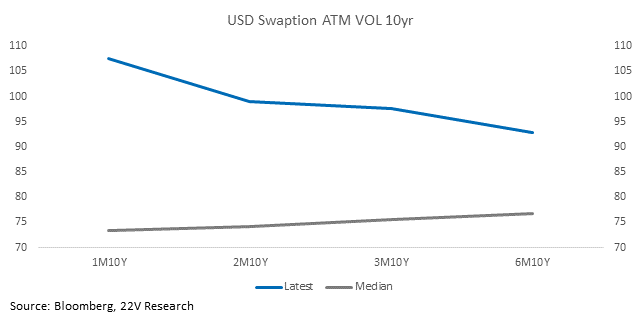
Implied vol in Treasury markets is in backwardation just like the VIX. Again, implied vol curves are poor timing tools but they suggest there could be a snapback in 10yr yields if there is a market-acceptable resolution to tensions.
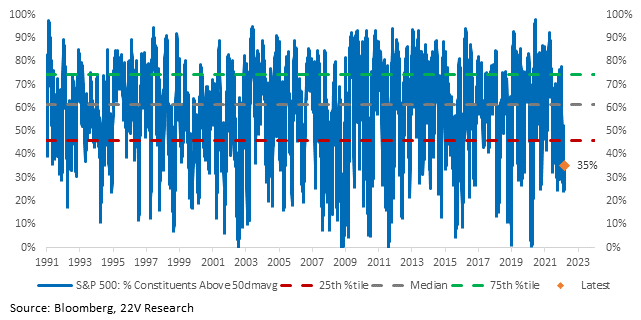
As we wrote yesterday, the implied cash return yield of the S&P is extremely high. People that focus exclusively on PE will continually miss this point. Monopolistic companies continuing to return mountains of cash to shareholders has been an important, NON-FED RELATED support for markets. Considering oversold conditions, a high equity risk premium, backwardation in energy, vol, and yields, and extremes in hedges, there is a flyer trade on equities if things improve. It’s a skew trade not a hope trade.
The skew trade won’t work if a truly chaotic scenario unfolds. Oil at $114 doesn’t bring a truly chaotic scenario. Energy goods and services spending is roughly 4% of disposable income. It was almost double the current amount in 2006/2007. Spiking energy costs don’t hurt the US consumer’s ability to spend as much as they once did. And as Gerard wrote on Sunday, the hit to real income from higher gasoline prices has already been felt. Equities can still go down, but you need to make a call on much higher oil, a more chaotic war scenario, systemic risk contagion because of SWIFT removal, or much higher US recession odds.
But a sustained asset price rally is tough. We like a reversal trade if things improve until the Fed communicates it will tighten financial conditions because the conflict in Europe isn’t. That communication will come from Powell and/or Brainard, so keep an eye on when the two of them are scheduled to speak. Commodity inflation is catching headlines, reinforcing the admittedly well-understood notion that inflation is everywhere. Highlighting that inflation is everywhere is not valuable educationally, but because (as we wrote last week) geopolitical tensions tend to blow over as far as the markets are concerned and then prior market trends reemerge. Russia is currently doing the Fed’s job and the Fed isn’t going to overdo it just for the heck of it. But the prior trend is inflation and the Fed will combat inflation by tightening financial conditions if Russia stops doing the Fed’s job. Stay long beneficiaries of tighter financial conditions.
Since the start of the war, financial condition tightening has primarily been a from the MOVE (Treasury volatility) and the VIX (implied equity volatility). If we get a market reversal like we discussed above, financial conditions would ease significantly. Hence why the Fed will reenter the arena.
Factor returns have been consistent with a backdrop of tightening financial conditions. Value and Earnings Turbulence, Value, and Momentum have been poor performers. Quality of Earnings, Low Vol, and Realized Growth have been the best performers. A cease fire/some other reduction in tensions, would likely see a short-term factor reversal that favors Value at the expense of Low Vol. Longer-term, a backdrop of tightening financial conditions and rising real rates supports a Quality rotation.