
Summary: An important transition in the economic, policy and market regime is taking place and macro volatility is going to remain high. The two important trends to keep in mind: 1) Real yields are headed higher and portfolio’s need to be set up accordingly. 2) Expected returns to stocks are declining. Index level returns won be negative but micro themes and internal rotations will dominate. Those two trends will become more obvious as uncertainty surrounding Omicron clears. Expect a short-term Value rally in 1Q as Omicron fades, but today is about the longer term and not focused on COVID.
Fed & Intent: The Fed penciled in three hikes for 2021 with 2.7% core PCE. They also estimate the funds rate to be 2.1% by 2024 (below neutral). In other words, the Fed does not intend to drive demand growth rapidly lower to achieve its core PCE goal. If that was their expectation, they would be forecasting more than three hikes. The fed signaling patience helps explain why the expected funds rate path didn’t move last week and credit spreads tightened. Policy will remain supportive of risk assets, just less so, and that is important to keep in mind. The Fed doesn’t believe crushing growth is necessary to drive inflation lower.
That being said, economist/Fed watchers like our economist Gerard noted Powell’s “base case for the economy is unambiguously hawkish. But in my view, he is not committed and ultimately the data will dominate. But he sounded hawkish.” At the post-FOMC press conference, Powell was not committed to being hawkish yet, but every chance he got to talk about inflation risk, the employment backdrop and the participation rate was tilted hawkish. Employment reports going forward will be increasingly important given Powell’s focus on employment.
Intent has Changed & Real Rates are a Focus: The intent of global central banks, not just the Fed, has shifted, which is important. While the Fed doesn’t want to slow growth meaningfully to drive inflation lower, that is the risk if core inflation remains above the Fed’s new 2.7% target for 2022. Zillow rent data last week highlighted that risk. The bottom line, with the BoE signaling more rate hikes ahead, the Fed pivoting to a tightening cycle and the ECB ending PEPP purchases, inflation expectations are moving lower as global central banks move into inflation fighting mode. What does that mean? Real yields are going higher because inflation expectations (and inflation) have further to fall than 10yr yields. Inflation expectations are in their 93rd percentile and 10yr yields are in their 7th percentile. Keep in mind that NY Fed President Williams said on Friday the Fed is focused on real yields (the Fed thinks they are too low).
Increasing real yields are a headwind for PEs, but the strong fundamental backdrop supports earnings growth and margins are likely to remain firm. The pace of market returns will be lower unless there is a clear upswing improvement in productivity. We are more bullish than most on productivity, but it is a major swing factor and its trend will not be clear for at least a few quarters.
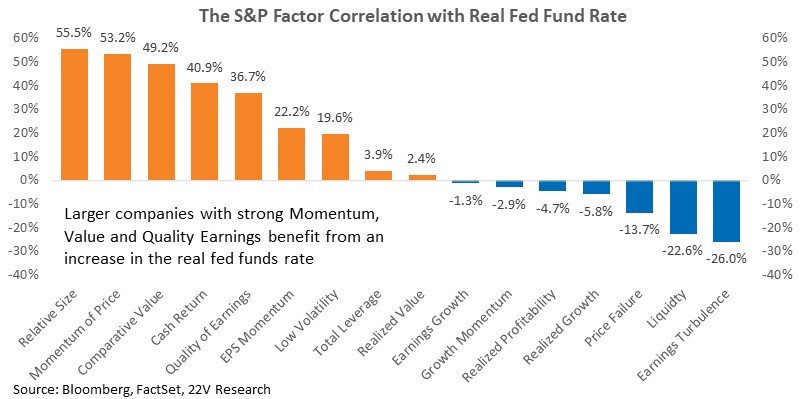
Factor & Micro Trends: At the factor level, changes in the implied real fed funds rate are most highly correlated to Relative Size, Momentum of Price, Value and Cash Returns. The factor with the most negative correlation is Earnings Turbulence, which faces multiple headwinds (see here and here).

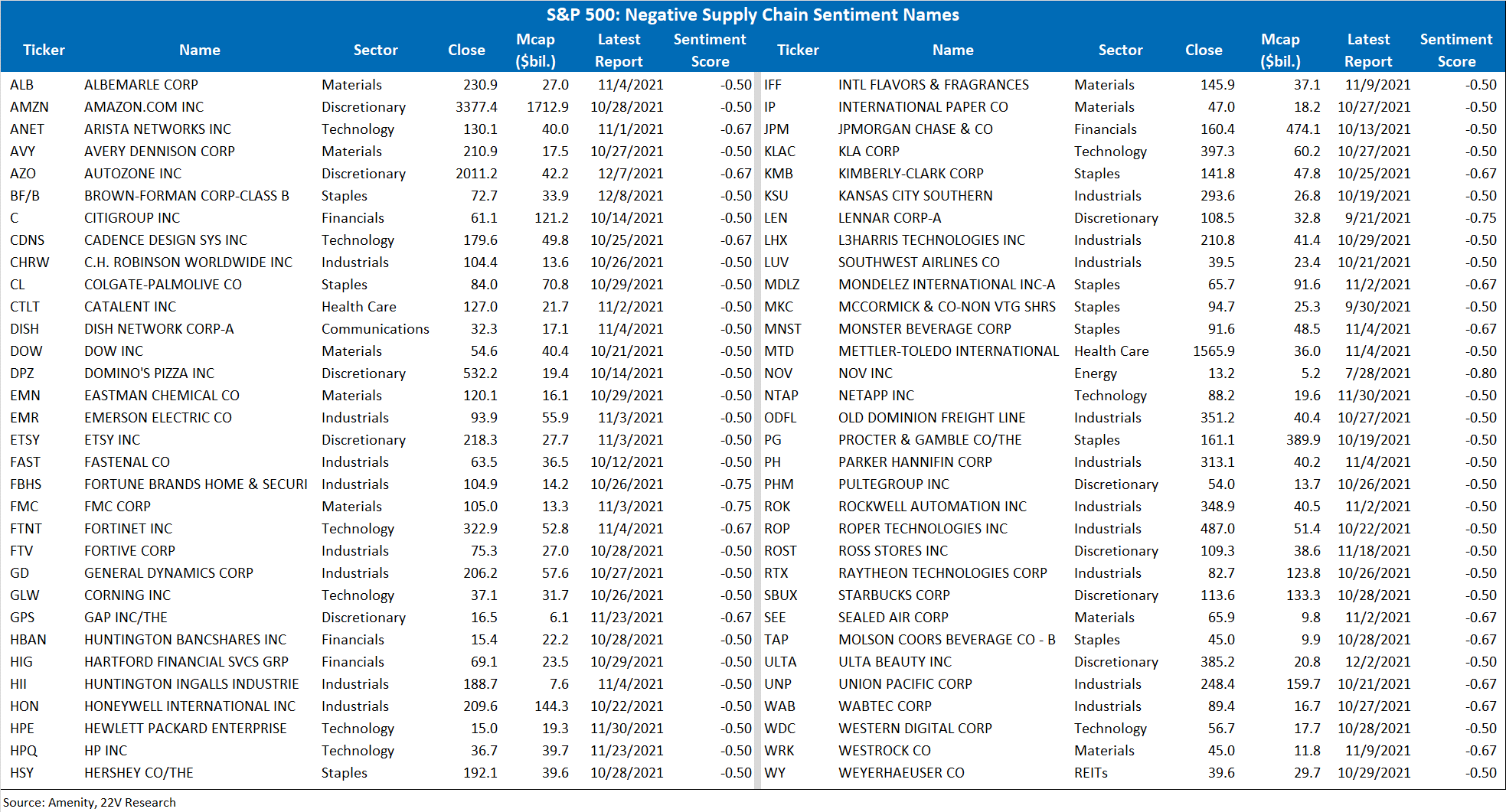
In addition to the factor positioning mentioned above, we continue to favor the average stock over the index. Small caps, deeper Cyclicals (Energy), Banks, Industrials (more interesting now as China floors growth at 5%) and micro trends. Defensives have rallied, which we were wrong on, but further gains will be difficult now that the group is overbought. Our favorite micro trend are companies that benefit from improving supply chains and specific companies that benefit from higher real fed funds. See the report for the list of stocks.
Full report below…
Indicators: The FOMC meeting was more about setting up the future than something that would change the trajectory of the rate hike path on the day. The Fed penciled in 3 hikes for 2021 with a 2.7% core PCE rate. They also said rates will only rise to 2.1% by 2024 (below neutral). The equity markets gravitated toward this view which implicitly implies the fed is NOT going to drive demand growth lower to achieve a much lower Core PCE goal. At least near term. Hence the Fed funds futures curve didn’t react.
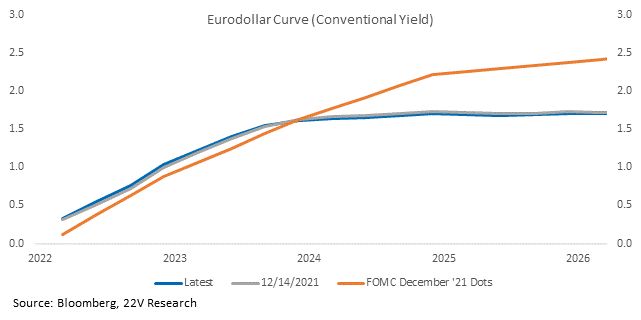
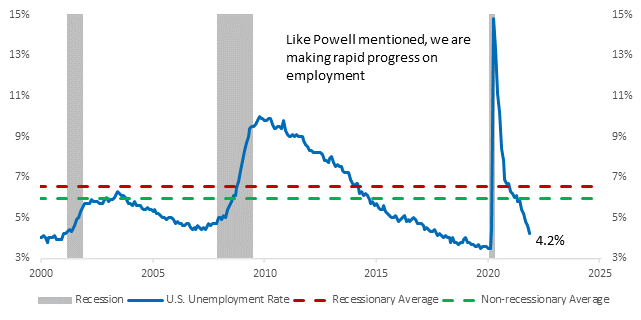
Equity folks took his “squishiness” on what full employment was as dovish. Macro folks took that as pretty hawkish. Macro folks believe he is setting up the potential for a more aggressive rate hike path (then is currently priced…macro folks think it is all upside risk to the rate hike path), when he indicated that 1) they could raise rates before full employment, 2) the economy is making rapid employment gains, and 3) basically giving up on participation increasing near term (doves think participation will increase , keeping the rate path wont shift higher).
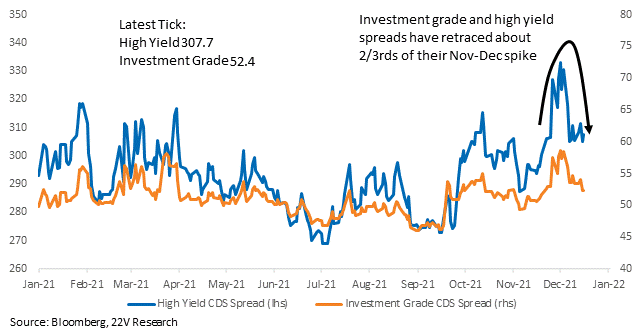
Last week we got firm economic data, a lower expected Fed funds rate path (shockingly to many, fed funds futures and 2yr yields have moved steadily lower) and credit spreads tightened. Both IG and HY CDS spreads have retraced about 2/3rds of their Nov-Dec spike and lower credit rated names outperformed yesterday. Also, the pricing components of the Empire, Philly Fed and Market PMI moved lower. Those indicate an improved supply chain outlook, consistent with the outperformance of companies that have the largest supply chain headwinds (one of our favorite ideas) and improving supply chain news sentiment.
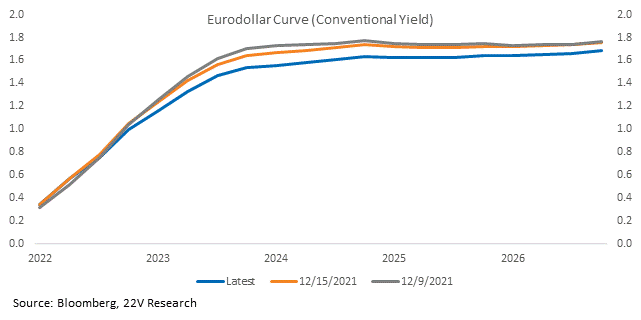
Interestingly, although lower credit rated names have underperformed significantly in 4Q and despite a week where the fed concretely affirmed its more hawkish shift and Omicron news remains an overhang, higher credit risk stocks have outperformed.
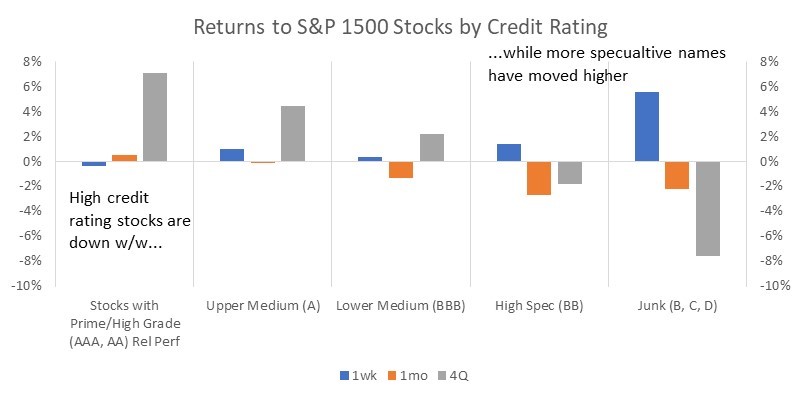
Also, the pricing components of the Empire, Philly Fed and Market PMI moved lower. That indicates an improved supply chain outlook. Relatively firm demand and improvements in supply chains helps explain the outperformance of companies that have been most negatively impacted by supply chains.
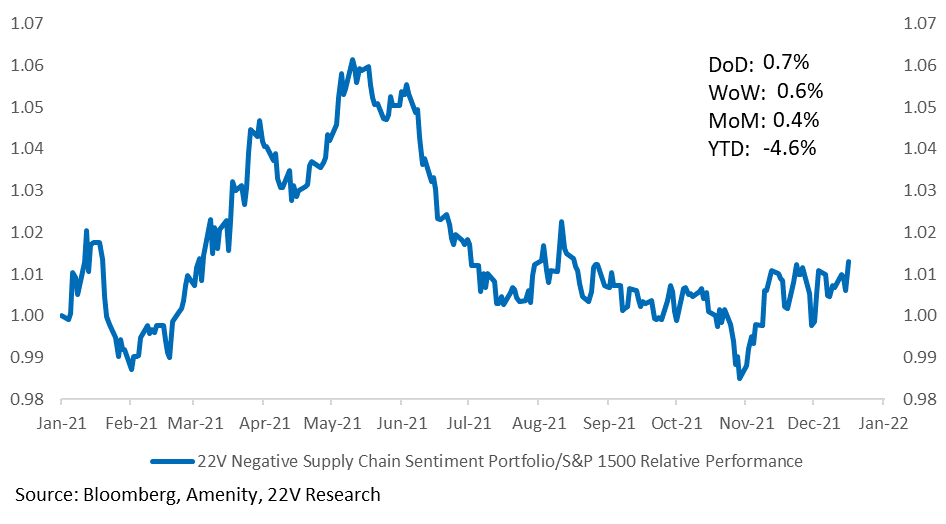
List of the stocks with the most negative supply chain sentiment as of the end of 3Q reporting is below.
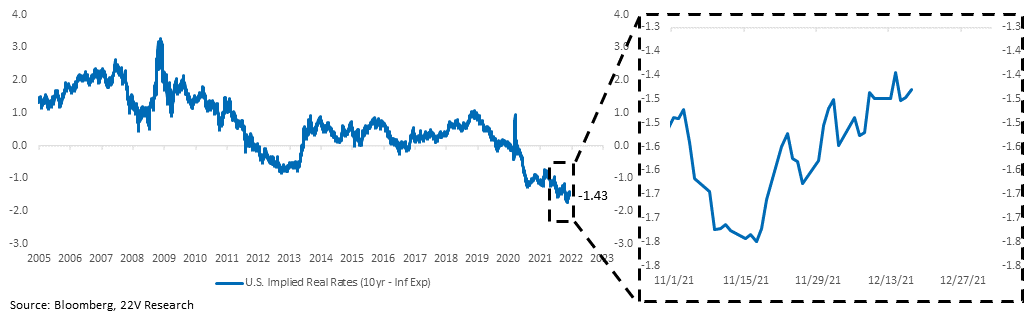
Intent Has Changed: The intent of global central banks, not just the Fed, has shifted. It is true that the Fed doesn’t want to slow growth meaningfully to drive inflation lower (that was clear in the statement), but is a risk if core inflation runs above the Fed’s new 2.7% target for 2022. The Zillow rent data last week highlighted that risk. The bottom line, with the BoE signaling more rate hikes going forward, the Fed pivoting to a hike cycle and the ECB ending PEPP purchases and President Lagarde signaling upside risk to inflation next year, inflation expectations are moving lower. What does that mean? Real yields are going up because inflation expectations (and inflation) likely have much further to fall than 10yr yields. See the chart below…inflation expectations are in their 93rd percentile going back to 2005 and 10yr yields are in their 7th percentile going back to 2005.
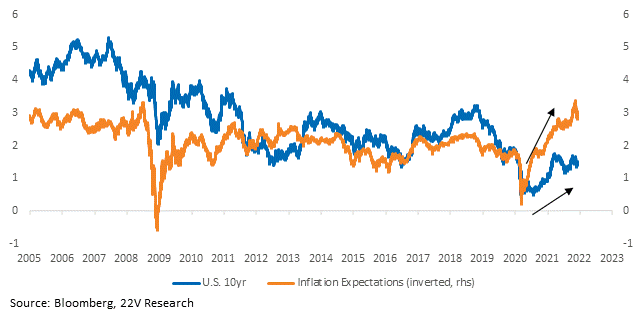
Unless the growth outlook collapses and 10yr yields crater (unlikely unless Omicron is terrible), The skew is heavily to the right now on real yields and especially so if Omicron proves to be much less of an issue than feared. Since we all know what the skew is, Tech is in trouble until investors get comfortable with the new equilibrium level of real rates. Which will likely still be very low, but we can’t be firm on that answer until we got more info on how Core PCE will trend. FYI…implied real yields have moved +30bp since 11/15 despite a sharp drop in 10yr yields.
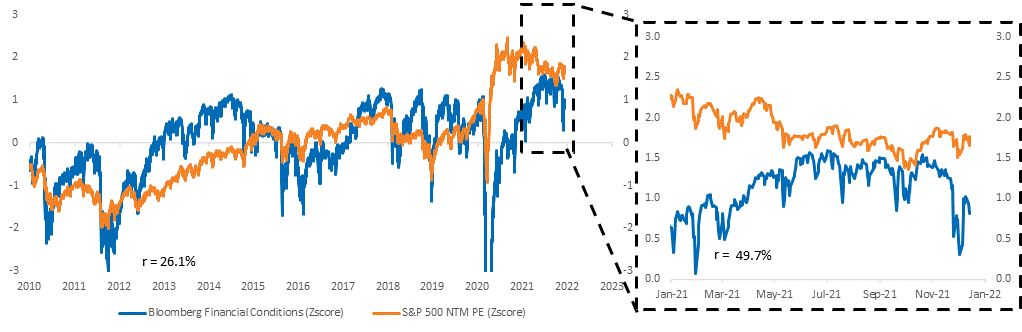
The net net of the above, financial conditions shouldn’t tighten much from here and could actually ease if Omicron risk starts to fade. That will keep S&P PE stable near term. Put simply, 3 hikes in the type of demand boom we are having is nothing. If Powell commits to a more forceful tightening (many macro folks think he will need to), that is how you get a much tighter financial conditions backdrop and lower PEs as equities would do much of the heavy lifting in tightening financial conditions.
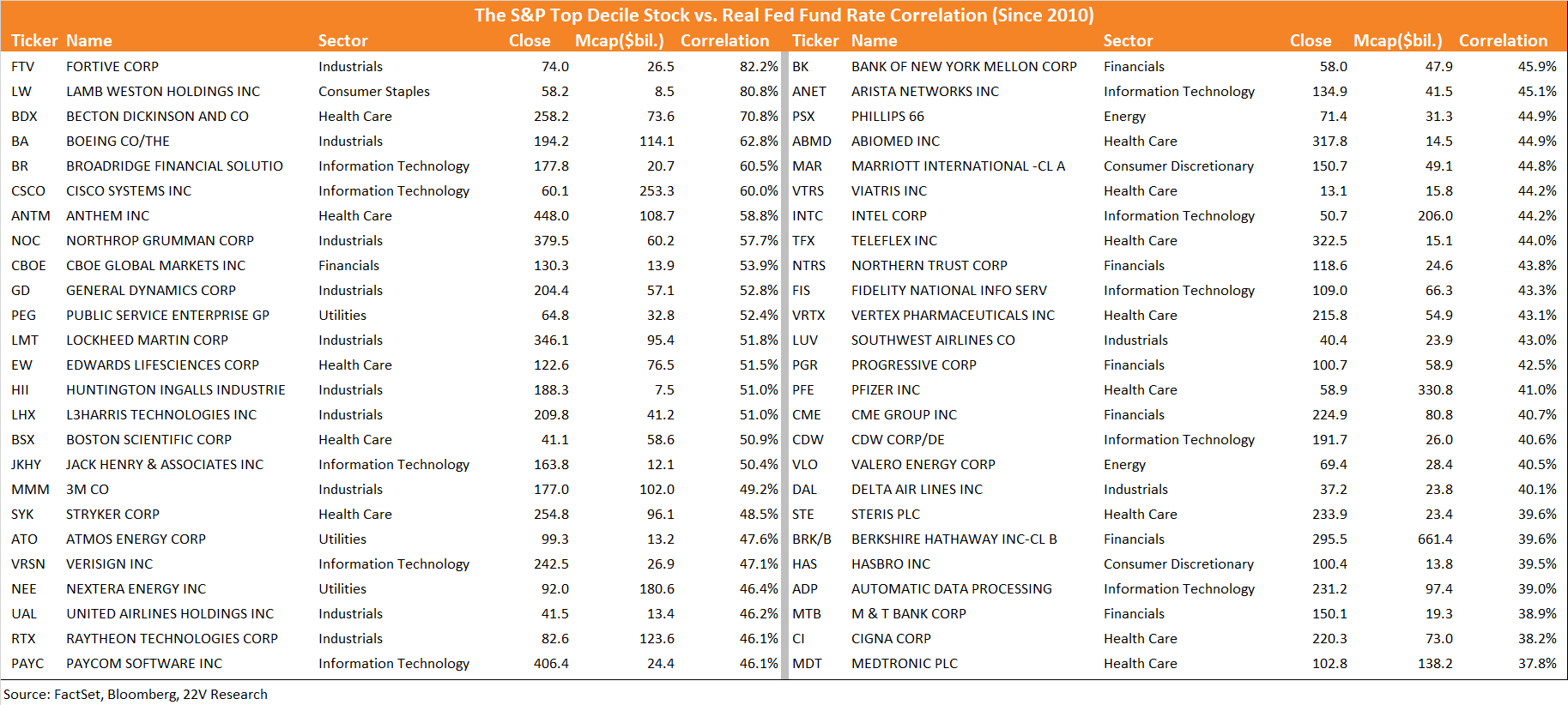
As noted in a quant report last week, we ran the correlations of changes in the implied real fed funds rate with factor returns. Larger cap, Value and Momentum names with large cash return and higher quality earnings tend to perform best during periods of rising short rates. Importantly, Relative Size, Value and Cash Return tend to perform best when real fed funds are moving higher due to rate hikes and Momentum of Price and Quality of Earnings do best in environments where the funds rate is stable but inflation expectations are falling. A credible Fed with a firm, stable economic backdrop should lead to easing of inflation expectations but relatively little increase in the expected funds rate.
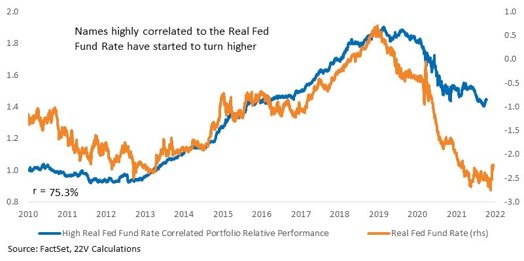
To better track the influence from a possible increase in the real fed funds rate, we created a portfolio of the stocks most highly correlated to changes in real fed funds. Those stocks started trending lower in 2019 and collapsed during COVD. Real fed funds have stabilized, as has the performance of our basket.
The list of stocks most highly correlated to changes in the implied real fund rate is below.
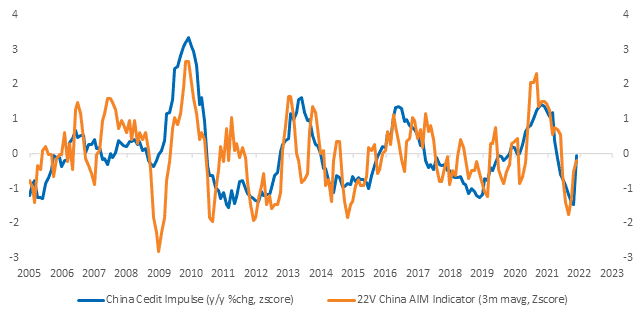
10yr yields & Value: To get an extended Value rally, 10yr yields will need to move higher. Two factors would lead to a significant move higher in 10yr yields. 1) We get through the Omicron wave without a significant spike in hospitalizations (this will take time to figure out). As we have noted, Omicron is the major overhang on 10ry yields currently. And 2) the China outlook improves. The high frequency data in China is firming as is the 12-month credit impulse. Last weeks’ annual Central Economic Work Conference suggested fiscal stimulus is likely in 1Q22. Many sell side firms are calling for a 1Q China stimulus following the conference. If that stimulus happens at the same time we are likely past the peak Omicron wave impact, expect a significant increase in 10yr yields in 1Q. Until then, Quality and Non-Value Cyclicals will work and Defensives will lag.
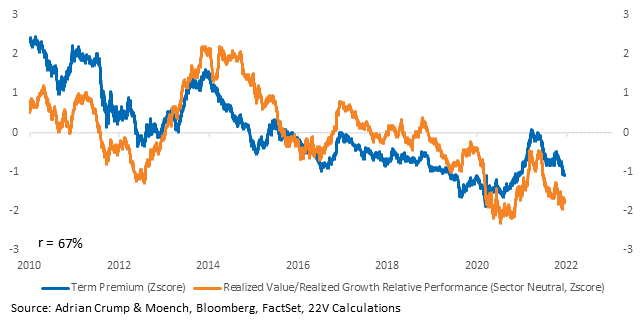
If Value is going to re-rate higher it will need to come with higher term premium. Term premiums are anchored and Omicron is likely having a significant impact on uncertainty risk in 10yr bonds. If the Fed is not going to slow growth AND Omicron risk fades, expect a rerating higher in term premium next year. Likely a mid to late 1Q issue if its going to happen.
Longer Term Thought: The question of what type of growth rate will come along with the Fed’s goal of 2% CORE inflation is still a major debate. The bears indicate close to 1% GDP growth and the more bullish economic crowd says closer to 3% GDP growth (we lean this way). A major swing factor in this debate is productivity. Productivity just happens to be one of the HARDEST things to forecast. On a smoothed basis productivity was already improving pre the pandemic and started to accelerate more after the pandemic hit. The latest tick was terrible though because of short term supply constraints, but that will resolve itself this quarter.
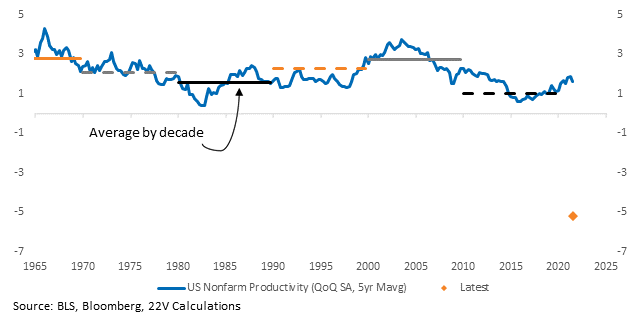
If productivity is higher than the post-GFC period (it is today), expecting a ~1% growth rate is unlikely to result in 2% inflation. We are not making a call on productivity, just noting that we have no reason to expect the current improved trend to reverse. If it turns out supply constraints are more binding and the fed needs ~1%ish growth to maintain 2% core PCE, that is a major problem for our call of the average stock outperforming the index next year.

