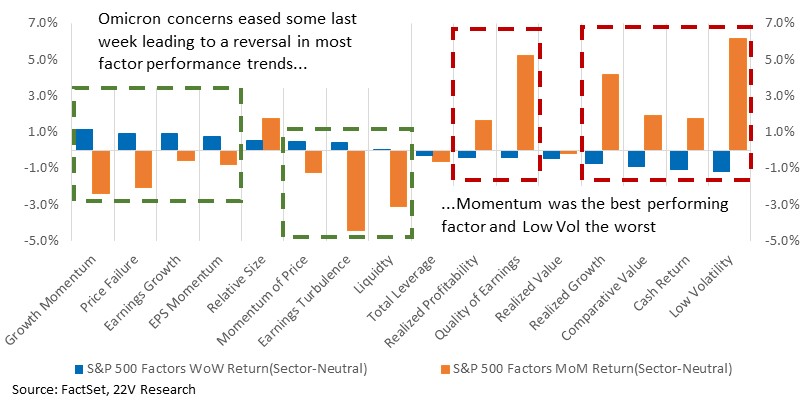
SUMMARY: Positive news about vaccine booster effectiveness and early signs Omicron has lower severity helped lift equities and drive implied volatility lower last week. More time and data are needed before the impact of Omicron is clear, but overall macro influence remains low. Market internals shifted significantly with Momentum and Earnings Growth gaining at the expense of Low Volatility and Value factors.
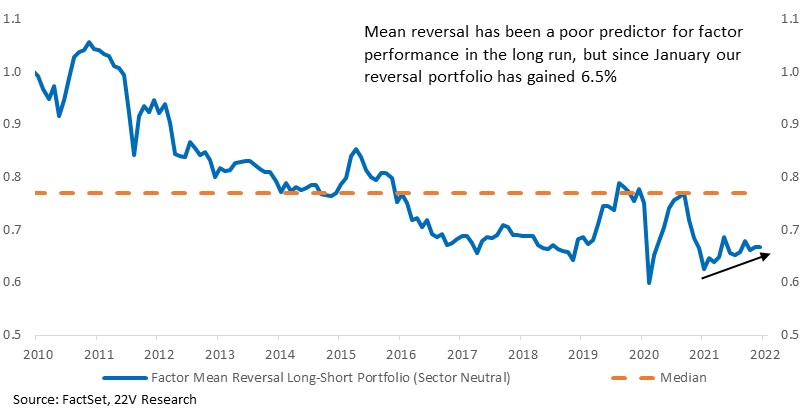
Mean reversal has been a poor factor rotation strategy historically, but it has worked well in most 2021. Excluding January, where factor momentum was historically strong (97th %tile) our factor mean reversal portfolio has posted a bumpy 6.5% gain this year.
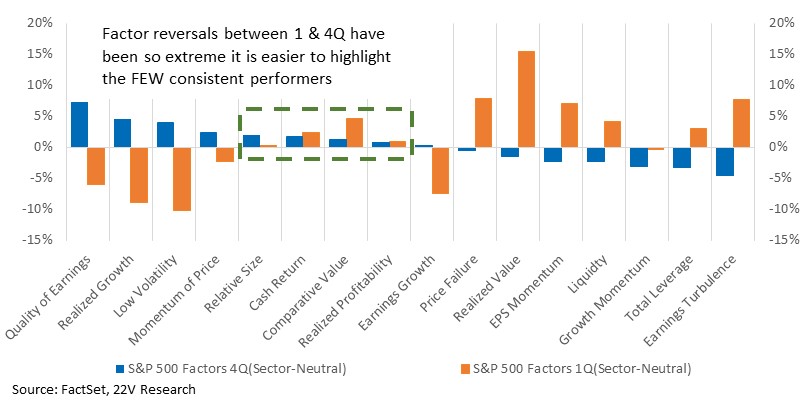
Though nowhere near as strong as the industry mean reversal trend, factor reversals are another sign of the increasingly uncertainty macro backdrop (COVID, inflation, the Fed, supply chain issues, debt ceiling, etc.). From 1Q to 4Q, returns to nearly all 16 Style factors have reversed. Mean reversal are not uncommon during regime shifts.

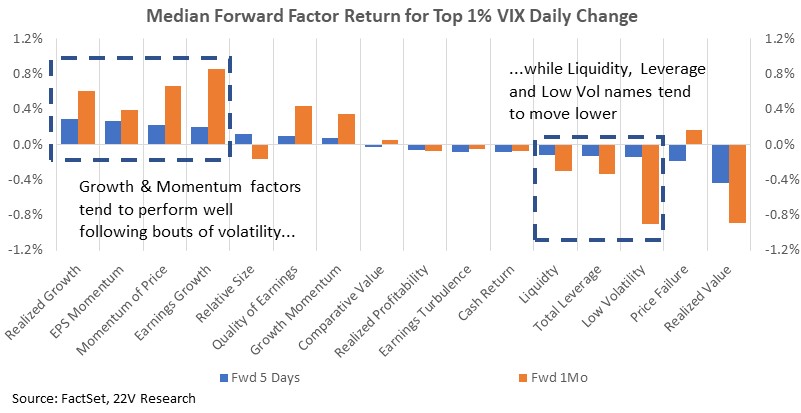
Near term, a continued unwinding of the market selloff/VIX spike favors Growth and Momentum factors through the end of the year. That same unwind suggests Low Volatility names will continue to move lower, a trend that would weigh on Household products, Food, Utilities and Telecom.
Another Round of Factor Shifts: Positive news about vaccine booster effectiveness and early signs Omicron has lower severity helped lift equities and drive implied volatility lower the past week. More time and data are needed before the impact of Omicron is clear, but it is important that during the latest wave overall macro influence remained low. Market internals shifted last week with Momentum and Earnings Growth gaining at the expense of Low Volatility and Value.
Though mean reversal has been a poor factor rotation strategy historically, it has worked well in most 2021. Excluding January, where factor momentum was historically strong (97th %tile) our factor mean reversal portfolio has posted a bumpy 6.5% gain.
Though nowhere near as strong as the industry mean reversal trend, factor reversals are another sign of the increasingly uncertainty macro backdrop (COVID, inflation, the Fed, supply chain issues, debt ceiling, etc.). Though there are many approaches, shifts in factor trends are one way of defining/tracking market regimes (a cool paper from Two Sigma on regime shifts here). From 1Q to 4Q, returns to nearly all 16 Style factors have reversed.
Factor returns took on a defensive tilt during the recent bout of volatility. Low Vol names moved rapidly higher, as is common during market selloffs, leaving it the third best performing style factor in 4Q. Investors also favored higher Earnings Quality and Realized Growth but those were continuations of multi-quarter trends.
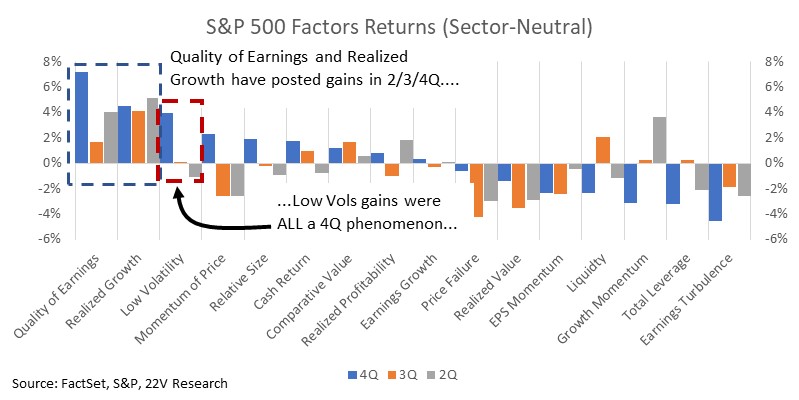
Quality of Earnings, Realized Growth and Realized Value (to the downside) do not tend to see big reversals as markets recover from big declines/vol spikes, but Low Vol names tend to reverse. The VIX has retraced most of its late-Nov/early-Dec spike over the past ~week.
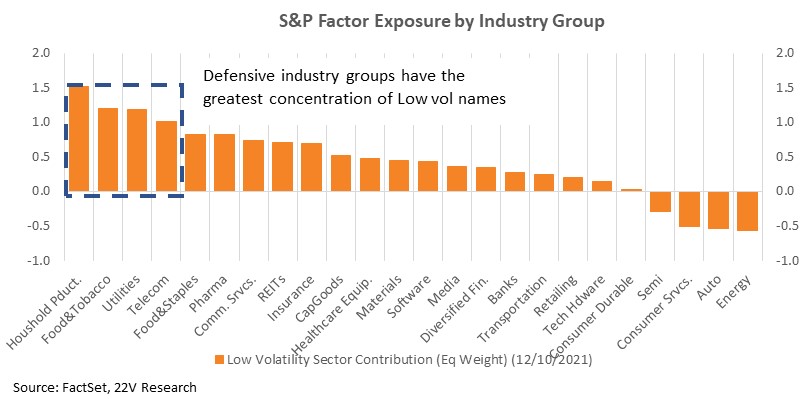
Low volatility names tend to be concentrated in Defensive Industries. Though macro uncertainty remains elevated heading into the Fed later this week, easing of implied volatility and the general increase in equities suggests a rotation out of risk-off factors like Low Volatility. Furthering of that trend would weigh on Household products, Food, Utilities and Telecom.
Realized Growth slipped last week, but the returns to the factor were very uneven. High Realized Growth names outperformed in most industry groups, but fell sharply within Commercial Services. Overall, the factor remained a good selection criteria.
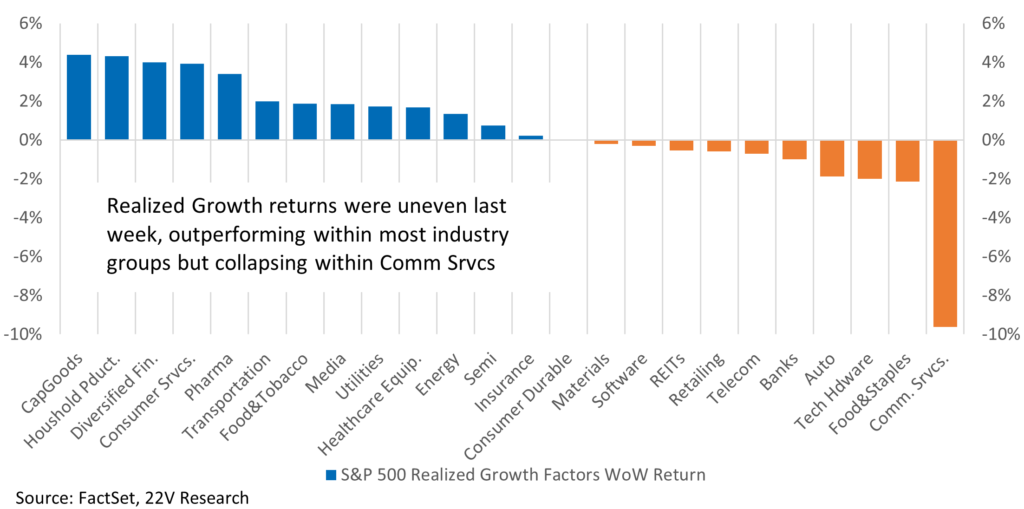
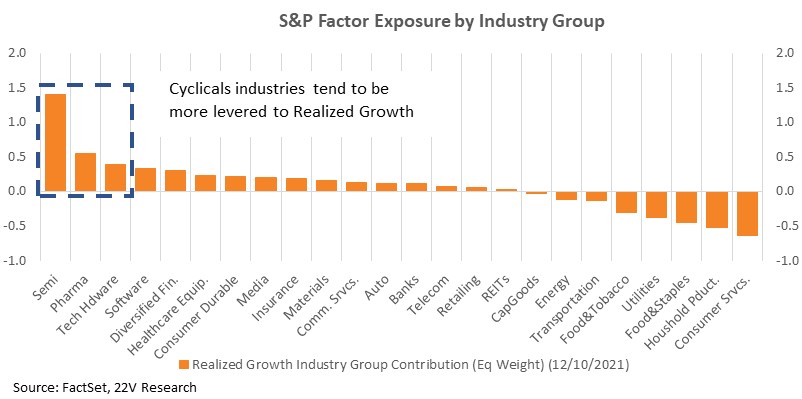
A continuation of Realized Growth’s outperformance in 4Q would be a tailwind for Cyclical Industries and Pharma. Semis, Pharma, and Tech Hardware all contain multiple stocks exposed to Realized Growth.