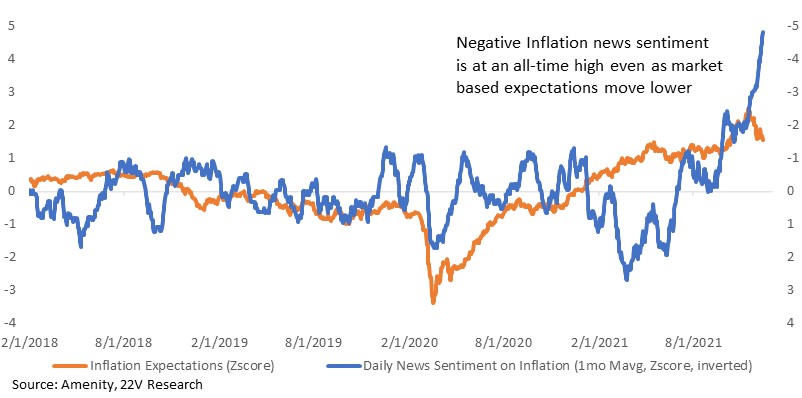
SUMMARY: Omicron continues to weigh on risk appetites, and headlines about inflation remain deeply negative. We measure news sentiment toward inflation with the Amenity natural language processing tool which, scores sentiment on a +1 to -1 scale*; net news sentiment is now -0.72. Negative news flow and mentions of inflation have continued to climb higher even as inflation expectations have broken lower.
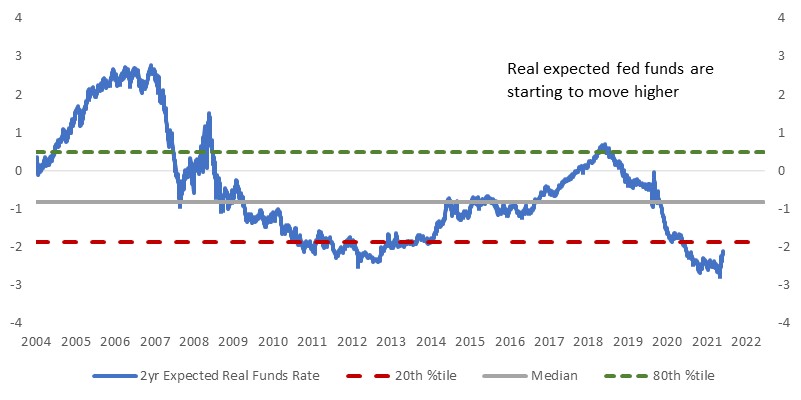
Declining inflation expectations have helped push implied real rates modestly higher from their all-time low in mid-November. Later today, the Fed will release the results of what is expected to be a hawkish meeting. Easing inflation and a stable to modestly higher expected path of rate hikes would push real rates up further.
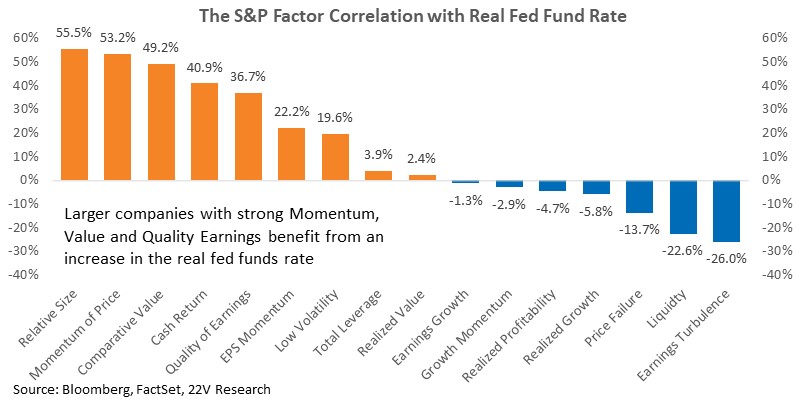
At the factor level, changes in the implied real fed funds rate are most highly correlated to Relative Size, Momentum of Price, Value and Cash Returns. The factor with the most negative correlation is Earnings Turbulence. We have noted in a number of reports (here, here) that Earnings Turbulence is likely to struggle over the coming months and this is another sign of the factor’s growing macro headwinds.

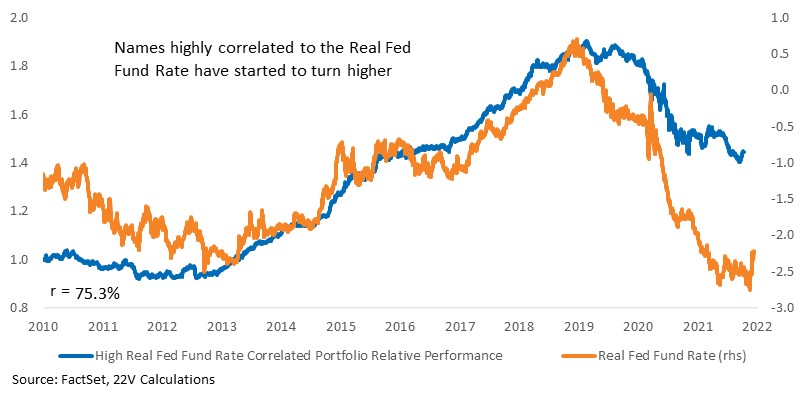
To better track the influence from a possible increase in the real fed funds rate, we created a portfolio of the stocks most highly correlated to changes in real fed funds. Those stocks started trending lower in 2019 and collapsed during COVD. Real fed funds have stabilized, as has the performance of our basket.
Also in the report is a breakdown of factor correlations to changes in the real fed funds rate, highlighting how Banks are a beneficiary of the fed’s more hawkish turn.
Rising Short Rates Positioning: News mentions of inflation continue to make new highs and sentiment toward inflation in those stories is almost completely negative. We measure news sentiment toward inflation with the Amenity natural language processing tool which, scores sentiment on a +1 to -1 scale*; net news sentiment is now -0.72. Negative news flow and mentions of inflation have continued to climb higher even as inflation expectations have broken lower. Pricing pressures remain and the forward path on inflation is a risk, but sentiment has reached an extreme that is hard to sustain.
*Net sentiment based on mentions is (positive mentions – negative mentions)/(Positive + Negative +1)
Declining inflation expectations have helped push implied real rates modestly higher from their all-time low in mid-November. Later today, the Fed will release the results of what is expected to be a hawkish meeting. Strong growth and higher-than-forecast inflation have led to a shift in the Fed’s stance. Policy communication is now catching up. Easing inflation and a stable to modestly higher expected path of rate hikes would push up real rates further.
At the factor level, changes in the implied real fed funds rate are most highly correlated to Relative Size, Momentum of Price, Value and Cash Returns. The factor with the most negative correlation is Earnings Turbulence. We have noted in a number of reports (here, here) that Earnings Turbulence is likely to struggle over the coming months and this is another sign of the factor’s growing macro headwinds.
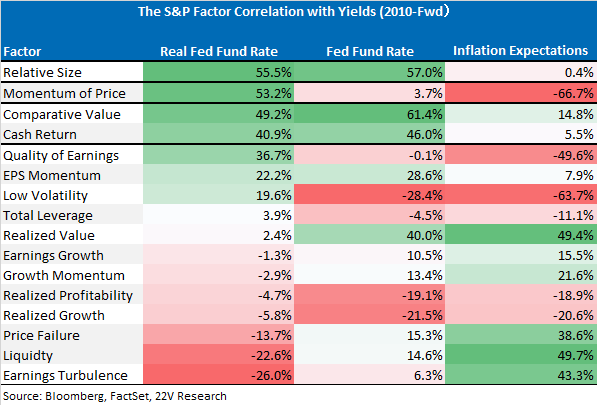
Running correlation analysis with yields since 2010, Relative Size, Comparative Value, and Cash Return are most positively correlated with both the nominal and expected real fed funds rate. PPI data came much higher than expected yesterday, but inflation expectations moved lower. Barring a Fed mistake or permanently higher inflation, real rates should trend higher as the Fed may be more aggressive taming inflation, benefiting large cap names with higher Value and Cash Return scores. Momentum names are highly correlated with changes in the real funds rate but have no relationship with changes in the nominal rate. While inflation expectations trend lower, higher Momentum of Price names are well positioned as well.
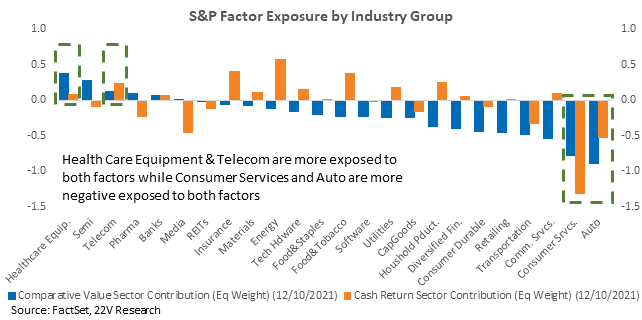
Currently, the industry groups more positively correlated with both Comparative Value and Cash Return are Health Care Equipment and Telecom. Energy and Insurance are also highly exposed to Cash Return, while Auto and Consumer Services are more negatively exposed to both factors.
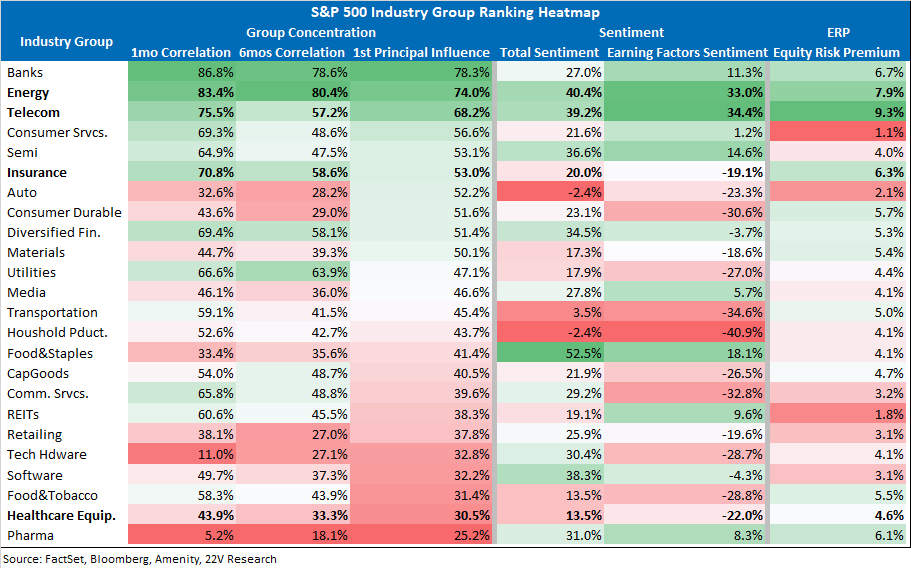
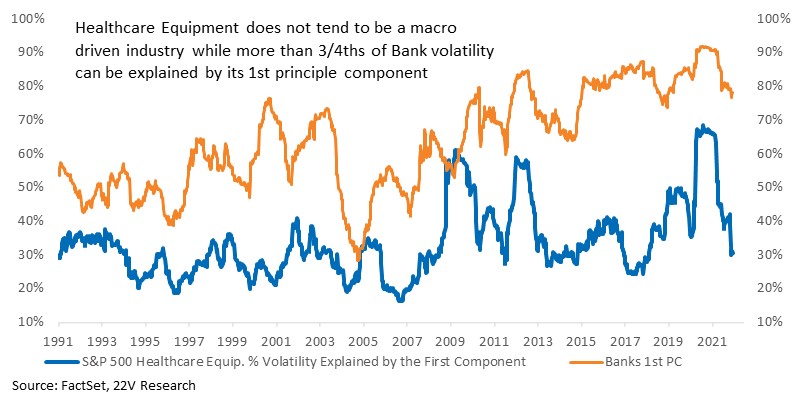
Screening for industry groups concentration and sentiment, Health Care Equipment has low correlations and low macro influence (1st principle component explains around 25% of volatility). That suggest investors are better off screening within the industry group for names rather than treating it as a basket. Banks, which have lower exposure to Value and Cash return, are highly correlated and macro driven, making them attractive for group-level positioning.
Historically, Healthcare Equipment has had minimal macro influence. The early phases of COVID were the last time the first principle component of Healthcare Equipment was above 50%. Banks, on the other hand, are highly tied to the rates outlook. Correlations within the group are extreme high as well, making it suitable for industry level positioning.
To better track the influence from a possible increase in the real fed funds rate, we created a portfolio of the stocks most highly correlated to changes in real fed funds. Those stocks started trending lower in 2019 and collapsed during COVD. Real fed funds have stabilized, as has the performance of our basket.
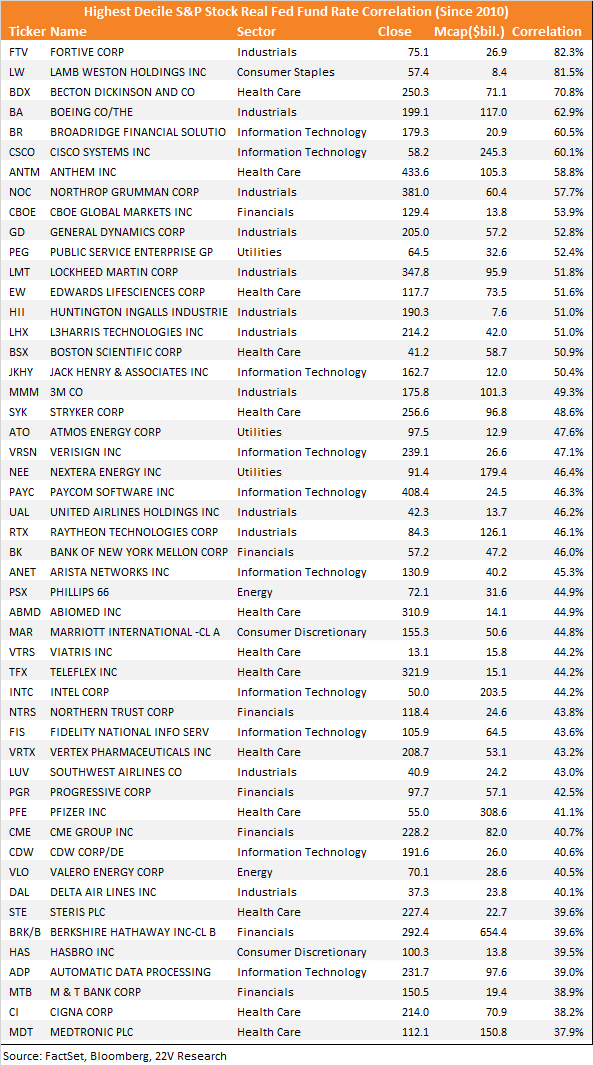
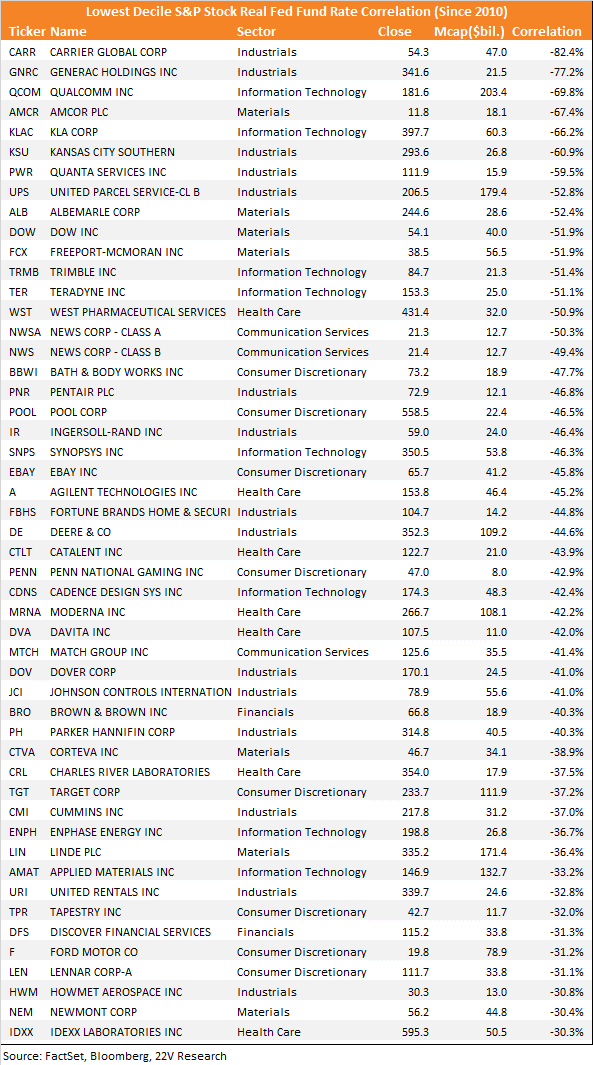
Below are baskets with S&P 500 names that have the highest and lowest correlation with real fed fund rates currently. These are the names facing the greatest headwinds and tailwinds from implied real fed fund rates.