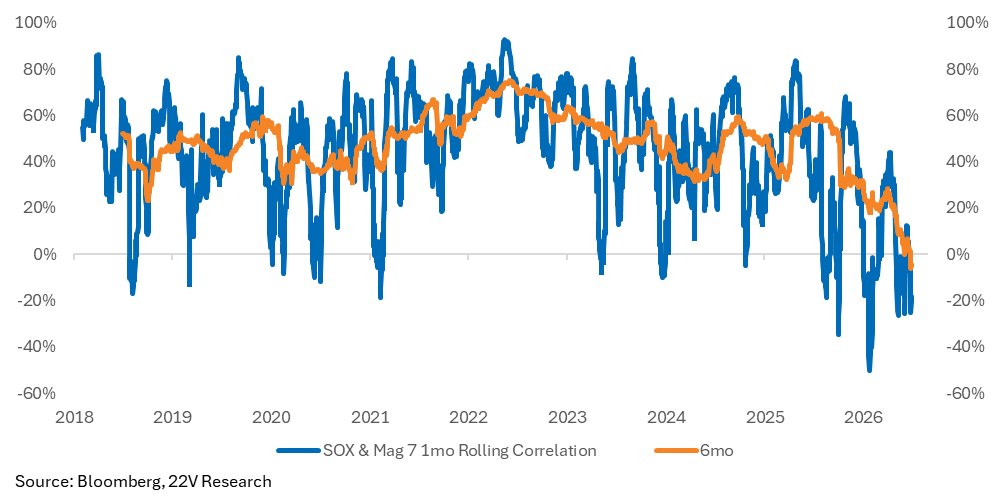
DAILY STRATEGY: Main Point – High vol and high correlations create an opportunity to hedge the Price Momentum factor via single-name options. YTD AI Winners have witnessed increasingly negative sensitivity to financial conditions. Those AI baskets have significant downside risk if financial conditions tighten. The 2yr yield breaking above 4.2%, which would be associated with core inflation coming in too high (above 0.21% MoM) would be negative for YTD AI thematic basket winners. Mag 7 relative performance is negatively correlated with Semis. Long Mag 7 is a way to hedge against downside risk in Semis, AI thematic basket winners and Price Momentum.
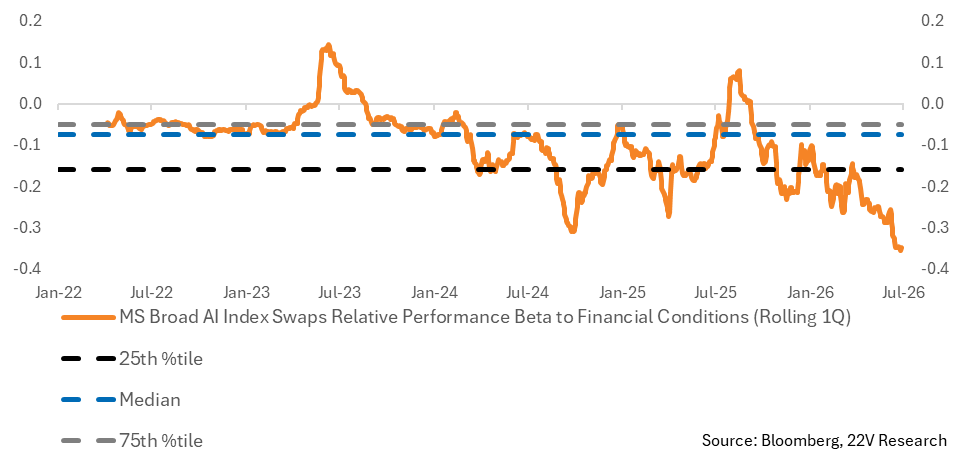
The Morgan Stanely (MS) Broad AI index (+73% absolute YTD) has witnessed an increasingly negative beta to financial conditions recently. The negative beta to financial conditions has moved toward extreme levels relative to history for the MS Broad AI basket. The negative sensitivity to financial conditions has become most intense since investors started to shift away from pricing in an easing bias from the Fed ~2 months ago. That is when 2yr yields started to reprice higher.
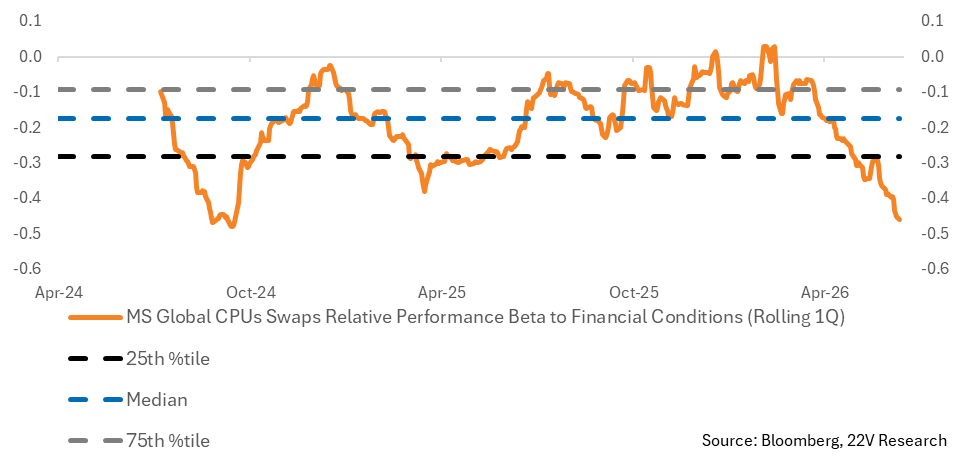
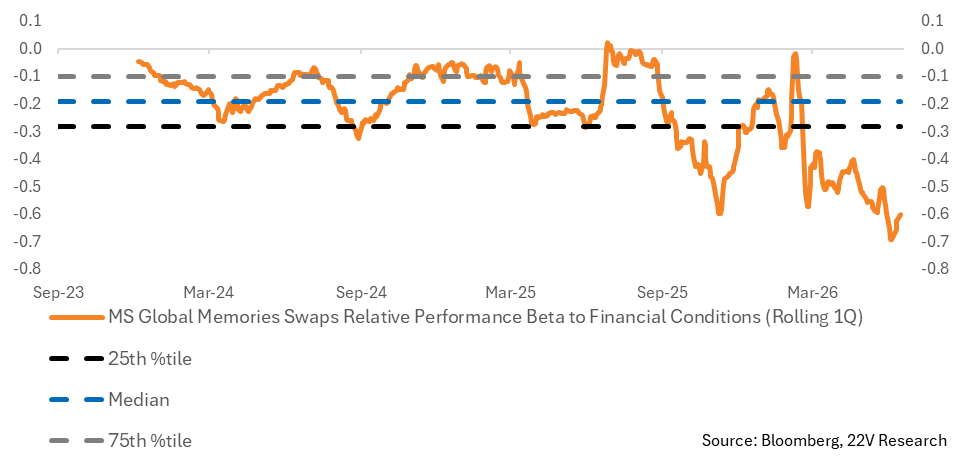
The same dynamic holds true for the MS Global CPU basket (+165% absolute YTD), and the MS Global Memory baskets (358% absolute YTD). Charts below.
Bottom Line – If core inflation comes in well above the Fed target for 2026 (3.3%), so well above 0.21% MoM between now and year-end 2026 for Core PCE, financial conditions would tighten more aggressively (HERE). Given the increasingly negative beta to financial conditions of some AI YTD winners and the Price Momentum factor, downside risk could be significant. 2yr yields moving well above 4.2% would signal investors are discounting hawkish core inflation readings.
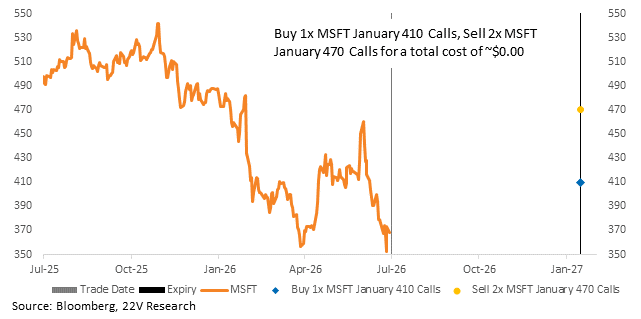
Jeff Jacobson, 22V Derivatives Specialist, sees the vol setup as an opportunity to be long Hyperscalers (short side of Mo). He highlighted costless call spreads HERE. An example with MSFT is below. FYI, Jeff can look at different structures across equities.
Long Hyperscalers is a way to hedge against a rotation. Hyperscalers have bounced while some of the best performing AI buildout trades – Onsite Power, nuclear, memory, semis – have come under pressure. The current rolling correlation between Hyperscalers and Semis, for example, has flipped to negative.
From Jeff…
Trade:
Buy MSFT Jan 15th 410 calls 1x
Sell MSFT Jan 15th 470 calls 2x
Trades for ~ EVEN (MSFT 373 Fri close ref)
Microsoft (MSFT)
Before the impressive rally on Friday, which also occurred on massive volume, MSFT shares had declined as much as 37% from their October high. The sharp decline brought the stock back to the April 2025 tariff lows. Perhaps even more significant was the move in implied volatility, with 6-month vol moved from 22 to 37 (a fresh five year high). Not only has volatility gotten expensive, but the upside 25-delta calls are now trading at their richest skew to at the money 50-delta calls. Again, when we have a situation like this of a large decline in underlying shares, overall volatility bid up AND upside calls trading “rich” to the at the money calls, we want to be looking at trades/strategies that offset the vol while capturing this attractive call skew.
Charts…
Price Momentum volatility is at its 94th percentile and top decile Price Momentum has contributed 8.4pp of the S&P 500’s 8.8% return. Correlation within Momentum baskets is also low, making it difficult to manage risk.
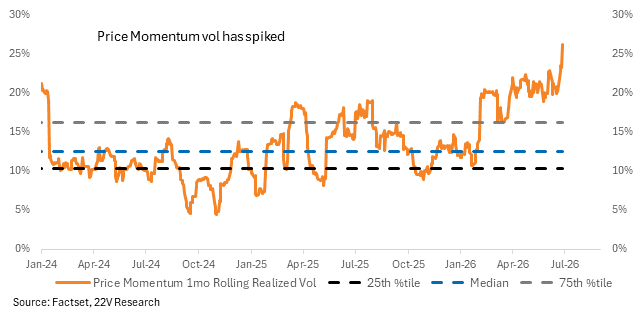
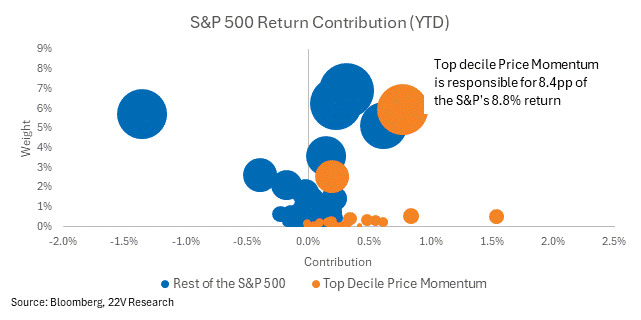
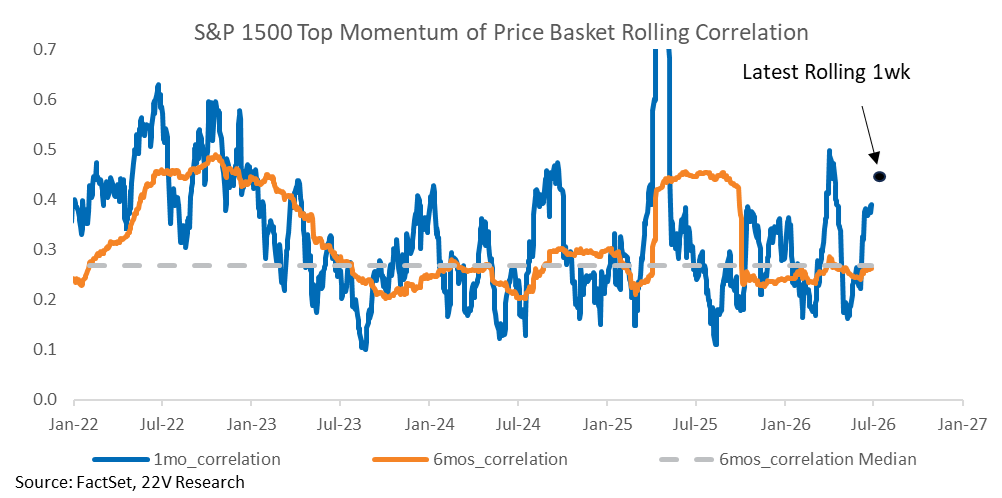
Hyperscalers have bounced some as other popular and YTD winners in the AI buildout trade have come under some pressure. Jeff Jacobson thinks the vol setup makes this rotation a good one to play with options.
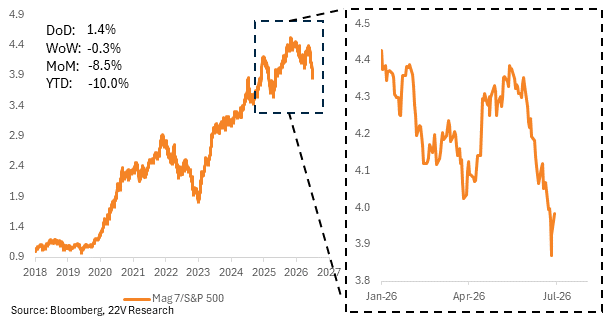
Mag 7 performance is negatively correlated with Semis.
The Morgan Stanely (MS) Broad AI index has a deeply negative beta to financial conditions. If inflation comes in well above the Fed target and financial conditions tighten more aggressively, the MS Broad AI basket would come under pressure.
The MS Global Memory basket negative beta to financial conditions has intensified.
Same for the MS Global CPU basket.