SUMMARY: In upcoming earnings calls, Mag 7 comments about AI/AI capex will have an outsized impact on markets, given limited data releases and high market concentration. We have seen this story play out a few times: the 10yr dropped -9bps on concerns Google’s ROI did not justify its capex (HERE), the 10yr fell -7bps when Meta announced it was freezing AI hiring and focusing on ROI (HERE). To be clear, AI capex will keep growing. It’s a matter of how much is priced and how sensitive the market is to AI capex comments. A negative capex comment would have cross-asset implications, and TLT vol is cheap right now, making it interesting to hedging via TLT calls. FYI, this could work both ways, TLT can be a way to position for higher yields too. We don’t have a reason to expect negative comments. This is part of our risk management framework in a concentrated market.
INCREMENTAL UPDATES: Peter Williams thinks we should dismiss the Beige Book, which was notably glum, because it doesn’t match recent tax receipt data or credit card spending data and commentary from Banks (HERE). Historically, it has a poor track record predicting actual data.
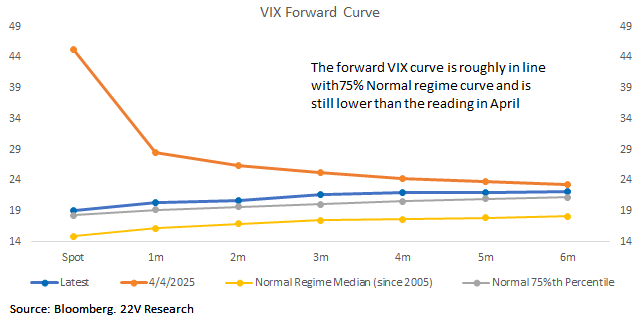
Trade talk was tough yesterday, but risk still rallied. Small caps, risk-on factors, and Debt Risk all outperformed. The tough talk was more factual in nature (“we’re in a trade war”) while still leaving “the door open” (explicitly), which helped risk. The forward vol curve shows a steady state over the coming months and never saw the kind of spike that occurred around the initial tariff announcements. The bottom line is today’s VIX curve is consistent with the a Normal economic expansion, and that is aligned with our regime modeling work (HERE). Short term recession risk remains low and VIX spikes remain buying opportunities.
Details in the full report below…
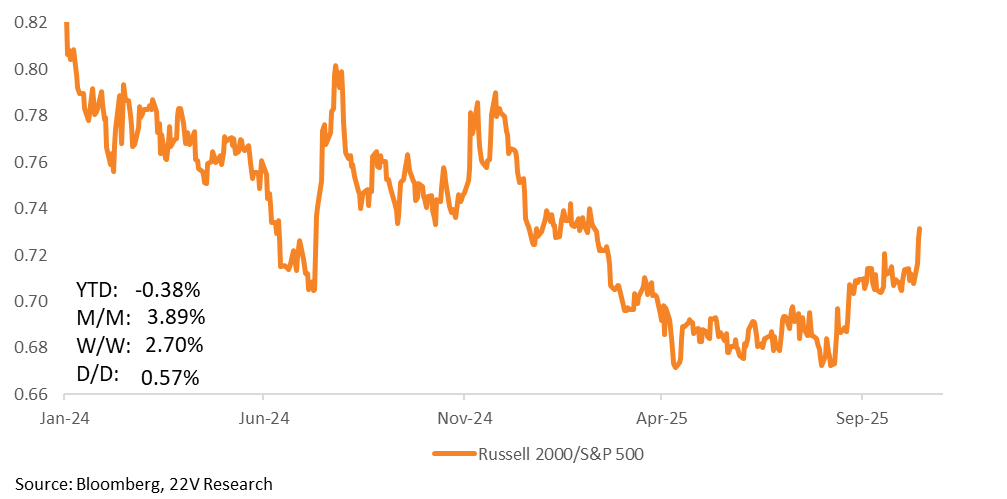
MARKET VIEWS: The Beige Book received extra attention because of the lack of economic data, and the responses were generally glum. However, Peter Williams thinks we should dismiss the beige Book because it doesn’t match the recent tax receipt data or credit spending data and commentary from Banks (HERE). Historically, it has a poor track record predicting actual data. In other news, the trade talk was tough in tone yesterday, but risk still rallied. Small caps, risk-on factors, and Debt Risk all outperformed. The tough talk was more factual in nature (“we’re in a trade war”) while still leaving “the door open” (explicitly), which helped risk.
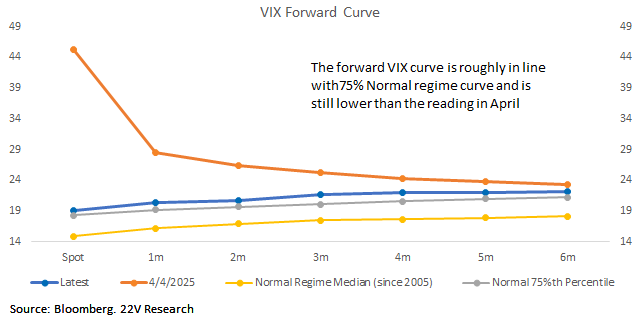
The forward vol curve shows a steady state over the coming months and never saw the kind of spike that occurred around the initial tariff announcements. The bottom line is today’s VIX curve is consistent with the a Normal economic expansion, and that is aligned with our regime modeling work (HERE). The backdrop could change, or course, but in the absence of a shock, the low vol, fundamental/risk-on backdrop of the past few months looks set to continue into year-end. Short term recession risk remains low and VIX spikes remain buying opportunities.
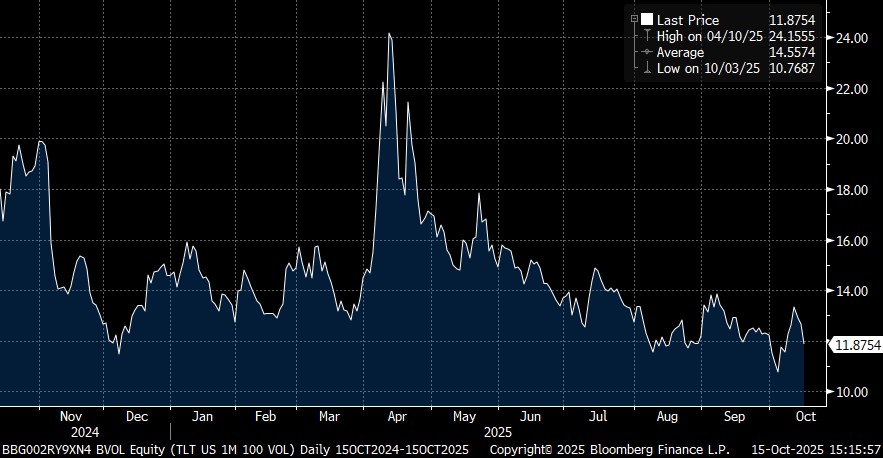
HEDGING FOR CAPEX COMMENTS: Mag 7 comments about capex in their upcoming earnings calls will have an impact on markets broadly, particularly without government data releases, since AI capex is considered a swing factor for growth. We have seen this story play out a few times already this year: the 10yr dropped -9bps on concerns Google’s ROI did not justify its capex at the beginning of the year (HERE), the 10yr fell -7bps when Meta announced it was freezing AI hiring and focusing on ROI (HERE). We would hedge ahead of Mag 7 earnings, not because we have any specific reason to expect bearish AI capex comments, but for risk management as more investors are talking about an AI bubble (HERE) and the US-China trade spat takes a bumpy road towards resolution. Since a negative capex comment would have cross-asset implications, and since TLT vol is cheap right now, consider hedging via TLT calls.
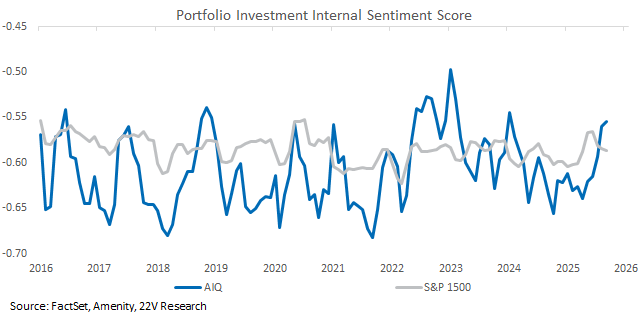
To be clear, there is little reason to expect we are near peak AI capex. Companies in the AIQ ETF – a popular AI ETF – sound more positive about their capex trends than the index. We measure capex sentiment using the Amenity natural language processing tool. This doesn’t prove capex estimates will keep rising, but it is not a reason to be cautious. The practical implication is to hedge via options rather than go short outright.