SUMMARY: Today, we focus on tactical 10yr positioning ahead of Payrolls and update two pieces of background on AI capex and the Services ISM.
Hiring data is strong heading into Payrolls. The Service ISM employment indicator, ADP private payroll growth, and as Gerard pointed out HERE, the most recent Business Trends and Outlook Survey from the Census Bureau, were all firm. That helps explain expectations for strong payroll data tomorrow. Our survey consensus for Payrolls is slightly above Bloomberg’s consensus, and investors have pushed expectations for labor market weakness much farther out.

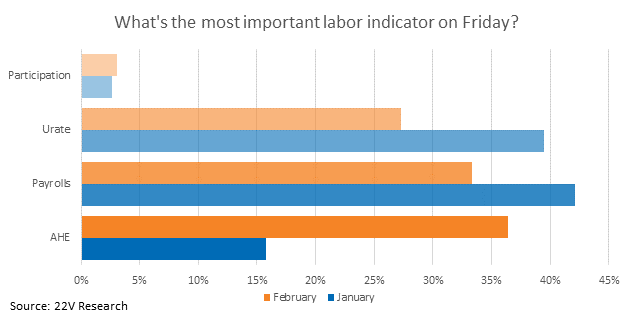
We have been long the 10yr (short yields, HERE), but the 35bp drop in 10yr yields in less than a month means, for risk management, not pressing long 10yr positions into tomorrow’s data. Much stronger wage data, if that happens, would change our view on the 10yr. A lower urate and higher wage growth COULD lead to a meaningfully reversal higher in 10yr yields. FYI, investors we polled ahead of Friday are most focused on AHE (HERE). With attention turning back to wages, the relevance of AHE data increases. A slight beat in payroll data would lead to a short-term jump in 10yr yields that is ultimately a fade.
We maintain our longer-term call for lower 10yr yields because the pull forward of ordering ahead of tariffs will fade, the labor force will slow as immigration slows aggressively, inflation data has been dovish, and productivity data firm.
Background on AI: Yesterday’s decline in 10yr yields (-9bps) was AI related. Google beat capex expectations significantly but missed on revenue. ROI needs to show up for these huge AI investments. The risk that AI models can be trained much more efficiently and cheaply means the market is pricing in risks to economic growth via a stepdown in AI capex.
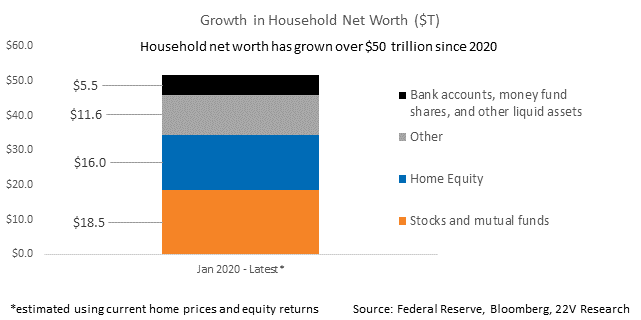
A reduction in AI investment, to the extent it happens, does create a headwind for economic growth and that biases 10yr yields lower. But a sharp slowing in economic growth SHOULD NOT be the base case. Recession risk from AI capex reduction is very low. Employment growth is firm, household balance sheets are strong, net worth is still +$50tril since Jan 2020. Slowing AI capex would impact market internals more.
More details in the full report below…
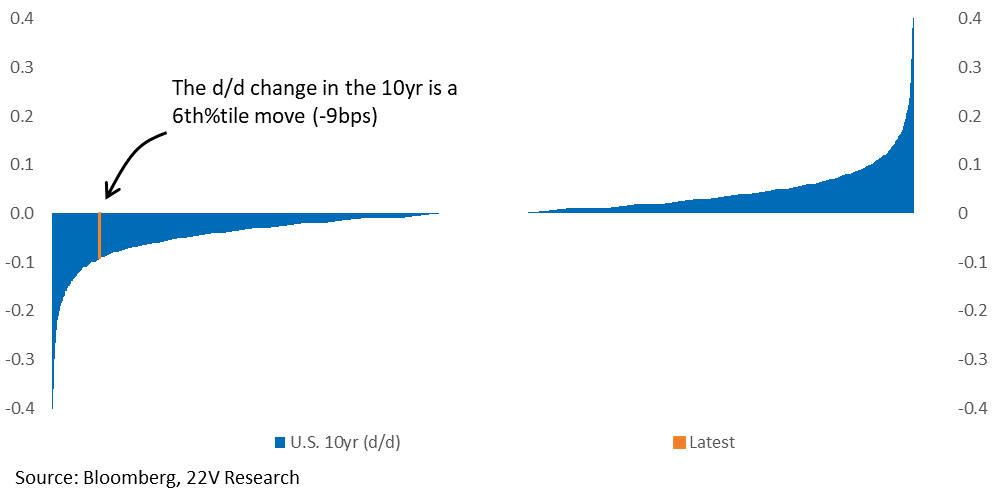
MARKET VIEWS: Yesterday’s decline in 10yr yields (-9bps) was a 6th percentile d/d move (1962 – fwd). The move could be related to concerns that tariffs will be contractionary. Also, the service ISM was softer than expected, but the USD was down on the day. It’s more likely that the drop in the 10yr yields was related to AI. Google beat capex expectations significantly, but missed on revenue, an unsustainable combo longer-term. ROI needs to show up for these huge AI investments, and with the risk that models can be built much more efficiently and cheaply, the market is pricing in risks to economic growth via a stepdown in AI capex.
A reduction in AI investment, to the extent it happens, creates a modest headwind to economic growth and biases 10yr yields incrementally lower. But a sharp slowing of economic growth SHOULD NOT be the base case. Recession risk from AI capex reduction is very low. Employment growth is firm, household balance sheets are strong, net worth is still +$50tril since Jan 2020. Slowing AI capex would impact market internals more.
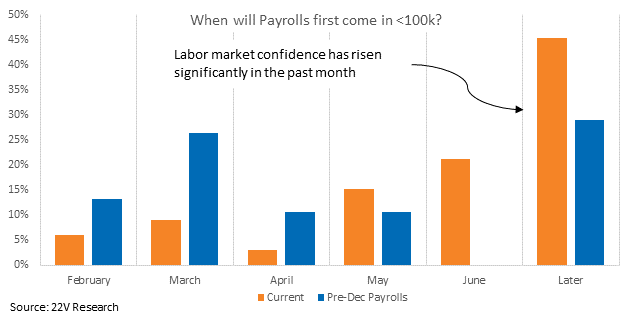
Turning to tomorrow… hiring data is strong heading into Payrolls. The Services ISM employment indicator increased, ADP printed +150k private payroll growth, and as Gerard pointed out HERE, the most recent Business Trends and Outlook Survey from the Census Bureau reached a new high in the hiring intentions index. It is a new indicator (launched September 2023) but has led actual hiring so far. That helps explain expectations for firm data tomorrow. Our survey consensus for Payrolls was slightly above Bloomberg’s consensus, and investors have pushed expectations for labor market weakness much farther out.
We have been long the 10yr (HERE) and we maintain that call because the pull forward ordering ahead of tariffs will fade, labor force will slow as immigration slows aggressively, inflation data has been dovish, and productivity data firm. But the 35bp drop in 10yr yields in less than a month means, for risk management, not pressing long 10yr (short yields) into tomorrow’s data.
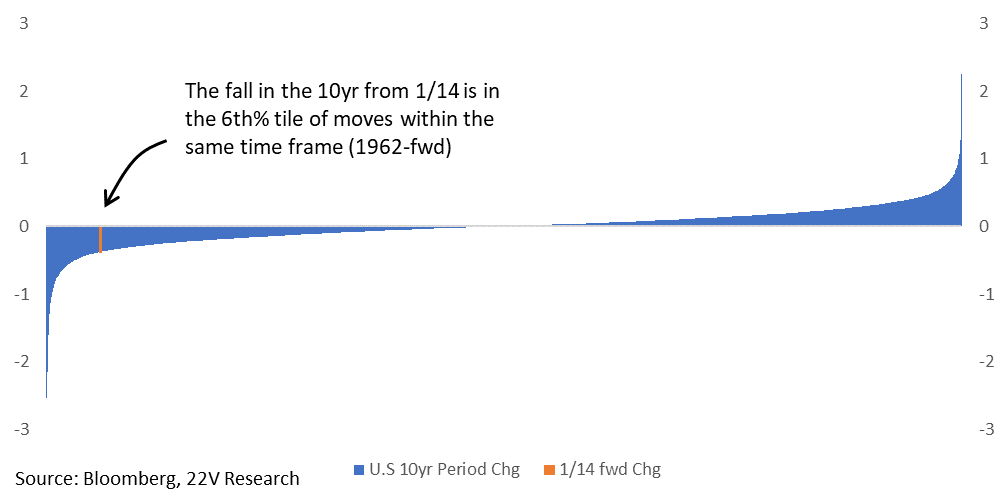
Much stronger wage data, if it were to happen, would change our view on the 10yr. The combo of a lower urate and higher wage growth COULD lead to a meaningfully reversal higher in 10yr yields. FYI, the investors we polled ahead of Friday are the most focused on AHE, not on Payrolls (HERE). With attention back on wages, the relevance of AHE data increases. A slight beat in the payroll data would leads to a short-term jump in 10yr yields that is ultimately a fade. Given the dovish reasons listed above.
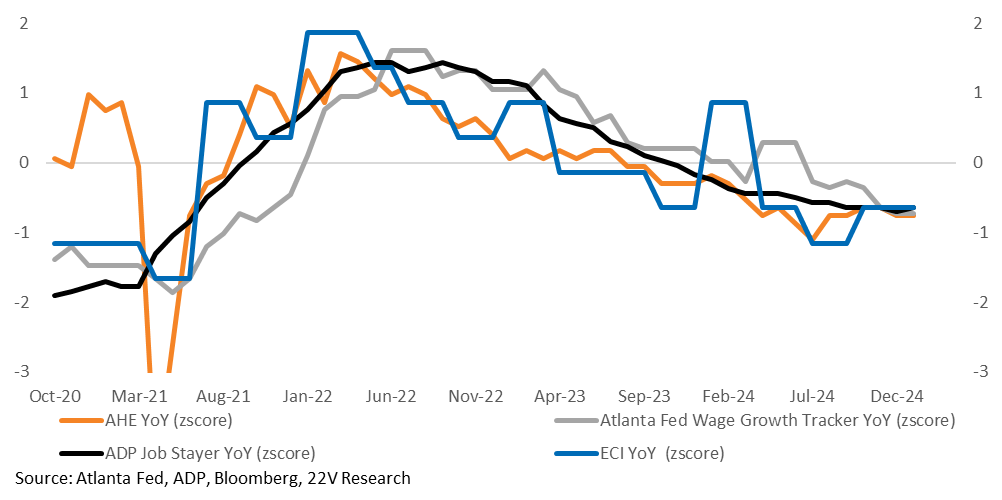
Within the ADP data, released yesterday, we focus on wage growth for job changers because it is the most informative of the outlook for wage growth. It’s the same logic of why we focus on the quits rate within JOLTS. Wage growth for job changers declined m/m, matching the rest of the dovish wage data we have received recently. That is another incremental update in favor of wage growth being a catchup effect to prior price level increases, not an indicator of problematic labor market tightness.
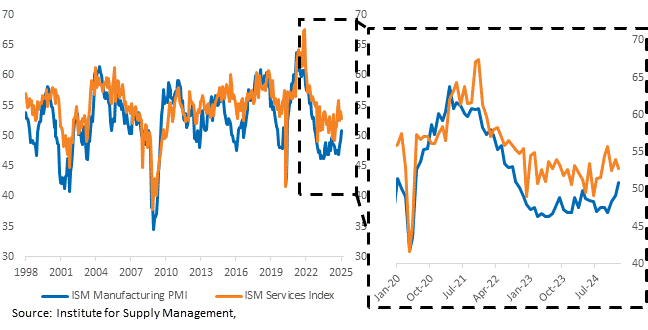
Background on Service ISM: The nonmanufacturing ISM came in softer than expected (though not outright weak). And as Gerard noted (HERE), the weakness was in the activity components (current production and new orders). If consumer spending on services slows, 10yr yields can come in some and the housing and durables sides of the economy can improve. Durables dependent on tariffs. When service spending is strong, rates increase and act as an automatic governor on the economy by slowing the interest rate sensitive sectors (housing, durables). If services are cooling, housing and durables can bounce. That would help the broadening out of the index too. The Goods PMI is increasing while Services is falling.