SUMMARY: All eyes on Payrolls today, so we highlight an important longer-term implication of today’s data, and cover what companies are saying about their own workforces. FYI our survey consensus is +180k Payrolls, 4.2% AHE, and 3.7% urate.
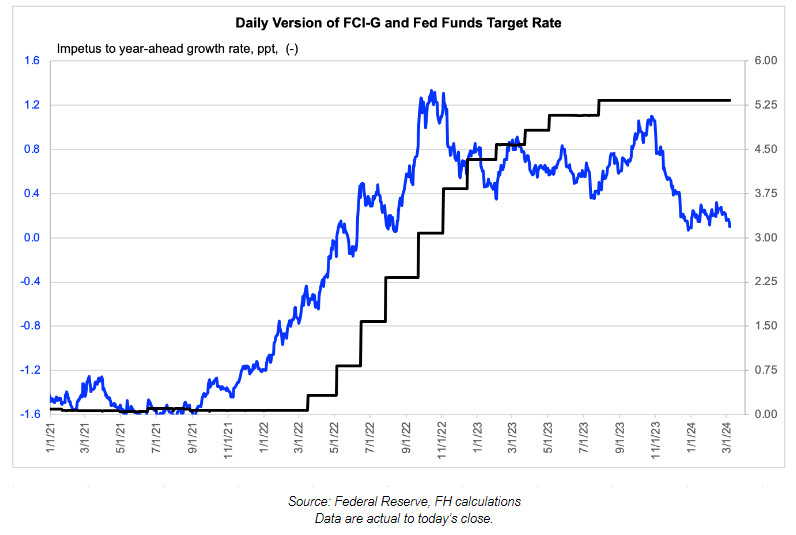
AHE: January’s spike in AHE was due to poor weather (hours worked dropped). Bbg consensus and our survey consensus, if the workweek reverses (Feb’s weather has been less unusual), implies underlying wage growth is accelerating meaningfully. A consensus reading won’t be a revelation to equities today, with risk-off gapping higher on a +0.3% AHE. But in the longer term, we need to see wage growth decline for risk-on to continue to work. That’s particularly the case because the Fed’s own financial conditions metric is hovering around a 0% impetus to year-ahead growth, despite the Fed arguing financial conditions are tight. Again, that’s not a revelation to equities, but it raises the stakes for wage growth deceleration being realized.
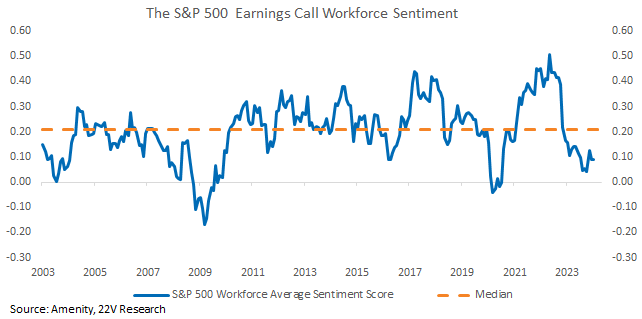
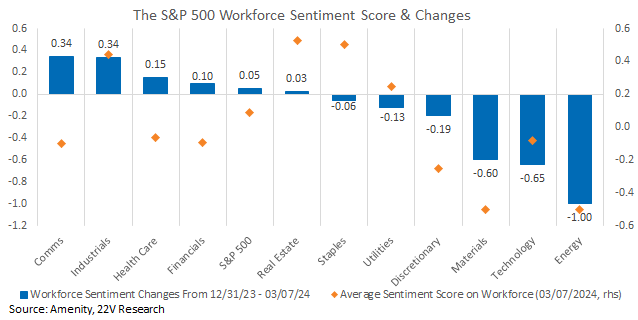
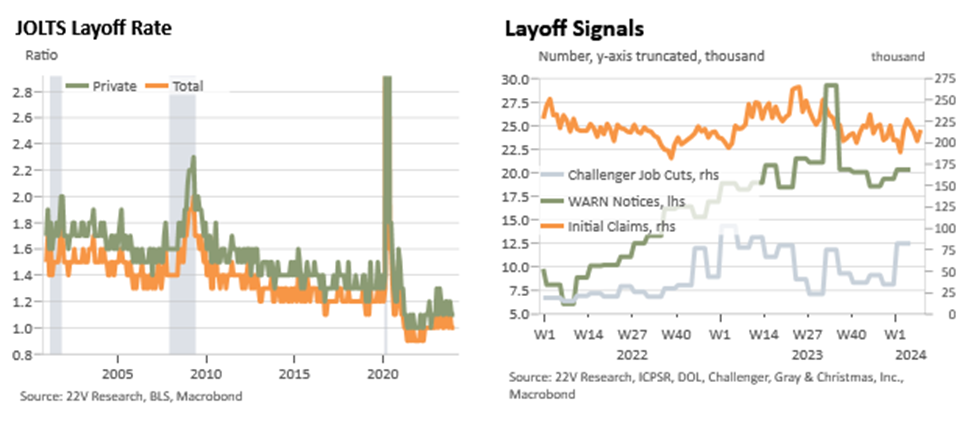
WORKFORCE SENTIMENT: We monitor what companies are saying about employment using Amenity’s natural language processor. Workforce Sentiment captures manager sentiment toward hiring or firing workers. Sentiment has largely stabilized after a big decline in 1Q23. As Peter mentioned in a report Wednesday (HERE), layoffs are a bigger deal in headlines than in macro data. The JOLTS data, WARN notices, Challenger data, and jobless claims all point to a continued very low layoff rate which seems below its cyclical peak (so far) in 1H23.

By sector, Communications and Industrials workforce sentiment improved the most in 4Q while Energy and Tech sentiment continued falling. From a level perspective, workforce sentiment is fine outside of materials, tech, and energy.
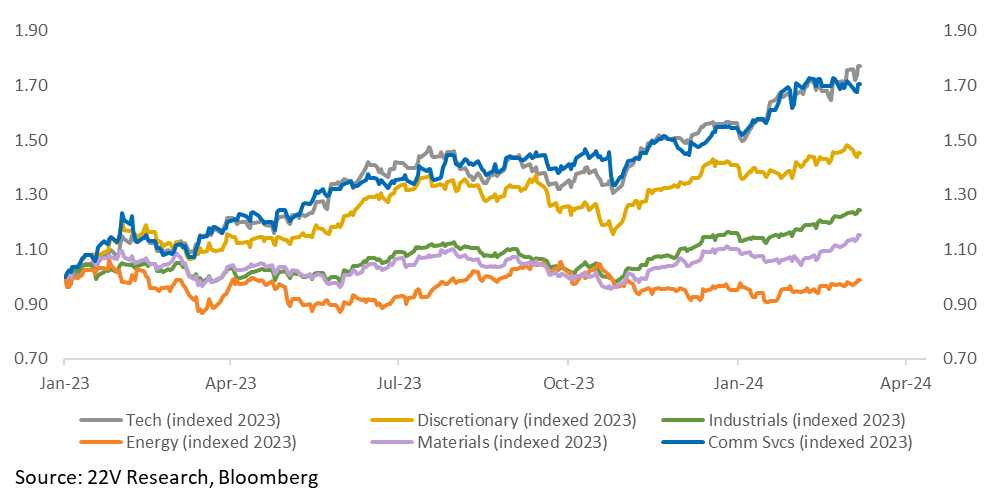
ENERGY AGAIN: We close out the report highlighting Colin Fenton’s latest (bullish) outlook on oil. This increases our conviction that Energy can catch up relative to other Cyclicals. Details in the full report below…
MARKET VIEWS: All eyes are on Payrolls today, so we highlight a point that will be important to the longer-term implication of today’s data. January’s spike in AHE was due to poor weather (hours worked dropped). Bbg consensus and our survey consensus, if the workweek reverses (Feb’s weather has not had the same problem), implies underlying wage growth is accelerating meaningfully. The 3-month growth rate of AHE would look like the below assuming consensus is correct. Keep in mind that cuts have already been priced out relative to the beginning of the year, and we are talking about the consensus number. Consensus won’t be a revelation to equities today, with risk-off gapping higher on a +0.3% AHE. But in the longer term, we need to see wage growth decline for risk-on to continue to work.
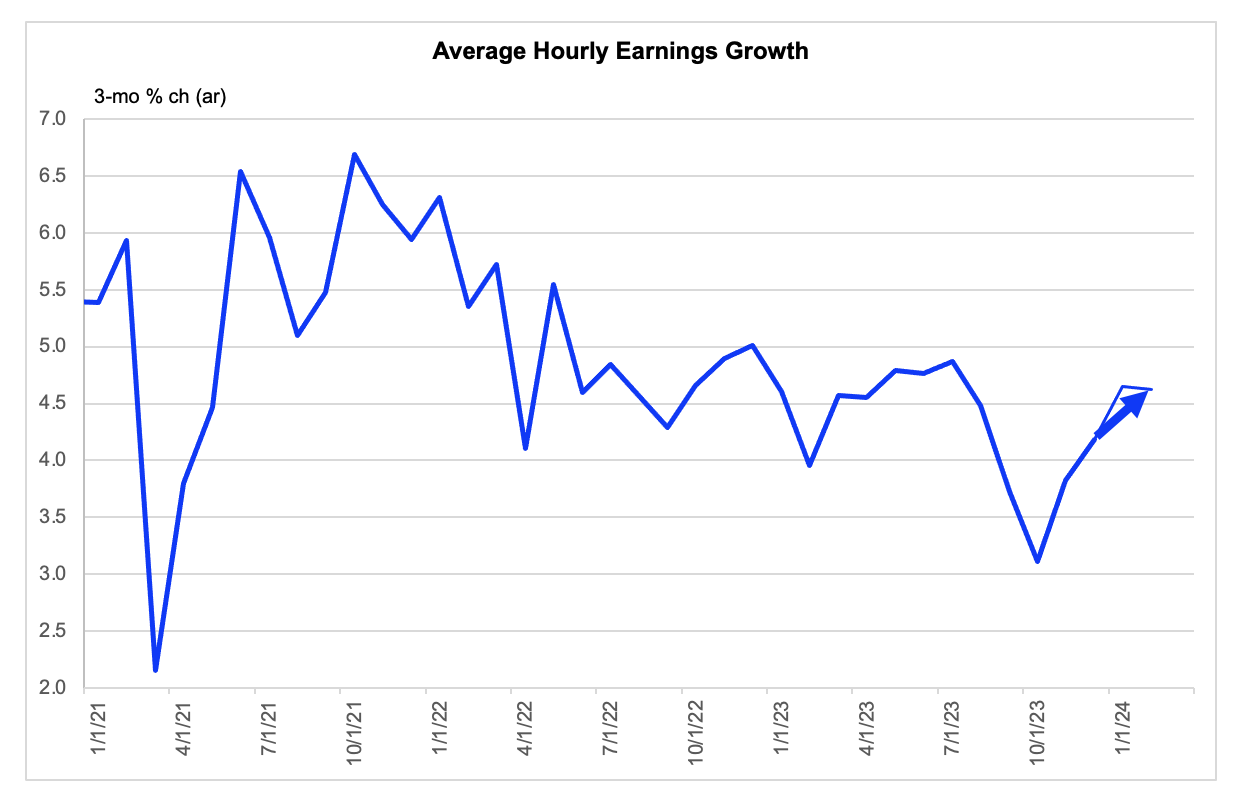
Source: Bloomberg, for historical data and consensus. Data are actual to February.
The Fed has argued financial conditions are tight (HERE, for example). They claim it’s part of the case for cutting rates. As Gerard pointed out yesterday (HERE), the odd thing is the Fed’s own financial conditions metric is hovering around a 0% impetus to the year-ahead growth rate. Again, this is not going to be a revelation for equities. But it raises the stakes for wage growth deceleration to be realized.
WORKFORCE SENTIMENT: We monitor what companies are saying about employment using Amenity’s natural language processor. Workforce Sentiment captures sentiment around companies discussing hiring or laying off workers. The sentiment has largely stabilized after a big decline in 1Q23.
By sector, Communications and Industrials workforce sentiment improved the most in 4Q while Energy and Tech sentiment continue dropping. Outside of Materials, Tech, and Energy, workforce sentiment is fine from a level perspective.
As Peter mentioned in a report Wednesday (HERE), layoffs are a bigger deal in headlines than in macro data. The JOLTS data, WARN notices, Challenger data, and jobless claims all point to a continued very low layoff rate which seems below its cyclical peak (so far) in 1H23.
ENERGY AGAIN: Colin Fenton has a bullish outlook on oil, based on the term structure (detailed in his chart below), the outlook for hot and stormy summer weather, and oil product prices. His note yesterday explains the microeconomics of the product prices (HERE).
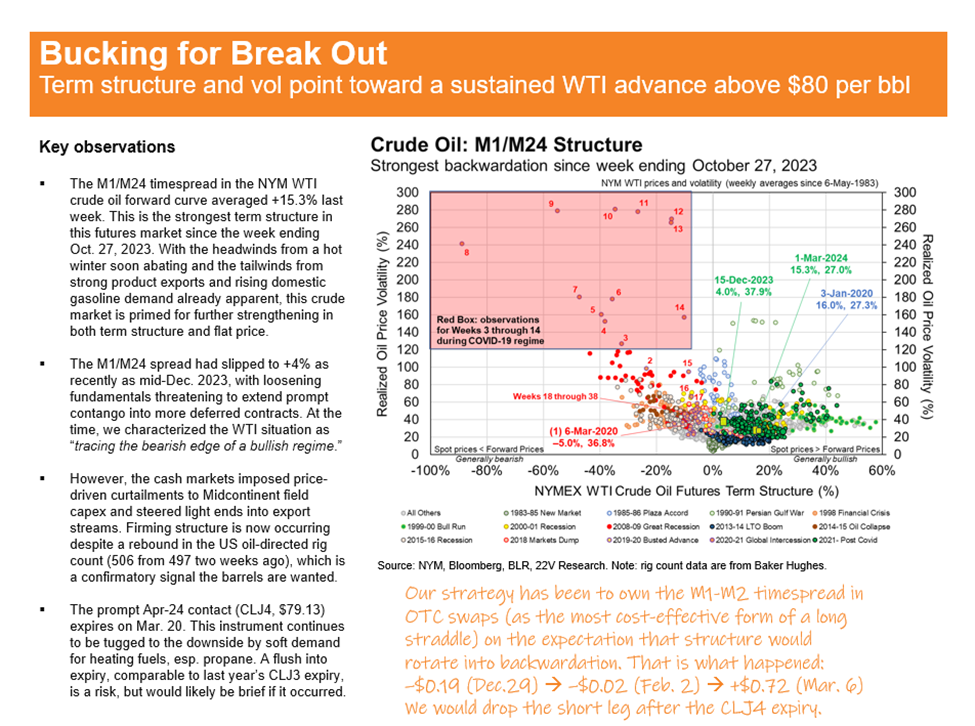
This increases our conviction that Energy can catch up relative to other Cyclicals.