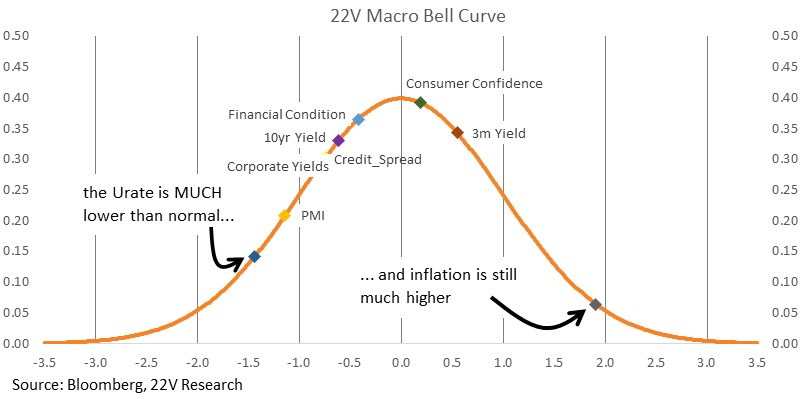
Though growth has slowed, and inflation is moving the right direction, the unemployment rate remains MUCH lower than its normal range, and core inflation remains MUCH too high. There is also still a steep inversion of the yield curve, but the distributions of other macro data have moved back into their normal ranges. The extremes Urate and inflation readings are encouraging tight central bank policy, so medium-term recession odds are elevated. That means ongoing factor volatility, particularly in risk-on/off factors.
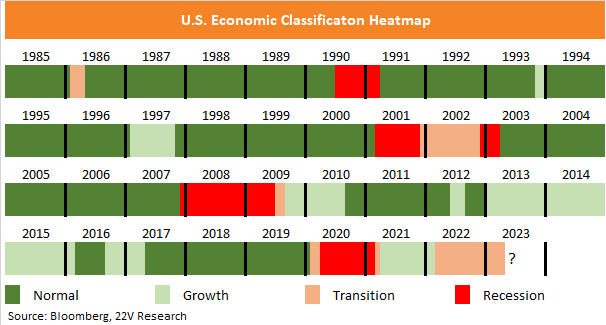
Our Macro Regime Model continues to classify the current backdrop as being in Transition. Inflation and unemployment are at extreme levels that signal low recession odds. Consumer and credit data suggest a Normal economic backdrop. This model is about where the economy is today. The bottom line is the odds we are in a recession NOW are VERY low.
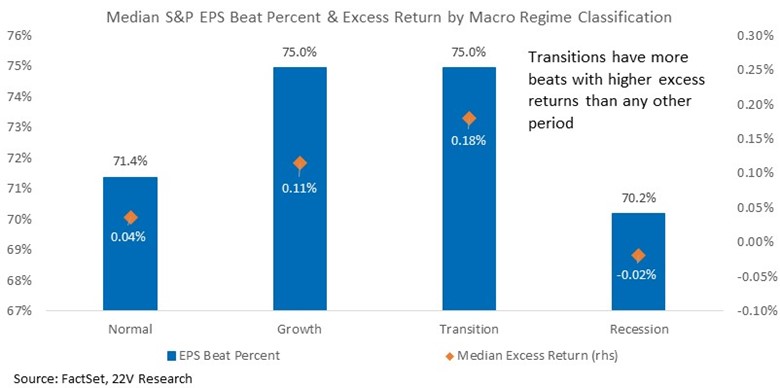
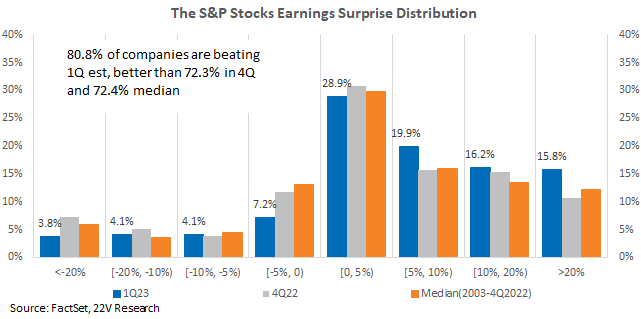
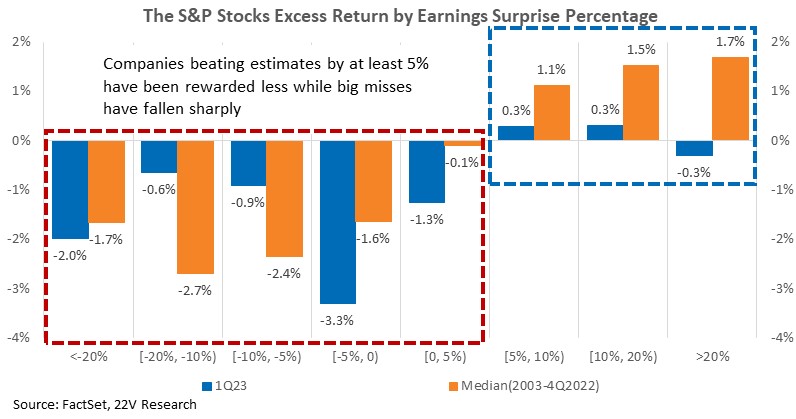
Earnings beat rates and excess returns have been best during Transitions when growth expectations move lower, but corporate performance tends to remain strong. Earnings surprises for the current earnings season have been much higher than normal, with 81% of names beating estimates even as absolute earnings growth continues to contract -1.6% y/y. A portfolio of ALL beats has posted an excess return of 0.1% during reporting. The ALL misses portfolio has underperformed by -1.5%. The distribution is messy, but the trend is clear; avoiding earnings misses is becoming more important.
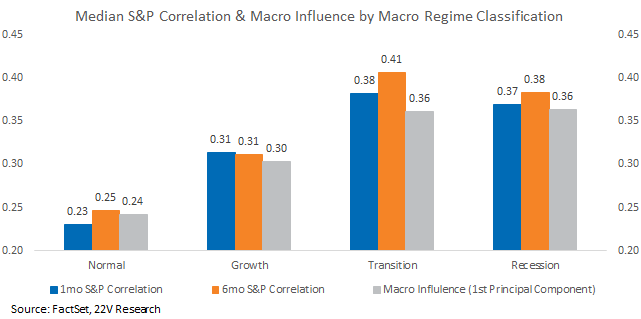
Since February, forward earnings estimates have been climbing as immediate recession concerns subside. If a shift to Recession can be avoided, divergent EPS estimates will help drive correlations lower. In our quant report earlier this week (report HERE), we highlighted that quantitative stock selection works best when correlations are lower. After peaking in 4Q22, both short-term and long-term correlations have trended lower, supporting factor-level stock selection.
The bottom line is a high conviction call for a shift into Recession would suggest high(er) correlations and more focus on avoiding earnings misses. A high conviction call for a shift into a Normal backdrop suggests low(er) correlations and a focus on earnings beats. Either way, a fundamental focus is becoming more important.
Still in Transition: The Fed meeting and payroll report this week are the market focuses. Currently, investors are expecting a 25bps hike this week followed by a data-dependent pause, which will reduce policy uncertainty at the margin. Though growth has slowed, and inflation is moving the right direction, the unemployment rate remains MUCH lower than its normal range, and core inflation remains MUCH too high. There is also still a steep inversion of the yield curve, but the distributions of other macro data have moved back into their normal ranges. The extremes Urate and inflation readings are encouraging tight central bank policy, so medium-term recession odds are elevated. That means ongoing factor volatility, particularly in risk-on/off factors.
Our Macro Regime Model continues to classify the current backdrop as being in Transition. Inflation and unemployment are at extreme levels that signal low recession odds. Consumer and credit data suggest a Normal economic backdrop. This model is about where the economy is today. The bottom line is the odds we are in a recession are VERY low.
Transitions & Earnings Trends: We looked at earnings reporting during different historical regimes. Earnings beat rates and excess returns have been best during Transitions, and worst during Recessions. Recession was the only period with negative median excess returns around earnings reporting. During Transition periods, growth expectations move lower, but corporate performance tends to remain strong, leading to increased beat rates. During Recessions, earnings tend to decline further and faster than consensus expectations.

Earnings surprises for the current earnings season have been much higher than normal, with 81% of names beating estimates even as absolute earnings growth continues to contract -1.6% y/y. That is roughly in line with earnings during Transitions historically. Consensus estimate for EPS at the start of 1Q reporting season was much lower than over the past few quarters. Revisions have shot higher over the past month (charts HERE).
The high beat rate means the pool of misses has been relatively small. One result has been sloppy returns to our typical beat/miss buckets. A portfolio of ALL beats has posted an excess return of 0.1% during reporting. An ALL misses portfolio has underperformed by -1.5%. The distribution is messy, but the trend is clear; avoiding earnings misses is becoming more important.
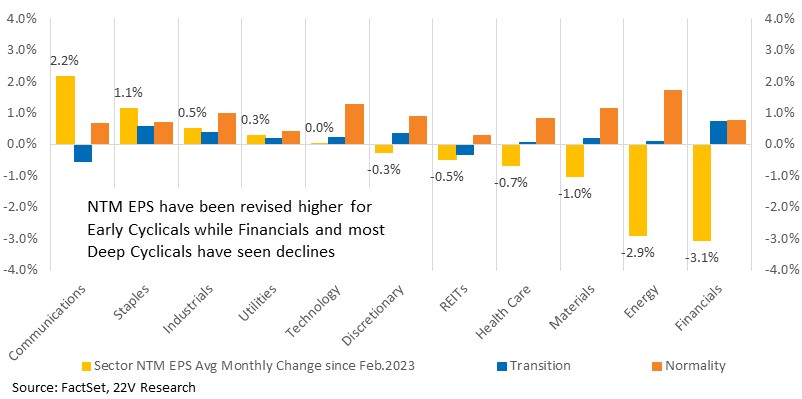
Forward revisions during Transitions tend to be modestly positive (Normal periods have the strongest revision trends, Recessions have the weakest). The monthly median S&P NTM EPS revision during Transition has been 0.3%. During the current Transition, average negative revisions have been modestly negative (-0.1%), which helps explain why beat rates have accelerated. Since February, forward earnings estimates have been climbing as immediate recession concerns subside. Across sectors, Early Cyclicals, especially Communications, have seen the strongest upward revisions. Financials and Deep Cyclicals have seen the greatest downward pressure. Revisions during this and historical Transitions have been a mix of Cyclicals and Defensives. If a shift to Recession can be avoided, divergent EPS estimates will help drive correlations lower.
In our quant report earlier this week (report HERE), we highlighted that quantitative stock selection works best when correlations are lower. 2022, when correlations were exceptionally high, factor analysis was largely a risk management tool. After peaking in 4Q22, both short-term and long-term correlations have trended lower, supporting factor-level stock selection. Lower correlations are also a sign the market is discounting a more AWAY from Transition/Recession. Correlations and macro influence remain high, but sustaining this level will require recession odds to move higher from here. The bottom line is a high conviction call for a shift into Recession would suggest high(er) correlations and more focus on avoiding earnings misses. A high conviction call for a shift into a Normal backdrop suggests low(er) correlations, and a focus on earnings beats. Either way, a fundamental focus is becoming more important.