SUMMARY: Gerard thinks the Fed will pause after hiking this week and that odds are high, over 75%, the Fed will further dial back any reference to rate hikes as the near-term central case. The more interesting debates are how long they remain on hold, whether they later resume tightening, and when/how forcefully they may begin easing. Payroll two days after the Fed meeting will inform this debate, but all labor market data points will be a focus going forward.
The endless search for the negative catalyst will continue, but the Fed meeting is unlikely to provide one (beyond the day). Making a high conviction long or short market call is tough now. Near term, it is tough to make money on the short side when inflation excluding rent and healthcare is falling quickly, allowing the Fed to pause, at the same time near-term recession risk is low. That helps explain why bond volatility has eased and the low level of the VIX (<16).
What limits upside is the longer-term problem of wages being sticky at too high of a level. It is odd wages have remained firm despite multiple measures of core inflation moving lower. That suggests the labor market is tighter and wages stickier than previously thought. If wages and salaries don’t catch up to the decline in other measures of core inflation, it would suggest core PCE will not fall below 3%. The fed needs to keep financial conditions tight under that scenario as more economic slowing – at a time when demand growth is closer to recession territory – would be required to lower wages. That is why longer-term recession risk (+6mo) is closer to 50%.

We continue to caution against high conviction longer-term macro views, so it is possible wages do catch up to the declines in core inflation (the dovish base case), but if it doesn’t happen, recession risk will increase and risk assets will struggle.
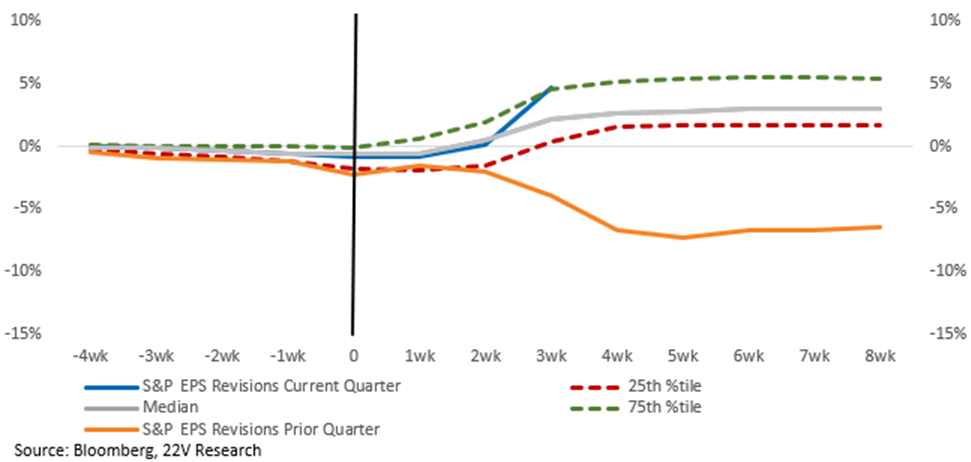
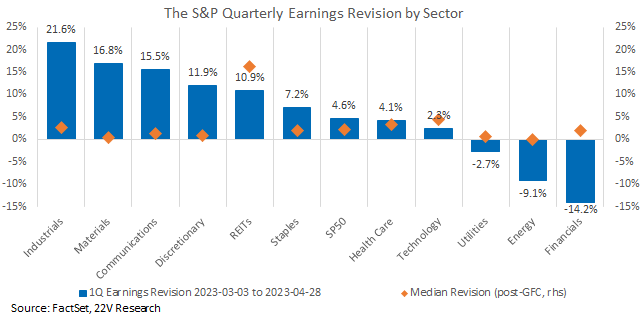
Earnings Strong – Earnings Outlook Meh as Margin Headwinds Persist: Upward revisions to S&P EPS growth estimates have climbed outside their normal range. Earnings in 1Q are proving MUCH stronger than feared. Keep in mind, EPS is still contracting. Earnings are not “strong”, but they are much stronger than consensus expectations. Sector-level revisions have been strongest among Cyclicals with the notable exception of Energy. The rapid decline in actual and forward-looking measures of margins confirms ongoing pressures on profitability. Growth has stabilized and inflation remains high historically, so don’t expect a collapse in profitability. Just a steady weakening of margins. The big earnings hit would come in a proper recession scenario.
Full report below…
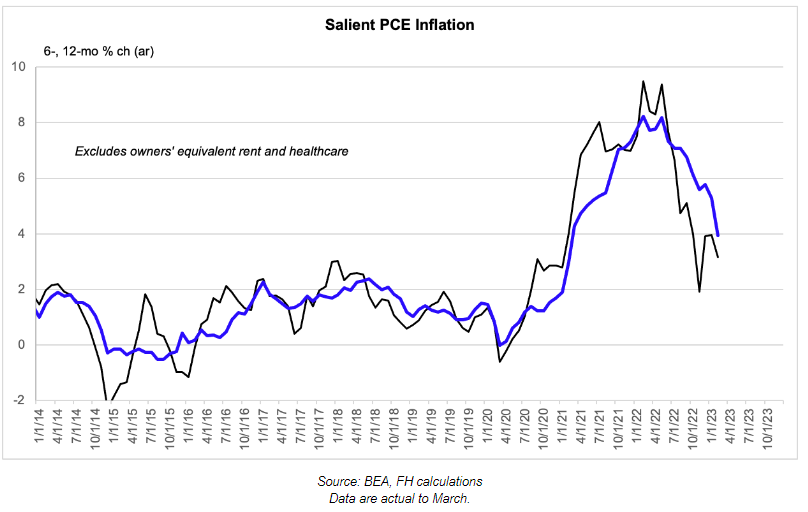
MARKET VIEWS: Gerard thinks the Fed will pause after raising rates this week, and that odds are high, over 75%, the Fed will further dial back any reference to rate hikes as the near-term central case. The more interesting debates are how long they remain on hold, whether they later resume tightening, and when/how forcefully they may begin easing. Payroll two days after the Fed meeting will inform this debate. Especially the average hourly earnings and unemployment readings. Inflation excluding rent and healthcare (Salient inflation below) is falling quickly. That is the good news and why the Fed is pausing. At the same time, near-term recession risk is low. That helps explain why bond and equity volatility have declined. That’s the good news…
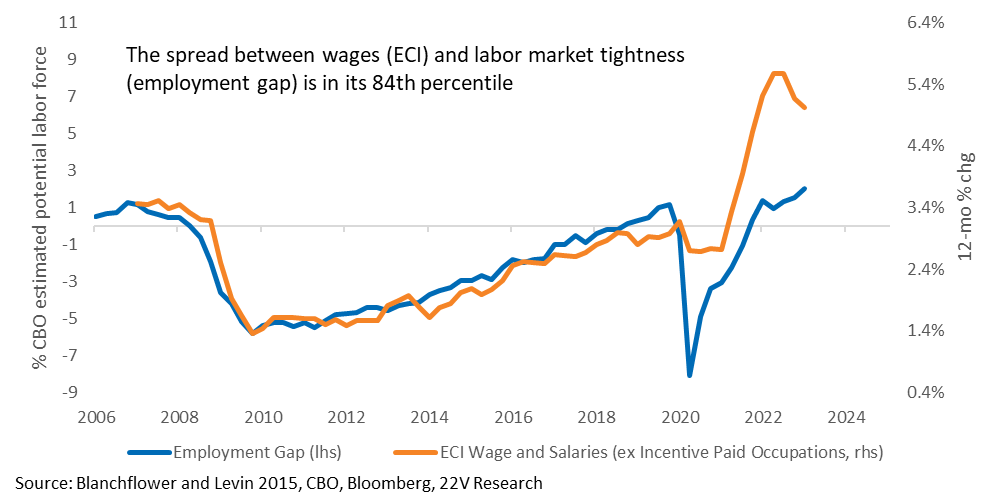
…the bad news is that wage growth is unusually strong despite the decline in core measures of inflation. That suggests the labor market is tighter and wages stickier than previously thought. The Employment Gap has sharply overshot and closely related the unemployment rate is at a half-century low. Doves would argue that the unusual spread between the unemployment gap, relative to ECI should narrow (wages lower) as other inflation pressure declines. Despite declines in measures of core inflation, that is not happening. It still MIGHT. We are in unchartered territory relative to history after all. But for now, it is not, which is why the Fed will be careful not to signal any cuts.
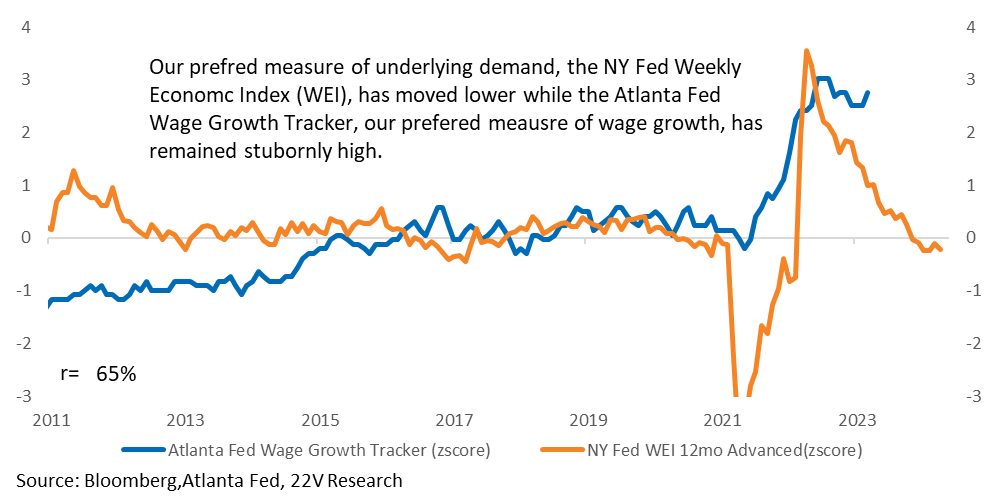
The net net of the above, if wages and salaries don’t catch up to the decline in measures of core inflation, it would suggest that core inflation will end up at too high. So, the decline in inflation will stop at a level that suggests above 3% core PCE. If that happened, it would require more slowing in economic demand (orange line below) and a time when demand growth is much closer to recession territory, to bring wages lower. That is why longer-term recession risk is higher. Bottom line, the Fed meeting will be important, but the labor market data will be the major swing factor in determining the Fed moves beyond the pause. That means labor market data is the major swing factor from a volatility point of view.
Earnings Stronger Than Expected: Upward revisions to S&P EPS growth estimates have climbed outside of their normal range. Earnings in 1Q are proving MUCH stronger than feared. Keep in mind, EPS are still contracting. Earnings are not “strong”, but they are much stronger than even consensus expectations. In our surveys of earnings estimates, investors expect ~$207 S&P EPS in 2023 IF there is a recession and $213 if there is no recession this year. The path of revisions today are consistent with non-recessionary EPS estimates.
Sector level revisions have been strongest among Cyclicals with the notable exception of Energy. Financials are still very negative.
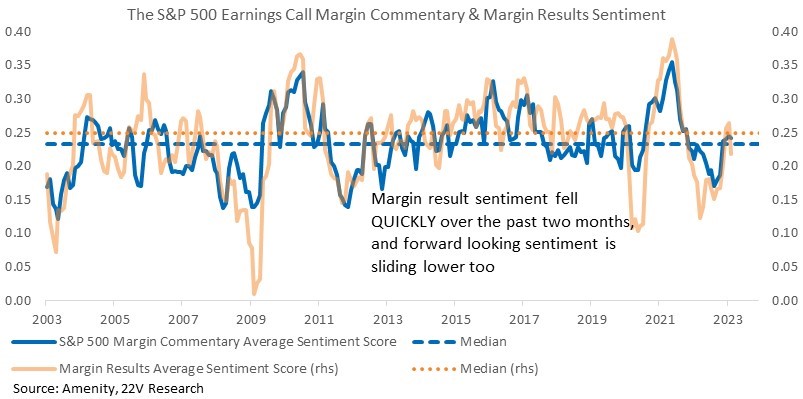
Margins Still a Headwind: Margin result sentiment – management views about current profitability – has plunged (82nd %til decline) and forward-looking margin commentary has moved lower. Those trends reflect how slowing economic growth and lower inflation are putting downward pressure on S&P margins, which is in line with the actual margin changes over the past quarter as well.
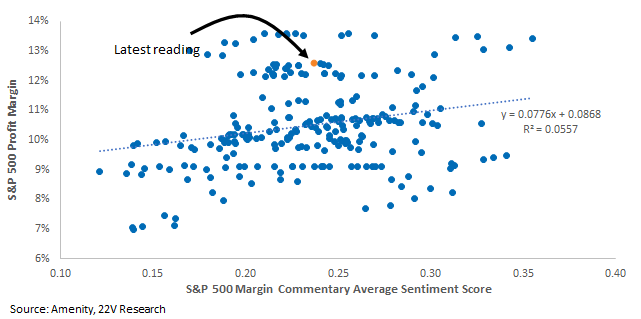
Historically, earnings margins have been positively correlated with margin sentiment. Trailing profitability is still high relative to history, even after margins declining -1.1pp to 12.5% over the past year. The rapid decline in actual and forward-looking measures confirms the ongoing margin pressures we would expect at this phase of the cycle. Growth has stabilized and trend inflation remains firm, so don’t expect a collapse in profitability. Just a steady weakening of margins.
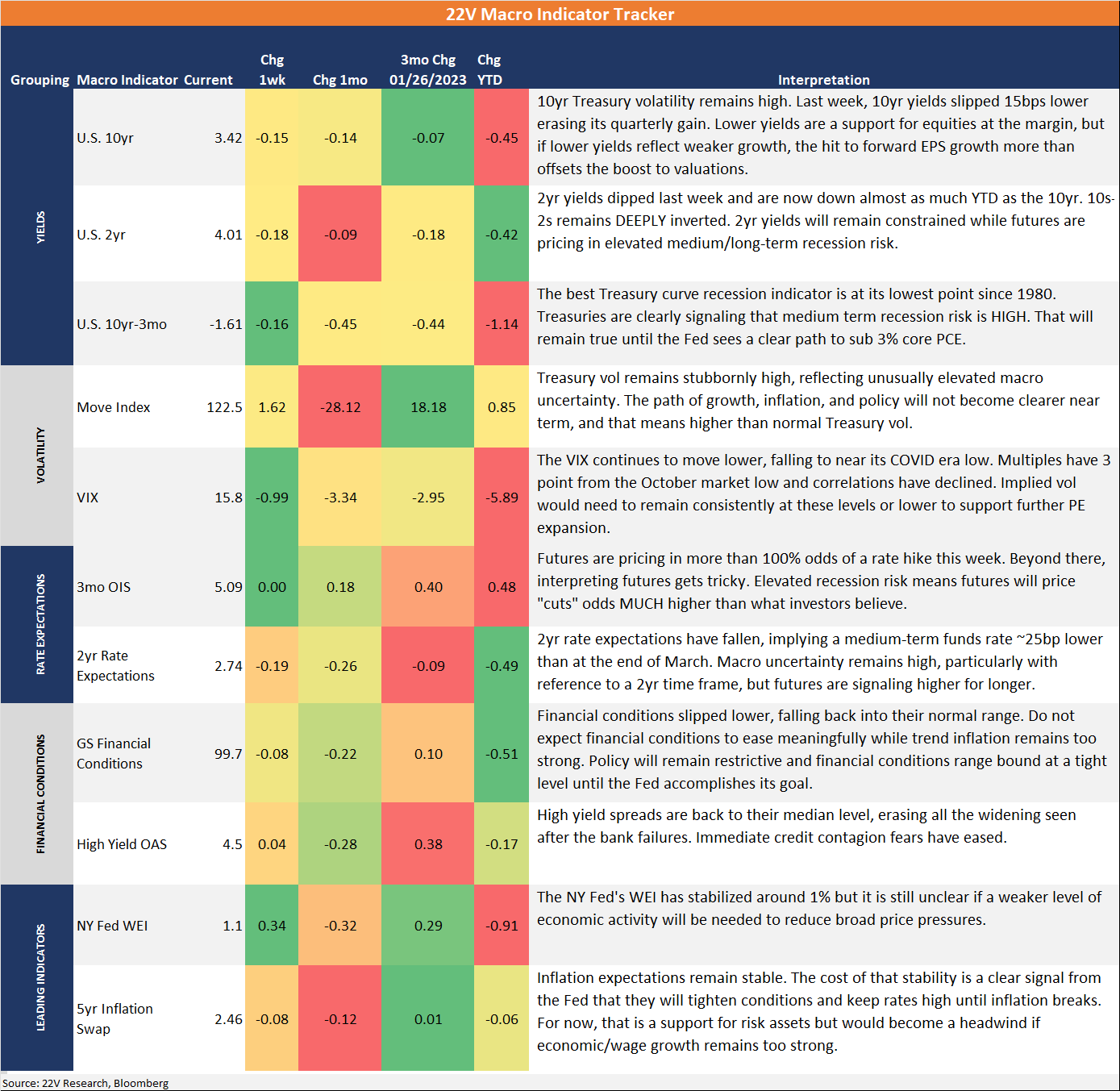
Macro Tracker: Earnings have been stronger than forecast but are doing little to lift the broad market, which was flat last week. Better fundamentals are helping push implied equity volatility lower. The VIX fell below 16 last week and is nearing its COVID-era low. All else equal, lower implied vol supports higher PEs. Signs of slowing earnings declines help create room for stock gains as well. But a low VIX and better EPS are insufficient to drive the S&P out of its 3,800-4,200 range. More clarity around recession risk is the catalyst needed for a sustained move higher or lower. Macro uncertainty will remain high until there is a clear break in inflation and a medium-term path toward sub-3% on core PCE. Until then, sustained sector and factor trends are difficult to come by. Micro-themes remain more attractive than directional market calls. Lower correlations mean more return dispersion between and within industries and factors. We continue to favor higher quality, higher sentiment names during earnings season. Avoiding earnings blowups is increasingly important as fundamental growth slows and margins come under pressure across industries.