SUMMARY: The risk-on reaction to yesterday’s FOMC meeting and presser was intense. But the fed funds futures path didn’t change much. The talk of a pivot came from, as GS pointed out today, that Powell mentioned the FOMC would react to growth, labor market data, and inflation. The single minded focus on inflation was a bit less than many feared. Given how bearish people seemed to be going into the FOMC this week (the chaos trade of terrible tech earnings, hawkish fed, and Europe gas prices was expected to send the S&P lower this week), we think the severe reaction to the SLIGHT dovish commentary was more likely a lesson in positioning. Exposures are low and people are negative.
Keep in mind that the Fed is still tightening and expect to do so until the labor market cools (Powell said that many times). Related to the point above, what Powell didn’t do is say that Fed would hike so aggressively that the economy implodes. Markets seemed prepared for that. He is not totally Volker (some people wrongly think he needs to be). So, the market reaction (in hindsight) could be a realization the Fed will not intentionally destroy the economy, which reduces tail risk. As an example, Powell said his aim is to balance supply and demand through below-potential growth, not a recession. That might not be possible and it is obvious the Fed will continue to slow growth and increase recession risk, but relative to positioning, Powell’s comments were taken as positive. Cyclicals and re-risking in general benefit if investors believe the Fed will try and avoid a recession. We are still long Cyclicals medium term and Quality of Earnings, Profitability, and Growth longer term as the economy slows.
Most Important Short-Term Point: If inflation expectations move much higher, it will become clear the Fed is too dovish relative growth and will be forced to react. There could be a window of a few weeks of investors testing the Fed by driving up oil prices (good for Energy), and inflation expectations if data is firm and people believe the Fed is too dovish. If inflation expectations go back toward the June highs, some “clarifying” statements from Fed officials would be likely.
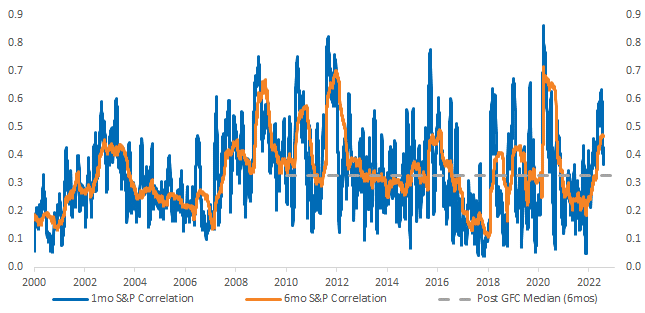
In other words, it is about the data and how hard the landing will be or not. Correlations can decline and stock picking matter more as long as macro data doesn’t show a dramatically stronger or weaker economy that reintroduces Fed/recession tail risk. The next important data points are the employment cost index and personal sending tomorrow, payrolls next week (8/5), and CPI the week after (8/10). We will be monitoring positioning and sentiment ahead of the data.
Full report below…
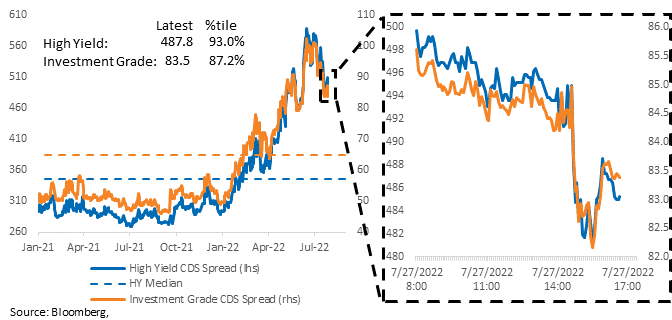
MARKET VIEWS: Following the FOMC decision and Powell’s presser, equities added to gains, yield curves steepened, CDX narrowed, the Dollar weakened, and real yields dropped. CDX had a 2nd percentile narrowing, the 10yr-3mo had an 85th percentile steepening, the DXY had a 7th %tile drop, and real yields had a 3rd percentile decrease. Yesterday’s FOMC reactions were intense. Some of the reaction unwound by the end of day/this morning, but the moves are still substantial.
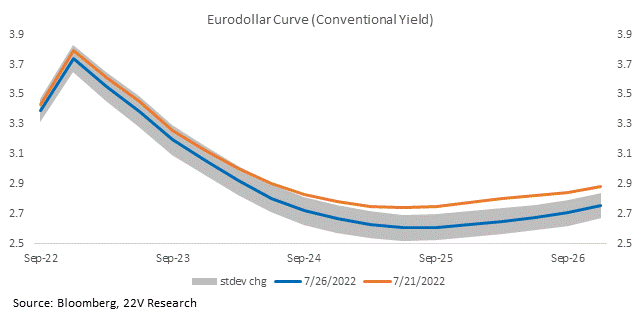
But the fed funds futures path didn’t change. Maybe the equity, rates, spreads, etc reaction is investors reading into a change in Fed posture, that they won’t tighten as much. We think it’s more likely a lesson in positioning. Investors were positioned for the bad outcomes this week due to the Fed and Tech earnings. Per our survey work, people had priced in 75 bps and were concerned about inflation commentary. Expectations for rates haven’t changed; the equity response was intense because positioning was deeply negative. The Fed wasn’t as dovish as many are talking about.

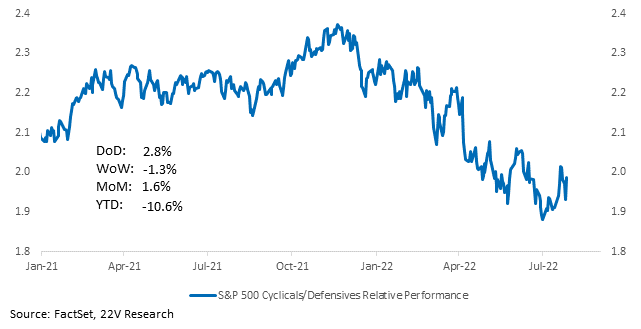
The fed is still tightening and expected to do so until the labor market cools (Powell said that many times). What Powell didn’t do is say the Fed was going to hike so aggressively that the economy implodes. The market reaction (in hindsight) is a realization that super hawkish commentary by Powell was needed to drive markets lower. At least on the day. The Fed didn’t confirm they will destroy the economy, which reduces tail risk. Helps Cyclicals and re-risking. Cyclicals outperformed Defensives by 2.8% and Earnings Turbulence/Low Vol returned 3.5% yesterday.
Gerard’s takes are 1) it’s increasingly clear that higher unemployment is required. Not new theme, but continuing to intensify. Clearer on this with each meeting. 2) Employment mandate is subservient to inflation. Dual mandate is now effectively single mandate. Not a new idea, but still adamant. 3) Path to avoiding recession is narrow and possibly narrowing. 4) Probably not now in recession. H2 should be ok, in part because of savings, but we will have to watch. (That savings stuff is nonsense, but I am not Powell.) 5) Hawkish, but no longer way away from consensus. He did not surprise me with any dovishness. It is just that consensus has moved. And we think #5 is part of the reason for the equity action yesterday.
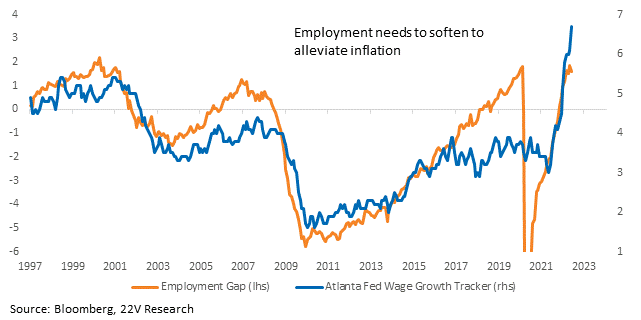
Now it’s about the data and how hard the landing will be or not. Correlations can decline and stock picking matter more as long as the macro data doesn’t show a dramatically stronger or weaker economy that reintroduces Fed/recession tail risk. The next important data points are the employment cost index and personal sending tomorrow, payrolls next week (8/5), and CPI the week after (8/10). We will be monitoring positioning and sentiment ahead of these data points too.
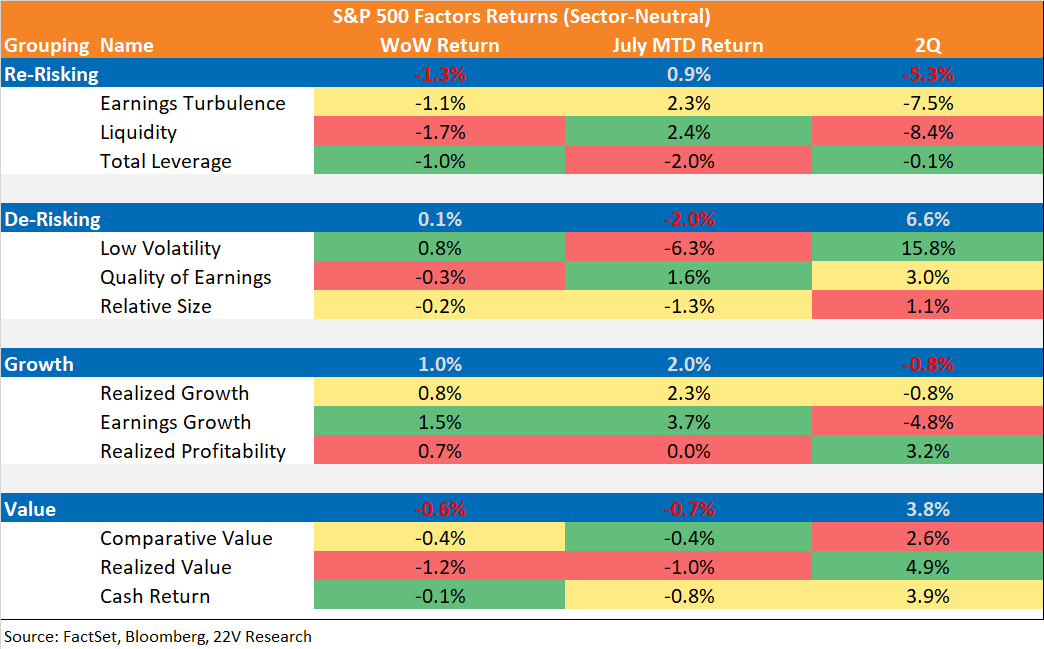
Still Favoring Risk-on and Growth: This past week has been tough for risk-on factors as some disappointing earnings numbers and concerns about possible shocks from the FOMC meeting weighed on sentiment. Risk factors/Growth are still leading in July, which is a sharp reversal from the risk-off/value rotation in 2Q. We prefer risk factors as a way of expressing macro views today, in part because of the tremendous gains by risk-off factors in 2Q and in part because of the increased rank correlation between Value and Growth. BUT, Growth should continue to outperform as economic activity slows, but the slowdown/mild recession//deep recession debate favors risk factor volatility/dispersion.
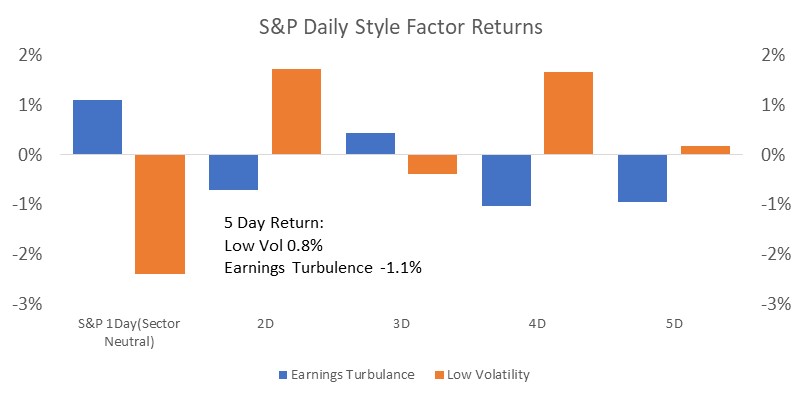
Internals shifted yesterday as the market rallied. Earnings Turbulence gained 1.1% while Low Volatility stocks fell -2.4%. The tremendous low Vol run in 2Q (+15.8%) has left those names expensive relative to higher Turbulence stocks, indicating investors have fully discounted at least a mild recession. If data deteriorates significantly and a deep recession becomes the base case, Low Vol will rally further, but the burden of proof has shifted and the skew to Earnings Turbulence names is better today.
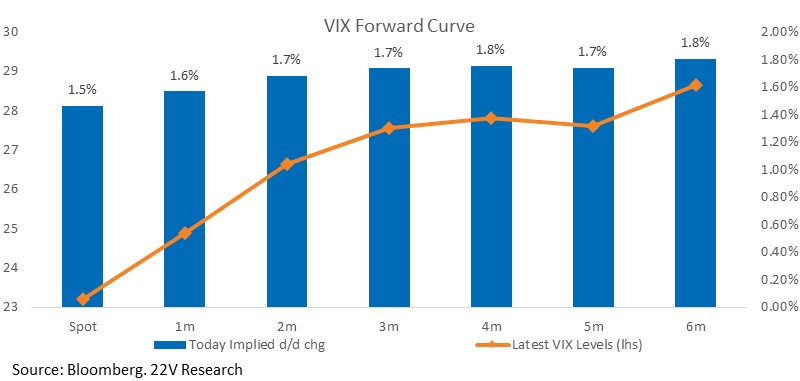
Though Powell stressed, repeatedly, that fighting inflation remains priority number one and that increased near-term downside risk to economic growth is an acceptable trade for getting inflation lower, investors took yesterday’s FOMC as a “pivot.” As the Quant team noted yesterday, the day AFTER Fed rate hikes has tended to see an increase in volatility, likely due to people reassessing the Fed’s message overnight. Futures have turned negative this morning, but are far from erasing yesterday’s 2.6% rally. Implied volatility remains high relative to history, suggesting 1.5-1.8% daily moves into the start of the year.