SUMMARY: Both ECB President Lagarde and Villeroy said the new ant-fragmentation tool should send a clear message that the ECB will backstop peripheral spreads. That has helped risk sentiment overnight. A deeply oversold condition is helping as well. As John Roque highlighted last night, he believes the market is close to making a trading low as the S&P got close to his downside target (3600), the percentage of stocks above their 200-day moving averages has collapsed, and the NYSE has recorded single-digit new highs for six days in a row. John still thinks we are in a bear market and APPL is at risk (so the market is as well), but a tradable low is possible now. Low volatility (Defensives) will suffer in a bounce and Earnings Turbulence, Price Volatility (Tech, Discretionary, Energy) should outperform.
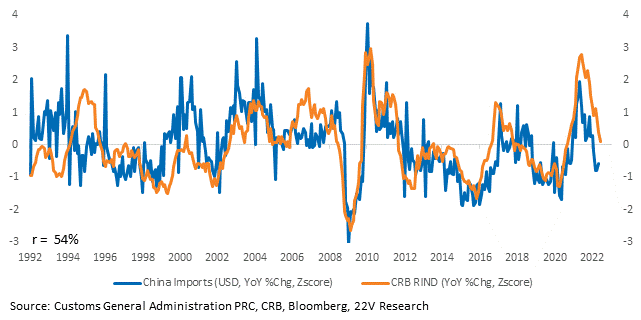
China weakness continues to impact broader commodity indices. Iron ore is down 20% from the early-June highs and traded limit-down 11% on Monday. In level terms, commodity prices are still high. But the YoY change in the broad commodity index (CRB RIND) is moving lower, which is consistent with the YoY collapse in China imports. The YoY indicators for most commodity prices look much better.
Credit spreads remain wide globally, commodity prices (ex Oil/Gas) appear to be rolling over, and mortgage rates are up to ~6%, which is a significant headwind for home price gains and the mortgage equity withdrawal that has helped fuel consumer spending. Growth is slowing. If it is slowing fast enough to put inflation on a path that allows the Fed to back off is the question for investors. For now, backing off doesn’t seem like an option. The Fed is hawkish – meaning the Fed is going to accept recession risk to deliver below-trend economic growth. That was the MAIN point from the FOMC statement and press conference last week. Powell made it clear getting inflation lower is CRITICAL and “the worst mistake would be to fail to restore price stability”.
The bear market will end when the inflation/recession outlook becomes clear. Until then bear market rallies and declines will remain the norm. Changes in valuation have driven equity returns, and PEs tend to move with investor sentiment that can shift FAR more rapidly than fundamentals.
Full report below…
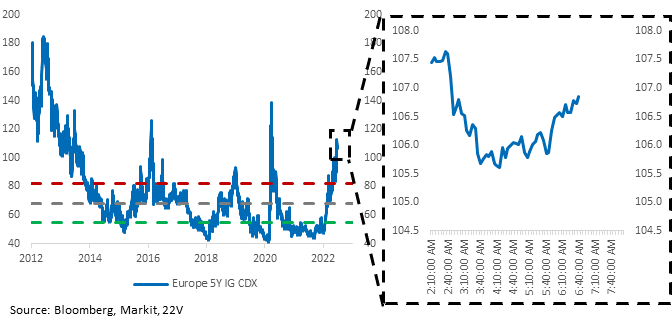
MARKET VIEWS: Risk assets are higher overnight as a combination of deeply oversold conditions and lower tail risk in Europe is helping stabilize risk. Both ECB President Lagarde and Villeroy said the new ant-fragmentation tool should send a clear message that the ECB will backstop peripheral spreads. The ECB still needs to actually implement and use said tool, but assuming they are serious (they seem so), European peripheral spreads should tighten, which is what is happening today (Italy/Spanish rates lower). European Corp CDS spreads are slightly tighter but are still VERY wide relative to history, indicating a sharp slowing in economic growth.
Oil prices are higher overnight, but the iron ore selloff continues with futures on China’s Dalian exchange now down 20% from their early June highs after trading limit-down 11% on Monday. China COVID news seemed to be better over the weekend, but the economic impact in Beijing and Shanghai over the past month has been significant. And some other regions are experiencing flare ups as well (Shenzhen and Macau). In level terms, commodity prices are still high. But the YoY change in the broad commodity index (CRB RIND) is moving lower, which is consistent with the YoY collapse in China imports.

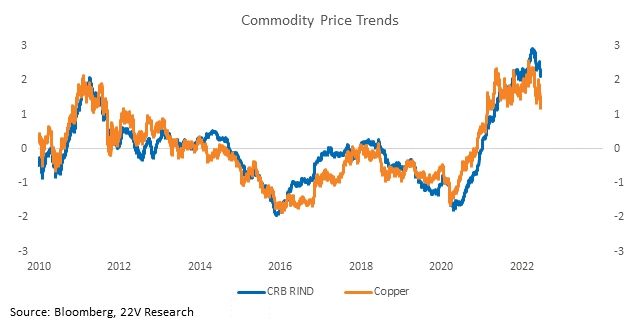
Level chart of CRB RIND and Copper. Both are rolling over, but at high levels. The YoY readings will become increasingly negative though.
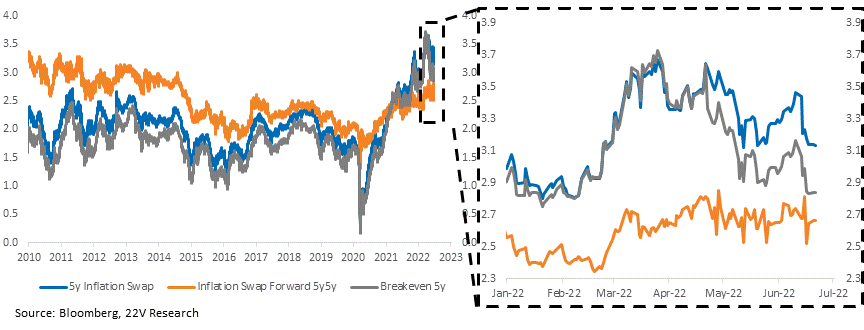
Credit spreads remain wide globally, commodity prices appear to be rolling over (ex Oil/Gas), the credit impulse in the US is fading, and Capex plans are weaking. At the same time, it’s important to keep in mind that the Fed is hawkish – meaning the Fed is going to accept recession risk to deliver below trend economic growth. That was the MAIN point from the FOMC statement and press conference last week. Powell made it clear getting inflation lower is CRITICAL and “the worst mistake would be to fail to restore price stability”. Economic growth is going to slow, potentially aggressively and that is the direction of travel investors should focus on. Inflation expectations seem to confirm that view. They have rolled over and are well anchored.
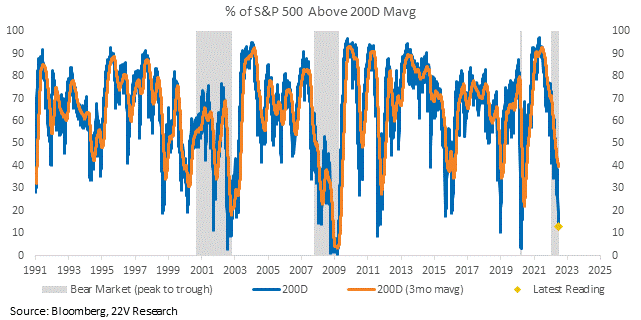
Short-term on the market – Expect a bounce: As John Roque noted last night, he believes the market is close to making a trading low as the S&P got close to his downside target (3600), “the percentage of stocks above their 200-day moving averages for NASDAQ is down to 14% and for the NYSE is 14.8%. These indicators are only 4–5% away from the single-digit readings I was expecting” and the NYSE has recorded single-digit new highs for six days in a row. As John writes, “it can’t get much worse in the near-term than to have a stretch of days where New Highs were only 4, 1, 4, 5, 1, and 2.” John is confident the bear market is not over and a secondary low of 3350-3400 still exists, but for the short term, he believes the market is close to a trading low.
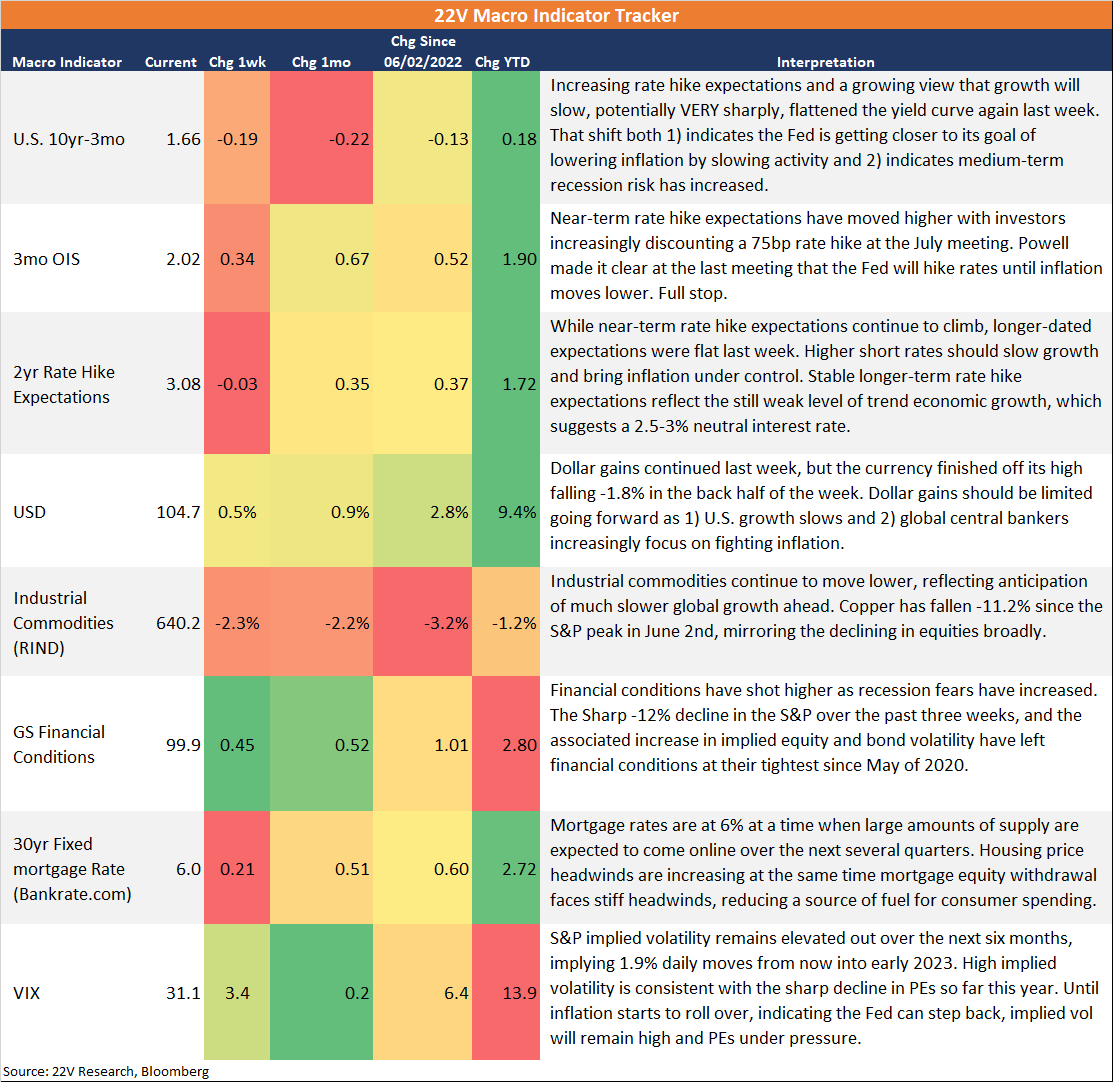
Macro Tracker: Treasury yields have shot higher over the past month, near-term rate hike expectations are increasing, and the yield curve has flattened. Investors are increasingly worried that sticky high inflation and a Fed that is clearly committed to reducing price pressures will result in a recession. Discounting that risk, the S&P has fallen more than -12% since its early-June peak and industrial commodities are down more than -11% over the same period. Implied equity volatility is elevated, indicating 1.9% average daily S&P moves from now until early 2023, and Treasury volatility is at extreme levels as well. All the above have led to the tightest financial conditions since May of 2020, when the global economy was just starting to emerge from near-complete lockdown. No one knows if financial conditions have tightened enough to slow growth/inflation enough. What we do know is that mortgage rates are up to ~6%, which is a significant headwind for home price gains and the mortgage equity withdrawal that has helped fuel consumer spending. At the same time, bond yields/spreads have widened, which are driving corporate borrowing and investment lower. Growth is slowing. If it is slowing fast enough to put inflation on a path that allows the Fed to back off is the question. Until that is answered clearly though, the scope for further Treasury yield gains is limited. The bear market will end when the inflation/recession outlook becomes clear. Until then bear market rallies and declines will remain the norm. Changes in valuation have driven equity returns, and PEs tend to move with sentiment, which can shift FAR more rapidly than fundamentals.