September Employment Report: October Hike Odds Fading Away
- The September employment report was a tale of two surveys with soft payrolls and AHE prints versus an on net strong household survey.
- The Fed has deemphasized NFP relative to the unemployment rate and jobless claims given the weakness in underlying labor supply growth. This report aligns with that view as most measures of slack tightened on net despite weak payrolls but recent soft AHE growth in several sectors pushes back on inflationary worries for now and seems to have been the key part of the release.
- With market pricing have moved notably more aggressively than the Fed’s baseline some it seemed that anything non-hawkish, along with credit/Eurozone worries, was enough to pull pricing in notably.
- As discussed earlier in the week, realizing the market’s 5x hike world would likely require baseline-or-worse inflation outcomes paired with a further retightening in the labor market. While labor market slack does seem to be improving, that observation has to tie into demand pressures on inflation which the AHE data lean against for now. Barring outsized surprises and shifts in labor market trends, it is the inflation data (near-term) and outlook (with influences from supply shocks, AI boom, and labor markets) that is driving the Fed at the moment.
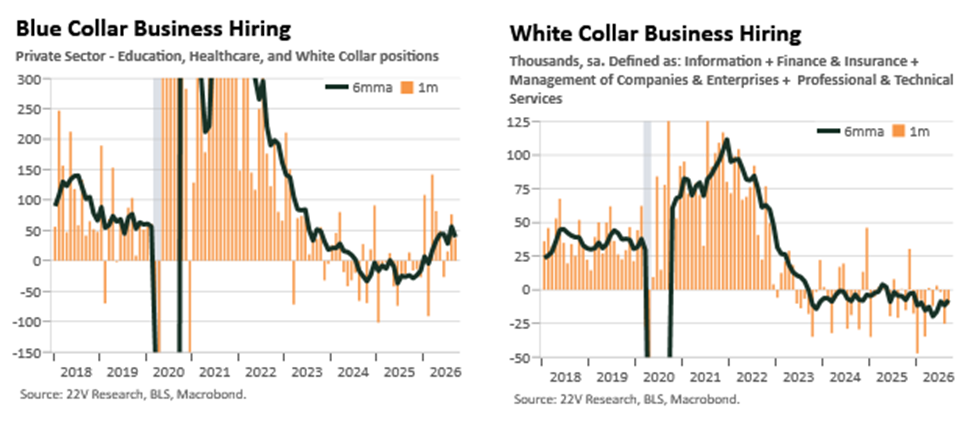
NFP sharply missed (+29k vs 90k exp) and saw notable downward revisions to the prior two months. Government swung back into a negative print (-17k) and healthcare was a bit slower than its recent pace. Among the other private sector workers recent trends seem to largely be holding with white collar workers continue to experience largely passive attrition driven moderate job losses as blue collar hiring has seen a solid turnaround in hiring over the past year. There’s little reason so far to change baseline labor market hiring off of this release (well one should never update all that strongly off a release that’s within a standard deviation of expectations and still in line with, or hotter than, labor supply growth) given the qualitative cyclical hiring stories did not shift much.
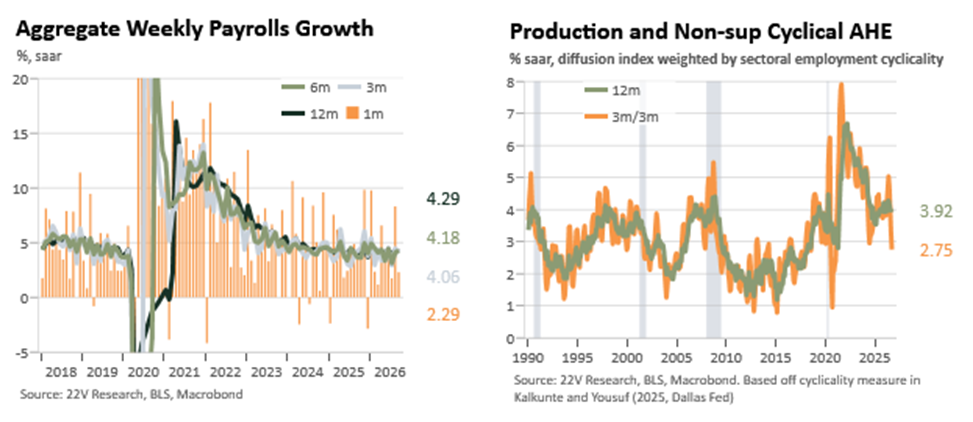
The very soft wage growth, and thus aggregate weekly payrolls, growth print was the most dovish part of the release. Despite growing evidence in the household survey of a gradually retightening labor market, including the Atlanta Fed’s wage growth tracker, the AHE data has softened on net this year. Earlier in the year cyclical measures of wage growth seemed to be firming, suggesting an eventual broadening out, but there has been a notable whipsaw downwards since the spring. Underlying aggregate nominal income trends continue to look close to 4%, maybe just a bit above, which may eventually require a bit of slowing in spending; given that household balance sheets and credit trends have been improving despite very strong spending growth, this is likely to be a more gradual trend, if broader sources of income actually require it (soft wages may be swamped by realized capital gains, transfer payments, and self-employment income).
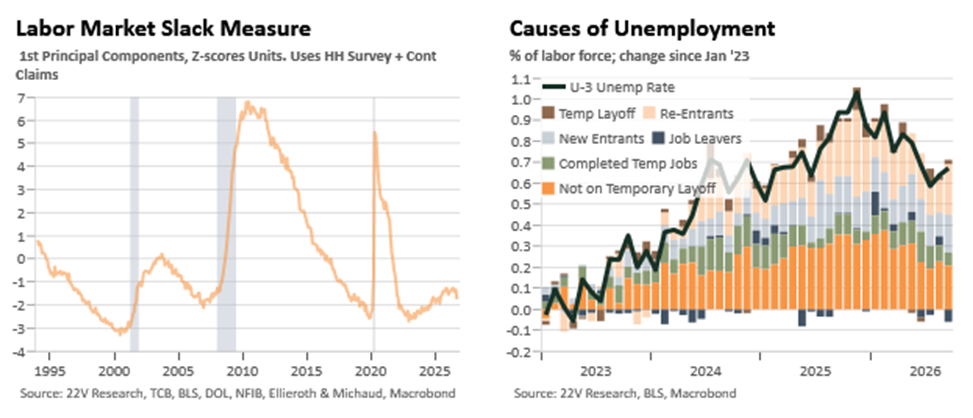
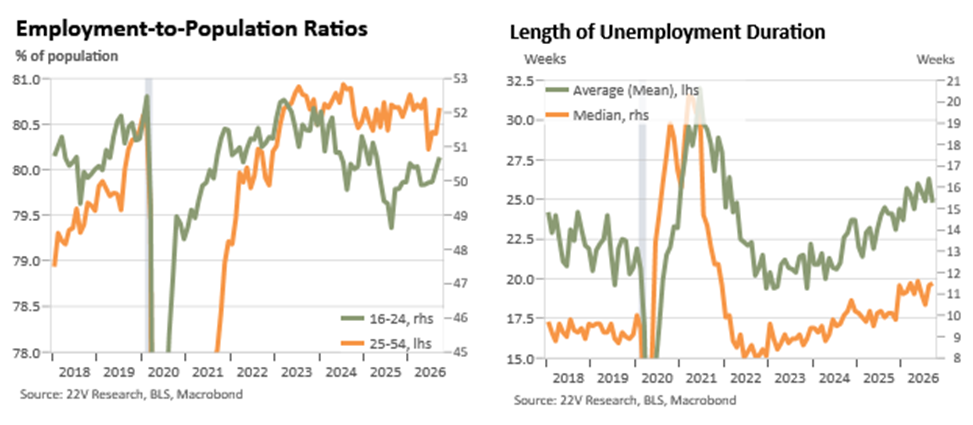
The household survey was notably more positive and, despite the 4bp move higher in the unemployment rate, points to a somewhat firmer, or less slack, labor market. The labor force participation rate ticked up by 18bps with new labor supply more than fully accounting for all the increase in the urate; it is important to keep in mind too that there is a substantial cyclical component to the unemployment rate which is often underappreciated. The demand-driven components of the urate have continued ticking down over the summer and look notably better than they did a year ago. Given these forces, the overall employment-to-population rate ticked up appreciably; most important of all the data today, the prime-age EPOP rate moved up 0.2pp. This reverses the noisy fade from June and takes the single best measure of labor market health close to its cycle highs.
Despite this strength in core measures of labor market slack, there were a few more peripheral areas which softened a bit on the month. Mostly these seem likely to reflect new or re-entrants into the labor force, but, consistent with the recent JOLTS data and slow net hiring trends overall, durations of unemployment have been the notable laggard in the broader improvement in slack over the past year.
These noisier signals were sharply outweighed by the claims, PAEPOP, and urate internals moves in our composite measure of labor market slack, which moved to its tightest level since early last summer.