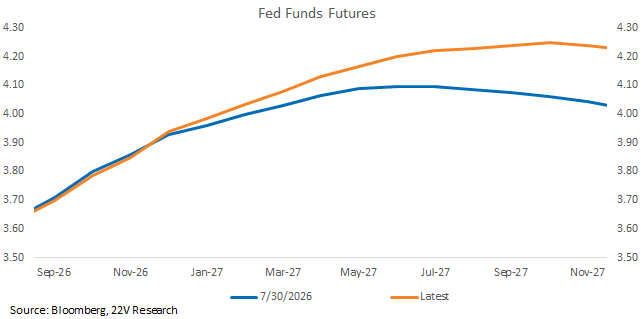
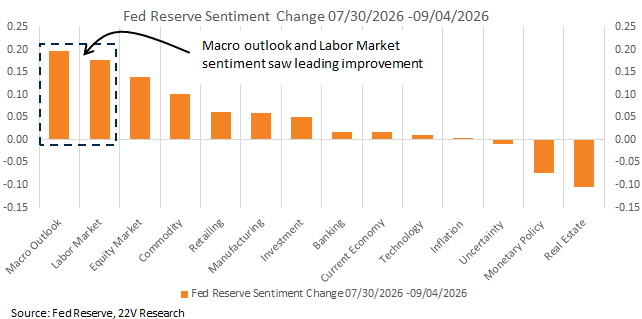
Our Fed Sentiment Scores (FRSS) show a hawkish shift heading into the September FOMC meeting. Since the July meeting, sentiment around the macro outlook and labor markets has improved, while monetary policy sentiment has deteriorated, signaling a clear shift toward a more hawkish policy stance.
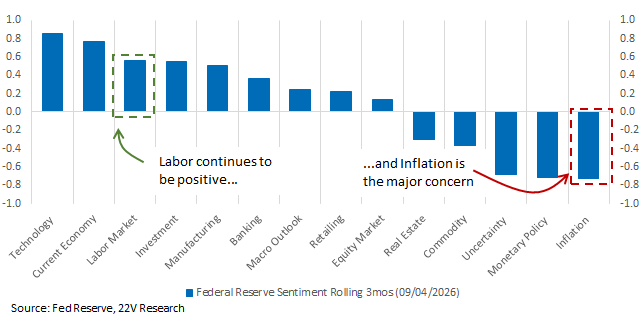
Inflation remains the Fed’s central constraint. Sequential inflation momentum has moderated since late July, particularly across producer prices and headline goods, helping inflation sentiment improve marginally. However, inflation remains the weakest of the 14 FOMC sentiment categories we track. Weak inflation sentiment is consistent with Core PCE remaining too high. In contrast, unemployment remains near the low end of its normalized historical range, with the latest labor data continuing to point to a resilient labor market.
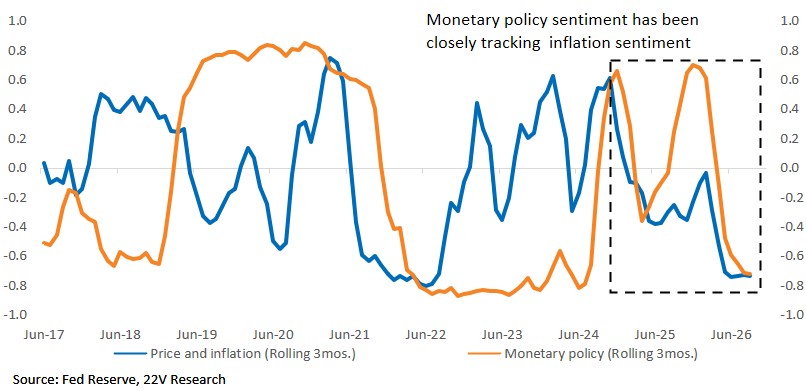
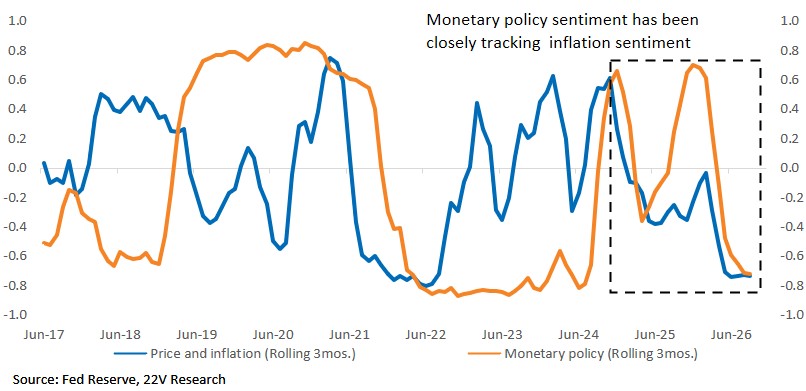
The important signal is the increasingly close relationship between Inflation sentiment and Monetary Policy sentiment. Both are now near the low end of their historical ranges, suggesting persistent above-target inflation is exerting greater influence on the Fed’s policy reaction function. During the prior tightening cycle, Monetary Policy sentiment fell to comparable levels only around the first hike in March 2022 and the extreme reading rebound roughly six months after the final July 2023 hike.
From this perspective, the FRSS suggests the Fed is approaching the threshold of another hiking cycle. Market pricing is moving in the same direction, with roughly a 60% probability of a September hike and 2–3 hikes priced through the end of next year. The upcoming inflation release is a critical near-term catalyst: further moderation could delay the start of tightening, while renewed inflation pressure would strengthen the case for a hike as early as September.
Fed Sentiment Score (FRSS) Update: Monetary Policy Sentiment Approaching Threshold of Another Hike Cycle: As the Fed enters its blackout period before the September meeting, we update our Fed Sentiment Scores (FRSS, whitepaper HERE). Since the last FOMC meeting, Macro Outlook and Labor Market sentiment have led overall Fed sentiment improvement, while Real Estate and Monetary policy sentiment have deteriorated. Dropping Monetary Policy sentiment reflects a shift towards a more hawkish tone since the last meeting.
On an absolute basis, inflation sentiment remains the lowest of all categories, reflecting continued concerns about inflation trends. Since the end of July, inflation data have delivered a clear moderation, particularly in producer and headline goods prices. The inflation shock seen earlier in the summer appears to be fading rather than accelerating, helping explain the marginal improvement in inflation sentiment. However, core inflation at an absolute level is still higher than the Fed’s target.
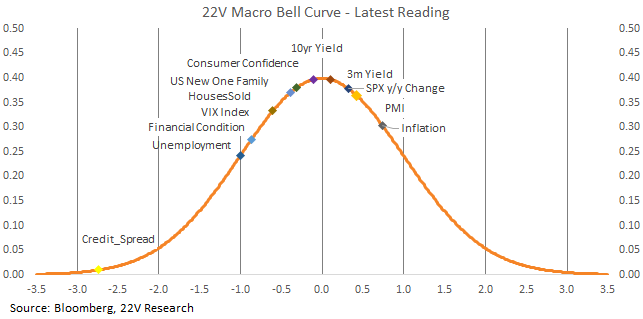
Comparing underlying data to their normalized readings, inflation measured by the core PCE Index remains elevated relative to other major macro series, reinforcing the persistently negative Fed sentiment readings. On the contrary, the unemployment rate is at the lower bound of normalized readings, confirmed by strong labor data last week.
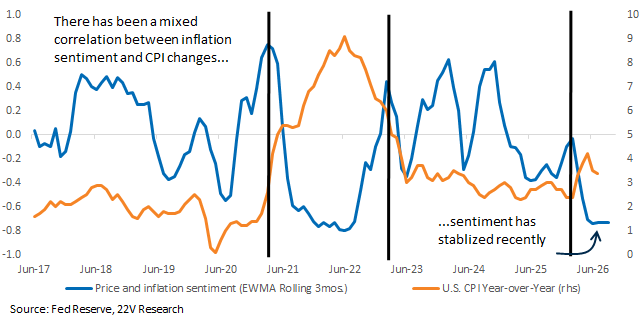
The inflation sentiment correlation with actual inflation data has been mixed, partially a binary effect from inflation. Though inflation sentiment dropped to the low end of its typical range, the trend has stabilized since 2H26. That stabilization is reflected in the improved sentiment over past two months. Current estimates for the next CPI release indicates a trending lower y/y reading.
At the same time, inflation has been consistently above the Fed’s 2% target. Inflation sentiment and Monetary Policy sentiment have been moving more closely together than usual since last year. In the last rate hike cycle, Monetary Policy sentiment fell to similar levels after the first hike in March 2022, and extremely negative sentiment extended until 2024, roughly half year after the last hike of that cycle. So, this objective measure of the Fed sentiment suggests Monetary Policy is approaching the threshold of another hiking cycle, though the inflation release will be the important watch point determining if that will start as early as September.
For now, market-based odds of a September Fed hike is around 60% with 2-3 Fed hikes being priced by end of next year. The Fed fund future curve now is higher for next year compared to the level post last FOMC meeting. Market expectation follows the path for Monetary Policy sentiment.