Bottom Line: Speed Limit
The economic speed limit looks like to be ~2% real GDP growth. Economic growth has been WELL above that, and the labor market is solid. The two sources of economic strength are consumer spending and AI related investments. Investors are discounting that economic growth needs to slow somewhat to bring inflation down (respecting the economy’s “speed limit”), that the Fed will apply mild restraint to help slow growth (see fed futures), and that consumer spending will do most of the work in that slowdown. Implicit in this discounting is productivity growth NOT improving much from current levels. That assumption could change, but it is not a relevant question for now. The relevant question is what it will take to get inflation closer to target over the coming year.
Relevant News: Factors Exposed to Buildout
Over the past week Earnings Risk, EPS Momentum and Price Momentum have been the best performing factors. All the factors have significant exposure to the AI buildout, which from an economic and near-term earnings perspective, will continue to be a support for those baskets. They all have negative exposure to Consumer service names. All factors are +2% Long/Short WoW. The size factor is outperforming as well.
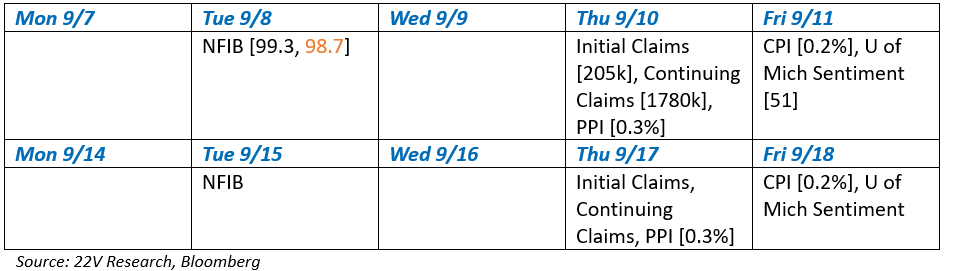
Things to Watch [Consensus, Results]:
Strategy:
Marking to Market Consumer Call – Investors Discounting Slower Economic Growth Through Weaker Consumer Spending– (HERE)
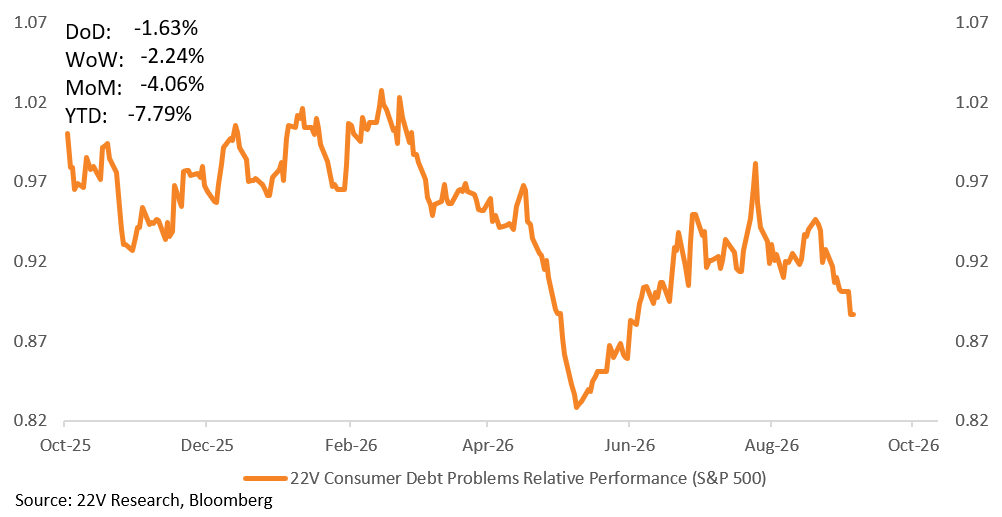
A basket of cyclical consumer stocks with lower interest coverage ratios, higher near-term debt ratios, and greater cash flow volatility is down roughly 8% YTD. And -9.7% since the late July high. Underperforming both the S&P 500 Retail Index and the broader S&P 500. Most of that weakness has occurred since late July. Since late July it has become more obvious that financial conditions need to tighten some to slow economic growth. Investors seem to have internalized that some slowing in economic growth is necessary to respect the economic speed limit.
Derivatives Strategy:
Trading the Upcoming Elections in Brazil With EWZ October/November Call Calendars– (HERE)
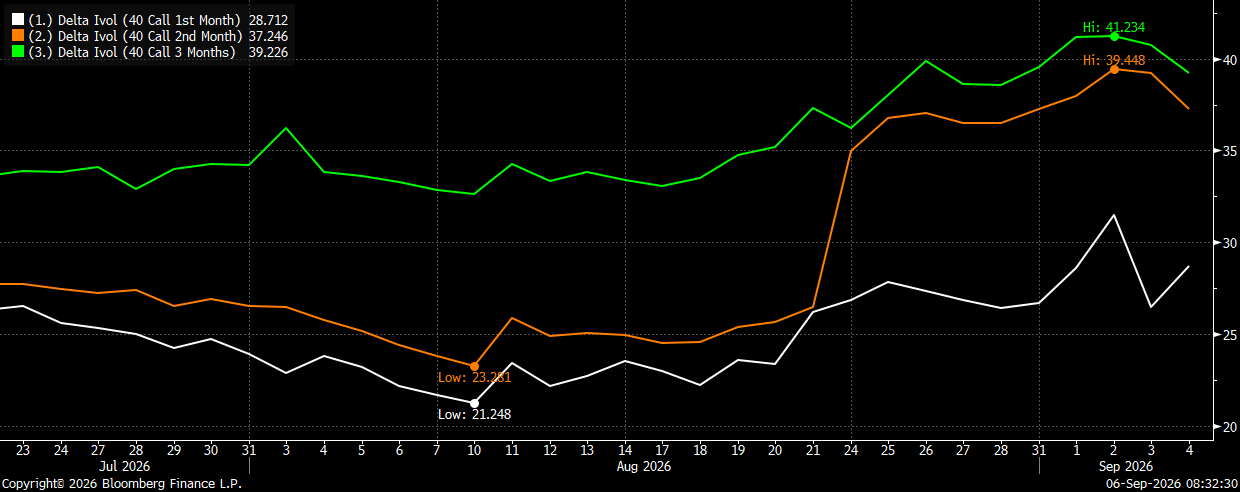
With Brazil’s presidential election less than a month away, EWZ options activity is increasingly focused on November and December upside calls rather than October, likely reflecting expectations that the Oct. 4 election will lead to an Oct. 25 runoff. With November call implied volatility only ~2–3 points above October despite the runoff potentially being the more consequential market event, November upside looks relatively attractive. Given a Flavio Bolsonaro victory could be viewed more favorably by markets on fiscal policy, the preferred setup is a lower-cost call calendar spread—owning November upside while selling richer October calls—with a potential breakout above EWZ’s long-term resistance around 42 as the target.