DAILY STRATEGY: 22V Data Infrastructure/Commodities analyst Dauvin Peterson has noted something we also picked up on speaking with investors. Investors are increasingly looking for signals that can validate 2028 and beyond AI related demand trends and EPS growth (HERE). One specific focus is when individual cycles – for DRAM, certain capital goods companies, power generators etc., – transition from scarcity and pricing power toward additional capacity.
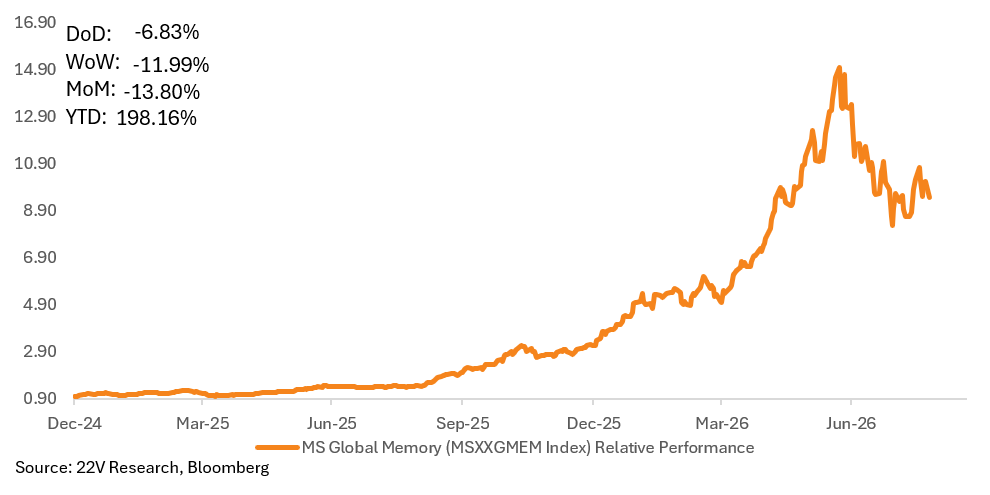
For the memory and DRAM* markets specifically, according to SemiAnalysis, the DRAM market is projected to remain undersupplied through potentially 2028. Beyond 2028, more supply is expected. Will that supply still be short relative to demand? Most investors we talk to seem to think so. But if not, increased sales volume and shipment growth drive revenue and earnings instead of significant pricing power. This might explain why the two-year forward PE spread of the MS global memory basket has moved below its 25th %tile. Technically, John Roque notes that he wants to be a seller of MS Global Memory basket.
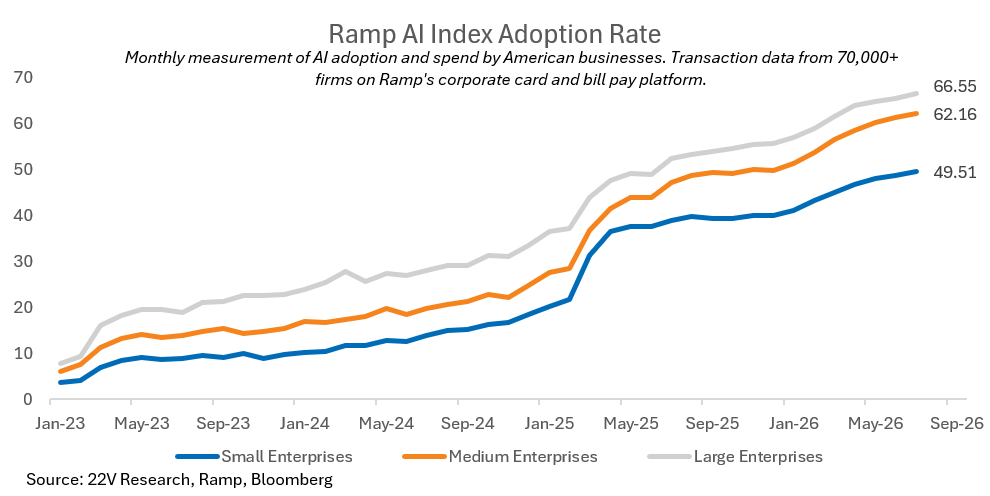
Investors looking for a positive near-term catalyst to change the outlook and lead to a higher forward PE likely need to focus on what happens to earnings beyond 2028 (2029 forward AI demand vs Memory supply). It might take a while for investors to form a strong opinion around 2028 and beyond. The good news is AI usage and enterprise adoption continues to accelerate. Higher AI usage is associated with higher margins, which should support future AI demand/Enterprise adoption. Companies generally like higher margins after all.
Net net, we are positive on the AI buildout, but the beneficiary baskets are becoming more nuanced. Right now, as Dauvin Peterson noted (HERE), the backdrop of accelerating AI token consumption and an increasingly challenging AI data center regulatory environment creates a strong tailwind for companies that are exposed to rising prices for compute and/or have significant approved sites for building compute (SPCX, CRWV, NBIS and FRMI).
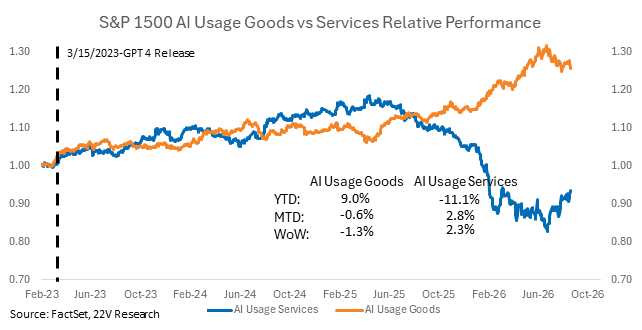
FYI – High AI Usage or AI demand goods companies have underperformed High Usage AI services companies MoM and WoW. If AI supply and demand are expected to increase, the Services companies using AI tools should benefit (think Financials, HC, Payments names).
One Macro Headwind to Consider for the AI Trade – It is possible that AI debt financing numbers (through 2030: $7 trillion debt and $12 trillion total according to SemiAnlysis) are SO LARGE that attempts to implement the scale being discussed COULD mean MUCH higher inflation. This demand shock would be happening in an environment of roughly equilibrium unemployment and legacy elevated inflation. That would make the macroeconomy less tolerant of new demand shocks. All things equal. 10yr yields have kept housing from contributing to economic growth and we wonder if that logic will start to apply to AI related capex.
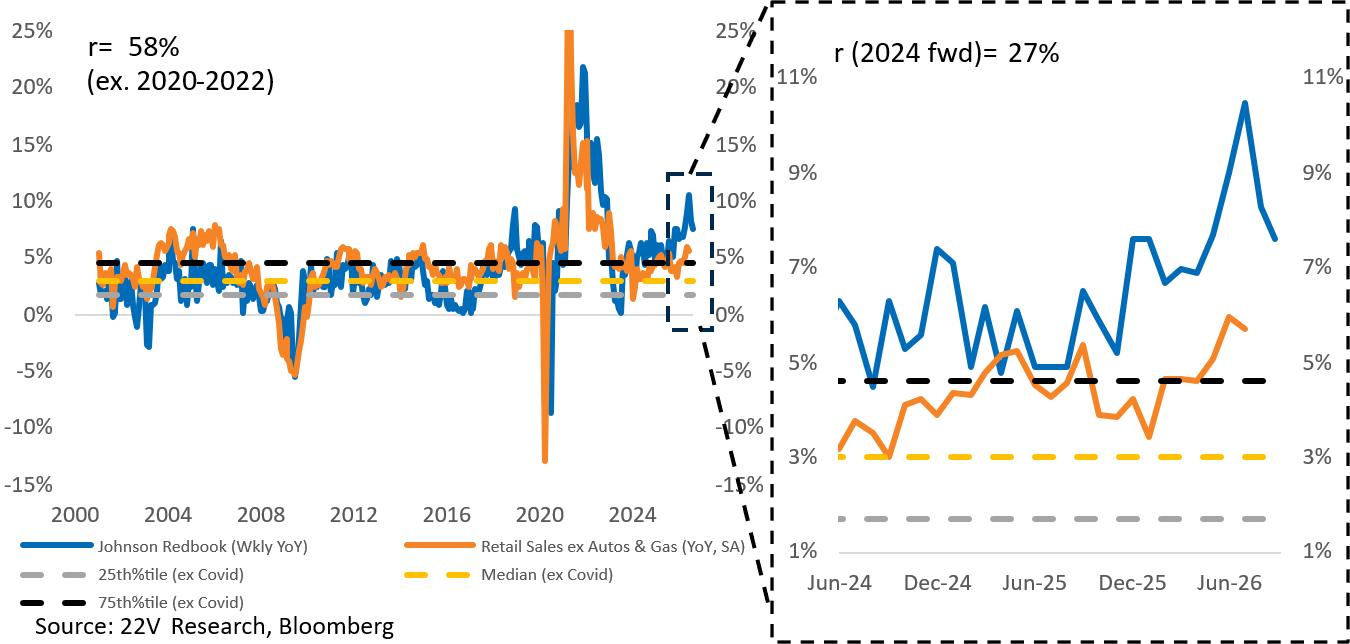
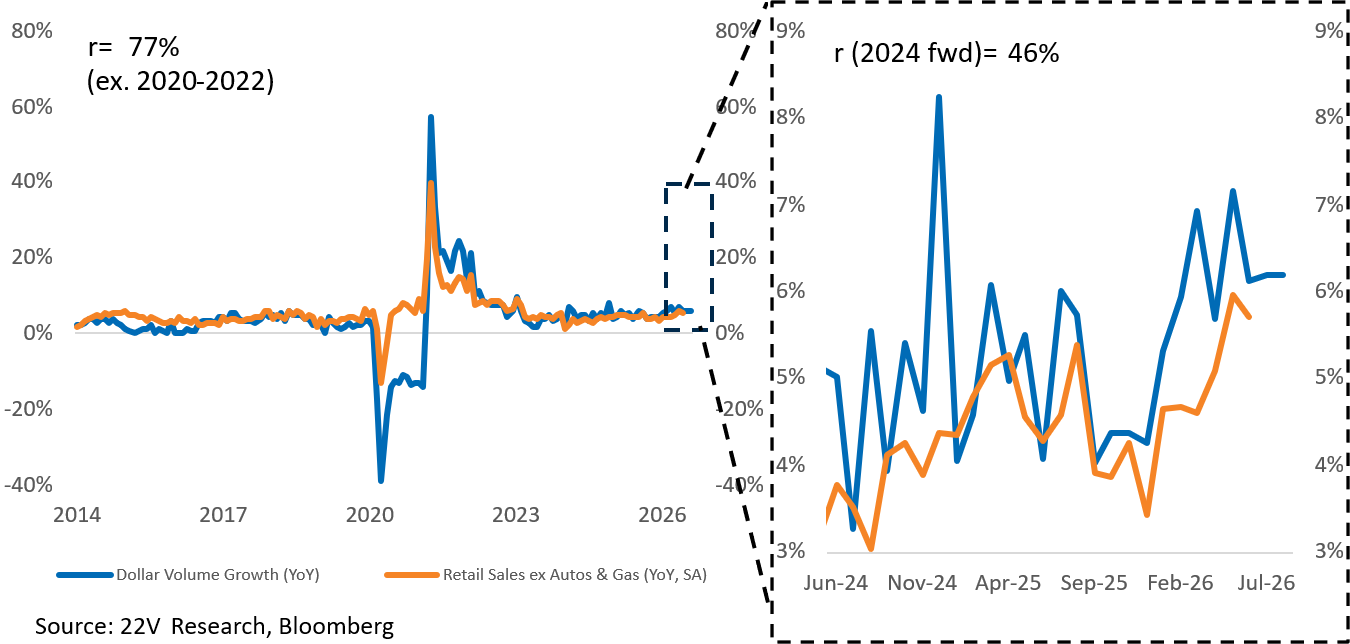
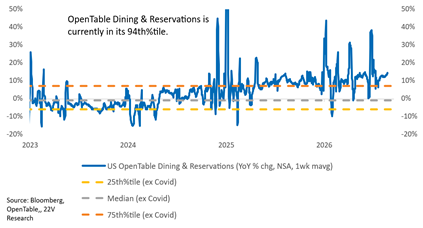
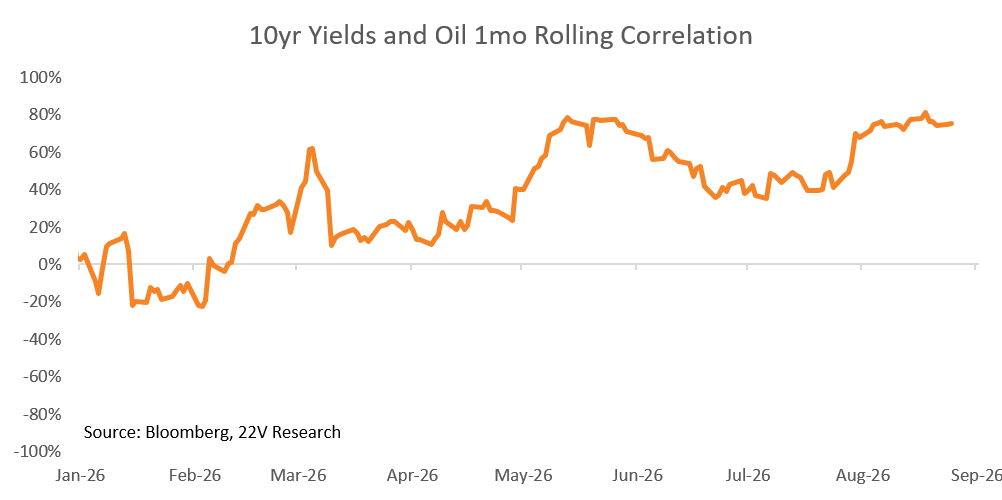
For today, oil prices are lower, which helps pressure 10yr yields. The high frequency consumer data has softened some, from unusually high levels, as well. That should put less upward pressure on 10yr yields. Also, Fed Chair Warsh should help flatten the yield curve by sounding more hawkish this week (HERE and HERE). Longer term though, 10yr yields have upside risk as long as those AI capex intentions are expected to be implemented, the deficit is increasing and Consumer spending is trending at ~+2.5% real. As it has been.
*DRAM (Dynamic Random Access Memory) is the primary working memory used in computing systems, providing fast, temporary storage for data being actively used by CPUs and GPUs.
Charts…
The two-year forward PE spread of the global memory basket has moved below its 25th %tile.
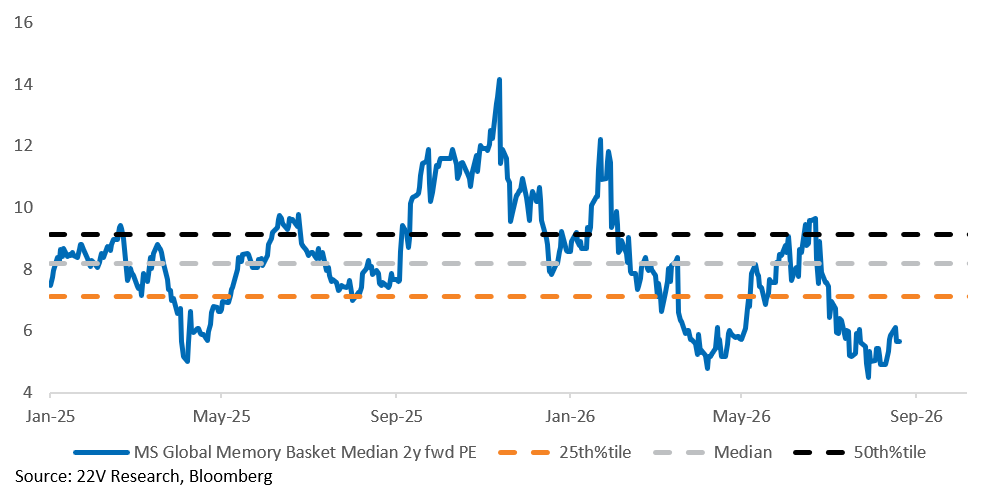
MS’s global memory basket is down 12% over the last week and 14% over the last the month. John Roque is a seller of the basket.
AI adoption is accelerating…
The risk for AI Goods is that the scale of the planned AI buildout could lead to tighter financial conditions, on top of existing physical bottlenecks. AI goods have underperformed AI services over the last week.
Lower oil prices is helping lower 10yr yields.
High frequency consumer data has deteriorated recently…