Industrials have emerged as one of the strongest fundamental stories of the 2Q26 earnings season, supported by the AI infrastructure buildout and strong technical momentum. Bloomberg Intelligence estimates AI-driven demand could more than double the data-center electrical infrastructure market to $117 billion by 2030, creating a significant long-term opportunity for Industrial companies. Meanwhile, technicals remain supportive, with Industrials scoring a 4 on John Roque’s, 22V Head of Technical Research, 0–4 technical scale.
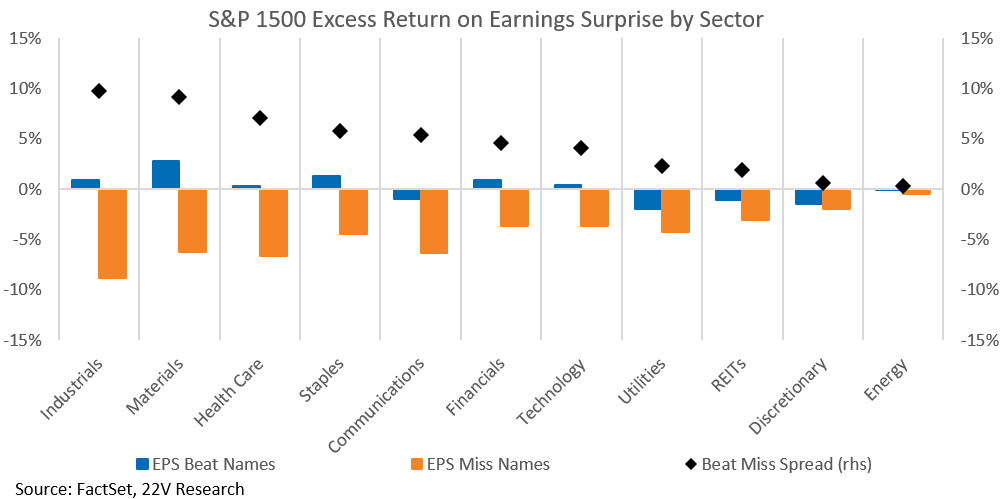
Despite these tailwinds, Industrials have been the least rewarded sector this earnings season. Misses were punished more severely than in any other S&P 1500 sector and relative to its own historical pattern. Industrial beats generated only modestly positive excess returns, producing the widest and most negative beat-miss reaction spread among the 11 GICS sectors.
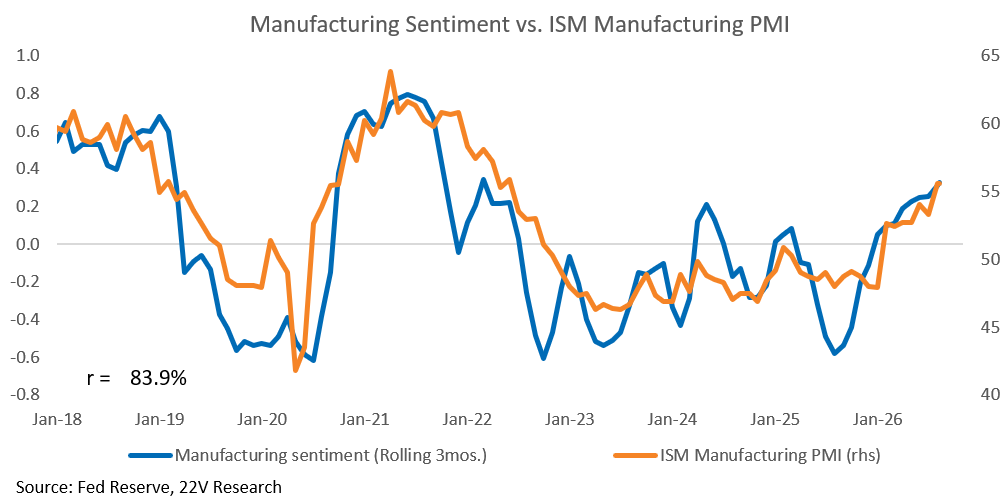
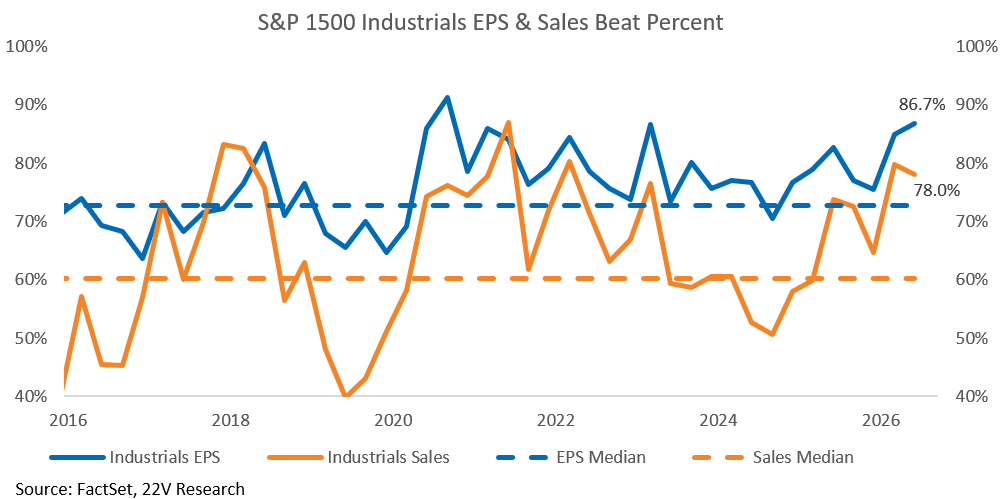
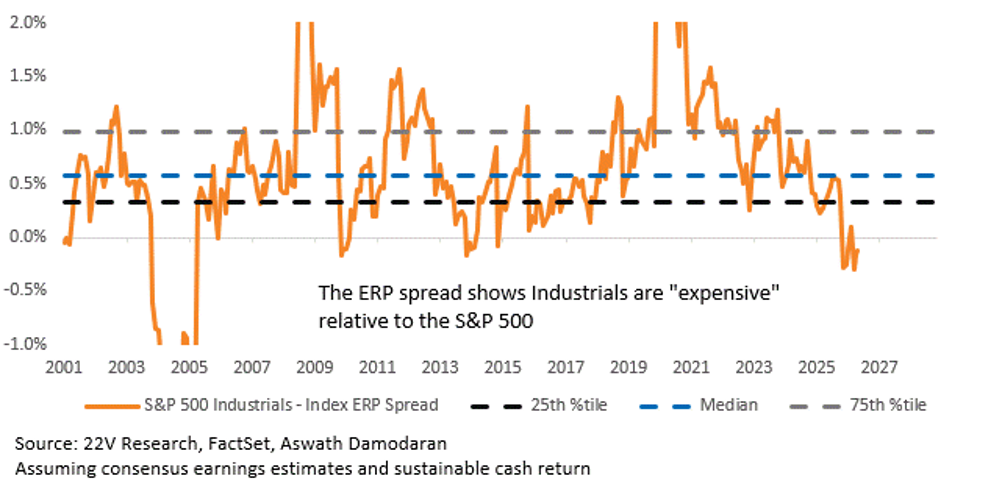
Part of the reason for that weakness can be attributed to how relatively “expensive” Industrials are today. The implied equity risk premium (ERP) of Industrials is exceptionally low (pries are high relative to cash return potential). Helping explain that the high valuations are very strong fundamentals. Industrials posted and EPS beat rate of 86.7%, the third highest among all sectors and near the top of its range since 2016. 78% beat top line as well, a 92nd percentile reading. The ISM manufacturing data and the Fed sentiment towards manufacturing have improved this year back to their highest levels since early 2022. Industrials continue to enjoy a macro data and Fed sentiment tailwind.
The bottom line is that Industrials delivered one of the strongest earnings seasons of any sector, are levered to the massive AI buildout, the macro environment supports them, and the technical setup is strong. What seems to be working against the sector is the market’s willingness to pay for it. Investors are applying a stricter standard to Industrials than other groups.
Industrials Opportunities in the Current AI Buildout: As we highlighted previously (HERE), earnings reports from GOOG, META, MSFT and AMZN have provided support for AI buildout names. Bloomberg Intelligence, in its latest Deep Dive report (HERE), argues AI is reshaping data-center electrical infrastructure, creating a $117 billion market by 2030 – more than doubling from 2025 – and offering one of the largest growth opportunities for Industrial companies in decades.
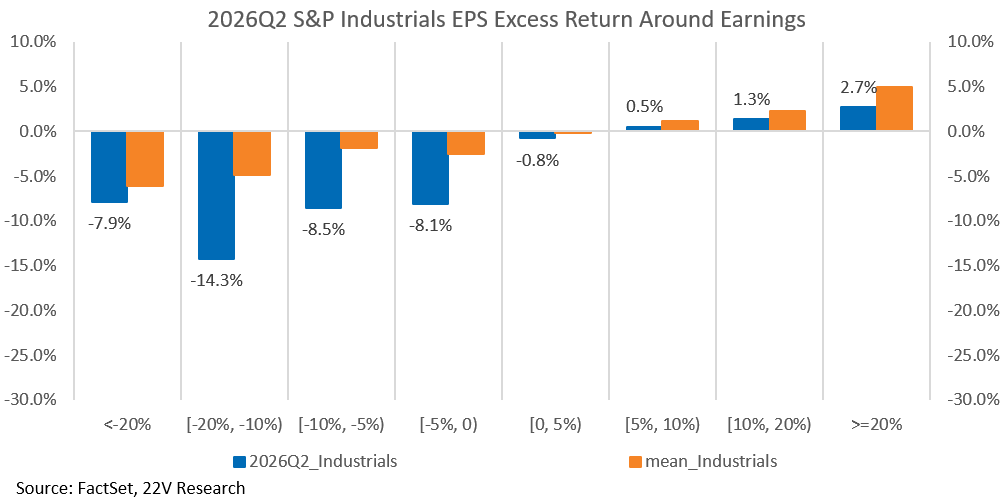
22V Technical Analyst John Roque notes that Industrials now carries good technical score in the market, a 4 on his 0–4 technical scale, with its new high confirmed by MACD (HERE).
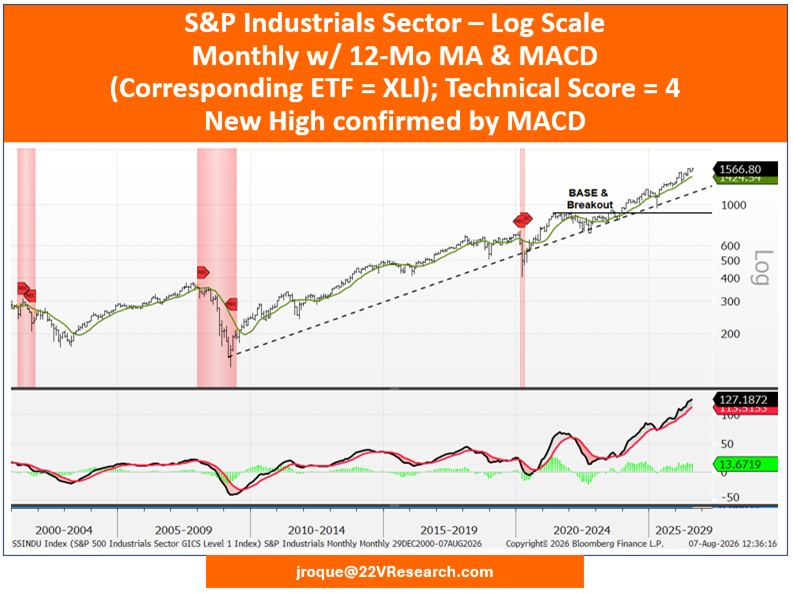
Yet Industrials were the least popular group during 2Q26 earnings season. Judging by post-earnings price reaction, the market clearly disliked the sector. S&P 1500 Industrials misses were punished more than those of any other sector, and although Industrials beat names earned only a slightly positive excess return, the beat-miss spread for Industrials was the widest of the 11 sectors.
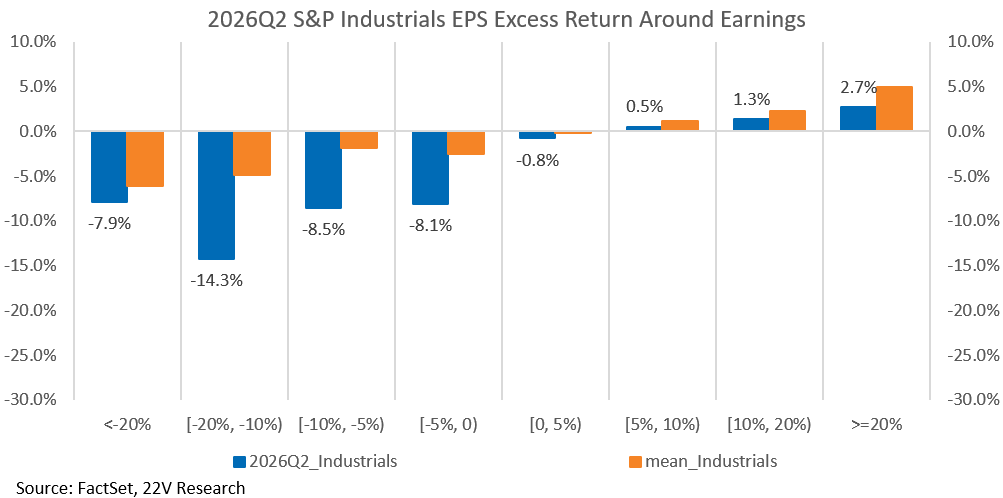
The punishment of Industrials misses was seen across all beats/misses, with excess returns in 2Q26 materially lower than their historical medians. Every tranche of EPS misses posted underperformance of 8% or worse, reflecting an unusually strict bar being applied to the sector. In addition, beat names generated a lower excess return than usual as well.
Part of the story behind Industrials’ unpopularity is how far valuations have already moved. The Industrials index ERP sits at its 93rd percentile relative to both the S&P 500 and the ERP spread – investors are paying a lot for growth. The YTD change in the ERP, if it is running ahead of better earnings growth, was pricing in an additional 3pp on the EPS CAGR over the next two years. The most recent data, however, indicates that EPS growth expectations have actually come down. One catalyst for better Industrials performance would be upward revisions to NTM estimates given the strength of 2Q results.
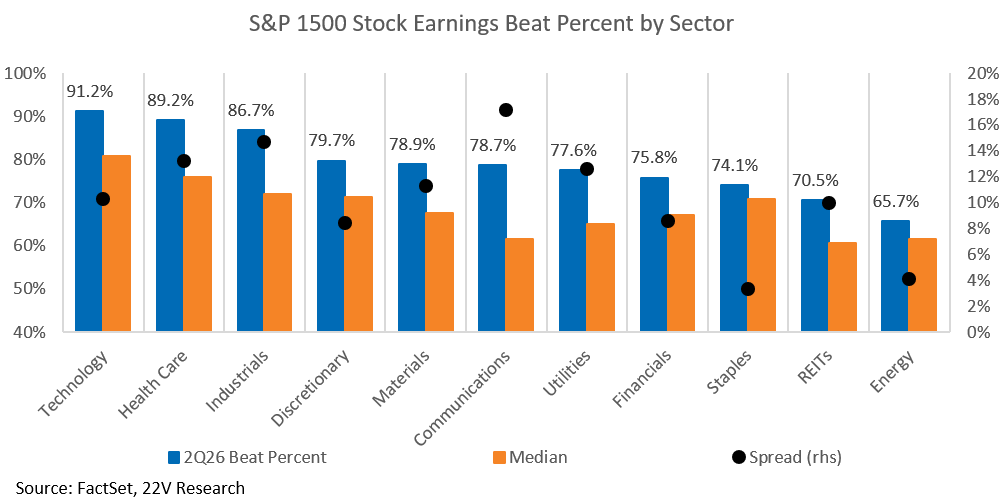
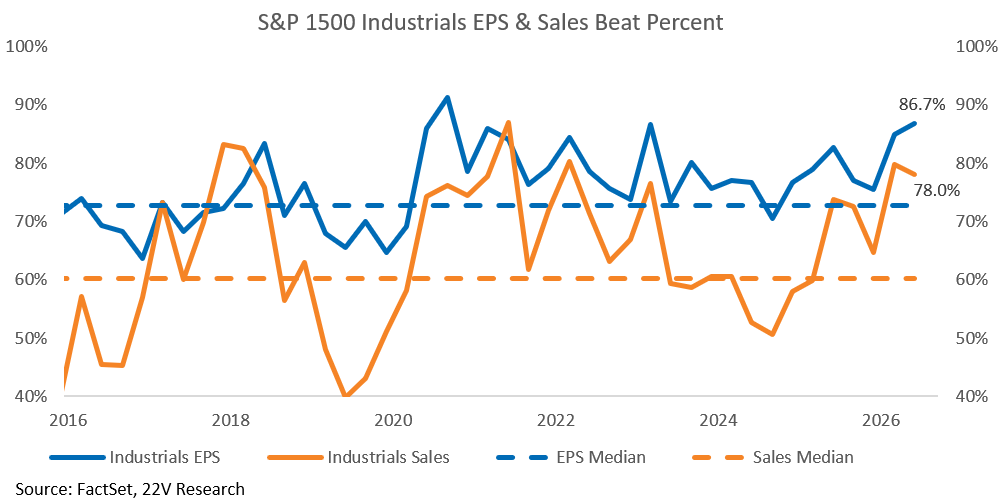
How strong was 2Q? Within the S&P 1500, Industrials posted an 86.7% EPS beat rate in 2Q26, the third best of the GICS sectors. The beat rate is much better than its historical median, with the spread the second highest of all sectors. On both a relative and an absolute basis, Industrials delivered good earnings in 2Q26.
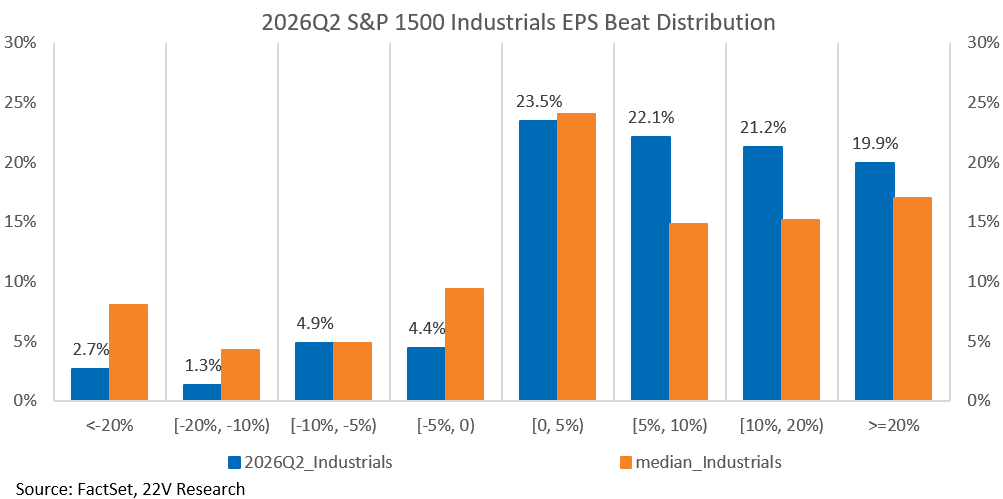
The beats distribution for Industrials has skewed towards positive side, with names beating >=5% much higher than historical and misses <-10% much lower as well. The strength was broad-based rather than a skew in one or two baskets.
The current 86.7% EPS beat rate is among the highest range for Industrials since 2016, only lower than the post-Covid recovery quarter. The 78.0% sales beat rate ticked down slightly from the prior quarter but remains at historical 92%th percentile.
The macro backdrop reinforces the fundamentals. Both ISM Manufacturing PMI and the Fed Manufacturing sentiment have moved higher through 2026, and both now sit at their highest levels since January 2022. The July Fed Reserve Beige Book clearly summarizes that “manufacturing production grew modestly to moderately in most Districts, led by stronger orders from the data center, machinery, and defense sectors.”(HERE), with the Philadelphia Fed notes “Manufacturers have more widespread expectations for future growth than nonmanufacturers.” (HERE). 10 of the 12 Fed Districts expressed positive Beige Book sentiment toward manufacturing, and the remaining two were neutral. A continuing tailwind for Industrials looks likely under a backdrop in which both the Fed and the macro data point the same way.