DAILY STRATEGY: Quick note to those that pushed back on our idea that Warsh’s reaction function would be “conventional”, implying a hawkish lean given the current inflation overshoot. You were right. We did not forecast the reaction function of jawboning being the major driver of Fed policy. As Peter Williams highlighted, Warsh seemed to endorse former BOE Governor and current task force member Mervyn King’s Maradona monetary policy of do little and let the market guide counter-cyclical financial conditions. This policy approach IS unconventional relative to what US investors are used to from the Fed. Not saying it is wrong.
The main implications of promising to get to 2% inflation but using markets to do the work for the Fed. 1) There seems to be a preference for short-term borrowing, which the fed largely governs, over longer-term UST bonds. This is very bad for housing and other long duration equities (Consumer Durables, Homebuilders, and high Debt Risk) if inflation remains well above target. The 10yr yield will do the heavy lifting of tightening financial conditions. Hyperscale CDS spreads would be biased wider FYI. It’s very good for housing and long duration assets if inflation comes in much lower than expected. I.e. 10yr bond vol is higher and long duration equities vol is higher.
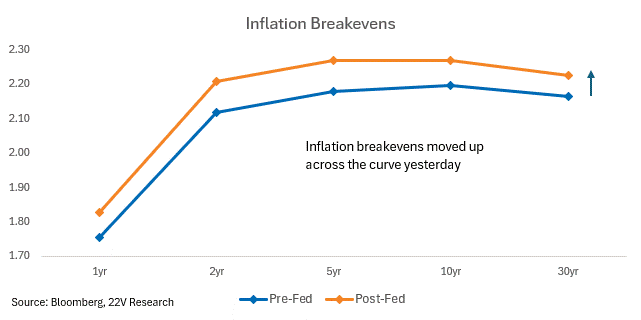
2) As Peter pointed out HERE, selloff in nominal yields was driven by inflation breakevens across all maturities, a sharp change from recent moves, along with an extremely sharp steepening in real yields. The combination of steepening real yields, a weaker USD and risk assets selling off suggests investors believe inflation will remain too high and Warsh is unwilling to respond to that. If inflation comes down quickly and appreciably there will be no need or real debate around hiking anyway and 10yr yields could move much lower. More vol for duration sensitive assets. Related, changes in oil prices have had a large impact on Fed rate hike expectations and 2yr yields. Oil prices swings should be more impactful on the 10yr going forward.
3) Assuming our forecast for roughly 2% real economic growth and some relief in inflation over the back half of 2026 (relief being slightly below the Fed forecast of 3.3% Core PCE in 2026), the Fed is on hold, markets price an extended hold through 2027 (maybe even a bias to cut), and the yield curve should steepen. That is good for Banks, which we are and have been long.
4) The risk of a BoJ-like loop where higher long rates tighten financial conditions, but the currency eases and policy doesn’t act (i.e. offsets the 10yr tightening), so long rates go up more and the loop continues, was brought up many times. This is not a theoretical risk. It played out in Japan.
5) Warsh’s reaction function may not last. The FOMC as a group may have, or likely does given what they have said historically, a different reaction function and could out-vote Warsh. Warsh mentioned the “good family fight” specifically.
AI Related Earnings – We aren’t the experts on individual company prints, but premarket pricing suggests MSFT (+9% at time of writing) may be a relief for Service companies who use AI, a recent theme of ours (HERE), particularly given success in MSFT’s application layer in 2Q. For AI capex, what we have heard from GOOG, MSFT and META suggest the $1.1 trillion in AI related capex that investors expect, or think is needed to own AI Buildout baskets longer term, is achievable. In fairness, investors are much more focused on the returns on that capex now.
Charts and Commentary below…
The selloff in nominal yields was driven by inflation breakevens across all maturities, a sharp change from recent moves, along with an extremely sharp steepening in real yields.
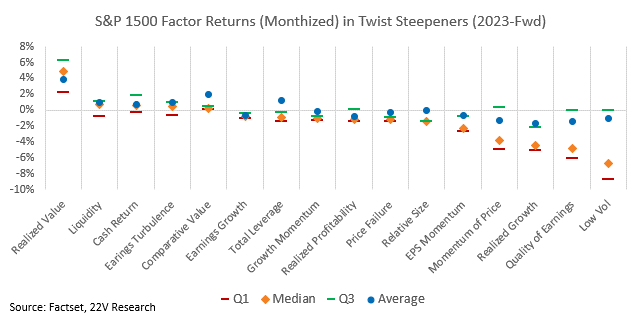
Lower 2yr yields and higher 10yr yields, the outcome of yesterday’s FOMC, is a twist steepener. We detail the historical performance of equity market internals in twist steepeners this cycle below for IF that’s the direction of travel going forward.
First, the sample size is small (5) and factor rolling sensitivity to the yield curve was low during the prior twist steepeners (ex Liberation Day). Value has tended to do the best, with the highest median and average return AND the highest range of outcomes. Risk-on relative to risk-off tends to work, albeit with a bunch of vol. Growth and Momentum skew mildly negative.
In industry group terms, best for Deep Cyclicals (Materials, Cap Goods, Energy, Transports) and consumer-facing industries (Autos, Consumer Services, Banks). Again, we suspect the outlook for Cyclicals will be a function of inflation data more than the reaction function though.
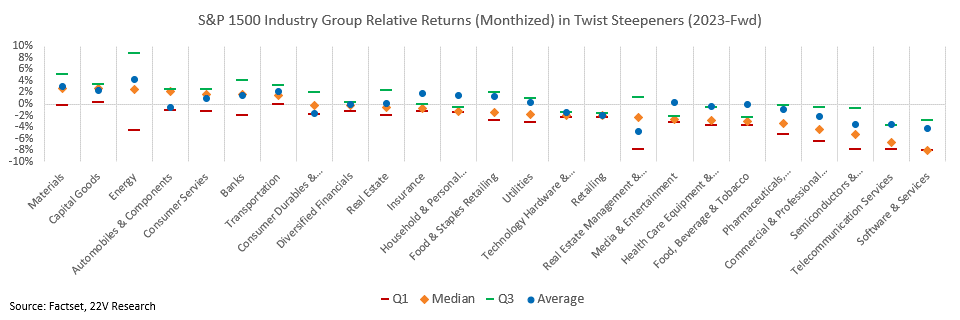
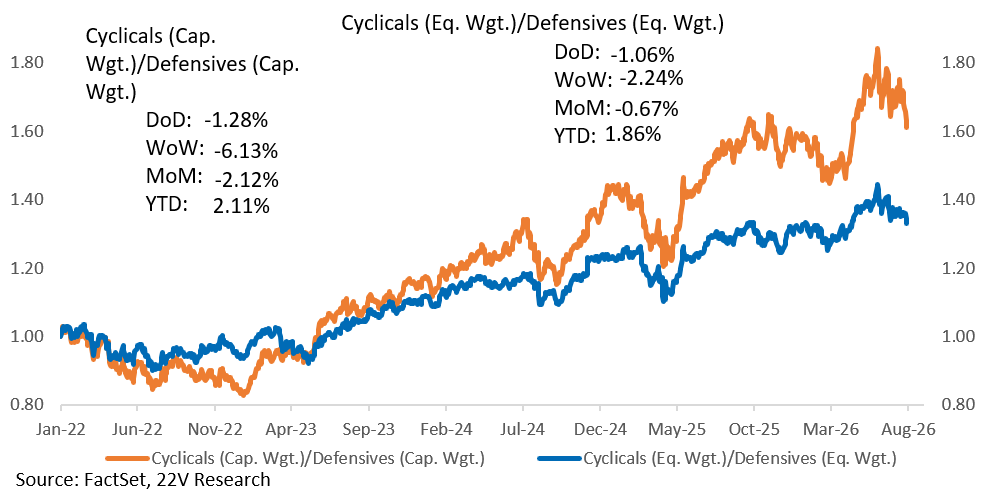
Cyclicals broadly underperformed yesterday.
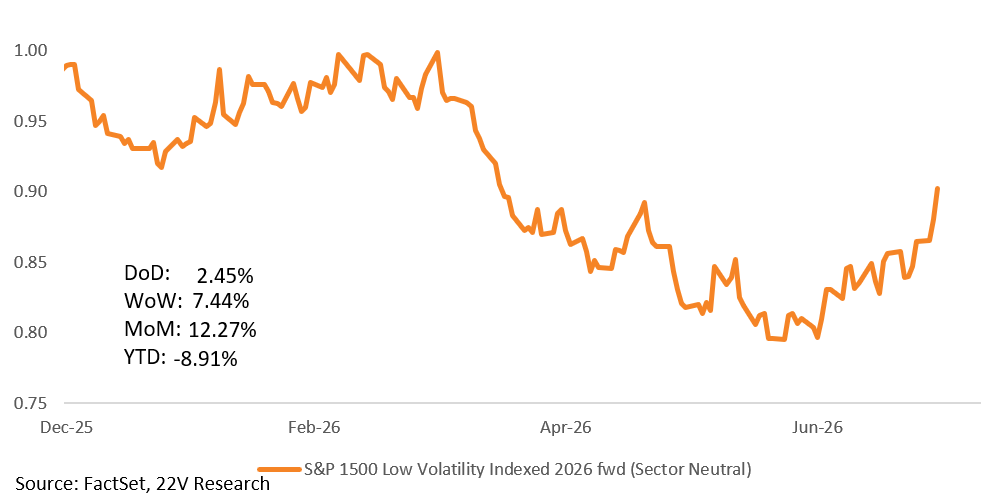
Low Vol had a 98th percentile day over day return yesterday.